3 million Russians in Europe. Nearly 5 years of full-scale war. Still no sustained mass protests against the regime those Russians fled from. At some point, silence stops looking like fear and starts looking like consent.
Speaking today in Riga at #RigaConf2026 on preparing for Russia remade by war. My core point: the war did not change Russia, it revealed it. There is no silent majority waiting to change course, and a ceasefire would freeze this system, not dismantle it. Full opening remarks below.
--
Let me start with what I think is the most important correction we need to make in this room.
The war did not change Russia. It revealed Russia. For years, some of us in this region said this plainly, and we were told we were exaggerating, that we were prisoners of our own history.
The war did not create a new Russia. It stripped away the excuses that let people pretend the old one was becoming something else.
Russia today spends over 6% of GDP and roughly 40% of federal budget expenditure on defence and security, the highest share since the Soviet collapse.
Church, state media, education curricula, industry and the courts have all been folded into a single machine whose output is the war effort.
That is not wartime mobilisation in the sense we understand it in a democracy - a temporary redirection of resources toward an external goal. It is the opposite. The war has become the organising principle of the state itself, and the state has organised everything else around sustaining it.
I want to be blunt, because I think this room can handle it.
Russia is not a state that happens to be run by a strongman who came out of the KGB. Russia is a state built and operated by security services, for security services, as a permanent condition.
Putin is not an aberration sitting on top of a normal state apparatus. He is the product of that apparatus, and so is whoever comes after him.
When we ask "what happens after Putin," we are asking the wrong question.
The right question is what happens to a system whose entire logic is threat detection, repression and control, regardless of who occupies the top chair. Individuals leave. The services, the networks, the operating logic, they remain.
There is a comfortable story in some Western capitals that ordinary Russians are quietly against this war, that repression is holding back a latent majority that would choose differently if only given the chance.
I do not believe that, and frankly, the evidence does not support it.
If there were a real, organised, majority demand for change inside Russia, we would see it.
Not because Russians are uniquely passive - history proves the opposite when the conditions are right. But because when a majority genuinely wants change, it finds a way to make that want visible, costly to ignore, and difficult to suppress indefinitely.
The simple, uncomfortable logical conclusion is this: the absence of visible mass demand for change is itself the evidence. Passive discontent that never translates into political consequence is not resistance - is accommodation.
And here is the line I want people to sit with: you cannot wake up someone who is only pretending to be asleep.
A society that quietly benefits from empire, that quietly enjoys the mobilisation of victimhood and grievance the Kremlin sells it, does not need waking. It needs to be confronted with costs it cannot ignore.
This is where I want to challenge some of the optimism I am hearing in European capitals about a negotiated end to this war.
So – what would a forced ceasefire today actually deliver? If Russia is compelled to stop fighting tomorrow, under pressure, exhausted, out of reserves, the war economy does not simply switch off, and the state built to run it does not simply dissolve.
We would still be dealing with a security-services state, now battle-hardened, industrially retooled for war production, more dependent on Beijing than it has ever been, and with a domestic population conditioned to accept permanent hostility toward Europe as the status quo.
A ceasefire freezes the war. It does not reverse the transformation the war has produced. That is the distinction Europe keeps missing – the distinction between an end to fighting and an end to the threat.
So where does that leave the sanctions question? Sanctions were never going to make ordinary Russians rise up. That was never the honest premise, and whoever sold it that way owes everyone an apology.
The real premise is harder: deny Moscow the components, the revenue, and the technology this machine needs to function.
Reserves are close to exhausted. Energy revenues are down sharply. Growth has stalled.
That is not collapse, it is a security-services state running out of room, and it will double down rather than reform, because reform was never in its vocabulary.
Europe's task is not to wait for Russia to change from within. It will not, not on any timeline that matters to Ukraine or to us.
Plan for the Russia this war has actually produced: poorer, more repressive, more dependent on Beijing, and no less hostile. That is not pessimism. It is realism, and realism is the only thing that has ever kept this region safe.
We built our security architecture assuming the worst about Moscow. We have been proven right every time. I see no reason to stop now.
🇪🇺 Kādas būs nākamā gada Eiropas Savienības prioritātes? 16. septembrī plkst. 10.00 (pēc 🇱🇻 laika) Eiropas Komisijas priekšsēdētāja Urzula fon der Leiena teiks ikgadējo runu par stāvokli Savienībā. Plašāk: https://t.co/XfZYFfpIl1
#SOTEU2026.
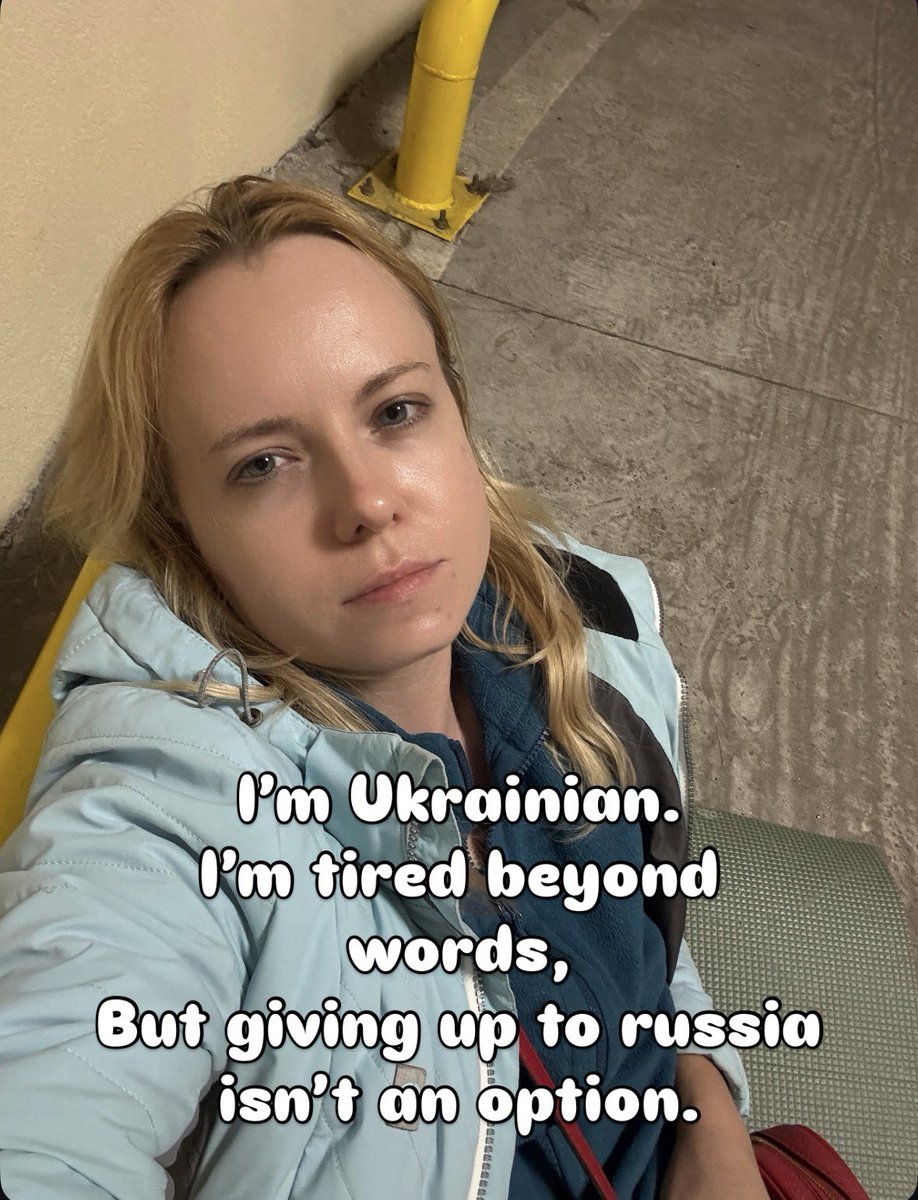
My friend died today from a Russian drone attack.
Russia is a serial killer country. Negotiations with terrorists are useless.
Appeasement leads nowhere.
Complicity is real.
Human safari must be stopped.
A heartbreaking conversation between a little Ukrainian boy and his mom about the war.
"What am I feeling right now? Anger. Anger about everything. That I can’t go to McDonald’s. That our people are dying. That we spend so much time sitting in the basement," little Lev cries.
This damned war is taking such a toll on Ukrainian kids.
📹: simple_curly/Instagram
A father is mourning his son who was killed by russians. This is the price that Ukrainians are paying for their freedom. The pain is unbearable. We, the free world, need to help Ukriane to get everything they need to defeat the russian evil.
Latvia stresses that the new EU Multiannual Financial Framework (2028-2034) must address challenges posed by Russia's aggression on the EU's eastern flank.
Līdz 4. septembrim piesakies 5 mēnešu apmaksātai praksei Eiropas Komisijā! 🇪🇺 Blue Book sniedz iespēju augstskolu absolventiem iegūt praktisku pieredzi ES politikas veidošanā, attīstīt profesionālās prasmes un iepazīt Eiropas Komisijas darbu.
👉 Vairāk: https://t.co/ezimLHmCmL
In June alone, nearly 28,000 Russian soldiers were eliminated – and we have video confirmation for every single one of them. The overwhelming majority were struck by drones.
Frankly, we take no pride in this. We are saying it to show what modern war looks like – a war we did not start, but one we are forced to fight – in order to defend our country.
From a speech at the NATO Defense Industry Forum. (1/5)
June 4 is the International Day of Innocent Children Victims of Aggression. It honours kids affected by war and violence. Since Russia's full-scale invasion of Ukraine began, at least 707 Ukrainian children have been killed. Behind every number is a child whose future has been stolen. Russia must be held accountable for these crimes.
@United24media
🇱🇻 First phone call with Prime Minister @AndrisKulbergs.
Hybrid threats faced by the Baltic states are urgent.
So we got to work immediately.
We discussed Latvia’s €3.5 bn SAFE plan and its contribution to our European flagship defence projects.
Let’s sign it soon!
I believe that Europe should develop a Protocol for hybrid threats and scenarios.
It would enable rapid mobilisation of all available EU instruments.
Because after all, deterrence is the best strategy to preserve peace.
https://t.co/nsEyCVbUM1
I want to praise the resilience of the Baltic people.
You have responded with calm and responsibility.
And with a clear message to Russia:
You will fail.
https://t.co/SD4WAvZWKd
Plkst 18:02, 🇱🇹Lietuvas armija:
—
Nav jākrāmē čemodāni. Tā ir ikdiena valstīm, kas dzīvo kara tuvumā. Tikai Lietuvai, atšķirībā no Igaunijas, Latvijas, Polijas vai Rumānijas, šādi brīdinājumi joprojām ir kas jauns.
Fiziskā drošības situācija pie mūsu valsts robežām nav mainījusies - Krievijas sauszemes spēku kapacitāte joprojām ir piesaistīta Ukrainā, taču kaimiņvalstu iebiedēšanas un šķelšanas taktika nekur nav pazudusi.
Koordinēta valsts iestāžu reakcija uz incidentiem nav vājas valsts pazīme, un tai nekādā veidā nevajadzētu mainīt mūsu - valsts iedzīvotāju - rīcību un lēmumus.
Simtiem gadu mums ir bijis šis pretinieks, kas no malas šķiet ļoti spēcīgs, taču šodien mēs joprojām staigājam ar Lietuvas pasēm un paši pieņemam savus lēmumus. Tas nozīmē, ka kaut ko darām pareizi, un neviens mūs no šī ceļa nenovirzīs.
Pēc 🇷🇺 draudu saņemšanas Latvijai ANO un mūsu gaisa telpas pārkāpšanas, aizvakar iniciēju un nupat pieņemts Eiropas Parlamenta Prezidentu konferences (galvenās EP lēmējinstitūcijas) paziņojums! Paldies tostarp arī Baltijas kolēģiem! Rīcība nevar aprobežoties tikai ar nosodījumu.
🇱🇻🇪🇪🇱🇹 Russia accuses Latvia, Estonia and Lithuania of preparing hostile actions. Pure fantasy.
This from a country that has invaded its neighbour, bombs civilians daily, deports children, and runs a huge disinformation machine. The same country that is responsible for recent incidents with drones in the Baltic, and then cries provocation. The absurdity would be laughable but this is jeopardizing security.
Latvia has categorically denied these allegations as disinformation. Because that is exactly what they are.
Belgium stands in full solidarity with Latvia, Estonia and Lithuania. A threat against one Member State is a threat against our entire Union and against NATO.
@BelgiumMFA
Russia’s intimidation and provocations against Latvia, Estonia and Lithuania are unacceptable and heighten tensions in the region.
We stand firmly with the Baltic States. No Member State should be threatened by Russia.
The security of the Baltics is the security of Europe.
The EU must remain united, vigilant and resolute against Russian attempts to destabilise its neighbourhood and undermine European security.
Statement by @Europarl_EN Conference of Presidents: https://t.co/b2T7cN6s97