Vegan🍃Non-globalist - Freedom for all - Humans and Animals alike - We are One🍃The truth about who we really are, without the illusion of the Ego = pure Love🍃
In Jesus name
Listen:
The root of cruelty to animals, greed, gluttony, numbness of heart, and the destruction of the earth is not mere habit or culture.
It is a heart that has turned away from God and chosen self instead.
Jesus described the condition of such a heart when he said, “Out of the heart come evil thoughts, murder, adultery, sexual immorality, theft, false witness, slander” (Matthew 15:19).
This does not mean the heart is forever closed.
The same Jesus also said the kingdom of God is near and offered to every person.
The heart that produces harm can be turned; the kingdom is not locked out of it. It is refused or received.
Jesus taught that these choices are not confined to this life.
Every act of greed, every refusal of mercy, every willful harm done to the creatures and the world God made is stored up for the day when the secrets of the heart are judged. He declared, “Blessed are the merciful, for they shall receive mercy” (Matthew 5:7), and warned, “With the measure you use it will be measured to you” (Matthew 7:2).
He cautioned, “Take care, and be on your guard against all covetousness, for one’s life does not consist in the abundance of his possessions” (Luke 12:15), and told of the rich fool who stored up treasures only for himself and was called a fool by God that very night (Luke 12:16–21).
He also told of the rich man who lived in luxury while ignoring the suffering at his gate and found himself in torment beyond this life (Luke 16:19–31).
The rule of darkness over a human soul is temporary in this age — it does not have the final word. It can be broken.
Those who remain under it, clinging to ego, greed, numbness, and cruelty, will face the lasting consequences of that choice beyond this earthly life.
Those who hand these things over — who repent, practice mercy, deny self, and treat creation as God’s rather than as property to exploit — are transferred into the kingdom that does not end.
The darkness is temporary; the kingdom of God is forever.
Jesus’ command is therefore simple and absolute: “Repent, for the kingdom of heaven is at hand” (Matthew 4:17). “You shall love the Lord your God with all your heart and with all your soul and with all your mind… You shall love your neighbor as yourself” (Matthew 22:37–39). “Seek first the kingdom of God and his righteousness” (Matthew 6:33). “If anyone would come after me, let him deny himself and take up his cross and follow me” (Mark 8:34). Show mercy.
Live as a steward, not an owner — for even the sparrows are not forgotten before God (Matthew 10:29), and the earth belongs to the Lord.
These are not suggestions for a better earthly life alone.
They are the path that leads beyond this realm, into the presence of the One who made both the sparrows and the earth, and who will ask an account of every heart.
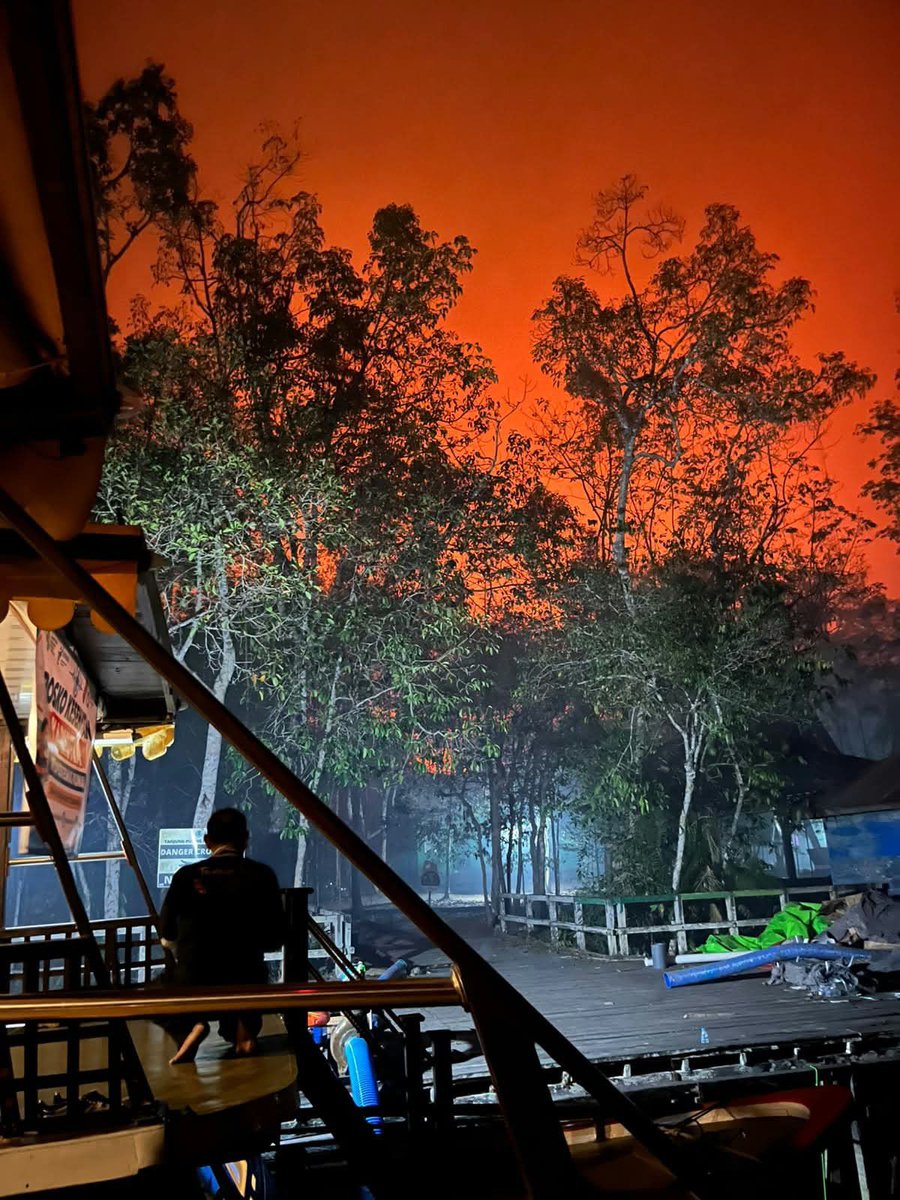
@SigneSol0 THAT'S WHAT HAPPENED IN INDONESIA. FOREST BURNING IS EVERYWHERE, ALMOST ENTIRE INDONESIA IS BREATHING CARBON MONOXIDE, THOUSANDS OF HECTARES HAVE BEEN BURNED, AND RARE ANIMALS ARE NOW ON THE FLOOR TOWARDS EXTINCTION.
OUR GOVERNMENT ARE INCOMPETENT, OUR PRESIDENT IS KILLER.
This is an ecological crime of staggering scale. Indonesia’s tropical rainforests—ancient ecosystems whose lineage stretches back tens of millions of years, with complex, irreplaceable biodiversity—have been deliberately set ablaze across millions of hectares so that peat and forest could be converted into oil-palm and pulp plantations.
Official figures alone show the pattern: roughly 2.6 million hectares burned in 2015, 1.65 million in 2019, 1.16 million in 2023, and large additional areas again in 2026. Peatlands, once drained, burn underground for weeks, releasing enormous carbon and toxic haze. Much of the land that burned was later turned into monoculture rather than restored.
The Indonesian government owns core responsibility. It issued the concessions. It permitted the drainage that made peat explosively flammable. It maintained laws against burning that were weakly enforced—few serious prosecutions, rare license revocations, and fines that largely went uncollected even when courts ordered them. After the 2015 disaster it created a restoration agency that reported partial progress, then let that agency expire and only re-created a new body amid another major fire season. Economic priorities (palm-oil exports, biofuels, food estates) repeatedly outweighed prevention.
Companies and smallholders light many of the fires. The state sets the rules, grants the permits, and chooses how vigorously to enforce them. When millions of hectares of ancient rainforest and carbon-rich peat burn year after year under that framework, the government bears primary accountability for the destruction.
——
Ini adalah kejahatan ekologis dalam skala yang mencengangkan. Hutan hujan tropis Indonesia—ekosistem kuno yang garis keturunannya mencapai puluhan juta tahun, dengan keanekaragaman hayati yang kompleks dan tidak tergantikan—sengaja dibakar di jutaan hektare agar gambut dan hutan bisa diubah menjadi perkebunan kelapa sawit dan pulp.
Angka resmi saja sudah menunjukkan polanya: sekitar 2,6 juta hektare terbakar pada 2015, 1,65 juta pada 2019, 1,16 juta pada 2023, dan area besar lagi pada 2026. Lahan gambut yang dikeringkan bisa terbakar di bawah permukaan selama berminggu-minggu, melepaskan karbon dan kabut asap beracun dalam jumlah besar. Banyak lahan yang terbakar kemudian diubah menjadi monokultur, bukan dipulihkan.
Pemerintah Indonesia memikul tanggung jawab utama. Ia mengeluarkan konsesi. Ia mengizinkan drainase yang membuat gambut mudah meledak terbakar. Ia mempertahankan hukum anti-bakar yang penegakannya lemah—sedikit penuntutan serius, pencabutan izin yang jarang, dan denda yang sebagian besar tidak tertagih meski sudah diputuskan pengadilan. Setelah bencana 2015 ia membentuk badan restorasi yang melaporkan kemajuan sebagian, lalu membiarkan badan itu berakhir dan baru membentuk badan baru di tengah musim kebakaran besar berikutnya. Prioritas ekonomi (ekspor sawit, biofuel, food estate) berulang kali mengalahkan pencegahan.
Perusahaan dan petani kecil yang menyalakan banyak api. Negara yang menetapkan aturan, memberi izin, dan memilih seberapa keras menegakkannya. Ketika jutaan hektare hutan hujan kuno dan gambut kaya karbon terbakar tahun demi tahun di bawah kerangka itu, pemerintah menanggung akuntabilitas utama atas kehancuran tersebut.
🆘 WAY KAMBAS NATIONAL PARK IS ON FIRE 🆘
Sumatran elephants, Sumatran tigers, Sumatran rhinos, tapirs, and bears all live in that forest… 😭😭😭😭
The wildfire in Way Kambas has already reached the restoration area.
⚠️🔥ALERTA…ALERTA…ALERTA🔥⚠️
🆘TAMAN NASIONAL WAY KAMBAS DIBAKAR🆘
Guys Gajah Sumatra, Harimau Sumatra, Badak Sumatra, Tapir, dan Beruang. MEREKA HIDUP DI HUTAN tersebut…😭😭😭😭
Kebakaran hutan way kambas sudah sampai restorasi.
@CassandraFreier Very likely.
The USA financed a government in Guatemala who murdered 200,000 indigenous Mayan people in Guatemala in the -80-90:ies - under absolutely abysmal circumstances.
No one talks about it.
This is an ecological crime of staggering scale. Indonesia’s tropical rainforests—ancient ecosystems whose lineage stretches back tens of millions of years, with complex, irreplaceable biodiversity—have been deliberately set ablaze across millions of hectares so that peat and forest could be converted into oil-palm and pulp plantations.
Official figures alone show the pattern: roughly 2.6 million hectares burned in 2015, 1.65 million in 2019, 1.16 million in 2023, and large additional areas again in 2026. Peatlands, once drained, burn underground for weeks, releasing enormous carbon and toxic haze. Much of the land that burned was later turned into monoculture rather than restored.
The Indonesian government owns core responsibility. It issued the concessions. It permitted the drainage that made peat explosively flammable. It maintained laws against burning that were weakly enforced—few serious prosecutions, rare license revocations, and fines that largely went uncollected even when courts ordered them. After the 2015 disaster it created a restoration agency that reported partial progress, then let that agency expire and only re-created a new body amid another major fire season. Economic priorities (palm-oil exports, biofuels, food estates) repeatedly outweighed prevention.
Companies and smallholders light many of the fires. The state sets the rules, grants the permits, and chooses how vigorously to enforce them. When millions of hectares of ancient rainforest and carbon-rich peat burn year after year under that framework, the government bears primary accountability for the destruction.
——
Ini adalah kejahatan ekologis dalam skala yang mencengangkan. Hutan hujan tropis Indonesia—ekosistem kuno yang garis keturunannya mencapai puluhan juta tahun, dengan keanekaragaman hayati yang kompleks dan tidak tergantikan—sengaja dibakar di jutaan hektare agar gambut dan hutan bisa diubah menjadi perkebunan kelapa sawit dan pulp.
Angka resmi saja sudah menunjukkan polanya: sekitar 2,6 juta hektare terbakar pada 2015, 1,65 juta pada 2019, 1,16 juta pada 2023, dan area besar lagi pada 2026. Lahan gambut yang dikeringkan bisa terbakar di bawah permukaan selama berminggu-minggu, melepaskan karbon dan kabut asap beracun dalam jumlah besar. Banyak lahan yang terbakar kemudian diubah menjadi monokultur, bukan dipulihkan.
Pemerintah Indonesia memikul tanggung jawab utama. Ia mengeluarkan konsesi. Ia mengizinkan drainase yang membuat gambut mudah meledak terbakar. Ia mempertahankan hukum anti-bakar yang penegakannya lemah—sedikit penuntutan serius, pencabutan izin yang jarang, dan denda yang sebagian besar tidak tertagih meski sudah diputuskan pengadilan. Setelah bencana 2015 ia membentuk badan restorasi yang melaporkan kemajuan sebagian, lalu membiarkan badan itu berakhir dan baru membentuk badan baru di tengah musim kebakaran besar berikutnya. Prioritas ekonomi (ekspor sawit, biofuel, food estate) berulang kali mengalahkan pencegahan.
Perusahaan dan petani kecil yang menyalakan banyak api. Negara yang menetapkan aturan, memberi izin, dan memilih seberapa keras menegakkannya. Ketika jutaan hektare hutan hujan kuno dan gambut kaya karbon terbakar tahun demi tahun di bawah kerangka itu, pemerintah menanggung akuntabilitas utama atas kehancuran tersebut.
@PalmOilDetect I don’t believe the ”climate - scare - agenda” for one micro second!!! Why? - BECAUSE THOSE WHO SHOUT ABOUT IT DON’T DO SQUAT TO HELP THE BORNEO RAINFORESTS BURNING TO THE GROUND RIGHT NOW AS WE SPEAK.
NOTHING!!!!
@PalmOilDetect I don’t believe the ”climate - scare - agenda” for one micro second!!! Why? - BECAUSE THOSE WHO SHOUT ABOUT IT DON’T DO SQUAT TO HELP THE BORNEO RAINFORESTS BURNING TO THE GROUND RIGHT NOW AS WE SPEAK.
NOTHING!!!!