SikhRI is a global non-profit organization providing educational resources to Sikhs to think critically based on Guru Granth Sahib’s paradigm of IkOankar.
What factors inform your perspective on Justice?
The Sikh Research Institute aims to capture Sikh thoughts and feelings on the topic of Niau: Justice in Sikhi.
Let your voice be heard in just 3 minutes.
Our State of the Panth series reports on a specific issue affecting either a large section of the Panth or the human race.
Previous topics include:
• Sexuality
• Caste & Race
• Abortion
• Miri-Piri
• Marriage
Complete the Survey today: https://t.co/tSh0XGmIDM
#SikhEducation #SikhCommunity #Education #Survey #Justice #Sikhs #Community #Sikhi #StateofthePanth
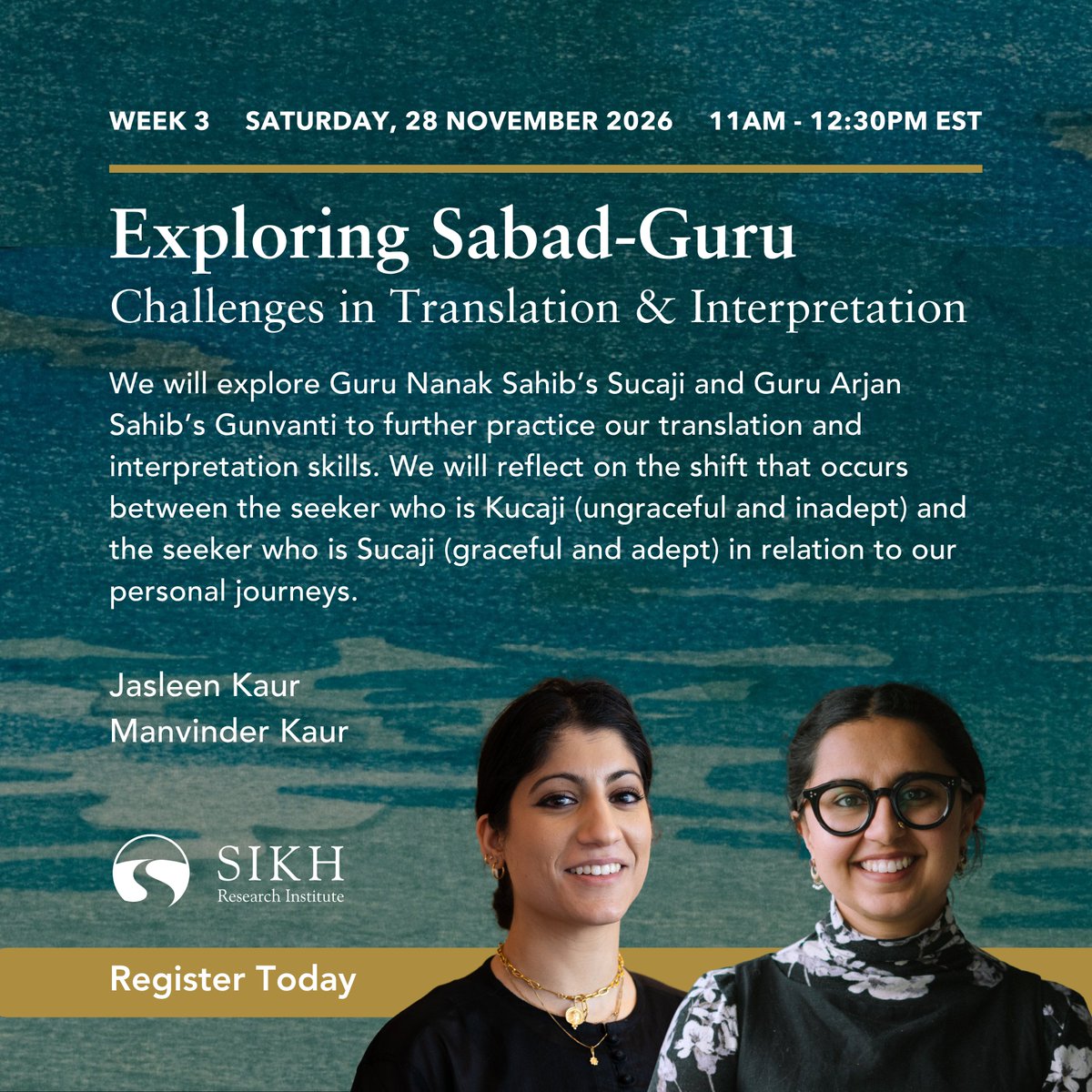
How might we cultivate a personal relationship with Sabad-Guru that transforms us individually and Panthically?
Join Sikh Research Institute (SikhRI) for our engaging live online classroom sessions centered around the "Transforming Through Sabad” course. Immerse yourself in interactive discussions with our instructor, Jasleen Kaur (@___jasleenkaur), and have your questions addressed directly.
In Transforming Through Sabad: Cultivating a Relationship with Guru in the Age of AI, we invite you to engage deeply with Sabad-Guru through three interconnected sessions.
Together, we will explore the foundational principles of the Sikh worldview, examine the challenges of translation and interpretation in the age of generative AI, and reflect on the journey from Kucaji to Sucaji and Gunvanti.
Open to participants of all backgrounds, our course offers a Sikh-centric perspective while encouraging critical analysis and vibrant discussions.
Classes will convene every Saturday at 11:00 am EST from Nov 14 to Nov 28, covering 3 weeks.
These dynamic sessions will be recorded and available for viewing two months after the course concludes.
Register today: https://t.co/qOU67jlldt
@womanvinder #Wisdom #Sabad #Guru #Transformation #AI #SikhCommunity #SikhRICourse #Learning #Education #OnlineCourse
Today in #Sikh History:
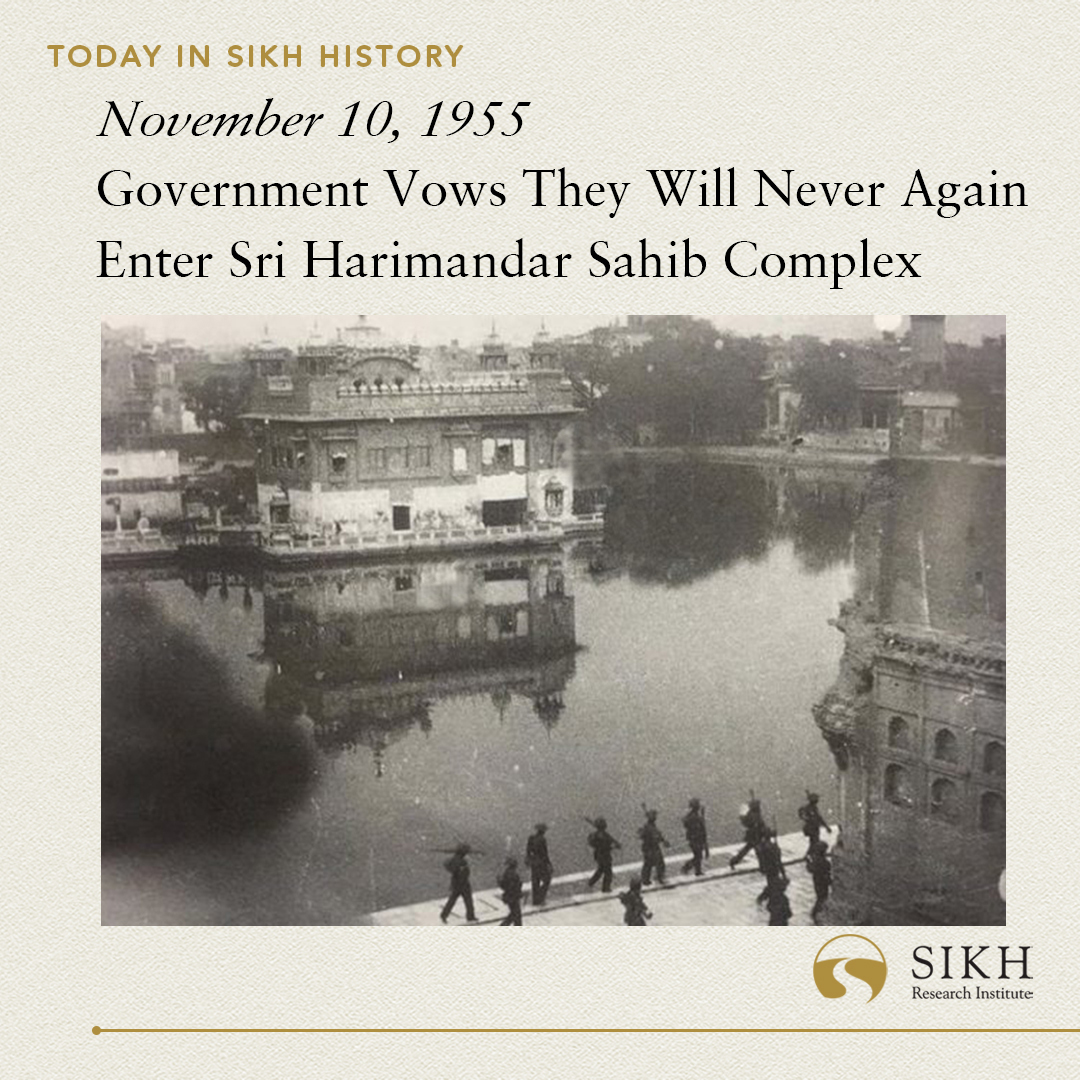
On this day in 1955, Bhim Sen Sachar, the Chief Minister of Panjab, personally visited the Sri Harimandar Sahib and Akal Takht Sahib Complex to apologize for the police intrusion into the sacred premises.
On April 6, 1955, the government prohibited using the slogan "Panjabi Zuba Zindabad." In response, the Akali Dal declared their intention to launch an agitation (Morcha) to assert their right to chant this slogan. This Morcha was initiated in May.
However, on the night of July 4, 1955, the Panjab Police, acting on orders from DIG Ashwini Kumar, conducted a raid on the Sri Harimandar Sahib Complex, even entering with their shoes on. They employed tear gas and batons, resulting in the assault of activists, SGPC workers, and congregation members. Numerous Sikhs were arrested, many were injured, and tragically, two individuals died. The langar service was halted, and religious ceremonies were disrupted.
Following a significant public outcry against this police operation, Chief Minister Bhim Sen Sachar apologized and committed to the Sikh community that the government would never intrude into the Complex again.
#TodayInHistory #India #Punjab #Panjab #SikhHistory
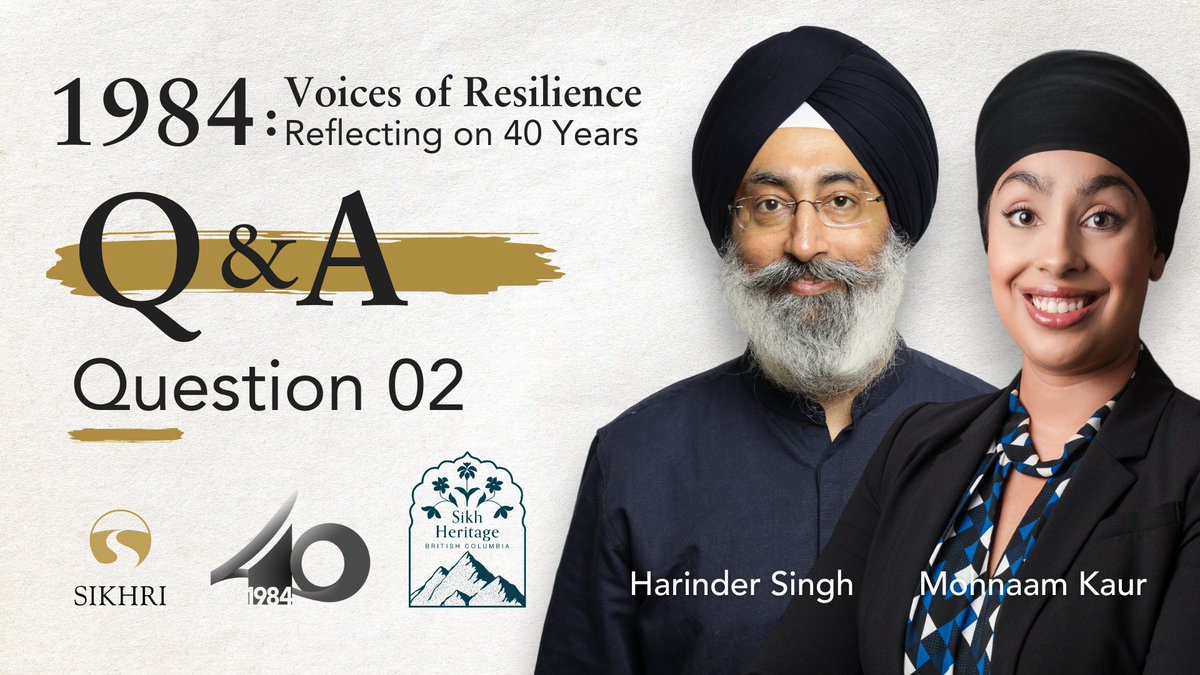
The concept of justice is often discussed in relation to the events of 1984, where the focus tends to be on bringing perpetrators to justice. However, a deeper question emerges: What does true justice look like?
Drawing inspiration from the Creator, who is believed to administer perfect justice, we, as instruments of this divine justice, should strive for that same ideal.
While legal systems have developed various approaches, such as reparations and restorative justice, they often fall short. The Sikh perspective reminds us that justice requires more than punishing individuals; it demands a transformation of consciousness, especially when state institutions themselves have failed or were complicit.
Watch: https://t.co/nDKhVoK5Ho
@1Force@sikhheritageBC #Remember1984 #SikhGenocide #SikhHistory #SikhCommunity #India #Delhi #History #Sikhs #Sikhi #SikhGenocide1984
"Genocide doesn’t happen in isolation. It is a combination of deep-seated hatred and racism. There are many who will deny the 1984 Genocide. But I remember…"
Author: Inni Kaur (@InniKaur)
Continue reading: https://t.co/ta0Z5U2Lc7
#Remember1984#SikhGenocide#SikhHistory #SikhCommunity #India #Delhi #History #Sikhs #Sikhi #SikhGenocide1984
Sidak Youth Leadership Program brings together young Sikh adults (ages 18–39) from diverse backgrounds for a two-week immersive learning experience at Miracle Valley, British Columbia, Canada, to deepen their understanding of Sikhi, engage with Gurbani, and develop leadership skills.
At a time when young Sikhs need meaningful opportunities to connect with Sikhi, community, and identity, Sidak provides a supportive environment to learn, lead, and build lifelong relationships. Supporting Sidak helps nurture a generation of informed, confident Sikh leaders equipped to contribute to the future of the Panth.
From November 13 to 22, we're asking our community to help us reach $25000 during DasvandhWeek. Every cause on Dasvandh Network (@DVNetwork) is verified, and gifts made during the week go further with match funds.
We'll share our link on November 13. Until then, please pass this on to someone who would want to give with you.
#SikhRI #Sidak #YouthLeadership #Sikhi #DasvandhWeek
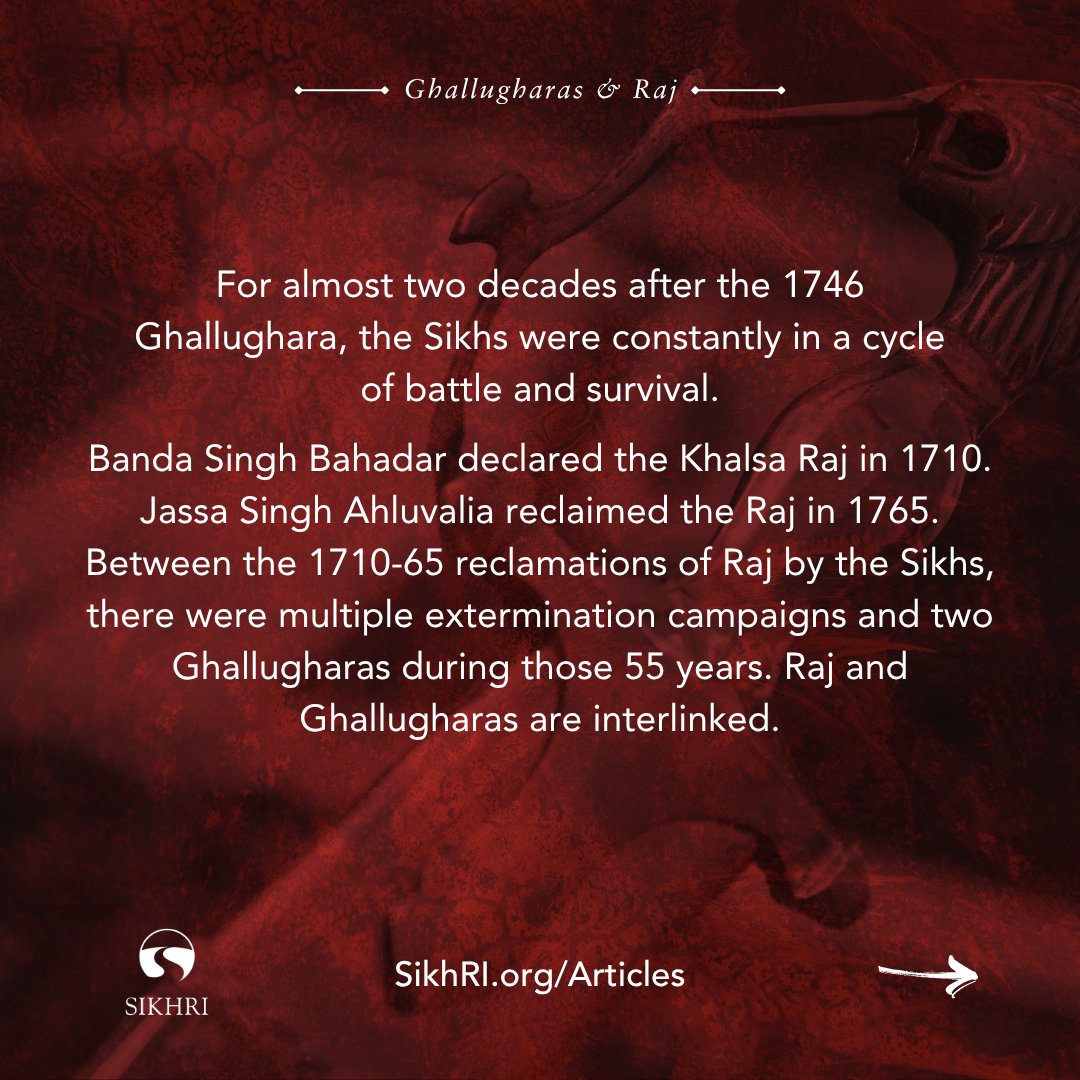
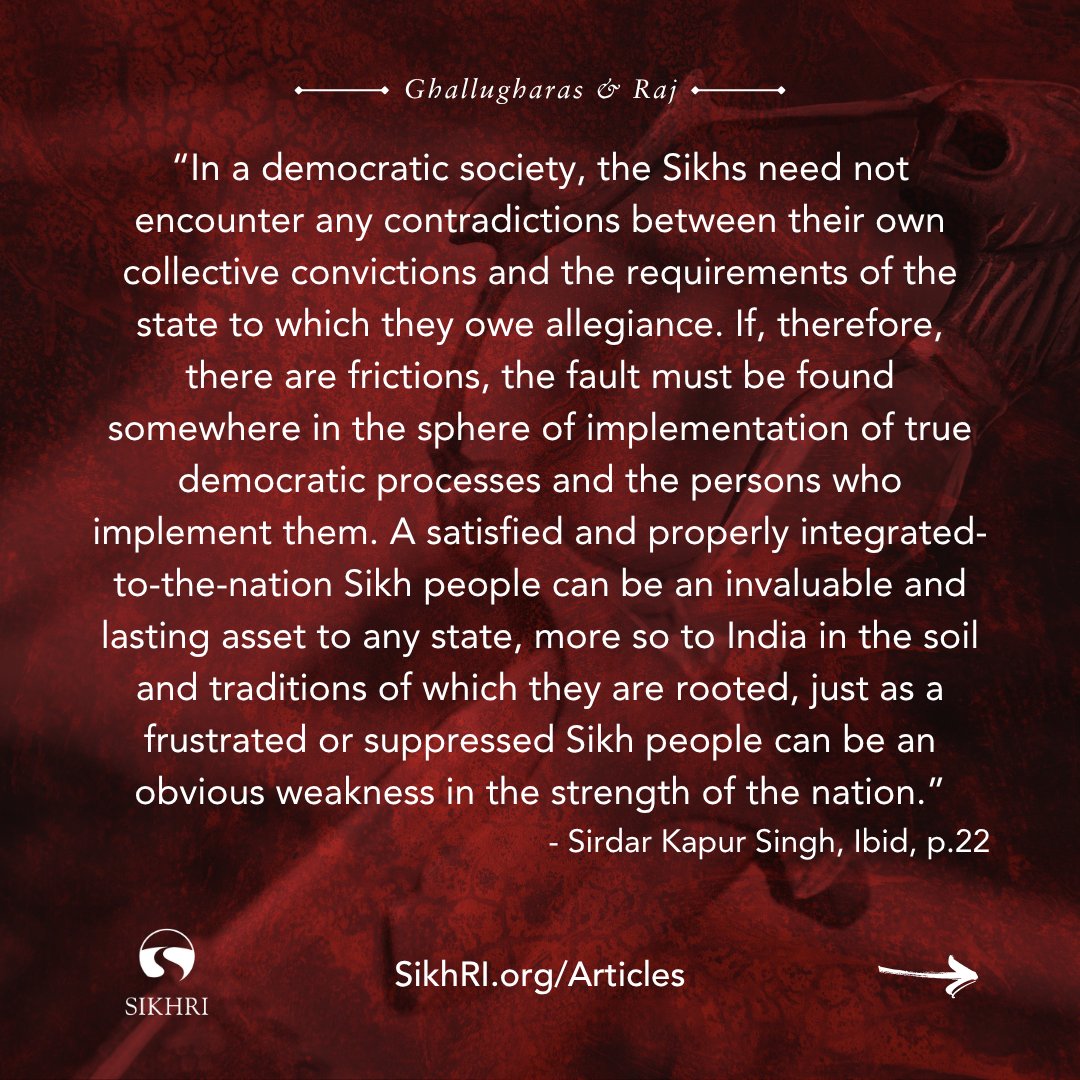
Ghallugharas are etched in Sikh consciousness. It is a Panjabi phrase coined in the eighteenth century when the Sikhs were targeted and killed en masse amid the establishment of the Raj. Ghallughara implies destruction, devastation, or apocalypse. It's akin to genocide or holocaust for global relevance, but it is much more. Ghallughara is not about remorse for the Sikhs; it is a reminder to continue the struggle for the Raj, which was commenced by Guru Nanak Sahib, the founder of Sikhi.
Author: Harinder Singh (@1Force)
Continue Reading: https://t.co/OgV0U7mhxB
#November1984 #Sikhi #Wisdom #SikhCommunity #SikhGenocide
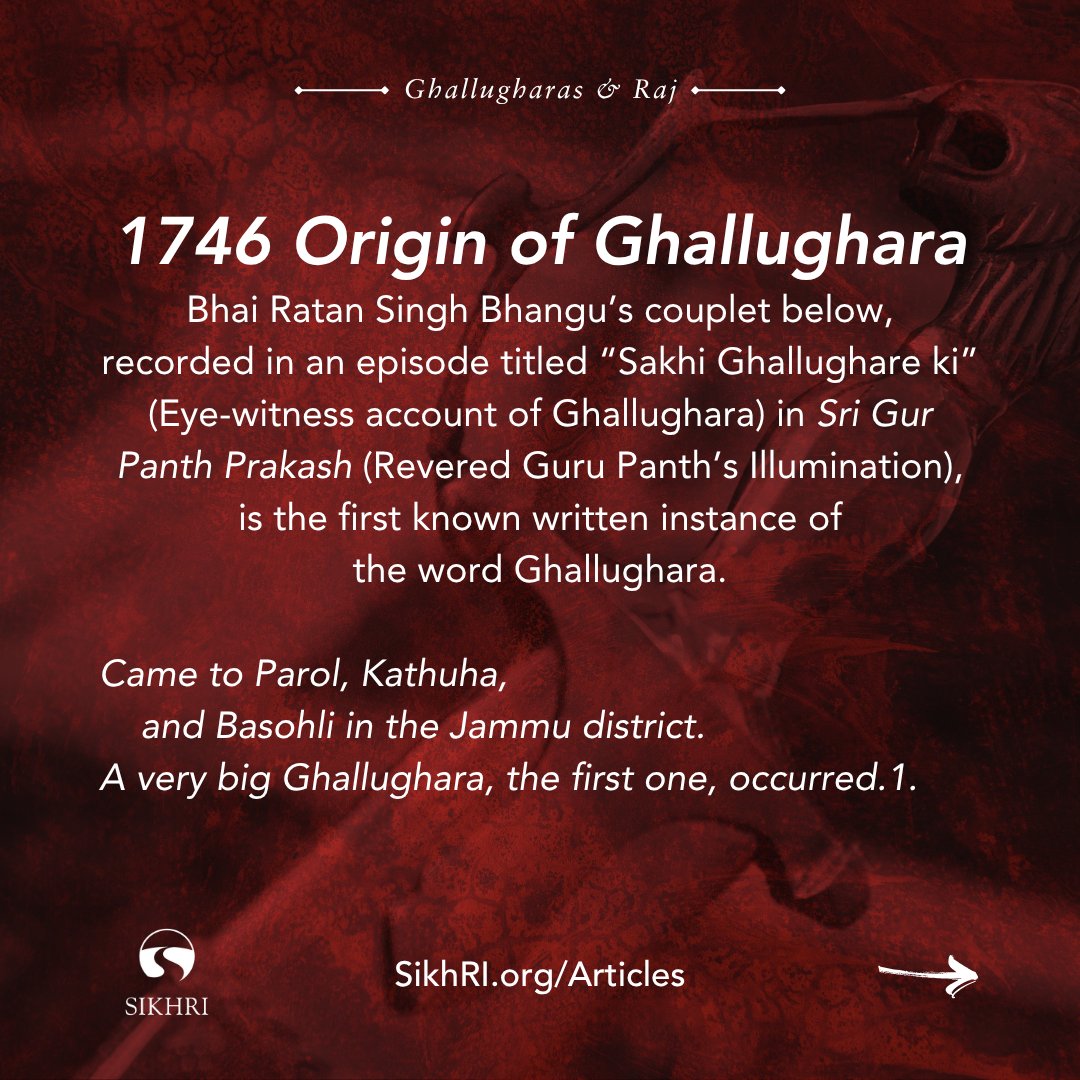
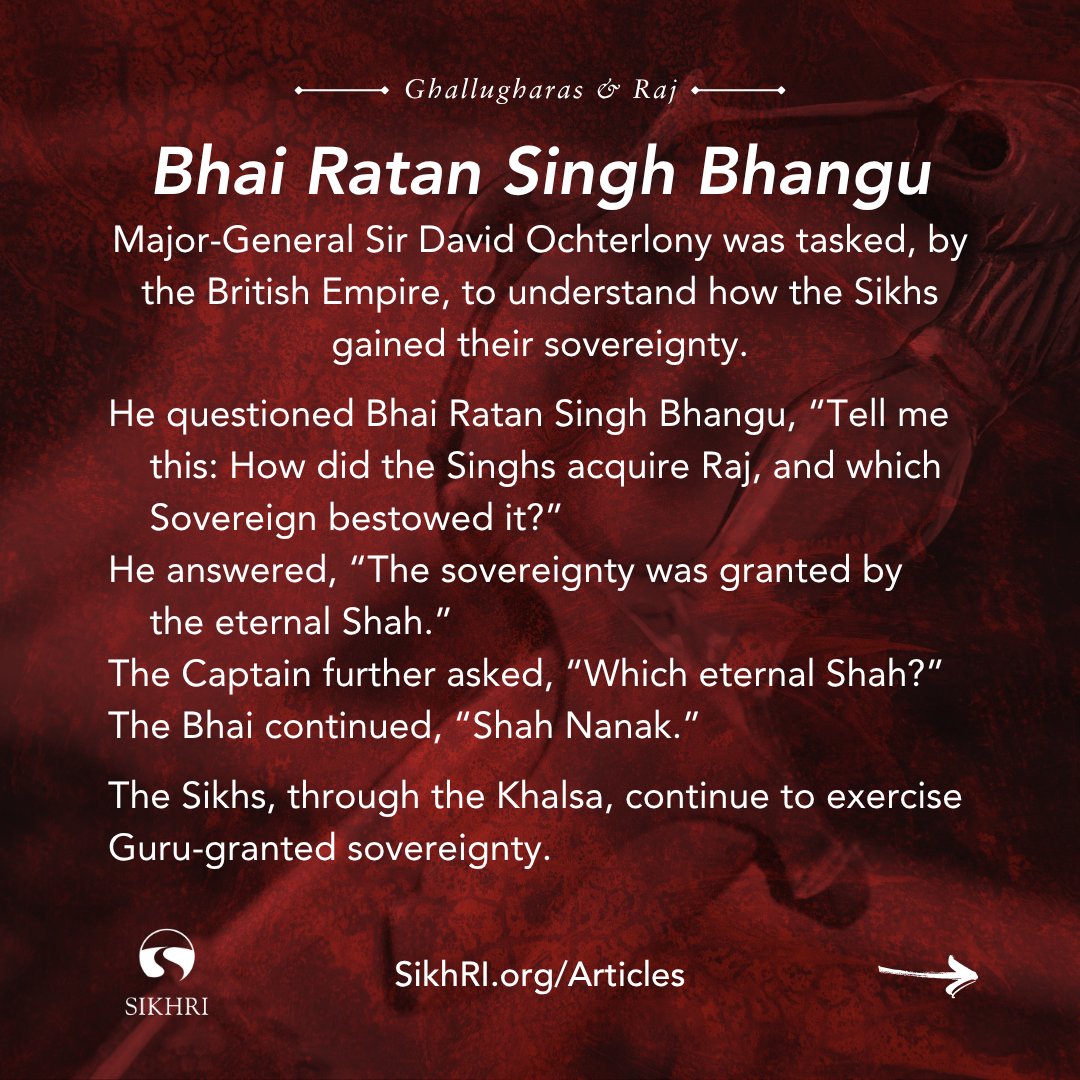
This essay explores the origin of Ghallughara. Why were they orchestrated, and who enacted them? How are they intrinsically linked to the Raj? It relies on the eyewitness accounts documented by Bhai Ratan Singh Bhangu in Sri Gur Panth Prakash and connects the eighteenth-century Ghallugharas to 1984.
#SikhHistory #History #Sikhs
Today in #Sikh History:
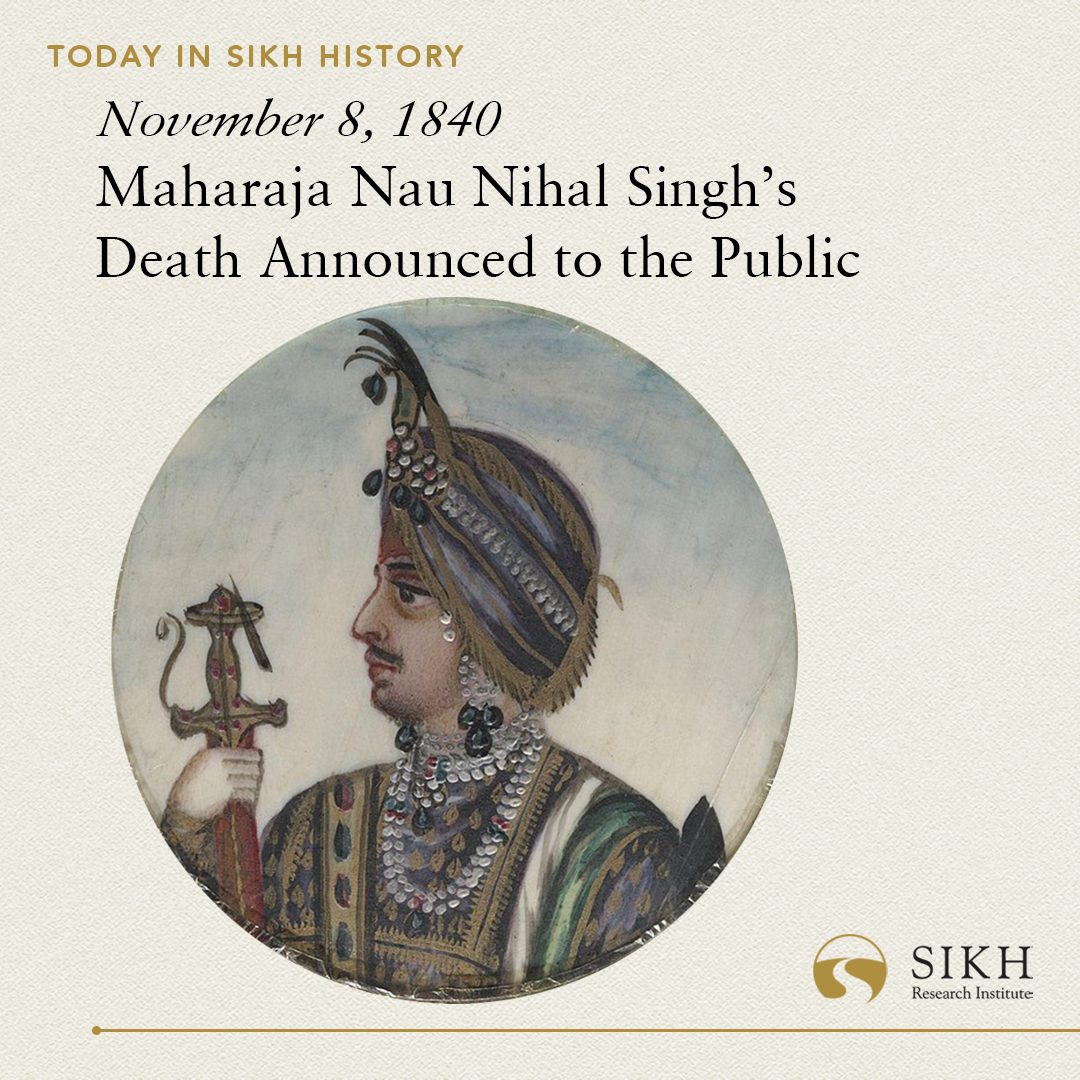
On this day in 1840, the death of Nau Nihal Singh, the third Maharaja of the Sarkar-i-Khalsa (Sikh Empire), was announced to the public. He was just 19 years old. Nau Nihal Singh’s father, Kharak Singh, had succeeded Ranjit Singh as Maharaja. Kharak Singh’s main advisor was Chet Singh Bajwa, whom the Dogra faction of the royal court (Dhian Singh, Gulab Singh, and Suchet Singh) mistrusted and wished to remove. They won over Nau Nihal Singh to their side and assassinated Chet Singh on October 9, 1839. Maharaja Kharak Singh was placed under house arrest, and state control fell to Nau Nihal Singh.
On the orders of Dhian Singh Dogra, Maharaja Kharak Singh was slowly poisoned, resulting in his death on November 5, 1840. On the way back from his father’s funeral, the northern gate of Hazuri Bagh collapsed upon Nau Nihal Singh’s head. Fortunately, the injuries were minor. However, Nau Nihal Singh was whisked away on a palanquin to the royal fort, where stones were used to crush his head. Dhian Singh then claimed that the gate collapse caused Nau Nihal Singh’s fatal injuries, and he did not announce the Maharaja’s death until three days later, on November 8.
Upon Nau Nihal’s death, one faction of the court supported his mother, Chand Kaur, as the next ruler of the Sikh state, while the other faction supported Sher Singh, another son of Ranjit Singh. Chand Kaur managed to take control, ruling on behalf of Nau Nihal Singh’s unborn child. However, the child was stillborn. Sher Singh then laid siege to Lahore. Chand Kaur agreed to give the throne to Sher Singh, who was crowned the next Maharaja of the Sarkar-i-Khalsa. It has been claimed that Sher Singh paid Nau Nihal Singh’s widow to terminate her pregnancy so that he could become the next Maharaja. Nau Nihal Singh’s short reign marked just another tumultuous chapter in the chaos that reigned in the Lahore Darbar after the death of Ranjit Singh. This confusion eventually led to the British colonization of Panjab.
#TodayInHistory #India #Punjab #Panjab #SikhHistory
Today in #Sikh History:
On this day in 1921, Amar Nath, the assistant commissioner of Amritsar, raided the house of Sundar Singh Ramgharia, the Sabrah of Harimandar Sahib, and seized the keys to the treasury (Toshakhana) of Harimandar Sahib and refused to turn them over. This led to the popular agitation known as the Chabia Da Morcha, a movement to regain the keys to Harimandar Sahib’s toshakhana. The agitation was led by Baba Kharak Singh.
Several prominent Akali leaders, including Kharak Singh, were arrested during the Morcha. Finally, the government announced they would turn over the keys on 3 January 1922, the Gurpurb of Guru Gobind Singh Sahib. The Akalis refused unless all Sikhs arrested during the morcha were released from jail.
On 11 Jan, the British announced that all Sikhs arrested during the morcha would be released. However, the Akalis refused to go and fetch the keys from the British and demanded that the British come and hand the keys over personally.
On 19 January, wrapped in red silk, the British handed the keys over personally to Baba Kharak Singh at a special divan held in front of Akal Takht Sahib. The Akali’s victory was hailed throughout the country, and Mohandas Gandhi declared that the “first decisive battle for India’s freedom had been won.”
#TodayInHistory #India #Punjab #Panjab #SikhHistory
On 31st October 1984, Indira Gandhi was assassinated. Beyond established facts, competing narratives exist between the State and the Sikhs. Harinder Singh (@1Force) revisits the 1984 Ghallughara, investigative accounts, and parallels in Sikh history.
Why did Beant Singh, Satwant Singh, and Kehar Singh become Bhais of the Panth? What does ‘sodha’ mean in Sikh understanding?
Continue reading: https://t.co/0XOei38KnB
#Remember1984 #SikhGenocide #SikhHistory #SikhCommunity #India #Delhi #History #Sikhs #Sikhi #SikhGenocide1984 #SikhRIArticle
The delivery of justice in line with the Sikh traditions, the assassination of Prime Minister Indira Gandhi, became the pretext for meticulously orchestrated planned violence throughout India. What followed was not chaos but calculation: Sikh homes burned, families were hunted, lives were extinguished. The very institutions meant to protect citizens looked the other way, and democracy collapsed into darkness. Violence was paraded as politics.
Read the full post and subscribe: https://t.co/YNTaFdMGrq
#Sikhi #Wisdom #SikhCommunity #SikhHistory #Sikhs #India #Remember1984
As we step into November, memory draws us back to a chapter scarred by atrocity and grief. The 1984 Ghallughara, the Sikh genocide and resistance, is not distant history—it is a wound that continues to breathe, reminding us of lives torn apart, of justice still denied, and of the nation’s resilience that endures.
#SikhGenocide #Delhi #History #SikhGenocide1984 #WeeklyInspiration
Understanding the 1984 events starts with self-education and discerning sources. The government’s single narrative—the White Paper—was quickly discredited, yet it remains widespread, leaving much unaddressed since June 1984.
Knowing where the information originates is key to discerning accuracy. Sharing credible information and consulting both Sikh and non-Sikh sources offers a fuller perspective, connecting community experiences with the broader global context.
Watch: https://t.co/Ds8BiLaGak
@1Force@sikhheritageBC #Remember1984 #SikhGenocide #SikhHistory #SikhCommunity #India #Delhi #History #Sikhs #Sikhi #SikhGenocide1984
Join host Santbir Singh as he delves into the profound impact of 1984 through the personal reflections of guest Pritpal Singh. In this intimate and moving conversation, Pritpal offers a rare, firsthand perspective on how the events of that year shaped the lives of countless Sikhs.
Moving beyond historical accounts, this episode brings listeners into the raw realities of 1984, offering younger diasporic audiences an emotional connection to a defining moment in Sikh history.
Listen to the podcast on Apple Podcasts, Spotify, Podbean, and more! https://t.co/tYdwnlHXNn
#Remember1984 #SikhGenocide #SikhHistory #SikhCommunity #India #Delhi #History #Sikhs #Sikhi #SikhGenocide1984 #SikhRIPodcast
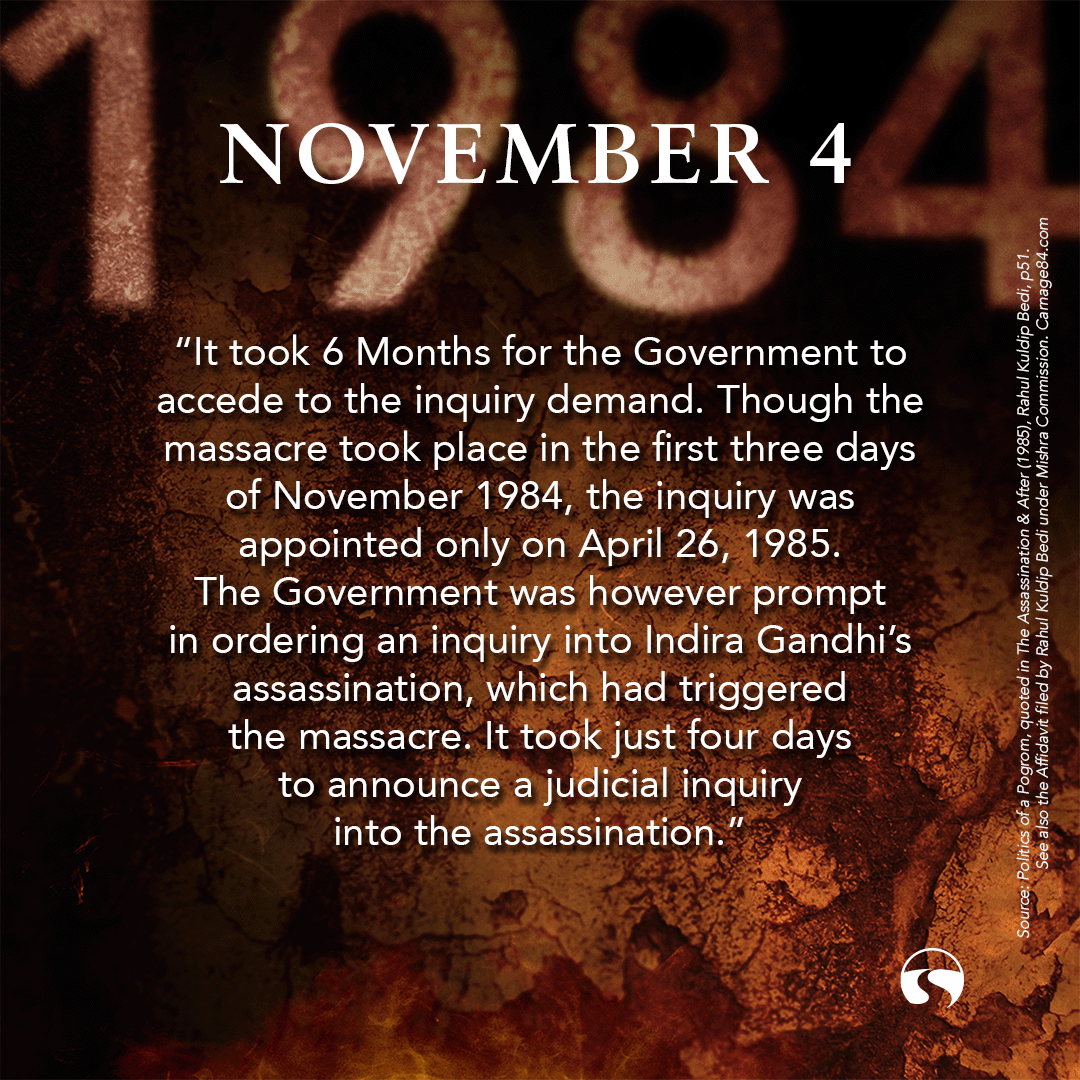
November 4, 1984
"It took 6 Months for the Government to accede to the inquiry demand. Though the massacre took place in the first three days of November 1984, the inquiry was appointed only on April 26, 1985. The Government was however prompt in ordering an inquiry into Indira Gandhi’s assassination, which had triggered the massacre. It took just four days to announce a judicial inquiry into the assassination." - 28Politics of a Pogrom, quoted in The Assassination & After (1985), Rahul Kuldip Bedi, p51.
See also Affidavit filed by Rahul Kuldip Bedi under Mishra Commission. https://t.co/vWh0qGYj38
#Remember1984 #SikhGenocide #SikhHistory #SikhCommunity #India #Delhi #History #Sikhs #Sikhi #SikhGenocide1984
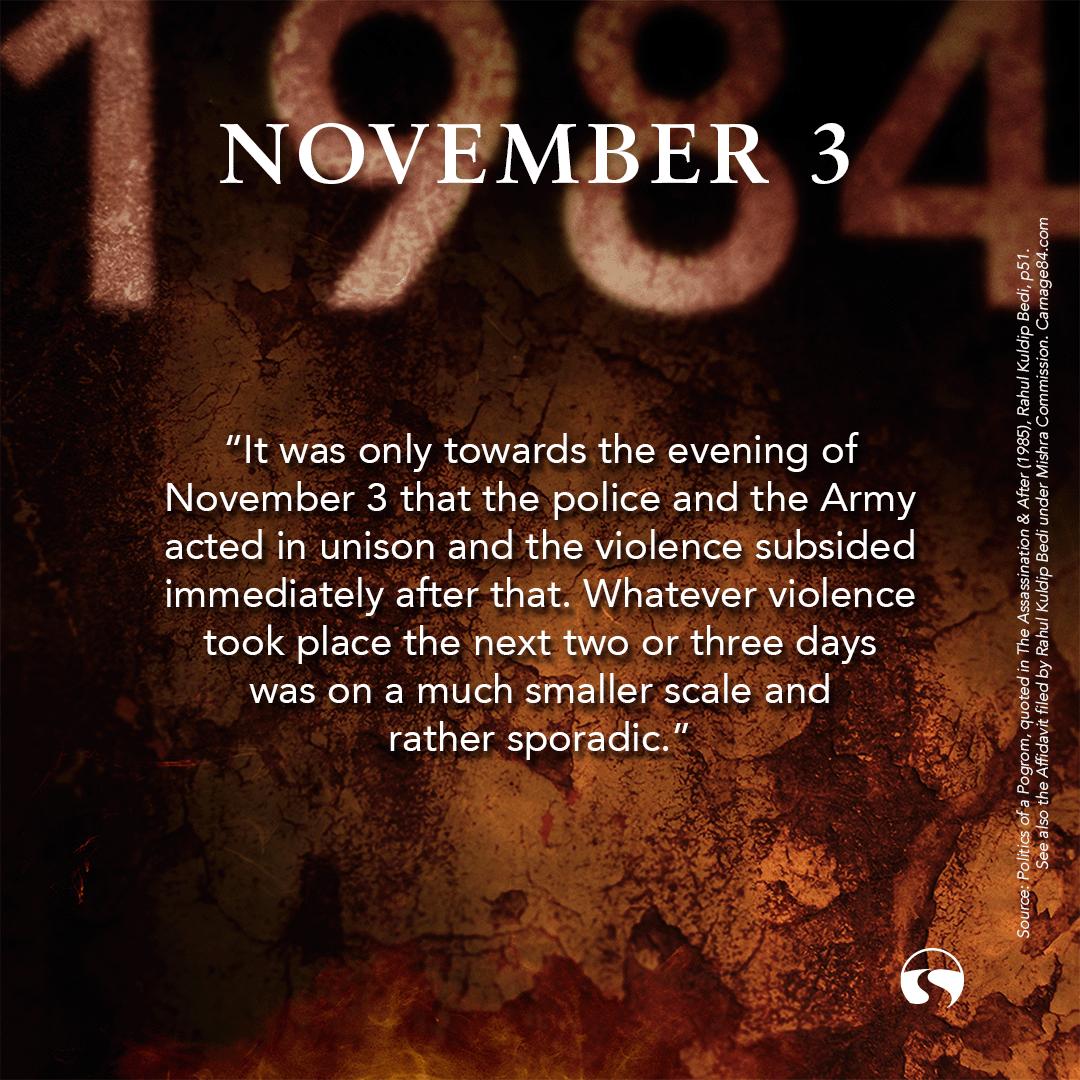
November 3, 1984
"It was only towards the evening of November 3 that the police and the Army acted in unison and the violence subsided immediately after that. Whatever violence took place the next two or three days was on a much smaller scale and rather sporadic." - 28Politics of a Pogrom, quoted in The Assassination & After (1985), Rahul Kuldip Bedi, p51.
See also the Affidavit filed by Rahul Kuldip Bedi under Mishra Commission. https://t.co/vWh0qGYj38
#Remember1984 #SikhGenocide #SikhHistory #SikhCommunity #India #Delhi #History #Sikhs #Sikhi #SikhGenocide1984
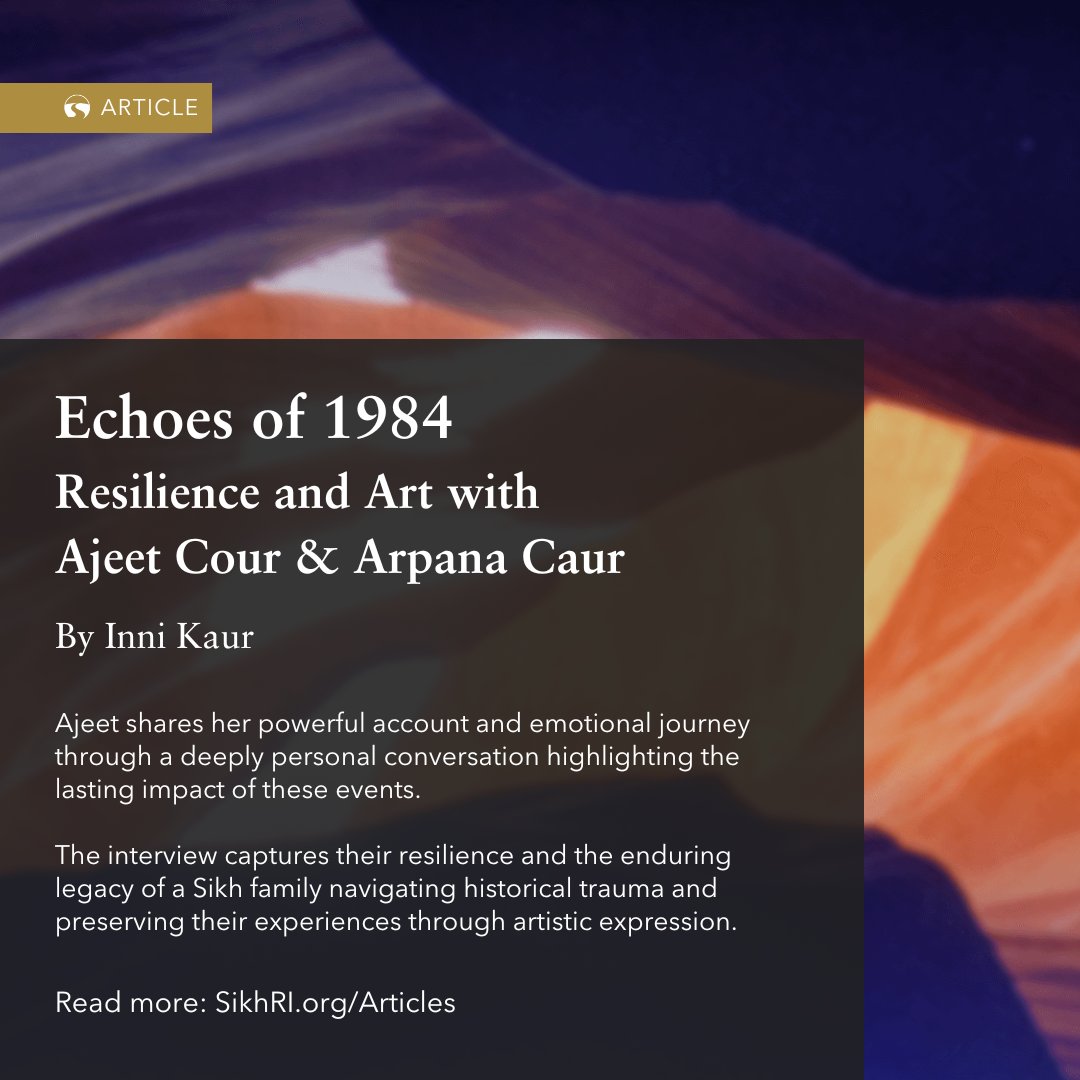
Step into the world of author Ajeet Cour and her daughter, artist Arpana Caur, as they share profound reflections on witnessing the 1947 Partition and the 1984 Ghallughara. This powerful interview unveils the emotional journey of a Sikh family, revealing the lasting impact of these historic events.
Ajeet Cour’s heartfelt story and Arpana Caur’s evocative art stand as testaments to the strength and resilience of generations, preserving their experiences and carrying forward a legacy shaped by courage and expression.
Author: Inni Kaur (@InniKaur)
Continue reading: https://t.co/x0UhE79u8c
#Remember1984 #SikhGenocide #SikhHistory #SikhCommunity #India #Delhi #History #Sikhs #Sikhi #SikhGenocide1984
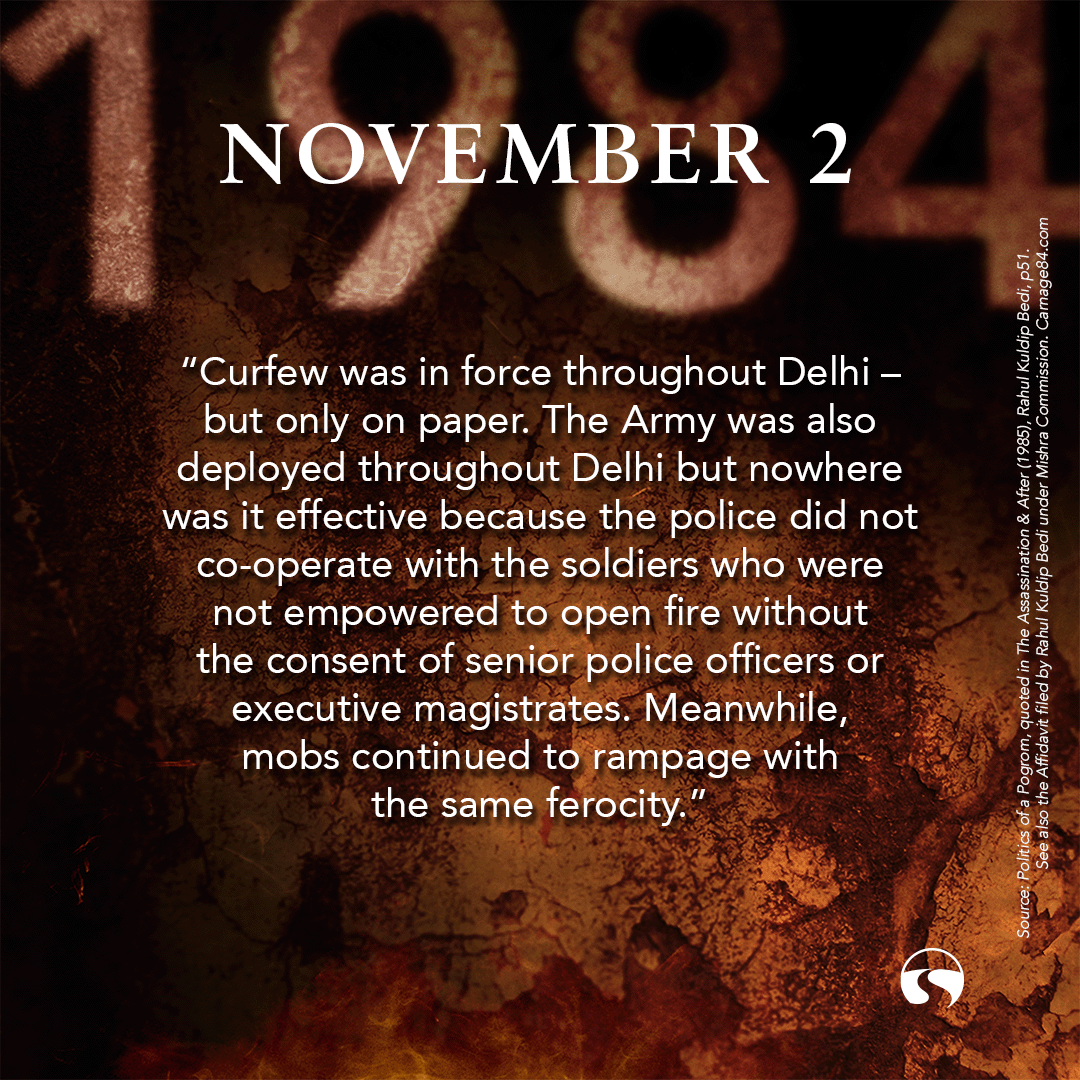
November 2, 1984
"Curfew was in force throughout Delhi – but only on paper. The Army was also deployed throughout Delhi but nowhere was it effective because the police did not co-operate with the soldiers who were not empowered to open fire without the consent of senior police officers or executive magistrates. Meanwhile, mobs continued to rampage with the same ferocity." - 28Politics of a Pogrom, quoted in The Assassination & After (1985), Rahul Kuldip Bedi, p51.
See also the Affidavit filed by Rahul Kuldip Bedi under Mishra Commission. https://t.co/vWh0qGYj38
#Remember1984 #SikhGenocide #SikhHistory #SikhCommunity #India #Delhi #History #Sikhs #Sikhi #SikhGenocide1984