Warren Buffett reveals the research loop behind earning 50% a year with a small account.
When asked how he'd start over with under $1M, he did not say "find a hot sector."
He said:
"In my particular case, it would be going through the 20,000 pages."
"I went through the Moody's Transportation Manual a couple of times."
"That was 1,500 or 2,000 pages."
"I found all kinds of interesting things."
"I would try and know everything about everything small."
"And I would find something."
"With a million dollars, you could earn 50% a year."
"But you have to be in love with the subject."
The concept is small-market obsession.
Big markets get arbitraged fast. Small, boring, ignored corners still reward people willing to read what nobody else wants to read.
For an operator, this is not just investing advice.
It is how you find overlooked customers, hidden supplier constraints, mispriced talent, weird distribution channels, and ugly little details that compound into an edge.
Buffett's edge was not a hack.
It was loving the boring work long enough to see what everyone else skipped.
Apple spent a decade squeezing memory makers below cost. One of them survived, finally got pricing power, and Apple is calling it "gouging."
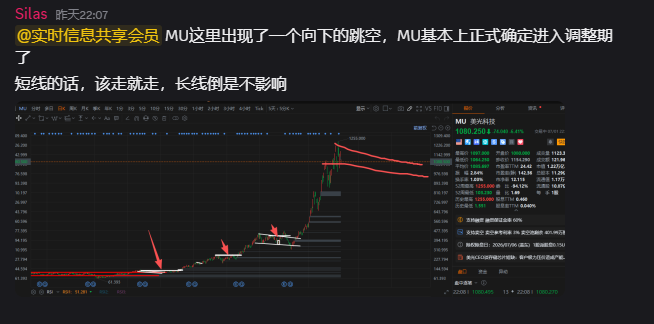
2 years ago $MU was selling DRAM below the cost of making it, gross margins underwater, in the kind of bust that has killed memory makers for 30 years. A field that once had dozens of players consolidated down to three survivors. Micron is here because it executed the downturns better than the ones that died, not because anyone was generous to it.
The buyers now screaming about 84.9% margins, Apple and the hyperscalers, are the exact players who spent that decade grinding memory to negative margins on every procurement cycle. Micron's own commercial chief said it out loud this week: blame the years of cheap procurement that made suppliers stop building capacity.
So this is not gouging and it is not collusion. It is the bill for a decade of underinvestment, and that underinvestment was a pricing failure. The actual service a speculator sells is marking a price close to intrinsic value, so capital flows to where it is needed. Analysts nailed Nvidia early; money poured in and supply got funded. They modelled memory as a commodity cycle right up until margins hit software levels. No accurate price meant no capital, no capital meant no capacity, and the squeeze now is the market collecting on its own mistake.
Memory stopped being a commodity the day LLMs took off. Compute happens in bursts and spreads across infrastructure; memory is the perpetual state the whole stack sits on. Chatbots to agents to real-time multimodal to robotics, every step up is built on more memory, not less.
If memory output 1000x's from here, the demand is already waiting to fill it. The supply glut everyone keeps pricing in is not coming back. This is the largest mispricing of an entire sector in the history of capitalism, and the gouging story is just the part where the market refuses to admit it was wrong.
A learning to me: Next time when market is ATH and position is super crowded, I might just clear my positions and take a break. Then patiently wait after everything is cleared to trade
On the stormy day, the bigger the waves, the pricier the fish. But I’d rather not risk my life