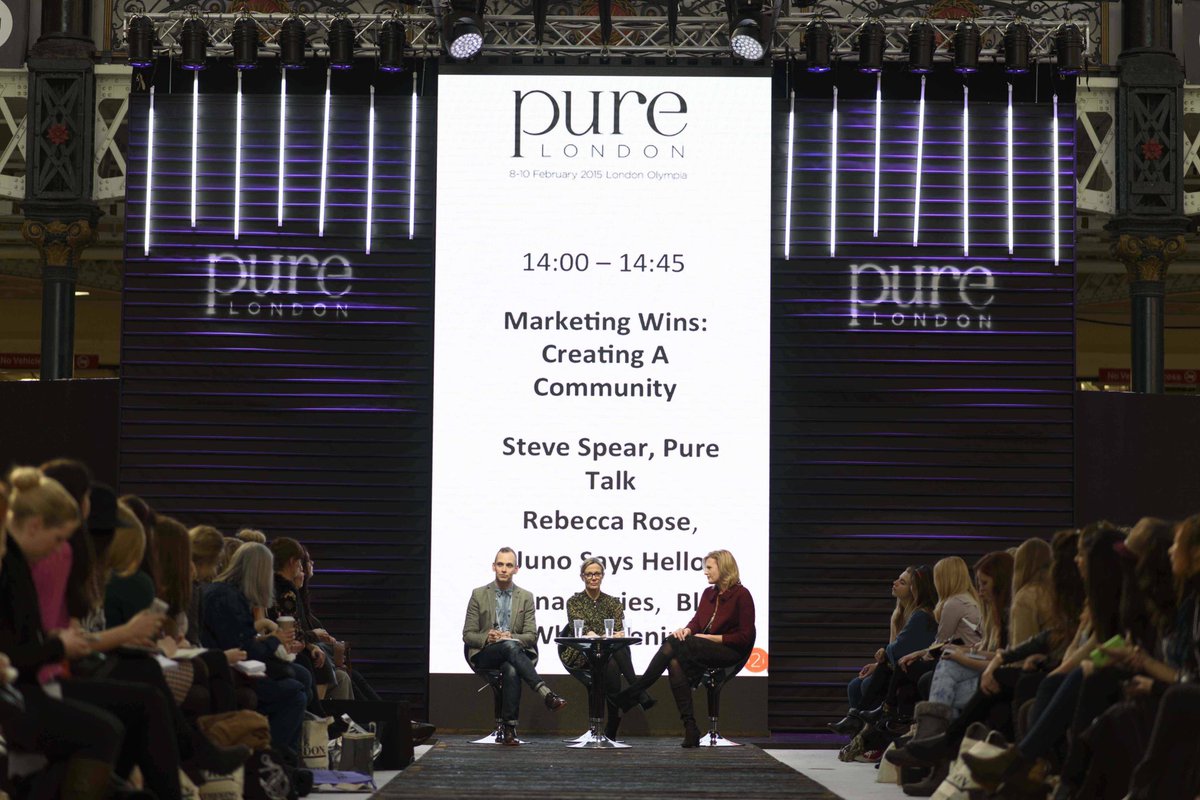
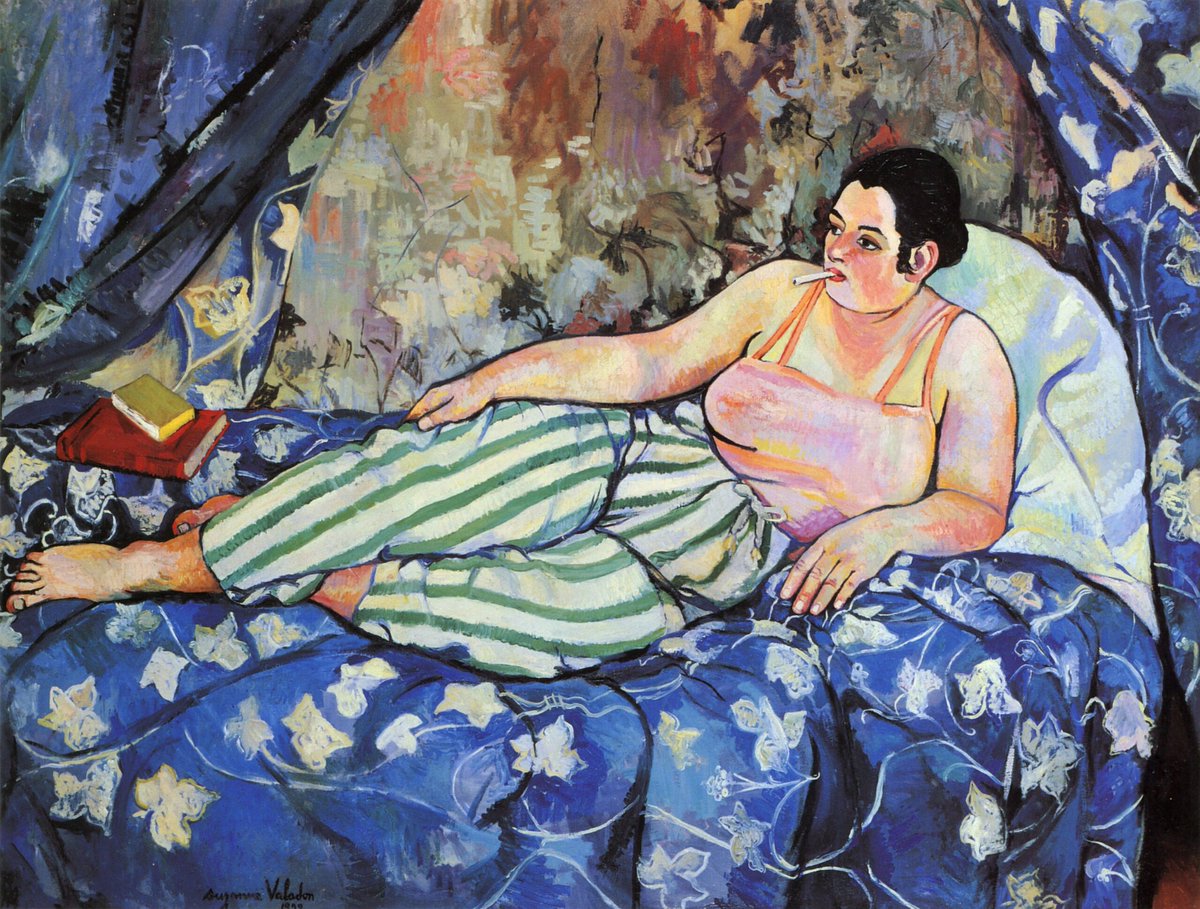
I’m putting together a series of online tutorials on how to create thoughtful and compelling content for your brand’s audience. For more details please DM 📲 or browse https://t.co/Wda5fiAo85 for all services. Image: @olympia_london
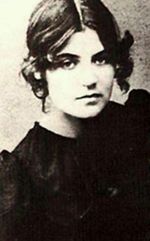
Gertrude Jekyll (1843-1932), British horticulturist, garden designer, craftswoman, photographer, writer and artist who created over 400 gardens in the UK, Europe and the US #WomensArt
The utterly imitable and extremely talented @roisinmurphy speaking at our @Freedom_in_Arts new toolkit launch in Westminster this week.
Please watch this. If you’re not in the arts this will be important. If you are in the arts heed her warning.
“The creative soul of this country, and of Europe, has always thrived on discomfort, on the freedom to be wrong, to offend, to pivot, and to surprise ourselves. Without that freedom, we don’t get better art. We simply put artists in a chokehold and suffocate life out of our culture.
We need free inquiry and open debate. The arts- must - breathe freely again.”
“Falkner is not retiring”, it says at the end of this article. True in more ways than one. The most resilient & determined person you could meet.
Baroness Falkner: Trans activist abuse made me fear for my family’s safety https://t.co/GV4w8Nb52t
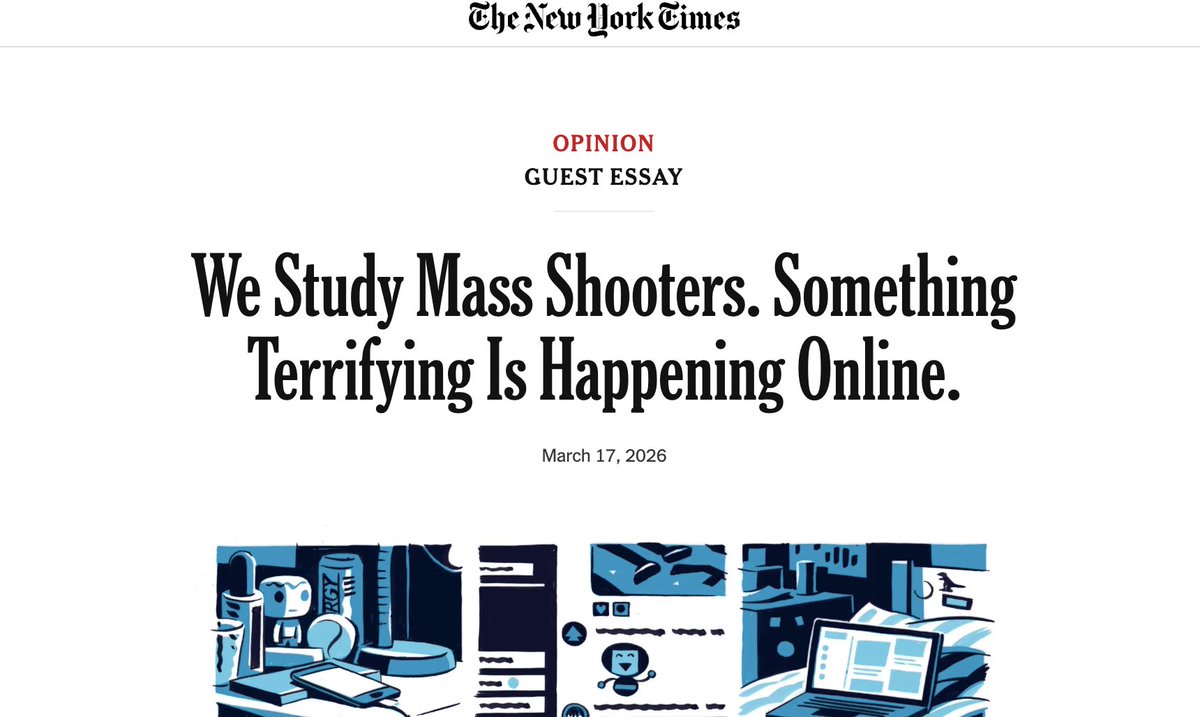
It is very strange to publish an article on the gender dynamics of mass shooters and not mention that the two "female" shooters used as flagship examples here were biologically male. Males commit more than 90% of violent crimes.
I’m delighted to report that To The Fairest fragrances are stocked in this beautiful new boutique. Follow @LondonPerfume for details about in-store events and special offers 🛍️
In light of the recent flurry of announcements surrounding AI-powered literary translation services, Daniel Saldaña Paris's thoughtful essay on AI in translation—from our AI-themed Special Feature—couldn't be more timely. On the human cost of convenience: https://t.co/6ZYEMRkGJn
Yael van der Wouden has been awarded the @WomensPrize for Fiction.
For the New Review, she discussed growing up Jewish in the Netherlands, losing herself in The Secret Garden, and being thankful to her family for skipping over her novel’s sex scenes.
https://t.co/Wsn7V1WNxJ
Brilliant tour de force interview by @HJoyceGender! 👏💚👏💚
Despite @BBCNuala
constant reference to "the listener", as if something was particularly unclear, Helen just cut through all smoke & mirrors in a way we have grown to love & expect. 1/2
Woman of the Day Dorothy Hodgkin born OTD in 1910 in Cairo was not only a biochemist and crystallographer but a talented artist who used her skills to sketch and decode biomolecules, the key to structural biology and crucial for developing new therapeutics and designing vaccines. She is the only British woman to be awarded a Nobel Prize for science.
As a 10 year old, Dorothy’s first introduction to science experiments was at school in England when she was asked to mix a solution of alum and copper sulphate to form crystals. “I was captured for life by chemistry and by crystals.” It became a lifelong fascination. Her parents gave her space in the attic to make a lab and she spent hours gathering natural specimens and analysing them. “I first met the subject of X-ray diffraction of crystals in the pages of the book W. H. Bragg wrote for school children in 1925, Concerning the Nature of Things.”
Graduating from Somerville College, Oxford, in 1928 with a degree in chemistry, she took up post as research assistant in Cambridge and in 1934, earned a PhD in the crystallographic investigation of steroid crystals. So far, so good - except her hands were increasingly painful. She consulted a specialist who advised rest. Dorothy wasn’t the resting type.
Dorothy returned to Somerville as a lecturer in chemistry - she had to use her own lab equipment - and was known to be a stickler for classroom safety. On one occasion, a prank by some of her students went too far. No one was hurt but the chemicals made a mess of the floorboards and they were frantically trying to clean it up before she caught them but only succeeded in making it worse. In walked a young Margaret Roberts who quickly worked out the correct chemical antidote and applied it. You might recognise the name. Such was her respect for her Labour-voting teacher that she kept Dorothy’s portrait on the wall of her office at No. 10 Downing Street.
In 1938, Dorothy had an attack of rheumatoid arthritis soon after the birth of her first child. “I found I had great difficulty and pain in getting up and dressing. Every joint in my body seemed to be affected.” She couldn’t even switch on the x-ray equipment needed for experiments so she solved it by having a long lever attached. The arthritis dogged her all of her life, to the point that in later years, she used a wheelchair. She simply took aspirin, had heat treatment, rested when she had to, and carried on.
1945 was a breakthrough year. Dorothy was the first to map cholesterol by X-ray crystallography, the first to decode the structure of vitamin B12 and - with biochemist Barbara Low - the first to solve the structure of penicillin. It was the largest molecule to be determined by crystallography and their joint discovery was contrary to all scientific opinion at the time. For decades, their work was funded by government and remained classified for years because of its importance to the nation.
In 1947, Dorothy became the third woman to be admitted to the Royal Society. This was no small achievement. Forty-five years before, physicist Hertha Ayrton was barred from the Society on the basis of her sex and in 1903, mathematician John Perry had no choice but to present Hertha’s groundbreaking research paper on her behalf so that Fellows needn’t even hear a woman’s voice.
Dorothy became a Reader at Oxford in 1957 - a sort of professor without a chair - and the following year, was finally given a modern lab. She was in her element (I couldn’t resist).
The only women to be awarded the Nobel Prize in Chemistry in its then 63 year history were Marie Curie and Irène Joliot-Curie but in 1964, Dorothy became the third. Five women have since been achieved it but she remains the only British woman to have attained that distinction.
Never one to rest, she applied herself to working out the three-dimensional structure of a particularly important protein and in 1969, after thirty years of research, she cracked it. Insulin.
Dorothy died in 1994, aged 84, but the importance of her breakthrough on this single intricate biomolecule cannot be overstated. Diabetes affects 830 million people worldwide.
“I used to say the evening that I developed the first x-ray photograph I took of insulin in 1935 was the most exciting moment of my life. But the Saturday afternoon in late July 1969, when we realised that the insulin electron density map was interpretable, runs that moment very close.”
None of these farms exist
All are works of fiction by @Tesco supermarkets
This #FarmWashing practice should be made illegal, it deceives consumers and makes nonsense of @RedTractorFood traceability
Food labelling should be clear, country of origin should be clear #BuyBritish
📌 Canning House convened the UK and Latin America at the inaugural Mexico-UK Summit.
Vsit our website to read the key takeaways and see photos from the event: https://t.co/Ahna9QPN6M
#MexicoUKSummit#Business#Learnings#Diplomacy#LatinAmerica
When other large and wealthy unions centre men, look for a union that centres working women in low-paid jobs and defends and supports their rights to fairness, dignity, safety and privacy. @DarlingtonUnion