@noisyimmigrant This too complicated for me to follow, but I'm ready to learn. Is it that in America white=Anglo, so since that's become the global standard and because America is meritocratic that means Capitalism=Anglo=bad unless the CEO of the megacorp is Indian which is subversive praxis?
@noisyimmigrant I'm all for pointing out the often totally hidden connection of literally everything to The Cause, but I think this one needs a bit more time in the oven. Doesn't really make sense
French riots. English translation.
A: I was with my infant in an apartment; [people] were trying to get in, because they were saying they were going to rape me because I was a dirty bourgeoise, because I was stopping them from looting the little shop downstairs.
B: That's collateral damage.
A: Oh, great!
B: Pacifist activism doesn't work. Nelson Mandela called for taking up arms at a certain point. Because apartheid, peacefully, could never have been brought down.
A: We agree. Thank you, I'm clarifying. You are not a pacifist.
B: No, but wait. I didn't do anything to the police.
A: I didn't do anything to the police either. Yesterday I was barricaded in with my infant, with guys threatening to rape me.
C: That's very serious.
A: But actually, you're not saying that's normal
B: Yes, a bit, no, because you're saying there's no revolution.
C: We're here to help, to clear up.
A: I just want to say, frankly, I was the first one — it's not something neutral — to be threatened with rape. I don't see how that's a political act.
B: What I'm saying is that at the start of the demonstration it was calm. There were lots of calls for revolution.
A: Lots of calls for beheading.
B: Revolution isn't calm! It doesn't happen calmly! But I'm for revolution, obviously!
A: Of course. Ah, OK, well thank you for clarifying!
A: Oh yes, but trashing Paris is normal, that's the source of our problems, in fact.
B: It's collateral damage!
A: You're for trashing small shops and threatening women with rape!
A: And so, yes, but excuse me, I'm just drawing a parallel, because that's the reality of yesterday, in fact.
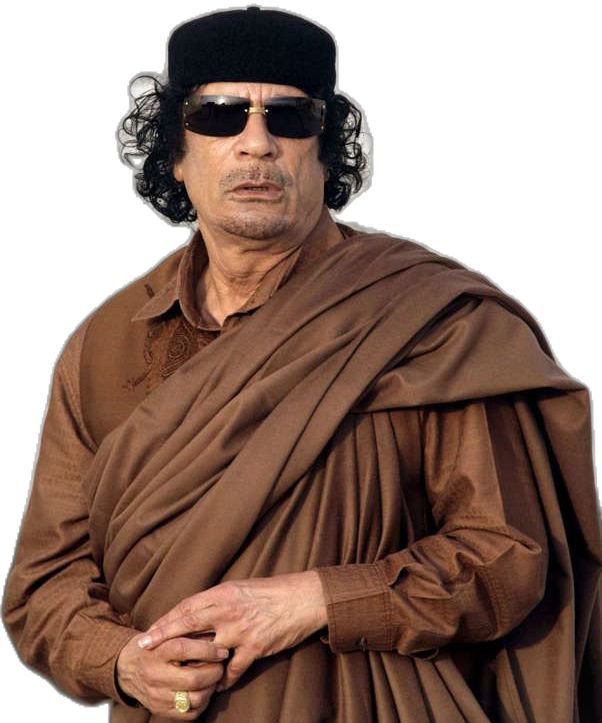
On this day in 2011, the West murdered one of Africa's most consequential sons — Muammar Gaddafi.
Gadaffi dreamt of an Africa that would never again kneel before foreign powers.
An Africa that controlled her resources, financed her own development, united her people and commanded respect on the world stage.
He championed African unity, pushed for a United States of Africa, supported liberation movements and invested Libyan wealth in African development.
He envisioned a continent with its own financial institutions, its own solutions and the power to determine its own destiny.
Gaddafi represented the audacity to imagine an Africa beyond Western domination.
His Pan-African ambitions inspired millions who were tired of seeing their continent exploited, humiliated and treated as a playground for foreign interests.
On 20 October 2011, he was captured and killed in Sirte after a NATO-backed "intervention" helped bring down his government.
Fourteen years later, the questions surrounding Libya's destruction and Africa's future remain painfully relevant.
Rest in power, Muammar Gaddafi.
May Africa one day achieve the unity, sovereignty and economic independence you spent years advocating.
Africa for Africans.
African wealth for African people.
African destiny in African hands.