#1 Restaurant & Retail POS Software. Reliable, Affordable and Easy to Use. Call us today on 020 2067933 or 0700 001779 for enquiries, demo/installation.
.
With SimbaPOS, every sale is tied to a specific cashier. Every void requires manager approval. Every shift ends with a tight, automatic report.
Your Restaurant + SimbaPOS = Zero theft, maximum profit.
👉 Book a demo: 0700 001 779 or https://t.co/YGLTAUOYfX
#POSKenya
💻✨ Upgrade Your Business with a Complete POS System!
Boost your sales, track inventory, and manage your business with ease using SimbaPOS POS solutions.
✅ All-in-One Hardware + Software
✅ User-Friendly Interface
✅ Affordable & Reliable
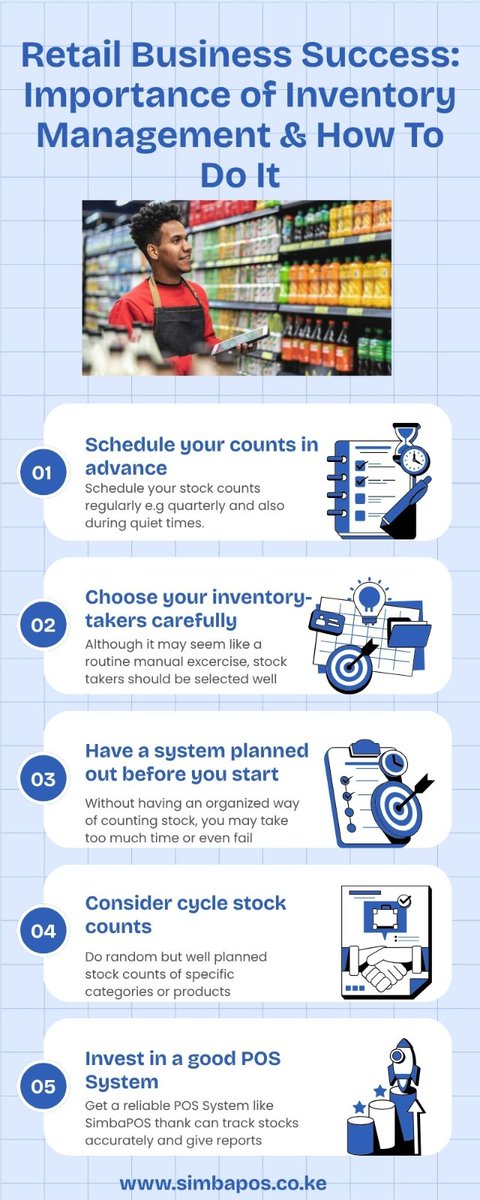
Importance of Stock Management & How To Do It.
Stock management is one of the most critical things in a Retail business. If not done well, it's just a matter of time before your business fails.
Link: https://t.co/CbI7f8WFRD
#stock#SimbaPOS#RetailTips
...all from your phone. Whether you’re at an event, travelling, watching football, or just relaxing at home.
Work smart. Not just hard.
Happy weekend from Team SimbaPOS! 🎉
https://t.co/YGLTAUOYfX
It’s the weekend! While you enjoy your weekend, is your business still working for you? 🌟
With SimbaPOS Mobile Reports App, you can check:
📊 Today’s sales
📦 Stock levels
💰 Cash collections
👥 Staff performance
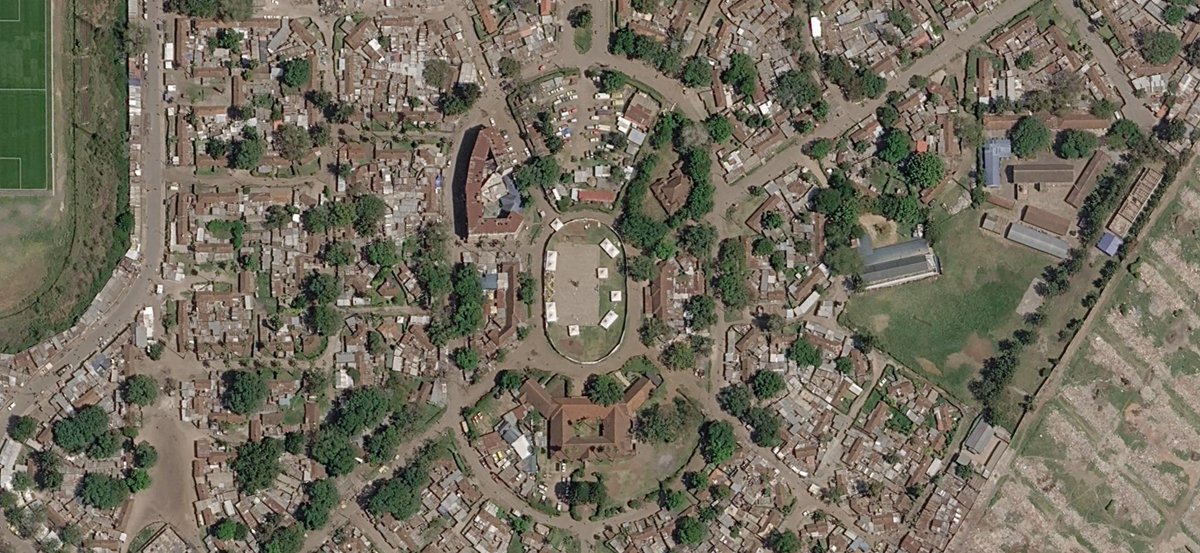
Kaloleni (also popularly known as “Ololoo”) is one of Nairobi, Kenya's 🇰🇪🏘️ oldest formal residential estates, located in the Eastlands area along Jogoo Road. It was conceived as a pioneering colonial-era housing project for Africans and remains a historically significant neighborhood unit. Tucked directly behind it lies Nairobi City Stadium, an integral part of the area’s development.
Origins and Design (1927–1943)
The estate’s planning began in 1927 during British colonial rule. It was originally recommended by Sir Charles Mortimer, who chaired the African Housing Committee (AHC), to address the housing needs of urban Africans in Nairobi.
The design drew heavily from American urban planner Clarence Perry’s Neighborhood Unit concept (itself rooted in British Garden City principles promoted by Ebenezer Howard and Patrick Geddes). The 1927 plan envisioned a self-contained “garden city” community to house around 3,000 people (initially planned as bachelors in single dwellings and duplexes), with bungalows arranged in loops or courts, communal green spaces, a social hall, library, clinic, shops, and other amenities to foster orderly family life.
The actual architect and planner was A.J.S. Hutton, a British imperial planner who had been senior colonial architect in Malaya (now Malaysia). He was seconded to the Nairobi Municipal Council in 1942 and produced the detailed 1943 layout and building plans (including one-room and two-room family dwellings). These featured stone construction, Mangalore-tile roofs (imported from India), and cement-screed floors—higher-quality materials than typical African housing of the era.
Construction and Builders (1945–1948)
World War II delayed building, but construction finally took place between 1945 and 1948 (some sources note groundwork or planning activity from around 1942–43). The estate was built by Italian prisoners of war captured by British forces and interned in Kenya. They provided the labor using the pre-existing designs.
Development of City Stadium (1950s–1960s)
Adjacent to Kaloleni, visible in aerial views as the large open space immediately west of the estate, Nairobi City Stadium was developed in the 1950s as the principal multi-purpose venue in Nairobi. Originally known as African Stadium (later Donholm Road Stadium and Jogoo Road Stadium after independence in 1963), it was built on what is now Jogoo Road to serve the growing Eastlands African community. With a capacity of around 15,000, it focused primarily on football and hosted major local matches, nurturing talent and becoming a vibrant hub for community sports and events. It remained Nairobi’s main stadium until Nyayo National Stadium and Moi International Sports Centre were constructed in the 1980s.
Purpose and Who It Was For
Kaloleni was one of the first formal public housing estates in Nairobi built specifically for African families (as opposed to earlier barracks-style housing for single male migrant laborers). It formed part of a broader post-WWII British Colonial Office shift toward a more “developmentalist” approach—aiming to create model suburban neighborhoods that would “civilize” and stabilize the African urban population while reinforcing colonial social order.
When completed in 1948, the bungalows were gifted to African soldiers (veterans of the King’s African Rifles) who had fought for the British in World War II. Over time it housed a wider range of African families, many of whom passed the homes down through generations. It quickly became home to prominent figures in Kenya’s independence movement, including Tom Mboya, Jaramogi Oginga Odinga, Charles Rubia (Nairobi’s first African mayor), and even Ugandan political figures like Milton Obote. The Kaloleni Social Hall served as a major venue for nationalist politics in the 1950s (sometimes called Kenya’s “first parliament”).
Legacy
The estate was celebrated at the time as a progressive, well-planned model neighborhood. Today it is still largely intact in layout (though the buildings have deteriorated due to decades of under-maintenance, overcrowding, and informal extensions), and residents have advocated for its preservation as cultural heritage. The neighboring City Stadium further cemented Kaloleni’s place in Nairobi’s sporting and social history as a cradle of Kenyan football.
In short: Kaloleni was a British colonial model housing estate designed by A.J.S. Hutton (1943 plans) for African families/veterans, built by Italian POWs (1945–48) as part of a Garden City/Neighborhood Unit vision to provide better living conditions while advancing colonial urban policy. The adjacent City Stadium, developed in the 1950s, extended the area’s role as a community and sports hub. It later became a cradle of Kenyan nationalism.
(for those who know.. that cluster of shops near the roundabout.. is where you can find the best motorcycle riding gear in Nairobi today)
NEW BLOG: How to Ensure Your Restaurant Fails in Kenya — 5 Key Steps.
Yes, you read that right. We’re sharing the 5 fastest ways to run your restaurant into the ground... so you can do the OPPOSITE.
Read the full article 👉 https://t.co/d4ISOC8nyq
No need to call your manager. No need to physically go to the shop. Just open the app and know exactly how your business is doing.
Ask us about the SimbaPOS Mobile & Web Reports Portal today!
https://t.co/YGLTAUOYfX ||| 0700 001779
#SimbaPOS#MobileReports#POSKenya
Did you know? With SimbaPOS Mobile & Web Reports Portal, you can check your business performance from ANYWHERE 📱
Whether you’re at home, travelling, or visiting your shags — your sales, stock, and expenses reports are always in your pocket.
@mainandegwa232@C_NyaKundiH He heads the Police Service as DIG.
National Police Service has it's own handle (which focuses on IG & entire Police).
On the other side there's another handle for Administration Police Service (APS) headed by DIG Masengeli
With SimbaPOS, every order is tracked, every sale is recorded, and your stock reports are one tap away on your phone.
Stop guessing. Start growing. Get SimbaPOS today.
📞 0700 001 779 | https://t.co/v2DAZzsYgQ
Still writing orders/bills on manual receipt books? 😅
Paper receipts get lost. Manual stock counts don’t add up. At the end of the month, you’re guessing your profits (and losing money!).