𝙍𝙖𝙩𝙚 𝙃𝙞𝙠𝙚 𝙉𝙚𝙖𝙧𝙡𝙮 𝙇𝙤𝙘𝙠𝙚𝙙 𝙄𝙣, 𝘽𝙪𝙩 𝘼𝙄 𝙇𝙚𝙖𝙙𝙚𝙧𝙨 𝙅𝙪𝙨𝙩 𝙏𝙝𝙧𝙚𝙬 𝙖 𝘾𝙪𝙧𝙫𝙚𝙗𝙖𝙡𝙡 𝙄𝙣𝙩𝙤 𝙈𝙤𝙣𝙙𝙖𝙮
Friday's hot CPI report all but sealed the deal on a quarter-point rate hike next week, and yet stocks still closed higher on the day. Then the weekend delivered a genuinely unexpected twist that's rattling futures this morning.
𝙁𝙧𝙞𝙙𝙖𝙮'𝙨 𝙍𝙖𝙡𝙡𝙮 𝙈𝙖𝙙𝙚 𝙎𝙚𝙣𝙨𝙚, 𝙀𝙫𝙚𝙣 𝙒𝙞𝙩𝙝 𝙖 𝙃𝙤𝙩 𝘾𝙋𝙄 𝙋𝙧𝙞𝙣𝙩
$DJ30 jumped 509 points, or 1%, $SPX500 rose 0.9%, and $NSDQ100 gained 0.7% on Friday. All three still finished the week lower, with the Dow posting its worst week since March, down 1.6%.
Odds of a quarter-point hike at this week's FOMC meeting jumped to 86.5% Friday, up from 72.4% the day before. Normally that kind of shift would spook markets, but GraniteShares CEO Will Rhind offered a useful explanation for the bounce: this pattern has played out repeatedly this year, macro-driven selloffs tend to get bought back quickly once investors realize the dip itself is the opportunity.
There's also a genuine case that a hike here could actually be good news. A rate increase would let Fed Chair Kevin Warsh demonstrate real seriousness about inflation, which could ease pressure building in the bond market. Stocks generally dislike higher rates, but they dislike uncertainty even more, and a clearly telegraphed, well-justified hike removes uncertainty rather than adding to it. That would let markets refocus on what's actually been driving this year's gains: the AI buildout and the earnings strength it keeps producing.
Rising yields are adding real pressure heading into this week's meeting too. If the Fed fails to deliver the hike markets are now pricing in, that risks further trouble for longer-dated bonds. Delivering the hike, on the other hand, could actually help anchor long-end yields by reinforcing the Fed's inflation-fighting credibility, even as short-term rates rise.
𝙏𝙝𝙚 𝙒𝙚𝙚𝙠𝙚𝙣𝙙 𝙏𝙝𝙧𝙚𝙬 𝙖 𝙂𝙚𝙣𝙪𝙞𝙣𝙚 𝘾𝙪𝙧𝙫𝙚𝙗𝙖𝙡𝙡
Over the weekend, leaders of the biggest AI labs, including Anthropic's Dario Amodei, OpenAI's Sam Altman, and xAI's Elon Musk, publicly called for slowing the pace of frontier AI model development, citing safety risks that they believe are outpacing the industry's ability to manage them. It's a rare moment of public alignment among fierce competitors, and it followed a high-profile resignation earlier in the week from a researcher who raised alarm about the industry moving too fast.
That news is weighing on Asian markets and US equity futures this morning, given how much of this year's rally has been powered by AI infrastructure spending and earnings. solana:5LS3ips7jWxfuVHzoMzKzp3cCwjH9zmrtYXmYBVGpump is also advancing, adding another layer of pressure heading into a week that already had the Fed's decision as its main event.
𝘾𝙡𝙤𝙨𝙞𝙣𝙜 𝙏𝙝𝙤𝙪𝙜𝙝𝙩𝙨
This is a genuinely unusual setup. A hawkish Fed decision this week may actually be a stabilizing force for markets given how much clarity it provides, but the AI slowdown headlines introduce a fresh, harder-to-price uncertainty around the sector that's been carrying the broader market all year. Worth watching closely whether this proves to be a short-lived sentiment shock or the start of a more meaningful repricing of AI-related growth expectations, right as the Fed makes its own consequential call on Tuesday and Wednesday.
Happy Investing,
Simion
Not financial advice. Capital at risk. Past performance is not indicative of future results.
#StockMarket #Investing #Fed #AI #RateHike
𝙒𝙝𝙮 𝘿𝙖𝙞𝙡𝙮 𝙋𝙧𝙞𝙘𝙚 𝙎𝙬𝙞𝙣𝙜𝙨 𝘼𝙧𝙚𝙣'𝙩 𝙒𝙤𝙧𝙩𝙝 𝙔𝙤𝙪𝙧 𝘼𝙩𝙩𝙚𝙣𝙩𝙞𝙤𝙣
We've all seen it happen: a company reports a genuine beat-and-raise quarter, everything management said sounded great, and the stock still drops on the day. It's happened more times than I can count, and it never stops being a little baffling in the moment. Here's the thing though, this isn't a sign that markets are broken. It's just a reminder of how they actually work in the short run versus the long run.
𝙎𝙝𝙤𝙧𝙩-𝙏𝙚𝙧𝙢 𝙋𝙧𝙞𝙘𝙚 𝘼𝙘𝙩𝙞𝙤𝙣 𝙄𝙨𝙣'𝙩 𝙍𝙖𝙩𝙞𝙤𝙣𝙖𝙡 𝘼𝙣𝙮𝙢𝙤𝙧𝙚
In the short run, prices don't move the way they used to. A huge share of daily trading volume now comes from algorithms and high-frequency trading firms reacting to headlines, options flows, and positioning, not necessarily to the actual quality of a business or its earnings. That means a single day's move often tells you almost nothing meaningful about a company's underlying value. Good numbers can get sold. Bad numbers can get bought. The noise is real, and trying to explain every single-day move with a tidy narrative is usually a waste of energy.
𝙑𝙖𝙡𝙪𝙚 𝙒𝙞𝙣𝙨 𝙊𝙪𝙩 𝙀𝙫𝙚𝙣𝙩𝙪𝙖𝙡𝙡𝙮
The good news is that this dynamic is largely a short-term phenomenon. Over longer stretches, capital tends to find its way to where the fundamentals actually justify it. Strong earnings and genuine value don't disappear just because algos ignored them for a few sessions, weeks, or even months. Eventually, price and logic tend to converge, it just doesn't happen on the algo's timeline.
𝙈𝙮 𝘼𝙥𝙥𝙧𝙤𝙖𝙘𝙝 This is exactly why I don't spend much energy trying to explain most single-day moves. If a stock I hold posts a genuinely strong quarter and trades down anyway, my first instinct isn't to panic or overanalyze the tape, it's to check two things: are earnings still healthy, and is the valuation still attractive. If both check out, the short-term price action is just noise to filter past, not a signal to act on.
𝘾𝙡𝙤𝙨𝙞𝙣𝙜 𝙏𝙝𝙤𝙪𝙜𝙝𝙩𝙨
Markets are more reflexive and headline-driven in the short run than they've ever been, and that's simply the environment we invest in now. But the longer-term relationship between fundamentals and price hasn't gone away, it's just gotten a bit more patient about showing up. Stay anchored to earnings quality and valuation, and let the algos have their fun in the meantime. Price eventually catches up to logic. It just takes the market a little while to pull its head out of the sand.
Happy Investing,
Simion
Not financial advice. Capital at risk. Past performance is not indicative of future results.
#StockMarket #Investing #ValueInvesting #LongTermInvesting
𝙏𝙤𝙙𝙖𝙮'𝙨 𝘾𝙋𝙄 𝙍𝙚𝙥𝙤𝙧𝙩 𝘾𝙤𝙪𝙡𝙙 𝙈𝙖𝙠𝙚 𝙤𝙧 𝘽𝙧𝙚𝙖𝙠 𝙉𝙚𝙭𝙩 𝙒𝙚𝙚𝙠'𝙨 𝙁𝙚𝙙 𝘿𝙚𝙘𝙞𝙨𝙞𝙤𝙣
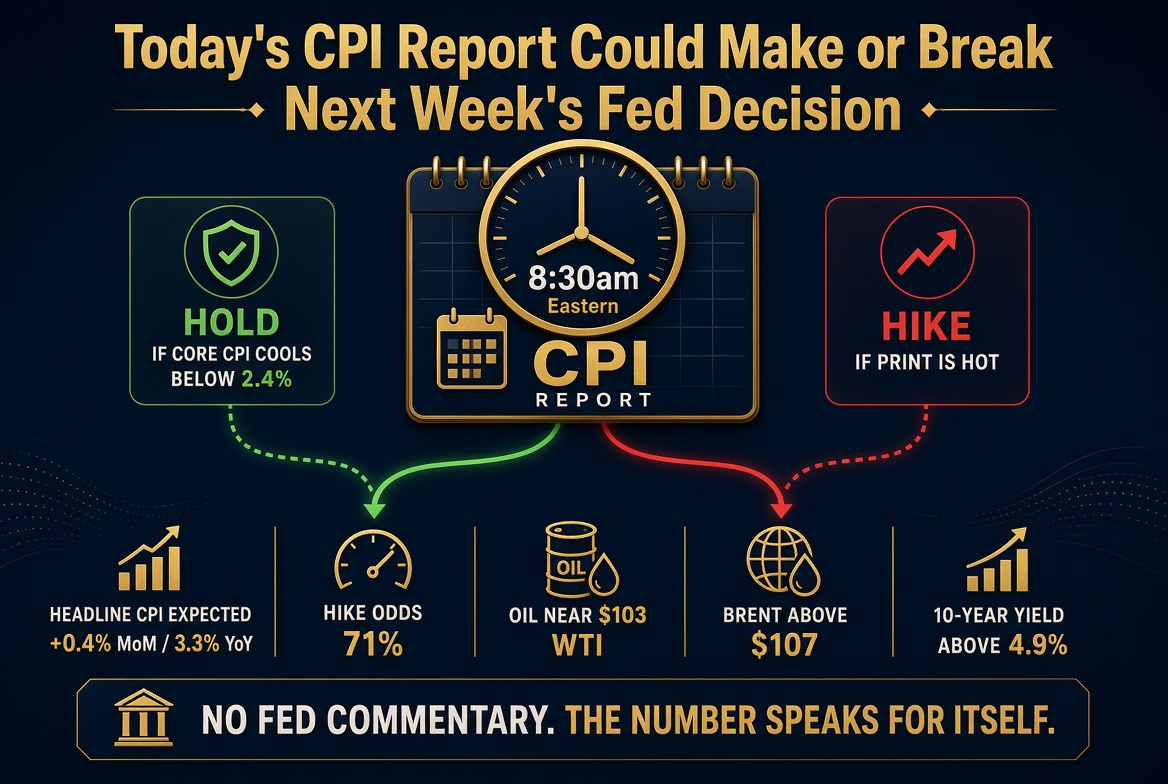
All eyes are on today's August CPI release, due from the Bureau of Labor Statistics at 8:30am Eastern. This is genuinely the data point that could tip the scales for the Fed's September 15-16 meeting.
𝙒𝙝𝙮 𝙏𝙤𝙙𝙖𝙮 𝙈𝙖𝙩𝙩𝙚𝙧𝙨 𝙎𝙤 𝙈𝙪𝙘𝙝
June and July both showed inflation cooling after an earlier spike tied to the Iran conflict. If August continues that trend, the FOMC could plausibly hold rates steady next week, even with markets currently leaning toward a hike. Consensus estimates call for headline CPI to rise 0.4% month-over-month, up from July's 0.1%, but on a year-over-year basis, the trend actually looks better: 3.3% expected for August versus 3.4% in July.
Core CPI is the number I'd watch most closely. It's expected to come in at 2.4% annually, which would be the slowest pace in more than five years, a genuine deceleration from July's 2.5%. Fed Chair Kevin Warsh has said he personally looks at how many individual price components are still growing above 3% annually to gauge underlying inflation, which is exactly why today's data matters beyond the headline number, it feeds directly into broader measures like PCE inflation that the Fed relies on.
One wrinkle: the Fed is currently in its pre-meeting blackout period, so no officials will be weighing in publicly on how today's number should be interpreted. Investors are essentially on their own to judge whether this reading is cool enough to justify a hold, or hot enough to lock in a hike.
𝙒𝙝𝙮 𝙩𝙝𝙚 𝘽𝙖𝙧 𝙛𝙤𝙧 𝙖 𝙃𝙤𝙡𝙙 𝙅𝙪𝙨𝙩 𝙂𝙤𝙩 𝙃𝙞𝙜𝙝𝙚𝙧 Markets enter today's report after a rough stretch. Stocks fell for a fourth straight session yesterday, with $NSDQ100 down 0.7%, $DJ30 off 316 points (0.6%), and $SPX500 down 0.6%. The culprit was a combination of surging solana:5LS3ips7jWxfuVHzoMzKzp3cCwjH9zmrtYXmYBVGpump prices and a global sovereign bond selloff that pushed the 10-year Treasury yield above 4.9% at one point, closing in on the psychologically important 5% level.
US crude topped $100 a barrel again yesterday for the first time since May, settling near $103, while Brent closed above $107 as Middle East tensions intensified. Rising fuel costs also pushed the ECB to hike rates from 2.25% to 2.5% yesterday, its second increase since the Iran conflict began. TS Lombard's Davide Oneglia captured the bind central banks are in well, noting simply that the trade-offs are getting harder.
Adding to inflation concerns, yesterday's PPI data came in line with expectations but still showed a fairly strong 0.4% monthly gain, driven largely by a diesel price surge. That pushed the odds of a Fed hike next week up to 71%.
𝙒𝙝𝙖𝙩 𝙀𝙡𝙨𝙚 𝙩𝙤 𝙒𝙖𝙩𝙘𝙝 Kroger reports fiscal Q2 2027 results today, offering a useful read on how grocery-sector pricing pressure is playing out for consumers. The University of Michigan also releases its September Consumer Sentiment survey, expected around 51, roughly a point below August and still well under the historical average.
𝘾𝙡𝙤𝙨𝙞𝙣𝙜 𝙩𝙝𝙤𝙪𝙜𝙝𝙩𝙨
The setup today is genuinely finely balanced. A cooler-than-expected core CPI print, especially anything meaningfully below 2.4%, could quickly bring that 71% hike probability back down and give the Fed real room to hold. A hotter number, on the other hand, particularly with oil prices already adding fresh inflationary pressure, would likely cement expectations for a hike. With no Fed officials able to comment given the blackout period, today's number gets to speak entirely for itself, worth watching closely as it lands.
Happy Investing,
Simion
Not financial advice. Capital at risk. Past performance is not indicative of future results.
#StockMarket #Investing #Oil #Fed #Tariffs
𝘼𝙥𝙥𝙡𝙚 𝙐𝙣𝙫𝙚𝙞𝙡𝙨 𝙄𝙩𝙨 𝙁𝙤𝙡𝙙𝙖𝙗𝙡𝙚 𝙞𝙋𝙝𝙤𝙣𝙚, 𝘽𝙪𝙩 𝙊𝙞𝙡 𝙖𝙣𝙙 𝘽𝙤𝙣𝙙𝙨 𝙎𝙩𝙚𝙖𝙡 𝙩𝙝𝙚 𝘿𝙖𝙮
Apple finally launched its long-awaited $2,000 foldable iPhone, along with the new iPhone 18 lineup, at its annual product event Wednesday. The market, however, wasn't in a celebrating mood.
$DJ30 fell 0.8%, $SPX500 dropped 0.5%, and $NSDQ100 slipped 0.6%. Even Apple shares slipped on the day, despite the headline product news, a signal that new CEO John Ternus faces real pressure to deliver genuinely exciting innovation rather than incremental upgrades if he wants to drive faster replacement cycles among consumers.
𝙊𝙞𝙡 𝙖𝙣𝙙 𝙄𝙧𝙖𝙣 𝙎𝙚𝙩 𝙩𝙝𝙚 𝙏𝙤𝙣𝙚
The bigger story today was geopolitics. Continued fighting tied to the Iran conflict pushed Brent crude above $100 a barrel and WTI past $95, rattling investors broadly. Energy stocks were the clear beneficiary, the sector is now on its best run since 2007, even as the broader market struggled.
𝘽𝙤𝙣𝙙 𝘽𝙪𝙮𝙗𝙖𝙘𝙠𝙨 𝘿𝙞𝙨𝙖𝙥𝙥𝙤𝙞𝙣𝙩
Adding to the pressure, the Treasury announced plans to purchase just $6 billion in long-term debt, below the $10 billion some investors had been hoping for. That's a meaningful letdown given how central bond-market anxiety has been all year, with falling prices and rising yields pushing up borrowing costs and reviving concerns about the government's debt load. Today's announcement did little to ease those worries.
𝙂𝙧𝙤𝙘𝙚𝙧𝙮 𝙀𝙖𝙧𝙣𝙞𝙣𝙜𝙨 𝘾𝙤𝙢𝙚 𝙄𝙣𝙩𝙤 𝙁𝙤𝙘𝙪𝙨
With inflation data and consumer sentiment readings also on this week's calendar, Kroger's Friday earnings might get overlooked, but they're likely to offer a useful read on the struggling packaged food and grocery space.
Groceries have been under a spotlight since Walmart cut prices this summer, partly funded by tariff refunds. That move helped Walmart's grocery division grow, reflecting real market share gains, though some investors questioned the cost of winning that share. Casey's General Stores felt the pressure directly, with shares punished after light same-store sales, and there's growing concern industry-wide about a brewing price war amid softening demand.
Packaged food names haven't fared much better. Campbell's posted its worst day since 2018 after earnings, while PepsiCo and General Mills remain deeply negative year to date. Coca-Cola stands out as an exception, but staples broadly are struggling with higher input costs and softer demand from consumers who are either inflation-fatigued or increasingly on GLP-1 medications.
Kroger's results could clarify a genuinely confusing consumer picture. A weak quarter would reinforce what other grocery and packaged food names have already shown, that this corner of the market is under real pressure. A strong print, on the other hand, might suggest Kroger has simply found something its peers haven't.
𝙒𝙝𝙖𝙩 𝙀𝙡𝙨𝙚 𝙄𝙨 𝙤𝙣 𝙩𝙝𝙚 𝘾𝙖𝙡𝙚𝙣𝙙𝙖𝙧
The ECB announces its policy decision, with markets widely expecting a quarter-point hike to 2.5% given Eurozone inflation running at 3.3% in August, well above target.
US PPI for August is also due, with consensus at 5.2% year-over-year headline and 4.6% core, both slightly above July's 4.7% and 4.2% readings. Existing home sales data follows, expected at a 3.98 million annualized pace, down modestly from July, while the median existing-home price sat at $434,100 in July, up 2% year-over-year.
Earnings continue with Adobe, Copart, Macy's, Oracle, and RH all reporting.
𝙈𝙮 𝙏𝙖𝙠𝙚
Yesterday captured the current tension well: a genuinely exciting product launch got completely overshadowed by macro forces, oil, bonds, and now grocery-sector stress. Kroger's report Friday is worth watching closely, it could either confirm that consumer staples are in real trouble or suggest the weakness is more company-specific than sector-wide.
Happy Investing,
Simion
#StockMarket #Investing #Oil #Fed #Tariffs
Not financial advice. Capital at risk. Past performance is not indicative of future results.
𝙏𝙝𝙧𝙚𝙚 𝙋𝙧𝙚𝙨𝙨𝙪𝙧𝙚𝙨, 𝙊𝙣𝙚 𝙍𝙤𝙪𝙜𝙝 𝙏𝙪𝙚𝙨𝙙𝙖𝙮
Coming back from the long weekend, stocks ran straight into a wall of bad news. All three major indexes fell Tuesday as geopolitics, rates, and trade tensions all hit at once.
$DJ30 dropped 626 points, or 1.2%. $SPX500 500 fell 0.6%. $NSDQ100 slipped 0.3%. The VIX, Wall Street's fear gauge, jumped about 2% to 15.6, a clear sign of rising nervousness.
Charles Schwab's Joe Mazzola summed it up neatly: it came down to the usual suspects, oil, Treasuries, and tariffs, all converging on the same day.
𝙊𝙞𝙡 𝙎𝙥𝙞𝙠𝙚𝙨 𝙤𝙣 𝙃𝙤𝙪𝙩𝙝𝙞 𝘼𝙩𝙩𝙖𝙘𝙠
The most immediate trigger was reports that Yemen's Houthis struck Saudi Arabian solana:5LS3ips7jWxfuVHzoMzKzp3cCwjH9zmrtYXmYBVGpump facilities. Brent crude jumped above $98 a barrel, briefly nearing $100 intraday, while WTI topped $93. Interactive Brokers' José Torres flagged the timing as particularly awkward, with rising crude putting inflation risk squarely back in focus right as critical PPI and CPI reports land Thursday and Friday.
𝘼 𝙏𝙧𝙚𝙖𝙨𝙪𝙧𝙮 𝘼𝙪𝙘𝙩𝙞𝙤𝙣 𝙀𝙫𝙚𝙧𝙮𝙤𝙣𝙚'𝙨 𝙒𝙖𝙩𝙘𝙝𝙞𝙣𝙜
Rising yields compounded the pressure. The 10-year Treasury climbed to 4.795% just as the Treasury prepares its first major auction since Secretary Scott Bessent's August announcement of increased bond purchases from investors. Wednesday brings a $39 billion 10-year auction, followed by $22 billion in 30-year bonds Thursday, and how investors respond will be closely watched.
Mazzola raised an interesting angle here: weak demand despite already-high yields could actually signal investors sitting on the sidelines waiting to see whether the Fed hikes next week, with odds currently near 60% according to the CME FedWatch Tool. The last round of auctions drew a fairly mixed reception.
𝘾𝙖𝙣𝙖𝙙𝙖'𝙨 𝙏𝙖𝙧𝙞𝙛𝙛𝙨 𝙆𝙞𝙘𝙠 𝙄𝙣
As if that wasn't enough, Canada's retaliatory tariffs on roughly $20 billion of US goods officially took effect today, the latest escalation in a trade dispute that risks real damage to both economies.
Pave Finance's Stephen Evans offered a blunt take on trade wars generally: nobody really wins them, and once you strip away the posturing, they usually just come down to trying to make the other side lose more, with consumers typically absorbing the resulting price increases regardless of who "wins."
𝙒𝙝𝙖𝙩'𝙨 𝙤𝙣 𝘿𝙚𝙘𝙠 Earnings continue tomorrow with Academy Sports & Outdoors, AeroVironment, American Eagle, Chewy, Cooper Companies, Korn Ferry, Navan, and SailPoint all reporting.
Apple also holds its "Surprise and Shine" event at its Cupertino headquarters, notably the first product launch under new CEO John Ternus, who took over from Tim Cook earlier this month.
𝙈𝙮 𝙏𝙖𝙠𝙚
Today's selloff wasn't really about any single catalyst, it was the combination. Oil-driven inflation risk landing right before two major inflation prints, a bond auction that could reveal genuine hesitation about next week's Fed decision, and a fresh round of tariffs all stacked on the same day. Wednesday's Treasury auction results are worth watching closely, weak demand there could tell us more about market expectations heading into the Fed meeting than almost anything else this week.
Happy Investing,
Simion
#StockMarket #Investing #Oil #Fed #Tariffs
Not financial advice. Capital at risk. Past performance is not indicative of future results.
This Week's CPI Print Could Decide the Fed's Next Move
Every so often a single data release ends up mattering more than everything else on the calendar combined. This week, that's Thursday's August CPI report.
Why CPI Is the Whole Ballgame This Week
The Fed enters its pre-meeting quiet period ahead of the September 15-16 FOMC decision, and August's blowout jobs report, 162,000 jobs added, has already taken any urgency for an immediate rate cut off the table. Fed Governor Christopher Waller laid out the reaction function clearly: policy is only mildly restrictive right now, and if inflation data shows genuine cooling toward 2%, he'd support holding steady. If it prints hot instead, a hike becomes a real possibility. That's consistent with Chair Kevin Warsh's Jackson Hole framework, which ended traditional forward guidance in favor of patient, data-driven decision-making. With the policy rate at 3.50-3.75% and core services inflation still sticky, the committee genuinely has room to wait and watch.
Thursday's CPI print is expected to reflect higher fuel costs, but the number markets will really be watching is core services and shelter, whether that continues moderating or shows renewed stickiness. Friday's PPI follows right behind, offering an early read on how much of that cost pressure manufacturers and freight operators are passing downstream.
The Fed Isn't Alone This Week
Other central banks have their own decisions to navigate. The ECB meets Tuesday, and markets have priced in a near-certain 25 basis point hike that would push the deposit rate to 2.50%, a defensive move given rising energy costs and euro weakness against the dollar that leaves little room to ease without importing more inflation.
The Bank of Japan is under mounting pressure too, with the yen sitting near 160 after a summer of heavy FX intervention. Japanese officials appear to be preparing markets for an autumn rate hike, aiming to normalize policy without derailing the investment momentum from Prime Minister Takaichi's growth agenda.
China releases trade and inflation data Tuesday and Wednesday, which should show whether export strength is still offsetting the ongoing property-sector drag domestically.
The Structural Forces Underneath
A few longer-running themes are worth keeping on the radar. US refineries are running near capacity ahead of seasonal maintenance, and because Europe lacks the infrastructure to produce enough of its own transport fuel, it imports American distillates at a premium, effectively exporting US refinery tightness into European inflation.
In the Gulf, commercial shipping is starting to test a newly dredged bypass route through Omani waters near the Musandam Peninsula that avoids Iranian territorial waters. It's promising for reducing harassment risk, but insurers haven't dropped war-risk premiums yet, so freight rates remain volatile.
On tech, the rapid spread of open-source reasoning models is compressing software margins, while export controls push Chinese firms toward domestic chip alternatives. Capital increasingly seems to favor physical infrastructure, specialized chips, and power generation, over software layers alone.
And China appears to be leaning more on targeted resource leverage, export controls on materials like gallium and antimony, rather than large overseas infrastructure spending, quietly making resource nationalism a more permanent cost of advanced manufacturing.
My Take
I think the bigger risk to this outlook isn't the Fed turning genuinely hawkish, it's markets over-reading Warsh's more disciplined communication style as a threat rather than what it actually is, a return to letting data drive decisions. The real vulnerability sits with leveraged middle-market companies and commercial real estate that have been absorbing elevated capital costs for a while now without much cushion. If this week's inflation data comes in soft, don't be surprised if markets rapidly reprice toward easing, but that kind of rally would be worth treating cautiously, since lower rates don't fix refinery bottlenecks or grid connection delays. I'd keep an eye on corporate credit spreads here, tight spreads alongside slowing real activity would suggest the system is running more on liquidity than genuine strength.
Happy Investing, Simion
#StockMarket #Investing #Fed #Semiconductors #Oil
Not financial advice. Capital at risk. Past performance is not indicative of future results.
𝘽𝙪𝙡𝙡 𝙈𝙖𝙧𝙠𝙚𝙩 𝙏𝙞𝙡 𝙋𝙧𝙤𝙫𝙚𝙣 𝙊𝙩𝙝𝙚𝙧𝙬𝙞𝙨𝙚, 𝘽𝙪𝙩 𝙒𝙖𝙩𝙘𝙝 𝙏𝙝𝙚𝙨𝙚 𝙁𝙞𝙫𝙚 𝙏𝙝𝙞𝙣𝙜𝙨
My core view remains simple: in a bull market, you assume it stays that way until proven otherwise. The US economy has proven remarkably resilient over the years, recessions elsewhere in the world often don't even reach our shores. Shifting to a bearish stance requires real proof, not just a list of worries. Absent that proof, staying bullish remains the better default.
𝙒𝙝𝙮 𝙩𝙝𝙚 𝘽𝙪𝙡𝙡 𝘾𝙖𝙨𝙚 𝙎𝙩𝙞𝙡𝙡 𝙃𝙤𝙡𝙙𝙨
Three things support that view right now. The economy is genuinely growing, with Q3 GDP tracking near 4.6%, well above the historical trend of 2.1%. Corporate earnings have also come in stronger than expected this year, with forward estimates now pointing to 12-15% growth in the quarters ahead, comfortably above the long-term average of around 8%. And valuations, particularly in AI and mega-cap names that looked stretched at the end of 2025, have become more reasonable as prices cooled while earnings estimates kept climbing. Put those three together, growth, earnings, and improved valuations, and it's genuinely hard to be shaken from a bullish long-term view, which is exactly why the S&P recently hit new highs.
𝙁𝙞𝙫𝙚 𝙏𝙝𝙞𝙣𝙜𝙨 𝙒𝙤𝙧𝙩𝙝 𝙒𝙖𝙩𝙘𝙝𝙞𝙣𝙜 𝙎𝙝𝙤𝙧𝙩-𝙏𝙚𝙧𝙢
That said, I see a handful of concerns building that could weigh on the market in the near term, even within a long-term bull market. If they take hold, I'd expect anything from a minor 3-5% pullback to a larger 10% correction.
Inflation running in the 3-4% range has persisted since 2022, and it's not going away quietly.
The Iran peace deal keeps stalling. Oil spiked the moment strikes began, setting off the familiar chain: higher oil, higher inflation fears, higher recession odds, lower stocks. That weakness mostly unwound earlier this year on peace-deal optimism, but months later, with no deal in hand and more strikes occurring, Iran appears to hold more negotiating leverage than the US, especially with midterms approaching and voters unhappy about gas prices. Unlike US officials, Iranian leadership doesn't face elections or a free press holding it accountable, which removes a lot of the usual pressure to settle quickly. This is probably the single biggest reason for my near-term caution, and recent market softness lines up closely with this issue.
Long-term Treasury yields keep climbing, driven by both persistent inflation concerns and growing worries about the federal deficit. Higher rates work against the economy the way lower rates support it, which raises real questions about forward growth.
The Fed remains poised to hike. The only reason it hasn't already is the anticipated Iran peace deal that would have eased inflation. With that deal continuing to slip, the case for a hike strengthens. The old rule "don't fight the Fed" cuts both ways, and higher rates historically mean a tougher environment for stocks, more of a risk-off adjustment than an outright bear market, but a real one nonetheless.
Trade tension with Canada adds one more layer of uncertainty. I see this as unlikely to escalate meaningfully given the administration's track record of using tough talk as a negotiating tactic rather than a genuine rupture, but until it's resolved, it remains a lingering question mark.
On top of all this, midterm election years are historically the weakest of the four-year cycle, and the months leading into the election specifically tend to bring extra uncertainty. On its own that's a fairly mild negative, but layered on top of everything above, it tilts the near-term balance further toward caution.
𝙈𝙮 𝙏𝙖𝙠𝙚
Bull markets never move in a straight line, pauses, pullbacks, and corrections are part of the process, and given everything above, the odds of one unfolding here have clearly increased. But none of this is guaranteed. A single Iran peace deal or a resolved Canada trade dispute could remove most of these concerns overnight and clear the path back to new highs.
So what am I doing with the portfolio? Nothing different. When the long-term trend is bullish, you never know exactly when the next leg higher starts, and I don't want to be sitting in excess cash or overly defensive positioning when it does. Staying invested through the noise remains the right call.
Happy Investing,
Simion
#StockMarket #Investing #Fed #Semiconductors #Oil
Not financial advice. Capital at risk. Past performance is not indicative of future results.
𝙉𝙚𝙬 𝙈𝙤𝙣𝙩𝙝, 𝙊𝙡𝙙 𝙒𝙤𝙧𝙧𝙞𝙚𝙨: 𝙍𝙖𝙩𝙚𝙨, 𝘽𝙤𝙣𝙙𝙨, 𝙖𝙣𝙙 𝙄𝙧𝙖𝙣 𝘼𝙧𝙚 𝘽𝙖𝙘𝙠 𝙞𝙣 𝙁𝙤𝙘𝙪𝙨
A new month brought a familiar set of concerns back to the surface, interest rates, the bond market, and the ongoing Iran conflict all weighed on stocks Tuesday.
DJ30 lost 0.8%, the SPX500 fell 0.7%, and the NSDQ100 closed 1% lower.
𝘽𝙤𝙣𝙙𝙨 𝙖𝙣𝙙 𝙍𝙖𝙩𝙚𝙨 𝙏𝙖𝙠𝙚 𝘾𝙚𝙣𝙩𝙚𝙧 𝙎𝙩𝙖𝙜𝙚
Bond prices fell Tuesday, pushing the 10-year Treasury yield to its highest level of Trump's second term. That's genuinely painful for sectors like tech, which trade at rich valuations built on expectations of strong future growth.
Macquarie's Thierry Wizman put it well, noting that higher yields are proving to be the market's real undoing right now, forcing analysts to discount future earnings more aggressively, which mechanically pushes valuation multiples lower.
Small caps felt this especially hard as the odds of a rate hike increased. Fed Chair Kevin Warsh's comments at Jackson Hole last week were widely read as hawkish, and oil jumped today after two supertankers were struck passing through the Strait of Hormuz. The Russell 2000 fell 1.23%, while energy stocks bucked the trend entirely, with the State Street Energy Select Sector SPDR ETF closing 1.3% higher.
Strategy Shares' Edward Rosenberg summed up the inflation risk clearly: as long as OIL prices stay elevated and America remains dependent on oil, that creates a cascading effect on inflation more broadly.
It's not hard to see why some investors are getting nervous.
𝘽𝙧𝙤𝙖𝙙𝙘𝙤𝙢 𝙎𝙩𝙚𝙥𝙨 𝙐𝙥 𝙩𝙤 𝙩𝙝𝙚 𝙋𝙡𝙖𝙩𝙚
Just days after NVDA (NVIDIA Corporation) earnings, rival chipmaker Broadcom reports Wednesday. Given tech's rough start to the month, strong results here could provide a real lift to the sector.
The bar is high though. Nvidia guided for 70% top-line growth next year, so investors will be looking for Broadcom to bring similarly bullish numbers to the table.
Freedom Capital Markets' Jay Woods framed the stakes well: Nvidia already proved the AI trade still has momentum, now Broadcom needs to show it's earning a bigger seat at that table, with investors wanting another strong outlook that carries AI growth into fiscal 2027 while keeping margins healthy.
The bigger question might actually be whether the market cares either way. Despite its massive weighting in the S&P 500, Nvidia's own earnings barely moved the broader index last week.
𝙈𝙮 𝙏𝙖𝙠𝙚
That last point is the one worth sitting with. If even a company as large and influential as Nvidia can't move the index on earnings day, it suggests the market has already priced in a lot of AI optimism, and the bar for genuinely surprising to the upside keeps climbing. Combine that with rising yields and oil-driven inflation risk, and this is a genuinely tricky setup heading into Broadcom's report.
Happy Investing,
Simion
Not financial advice. Capital at risk. Past performance is not indicative of future results.
#StockMarket #Investing #Fed #Semiconductors #Oil
𝘼𝙪𝙜𝙪𝙨𝙩 𝙐𝙥𝙙𝙖𝙩𝙚: 𝟮.𝟭𝟵% 𝙃𝙞𝙜𝙝𝙚𝙧, 𝙖𝙣𝙙 𝙩𝙝𝙚 𝙊𝙪𝙩𝙥𝙚𝙧𝙛𝙤𝙧𝙢𝙖𝙣𝙘𝙚 𝙆𝙚𝙚𝙥𝙨 𝘽𝙪𝙞𝙡𝙙𝙞𝙣𝙜
August closed up 2.19%, bringing the portfolio to 16.30% YTD versus 12.1% for the S&P 500. Zooming out further, we're at 25.1% over the trailing 1-year period versus 19.8% for the index, and 49% over 2 years versus 37%. Add in another 1.5-2% from dividends on top of those figures, and the portfolio is exactly where I want it to be, meaningfully ahead of the market across every timeframe that matters.
𝙒𝙝𝙚𝙧𝙚 𝙄 𝙎𝙚𝙚 𝙊𝙥𝙥𝙤𝙧𝙩𝙪𝙣𝙞𝙩𝙮 𝙊𝙫𝙚𝙧 𝙩𝙝𝙚 𝙉𝙚𝙭𝙩 𝟭𝟮 𝙈𝙤𝙣𝙩𝙝𝙨
If economic growth moderates without tipping into outright contraction, I think the real opportunity lies in companies with genuine pricing power and resilient free cash flow. Microsoft and V (Visa) fit that description well, both have the kind of durable competitive position that holds up even if the broader economy slows.
ZIM offers a different kind of exposure, commodity and trade-flow linked, and stands to benefit if global shipping and trade volumes normalize from current levels. CSL, meanwhile, provides a more industrial, stable anchor to the portfolio.
On the short side, the USO short remains sensitive to inventory data and OPEC decisions, and I'm watching both closely given how much these can move on a single headline.
𝙍𝙞𝙨𝙠𝙨 𝙒𝙤𝙧𝙩𝙝 𝙒𝙖𝙩𝙘𝙝𝙞𝙣𝙜
The main risks I'm tracking are sharper volatility in energy markets, which could pressure the USO short, and the possibility of multiple compression across the tech holdings if interest-rate expectations shift abruptly. A sustained rise in real yields, or a genuine credit event, would be a real test of the portfolio's current net-long posture.
𝙒𝙝𝙖𝙩 𝙒𝙤𝙪𝙡𝙙 𝘼𝙘𝙩𝙪𝙖𝙡𝙡𝙮 𝘾𝙝𝙖𝙣𝙜𝙚 𝙈𝙮 𝙈𝙞𝙣𝙙
I want to be specific about what would shift this thesis, because it's not macro noise. If Microsoft's cloud margins start eroding, or Visa's transaction volumes stall out, that changes the underlying company fundamentals I'm relying on, and I'd adjust accordingly. Similarly, if currency volatility moves beyond levels that justify current position sizing, that's a signal worth acting on. Any changes to this portfolio will follow from those kinds of company-specific or market-structure signals, not from trying to predict the next macro headline.
Happy Investing,
Simion
#StockMarket #Investing #Portfolio #Outperformance #Dividends
Not financial advice. Capital at risk. Past performance is not indicative of future results.
𝙒𝙚𝙚𝙠 𝘼𝙝𝙚𝙖𝙙: 𝙉𝙫𝙞𝙙𝙞𝙖 𝙀𝙖𝙧𝙣𝙞𝙣𝙜𝙨 𝙖𝙣𝙙 𝙒𝙖𝙧𝙨𝙝'𝙨 𝙅𝙖𝙘𝙠𝙨𝙤𝙣 𝙃𝙤𝙡𝙚 𝘿𝙚𝙗𝙪𝙩
Traders took a breather Friday, with all three major indexes closing higher on thin trading volume. The S&P 500 climbed 0.4%, narrowing its weekly decline to 1.4% and snapping a three-week winning streak. The Nasdaq did the same, ending the week down 2.1%. Don't expect the calm to last.
Next week features two genuine market-moving events: Nvidia's earnings and Fed Chair Kevin Warsh's speech at the central bank's annual Jackson Hole Symposium.
𝙒𝙖𝙧𝙨𝙝 𝙁𝙖𝙘𝙚𝙨 𝙩𝙝𝙚 𝙍𝙚𝙖𝙡 𝙏𝙚𝙨𝙩
Warsh's remarks are drawing heavy anticipation. Since succeeding Jerome Powell in May, he's signaled he wants to use this speech to frame the bigger structural questions facing the Fed, inflation targeting, productivity trends, demographic shifts, and global economic shocks.
Former Philadelphia Fed President Patrick Harker summed up the stakes well, noting that Warsh can't simply gesture at being "in the fight" against inflation without offering something more substantive, or markets are likely to be disappointed. That's the real bar he needs to clear on Friday
𝙉𝙫𝙞𝙙𝙞𝙖'𝙨 𝙉𝙪𝙢𝙗𝙚𝙧𝙨 𝙇𝙤𝙤𝙢 𝙇𝙖𝙧𝙜𝙚
Nvidia reports roughly 48 hours before Warsh takes the stage in Wyoming, and the numbers involved are staggering. Four years ago, right before ChatGPT launched, Nvidia posted second-quarter revenue of $6.7 billion. This time, analysts are forecasting $92.06 billion, with bottom-line earnings of $2.08 a share, nearly double last year's figure. Since that pre-ChatGPT quarter, shares are up 1,149%, compared to an 85% gain for the S&P 500 over the same stretch.
At a $5.2 trillion market cap, Nvidia's law of large numbers is starting to show, share gains have slowed in recent quarters even as revenue keeps climbing. The more important number next week may actually be forward guidance: investors are looking for full-year revenue guidance near $400 billion, nearly double 2025's $215 billion total.
𝘼 𝙇𝙤𝙖𝙙𝙚𝙙 𝙀𝙖𝙧𝙣𝙞𝙣𝙜𝙨 𝘾𝙖𝙡𝙚𝙣𝙙𝙖𝙧
Nvidia isn't reporting alone. Salesforce, CrowdStrike, and Marvell Technology are also on deck this week. Tech has been carrying the bulk of overall earnings growth this quarter, with information technology, communications services, and consumer discretionary together contributing roughly half of the S&P 500's expected $740 billion in total profits, according to LSEG estimates.
𝘿𝙖𝙩𝙖 𝙩𝙤 𝙒𝙖𝙩𝙘𝙝
Beyond earnings, the calendar is busy. Second-quarter GDP and a key PCE inflation reading land the day before Warsh's speech. Consumer sentiment data from the Conference Board hits Tuesday, followed by the University of Michigan's read on inflation and spending expectations on Friday.
𝙈𝙮 𝙏𝙖𝙠𝙚 This is genuinely one of the more consequential weeks of the summer. Nvidia's guidance will say a lot about whether AI capex spending is holding up as expected, while Warsh's Jackson Hole debut could set the tone for Fed policy expectations well into the fall. With PCE data landing right before his speech, he'll have fresh inflation numbers in hand when he takes the podium, worth watching how directly he addresses them.
Happy Investing,
Simion
#StockMarket #Investing #Bonds #Fed #Semiconductors
My LONG in $JLL (Jones Lang LaSalle) is sitting at +33% and the momentum feels justified. Over the past week, the stock climbed on stronger-than-expected Q2 transaction volumes and a clear uptick in advisory fees across their Americas and $EMEA segments. The commercial real estate market is finally seeing deal flow return as financing conditions ease, and $JLL’s brokerage platform is capturing a solid share of that activity.
In my view, the real driver here is sustained leasing demand in key office and industrial markets, which should keep their pipeline healthy into year-end. I’m watching the next round of property investment data and any further rate-cut signals to see how far this recovery can run.
Follow my full strategy and copy my portfolio on eToro: https://t.co/fTPcm8db87
#StockMarket #Investing #Bonds #Fed #Semiconductors
⚠️ Not financial advice. Capital at risk. Past performance is not indicative of future results. CFDs involve a high risk of losing money.