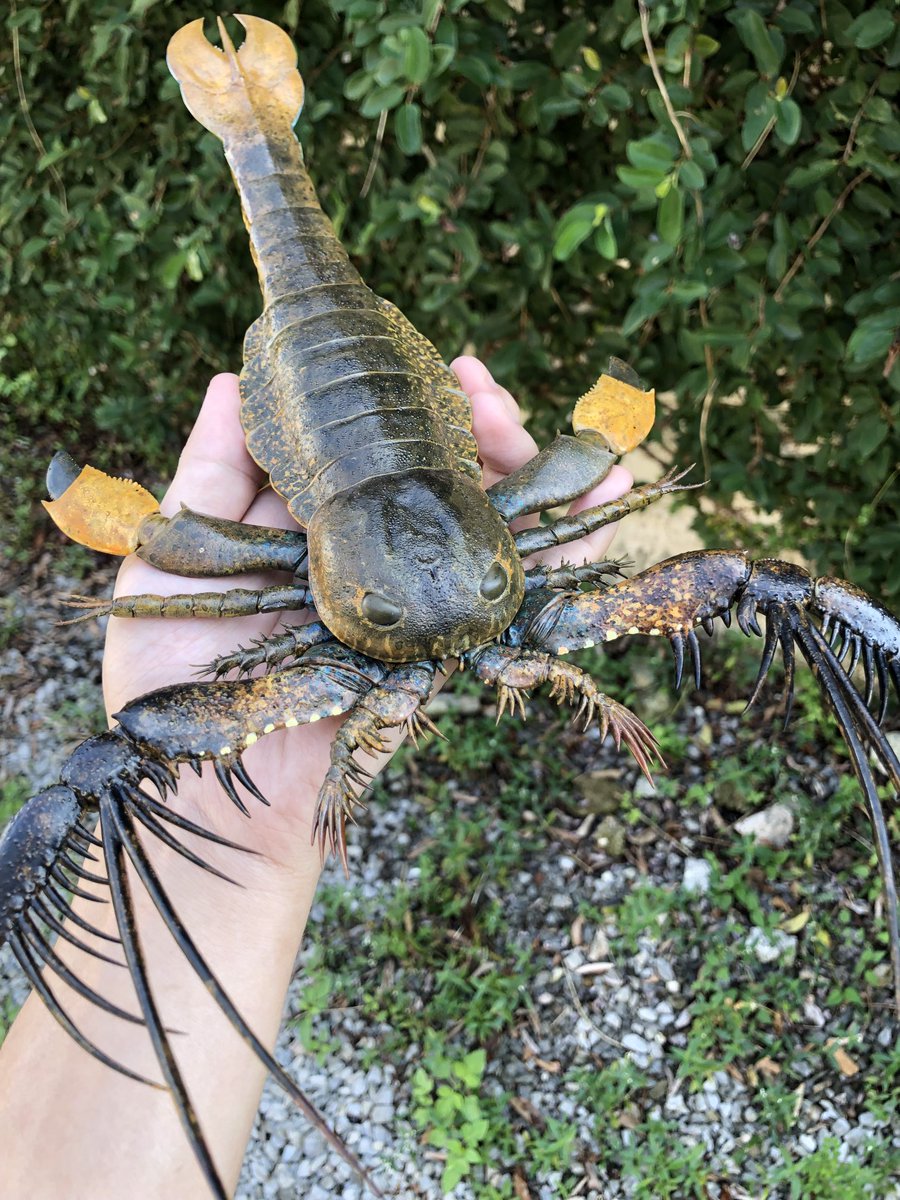
A video on my Big Bug article and subsequent research on pterygotid #eurypterids; spoilt by AI images but OK. (0:10) Markus found it lying in the quarry. (3:33) Arthropleura was 2 m long. (5:52) #Acutiramus did not only catch and "slice soft-bodied prey".
https://t.co/SsDebRiXcq
Jason's skepticism is correct. I still think Praearcturus was a decapod crustacean, evident by tuberculate carapace with grooves and epimera. Brachyura have dactylus on outside. Pectines absent in Bennettarthra.
https://t.co/2idxmJuNh4
Derek Briggs et al. just published Waukartus muscularis, a new aquatic myriapod-like arthropod from the #Silurian#Waukesha Lagerstätte of Wisconsin. It resolves sister group to euthycarcinoids + #Myriapoda, an aquatic member of the stem lineage. https://t.co/iIRs6Icvb1
@robokaseki I think adults could swim; most animals can, but not using its tail to propel itself. I think they were more like a giant heron, catching fish and other animals at the riverbank.
Congratulations Rudy and Javier on this #arthropod#fossil discovery.
A 500-Million-Year-Old Surprise Is Forcing Scientists to Rethink Spider Evolution https://t.co/XrEDGc1mhL
Now published in print, the evolution of cyclopygid trilobites. Taihungshaniidae basal to the Nileidae and Cyclopygidae. Evolved into deeper waters alongside their increased pelagic adaptations. Dedicated to Euan Clarkson and Richard Fortey.
https://t.co/UEL0EOPCO0
@ikusue77590 Braddy (2023, Bull. Geosci., 98 [4], p. 297) discussed Monomorphichnus traces reported by King et al. (2017, Atlantic Geology, 33, 1-15), but suggested they were produced by stylonurids or euthycarcinoids; pterygotids chelicerae are rapid-capture structures.
#Fossil discoveries of Ron Meyer and Gerry Gunderson, including the Waukesha, Ruin Wash, Scotch Grove and Big Hill #Lagerstatten, featuring Brenda Hunda, Nigel Hughes, Chris Gass, Pete Palmer, James Lamsdell, Paul Smith and Derek Briggs.
https://t.co/3VpWJmfSkT
@ikusue77590 Predation traces (holes) are known on pteraspids (Lechriaspis and Larnovaspis), eurypterids (Eurypterus and Acutiramus) and a trilobite (Spinisscutellum). Coprolites provide further evidence for predatory interactions. https://t.co/N2vkgEXvot
@ikusue77590 Congratulations Narumi. This is really great. Consider writing a popular article in Japanese as an example of robotic experimental neoichnology.
This is the document version I prepared based on the video that summarizes our research on Cephalaspis trace fossils using a robot.
https://t.co/czAvLWlpyi
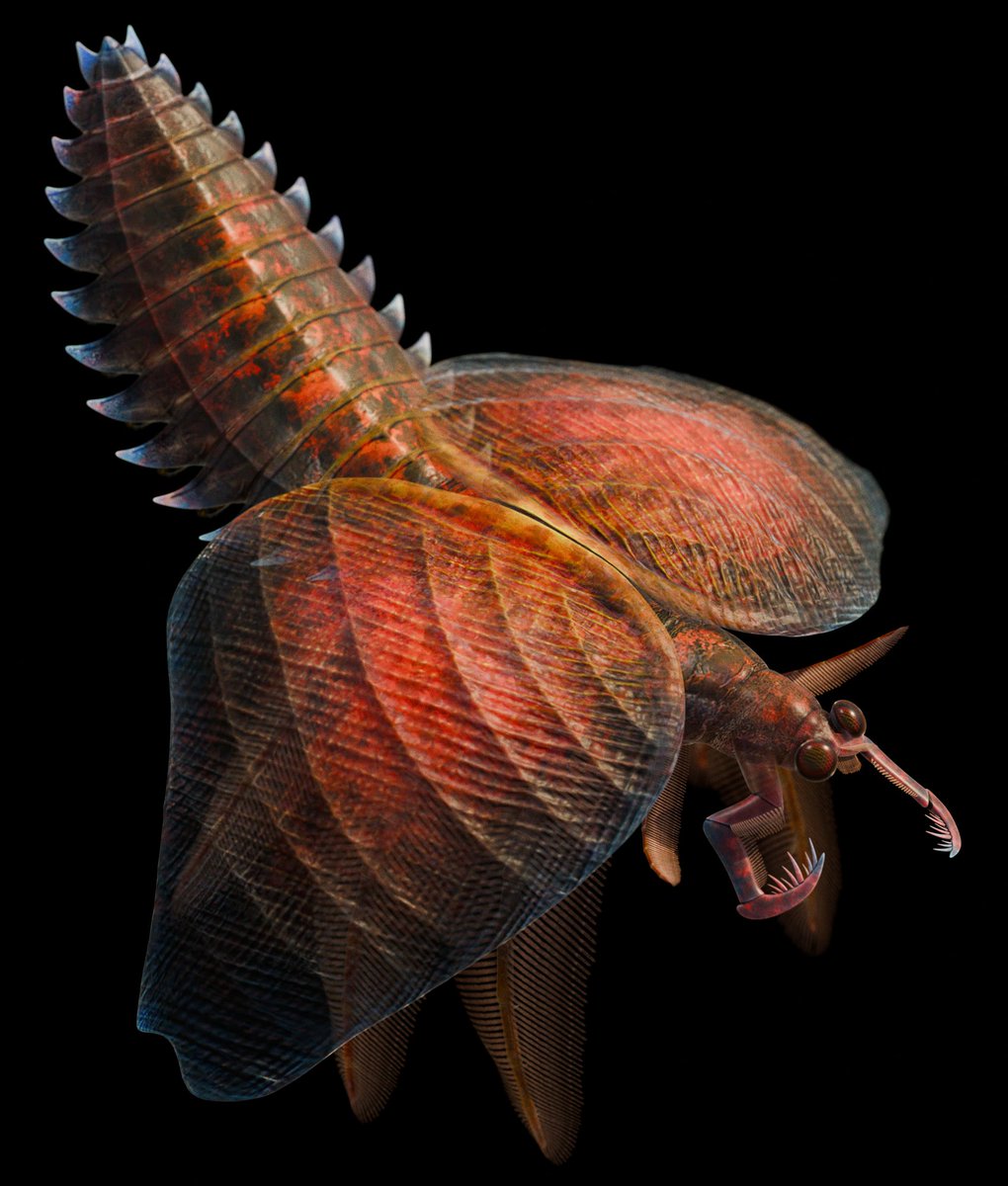
Papiliomaris kluessendorfae, first reported in 1985 as the Waukesha "Butterfly Animal", was recently described as a strange bivalved arthropod with three pairs of large, feathery appendages. Some reports indicate it could reach up to 20cm wide.