@UofGInfoStudies Very sad news. Johanna was brilliant and so kind and friendly. Had some fun times at the Leipzig summer school years ago. Condolences to her family and friends.
Calling Roman history lovers, especially teachers! We've launched Roman Inscriptions of Britain in Schools materials to provide better access to the diverse voices of Roman Britain and to support the teaching of classical subjects. @UoNArts
https://t.co/Yy0IPSLkrB
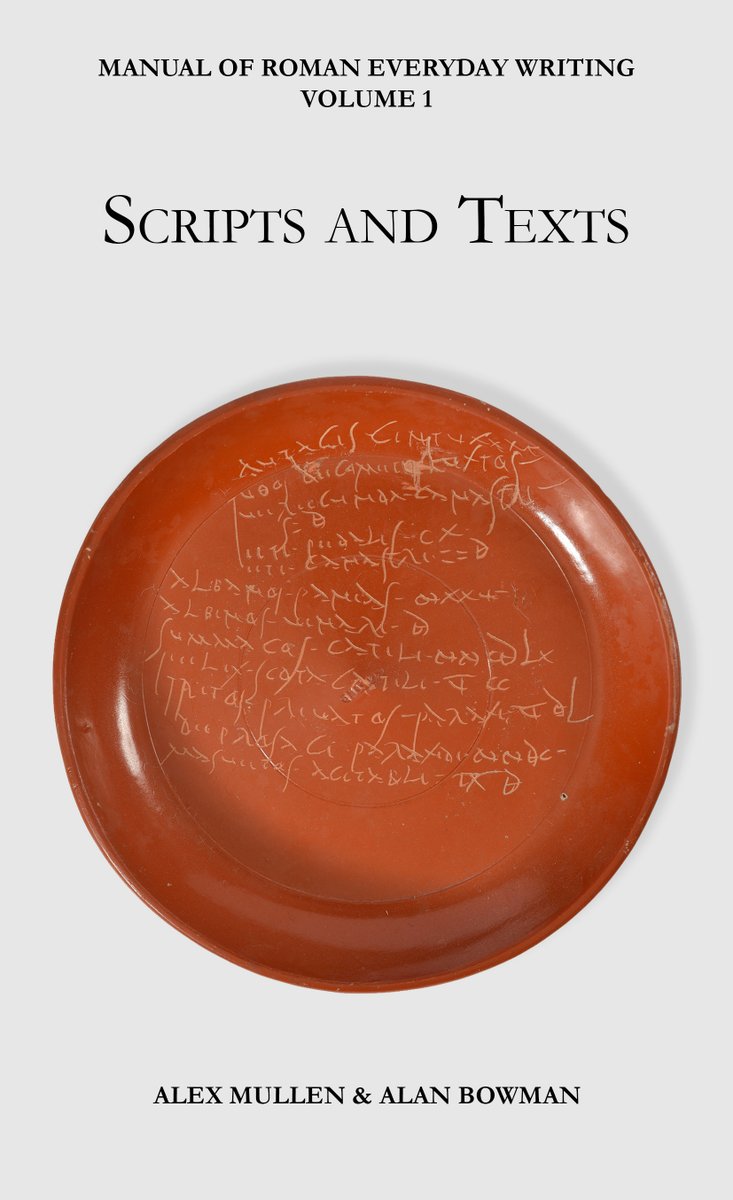
OPEN ACCESS📢Vol.1 of the Manual of Roman Everyday Writing is out! Written by Alex Mullen @UniofNottingham Alan Bowman @CsadOxford. Find out all about the scripts Romans used to write their everyday texts! We even put videos in the book.. https://t.co/3Oe5BGNrvK @ERC_Research 1/6
Over the moon to have secured one of these with Marietta Horster (and @CIL_BBAW) and @pettulda for "FAIR Epigraphy" - Epigraphic linked data here we come!
We've made some videos on RTI for our Open Access Manual of Roman Everyday Writing Vol 1 Scripts and texts, which is coming very soon. You can see the introductory videos here on our blog:
https://t.co/ZthdgnwWcl
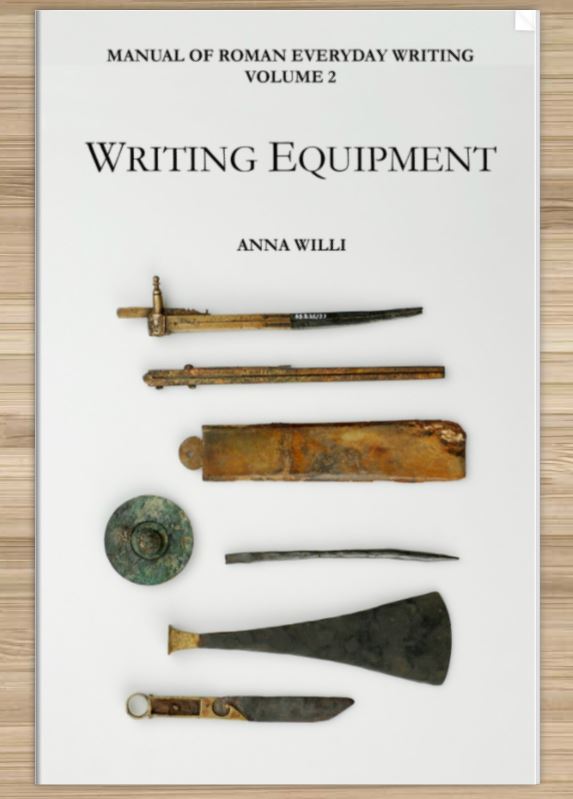
📢 All Roman writing equipment lovers! #ClassicsTwitter Anna Willi of @LatinNowERC has today published volume 2 of our Manual of Roman Everyday Writing. A lavishly illustrated guide to writing equipment and why we should care about it. IT'S OPEN ACCESS https://t.co/JoHcLPQ6OQ 1/4
EADH is searching for a venue for the #EADH2022 International Conference: take the chance to host this important event for the Digital Humanities in the wide European and Mediterranean area! https://t.co/nV7S9m2j9e
@Dustin_McK https://t.co/mSmykW4yaP
https://t.co/ziOiqNiG3j
https://t.co/r5gl6mb5kp
Just a few of the many - different reasons, texts, uses, data models...
@pettulda@Sicilyepigraphy Yes, exactly, also for months and days. And various ways to point out uncertainty or arbitrary divisions of ranges, e.g. `@cert=“low”` or `@precision=“medium”`, depending on the case. Envisioning a cool date-slider at some point :-)
On #dayofdh2021 I’m standardising date expressions in the metadata of ancient inscriptions found in Sicily. From '9/12/223 CE’ to ‘2nd half of 2nd cent CE or 3 cent CE’ to ‘Paleochristian’ to 'Probably later 2nd cent BCE’ - fun! :-D @Sicilyepigraphy
Languages of Sicily (3a): writers of Sikel generally used the variant of the Greek alphabet employed by the nearest major Greek colony city; but many Sikel inscriptions are distinguished by a distinctive arrow-head form of Alpha