Hello world, I'm Simone Mao.
Join me on a legendary journey and witness how Simone and her ideas positively impact and help shape our future. 🌍
Watch how thought becomes force, and the #future takes form.
Indeed, the source of my idea partly comes from the country from which I come: #Canada , and its #multicultural tradition in society and intellectually. I’m deeply indebted to this country.
My proposal is published in the Research Workshop Proceedings of the 3rd #UNESCO Global Forum on the Ethics of AI 2025.
Read Online: https://t.co/Mub4EJflUv
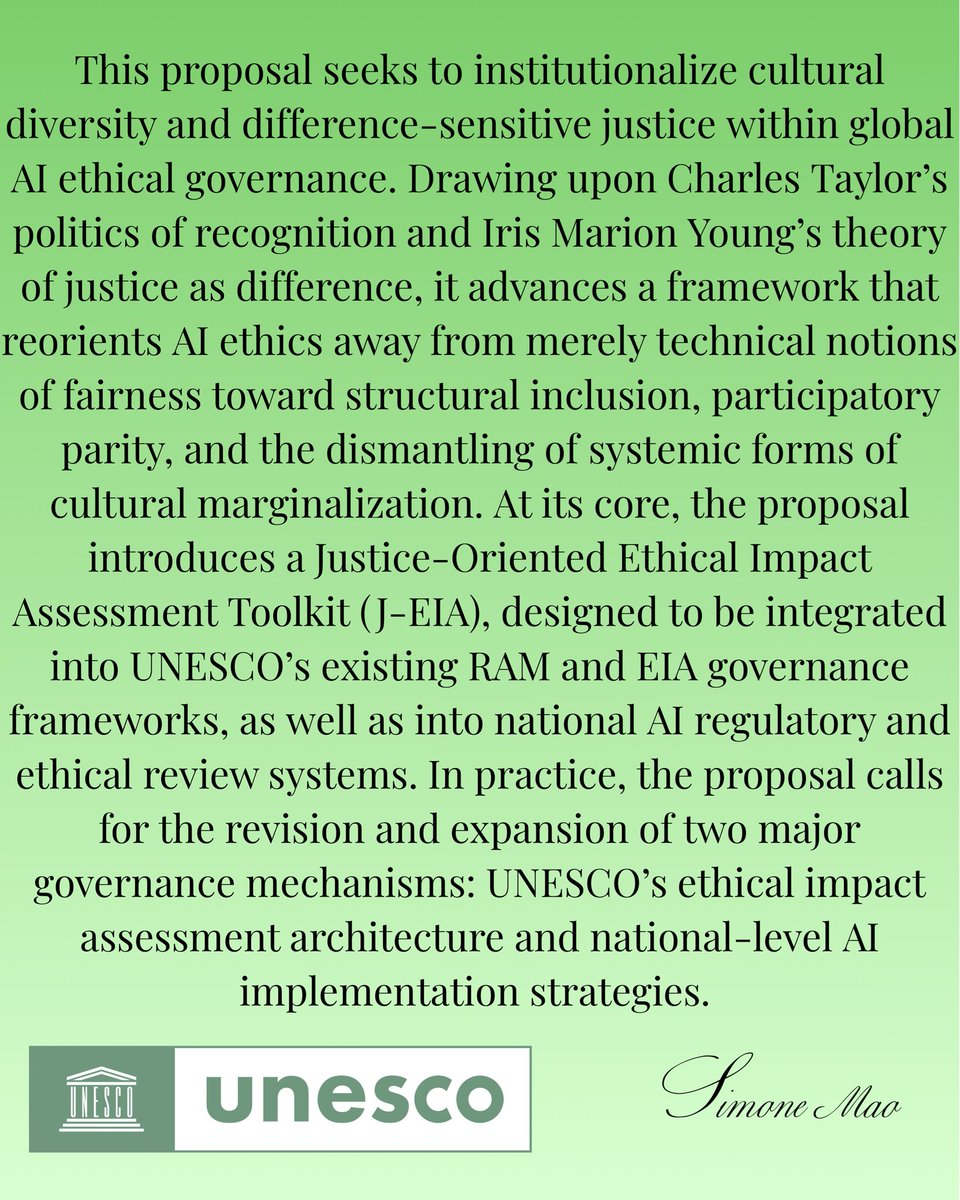
My work involves advising on the revision of UNESCO’s groundbreaking Recommendation on the Ethics of #ArtificialIntelligence —the first global standard on #AI ethics and governance, adopted by all 193 Member States. I contribute to the development and implementation of its two key practical methodologies: the Readiness Assessment Methodology (RAM) and the Ethical Impact Assessment (EIA), the former of which has been deployed in over 70 Member States. From theory to governance, I’m helping to shape a more ethical and inclusive global AI landscape.
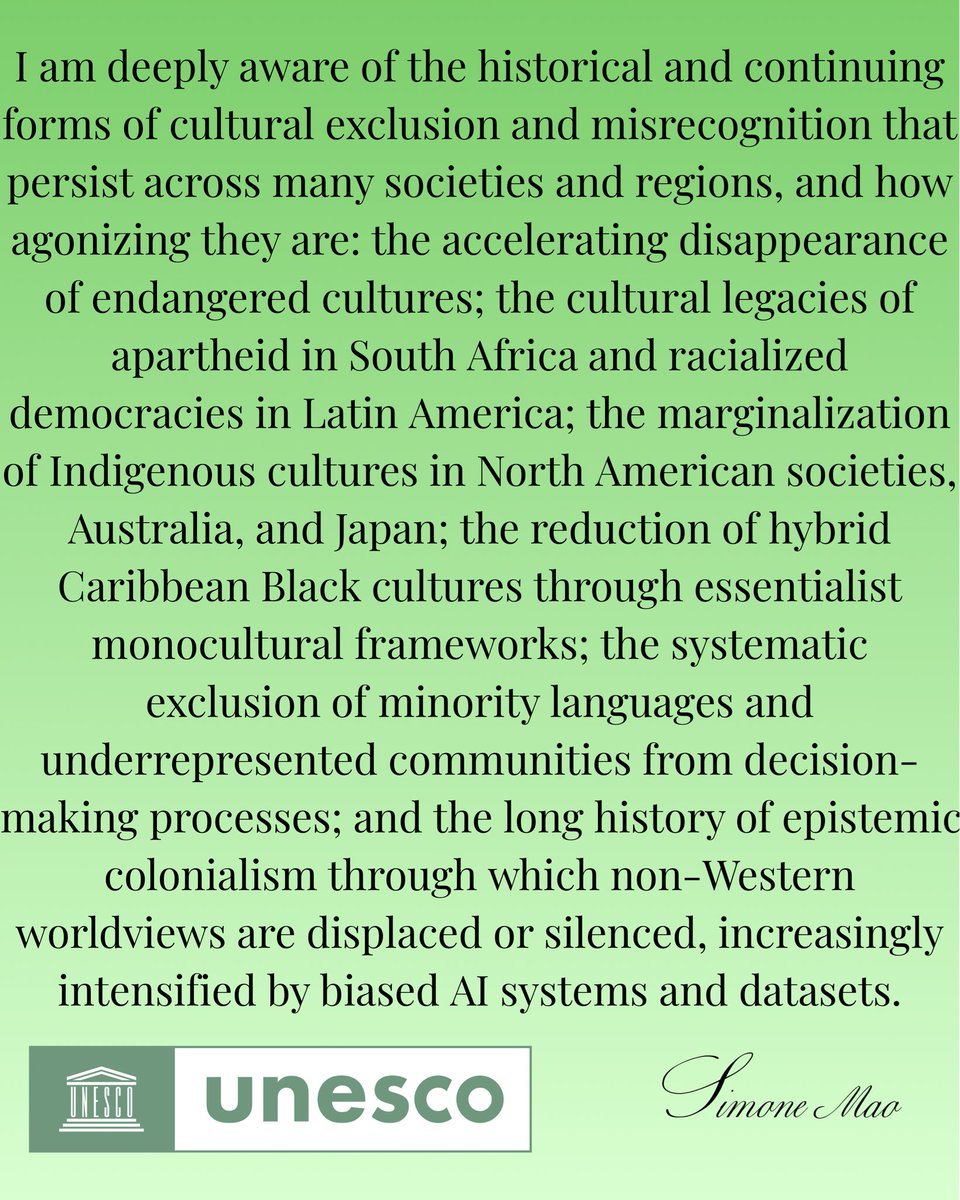
I am deeply aware of the historical and continuing forms of cultural exclusion and misrecognition that persist across many societies and regions and how agonizing they are: the accelerating disappearance of endangered cultures; the marginalization of Indigenous cultures in North American societies, Australia, and Japan; the systematic exclusion of minority languages and underrepresented communities from decision-making processes; and the long history of epistemic colonialism through which non-Western worldviews are displaced or silenced, increasingly intensified by biased AI algorithms and datasets. AI systems inevitably mirror human social structures and biases. Without critical intervention, they can easily become instruments through which existing inequalities and exclusion are exacerbatingly reproduced.
My intervention in global AI governance represents an attempt to connect abstract philosophical inquiry with the urgent social realities and governance challenges of our time. What began as a theoretical concern gained practical significance when UNESCO, as a supranational platform of global governance, provided an opportunity for these ideas to enter real-world institutional processes and potentially influence the national AI strategies of Member States. #UN
This work is a modest beginning in relation to the broader philosophical mission I intend to undertake: I devote myself to the most fundamental problems facing humankind.
This work is a modest beginning in relation to the broader philosophical mission I intend to undertake: I devote myself to the most fundamental problems facing humankind.
My proposal is published in the Research Workshop Proceedings of the 3rd #UNESCO Global Forum on the Ethics of AI 2025.
Read Online: https://t.co/Mub4EJflUv
My work involves advising on the revision of UNESCO’s groundbreaking Recommendation on the Ethics of #ArtificialIntelligence —the first global standard on #AI ethics and governance, adopted by all 193 Member States. I contribute to the development and implementation of its two key practical methodologies: the Readiness Assessment Methodology (RAM) and the Ethical Impact Assessment (EIA), the former of which has been deployed in over 70 Member States. From theory to governance, I’m helping to shape a more ethical and inclusive global AI landscape.
I am deeply aware of the historical and continuing forms of cultural exclusion and misrecognition that persist across many societies and regions and how agonizing they are: the accelerating disappearance of endangered cultures; the marginalization of Indigenous cultures in North American societies, Australia, and Japan; the systematic exclusion of minority languages and underrepresented communities from decision-making processes; and the long history of epistemic colonialism through which non-Western worldviews are displaced or silenced, increasingly intensified by biased AI algorithms and datasets. AI systems inevitably mirror human social structures and biases. Without critical intervention, they can easily become instruments through which existing inequalities and exclusion are exacerbatingly reproduced.
My intervention in global AI governance represents an attempt to connect abstract philosophical inquiry with the urgent social realities and governance challenges of our time. What began as a theoretical concern gained practical significance when UNESCO, as a supranational platform of global governance, provided an opportunity for these ideas to enter real-world institutional processes and potentially influence the national AI strategies of Member States. #UN
This work is a modest beginning in relation to the broader philosophical mission I intend to undertake: I devote myself to the most fundamental problems facing humankind.
My proposal is published in the Research Workshop Proceedings of the 3rd #UNESCO Global Forum on the Ethics of AI 2025.
Read Online: https://t.co/Mub4EJflUv
My work involves advising on the revision of UNESCO’s groundbreaking Recommendation on the Ethics of #ArtificialIntelligence —the first global standard on #AI ethics and governance, adopted by all 193 Member States. I contribute to the development and implementation of its two key practical methodologies: the Readiness Assessment Methodology (RAM) and the Ethical Impact Assessment (EIA), the former of which has been deployed in over 70 Member States. From theory to governance, I’m helping to shape a more ethical and inclusive global AI landscape.
I am deeply aware of the historical and continuing forms of cultural exclusion and misrecognition that persist across many societies and regions and how agonizing they are: the accelerating disappearance of endangered cultures; the marginalization of Indigenous cultures in North American societies, Australia, and Japan; the systematic exclusion of minority languages and underrepresented communities from decision-making processes; and the long history of epistemic colonialism through which non-Western worldviews are displaced or silenced, increasingly intensified by biased AI algorithms and datasets. AI systems inevitably mirror human social structures and biases. Without critical intervention, they can easily become instruments through which existing inequalities and exclusion are exacerbatingly reproduced.
My intervention in global AI governance represents an attempt to connect abstract philosophical inquiry with the urgent social realities and governance challenges of our time. What began as a theoretical concern gained practical significance when UNESCO, as a supranational platform of global governance, provided an opportunity for these ideas to enter real-world institutional processes and potentially influence the national AI strategies of Member States. #UN
This work is a modest beginning in relation to the broader philosophical mission I intend to undertake: I devote myself to the most fundamental problems facing humankind.
My high school had an incredibly liberal, progressive, and humanistic educational philosophy. Students were granted an exceptional degree of autonomy and self-governance, seen by the school as expressive practices of civic freedom and democracy. It felt almost like an enclave, an unbelievably liberal existence within the Chinese educational system. The school enjoys national and international renown, owing in large part to alumni who have gone on to become globally influential leaders in their respective fields.
My first time speaking in the Red Chamber.
Senator Mao, representing #Ontario.
🏛️ Parliament derives from the Anglo-Norman and Old French parler (“to speak”). 🗣️
The story behind my passion for democracy and public speaking:
Twelve years ago, at age 15, during my first introduction in an English class in China, some classmates mocked the way I spoke. My American teacher, UMichigan PhD, stopped them and said, “Why laughing? This is completely normal in our society. She did well.” I began to reflect on how differently societies/cultures understand behavior and social customs (nomos). (From then on, I never again used my Anglophone name. I prefer my Francophone name: Simone.)
Between 16 and 18, I read nearly all of Rousseau’s writings. #Enlightenment thinkers profoundly shaped my intellectual path. Their vision of political order, democratic principles, and civic #freedom became a thread that guided me from afar toward the world I live in today.
At 20, I was diagnosed with Asperger’s syndrome. Suddenly, many things about my childhood became understandable: why I easily fell while walking, why holding a pen steadily was difficult—all because of autism-related speech and motor difficulties. My vocal function was severely affected. It was a painful period of my life, marked by racial discrimination in Europe. It motivated me to contribute to non-discrimination, #inclusion, and #multiculturalism for a better world, and 5 years later, to bring my philosophical research to the UNESCO forum. #AutismPride
In 2024, at #Harvard, I had the opportunity to learn public speaking from a NY State senator. I challenged myself, broke through limitations. I could walk into any room, any conference, and own the stage without fear. I still need written speeches, even speaking at #UNESCO, but I no longer see that as weakness.
This year, I have the privilege of contributing my own voice to public life in the Red Chamber, representing Ontario, upholding inclusion and equality, and contributing to the liberal democratic process, advancing the intellectual and moral commitments that have shaped my academic journey for a decade inspired by thinkers like Locke, Montesquieu and Rousseau—as a proud #Canadian!
For a naturalized Canadian deeply committed to #democratic life and once limited by speech impairment, this moment means more than I can fully express! #Canada is a great country. Senator Mohamed encouraged youth to think big and work hard, you can achieve anything in this wonderful country, given her own journey from arriving in Canada as a refugee from Uganda to serving in the #Senate.
📷: @SenateCA @ Casey
My first time speaking in the Red Chamber.
Youth Senator Simone Mao, representing Ontario.
“Honourable senators, I rise today to speak in support of Bill S-394, which proposes to develop a framework to expand alternative treatment and rehabilitation programs for convicted offenders with mental health conditions, and to express my strong support for this legislation.
Debate at second reading is meant to centre on the constitutional principle of a bill. The principle here is inclusion, dignity, and humanitarian concerns, reflecting both compassion and pragmatism in our approach to justice. We should combine the principles of denunciation and deterrence with those of prevention and rehabilitation.
For too many Canadians with mental illnesses, lack of timely treatment, community supports, stable housing, or crisis intervention services leads to contact with the justice system, where incarceration too often becomes the default institutional response to behaviours rooted in illness.
But prison is not a hospital.
As we reflect on the purpose of punishment within our justice system, we must also uphold the values of proportionality, rehabilitation, and human dignity. We must also reflect on the consequences of exclusion, which is neither just nor inclusive. Too often, correctional facilities become not only a legal response, but a form of social abandonment — one that pushes vulnerable individuals further to the margins of society rather than helping them return to it. The result is a costly and destructive cycle that serves neither the individual nor society well: repeated incarceration, deteriorating mental health, social isolation, and ultimately a heightened risk of reoffending. That is not effective governance.
The French philosopher Michel Foucault observed in Madness and Civilization and Discipline and Punish that modern prisons emerged alongside broader systems of social confinement. When individuals suffering from mental illness are treated primarily through isolation and incarceration, we risk repeating a system that confuses punishment with justice and exclusion with safety. A fair and inclusive society cannot simply cast aside those who are vulnerable or unwell. Our responsibility is not merely to punish, but to ensure that every person retains the possibility of treatment, dignity, and reintegration into society.”
📷: @SenateCA
⚡ Day 3 at Model Senate 2026!
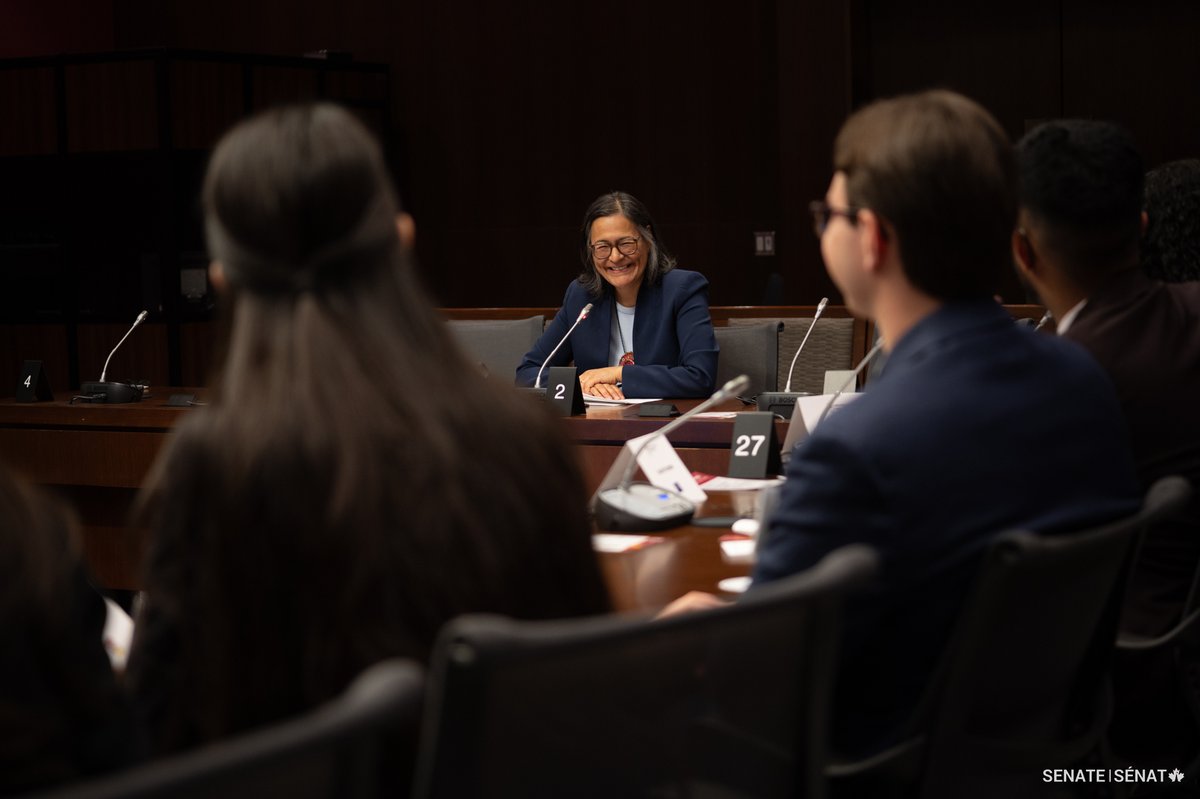
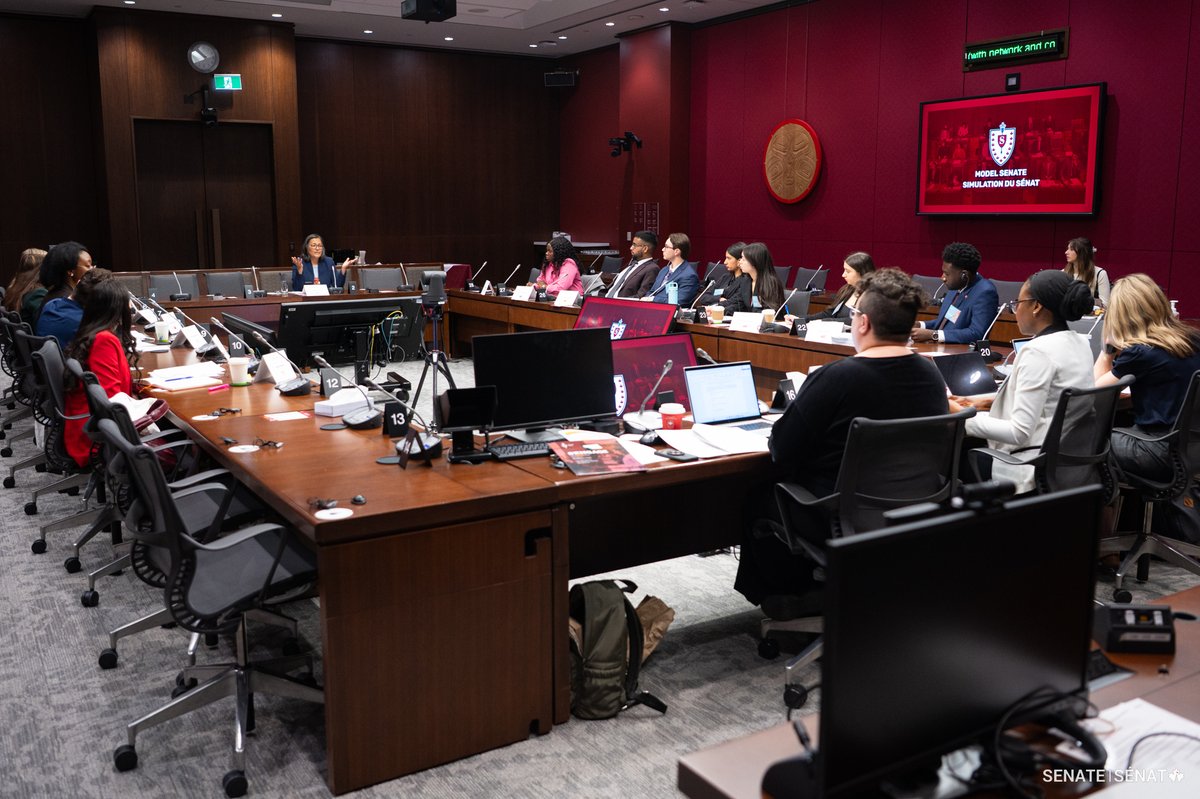
📝 Simulated committee with Senator Michèle Audette
🏛️ Simulated sitting in the Chamber
🚨 Emergency debate (surprise!)
📣 Closing remarks by Senator Farah Mohamed
Many thanks to senators Michèle Audette and Farah Mohamed, who shared their time and knowledge.
#SenCA #ModelSenate2026
Philosopher Daniel Garber, “I’m reminded of the Government Department at Harvard - yea, it’s called Government there, not Political Science. John Rawls taught me. He was such a lovely person, truly lovely.”
I was deeply moved hearing this. Countless stories and his thoughts rushed into my mind at once. Lately I’ve felt so overwhelmed inwardly that I’ve found myself almost unable to speak, only quietly immersed in this immense feeling (overactive crown chakra suppressing throat chakra).
People often remember #Rawls for his serious and severe intellectual presence, but not everyone knows how gentle and lovely he was in person. Somehow, I can easily believe that about him. I’ve been reading him systematically, and last year I spoke about public reason in a workshop. I miss this upright person.
Very grateful to Daniel for sharing this story with me. Before we parted, he said, “Good luck in your #philosophical quest.” #philosophy #Spinoza
Passionate debates on legislation and public policy. Valuable face time with senators and Senate staff. In-depth committee studies and expert testimonies — punctuated by a surprise emergency debate in the Red Chamber.
Model Senate 2026 featured unforgettable parliamentary simulations and networking opportunities for 110 civic-minded post-secondary students from across Canada: https://t.co/1Y1GRIKBNX
#SenCA #SENgage #ModelSenate2026
Had a wonderful time with Allan and Luna 🐶. We talked about our stories of immigrating to Canada and how surprisingly similar our experiences were, even though Allan came from Iran and arrived in Canada back in 1997. His immigration history is even longer than my age.
I told him I’m proud of myself for leaving all my family members because of my faith, not for other reasons. Allan and I both feel a deep difference in mindset from our parents’ generation. We love experiencing different cultures, respecting other perspectives, traveling, and staying aware of what’s happening around the world.
As Allan put it, many of our parents’ generation spent their entire lives in one place, surrounded by the same small social circle, rarely traveling and rarely being curious about how people in other parts of the world live, think, or just to see different lifestyles.
We also spoke about religion, secularism, Islamic sects, and the current situation in Iran. Allan said religion is a philosophy. I said that every church is orthodox to itself, yet often seen by others as erroneous or heretical. For me, my faith is not a particular set of doctrines or religious rules, but a belief that different convictions can be expressed, respected, and coexist peacefully. Such a multicultural faith is built on trust and dialogue.
I also expressed my compassion for the people of Tehran enduring the inhumane suffering caused by oil rain in Iran after the oil reservoir fired.
Thanks Allan for sharing such a meaningful time together. It helped me ease some of the sadness and depression I felt after leaving home.
Had a wonderful time with Allan and Luna 🐶. We talked about our stories of immigrating to Canada and how surprisingly similar our experiences were, even though Allan came from Iran and arrived in Canada back in 1997. His immigration history is even longer than my age.
I told him I’m proud of myself for leaving all my family members because of my faith, not for other reasons. Allan and I both feel a deep difference in mindset from our parents’ generation. We love experiencing different cultures, respecting other perspectives, traveling, and staying aware of what’s happening around the world.
As Allan put it, many of our parents’ generation spent their entire lives in one place, surrounded by the same small social circle, rarely traveling and rarely being curious about how people in other parts of the world live, think, or just to see different lifestyles.
We also spoke about religion, secularism, Islamic sects, and the current situation in Iran. Allan said religion is a philosophy. I said that every church is orthodox to itself, yet often seen by others as erroneous or heretical. For me, my faith is not a particular set of doctrines or religious rules, but a belief that different convictions can be expressed, respected, and coexist peacefully. Such a multicultural faith is built on trust and dialogue.
I also expressed my compassion for the people of Tehran enduring the inhumane suffering caused by oil rain in Iran after the oil reservoir fired.
Thanks Allan for sharing such a meaningful time together. It helped me ease some of the sadness and depression I felt after leaving home.
This evening marked the official start of Model Senate 2026 with the Senate Social, a networking event hosted by the Speaker of the Senate, the Honourable @SenGagne.
Participants from across the country are gathered at the Senate of Canada Building to meet senators, connect with other participants and kick off a weekend of debates, collaboration and learning.
Thank you to Speaker Gagné for hosting this great evening!
#SenCA #ModelSenate2026
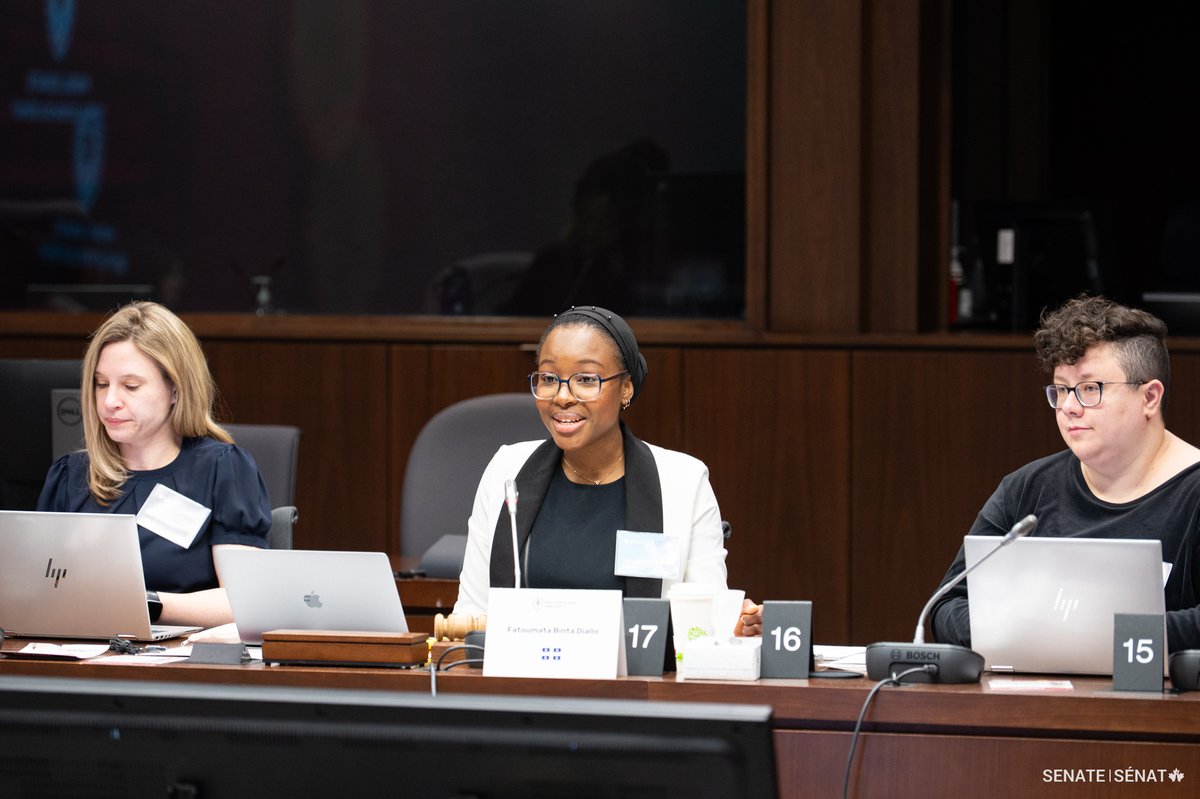
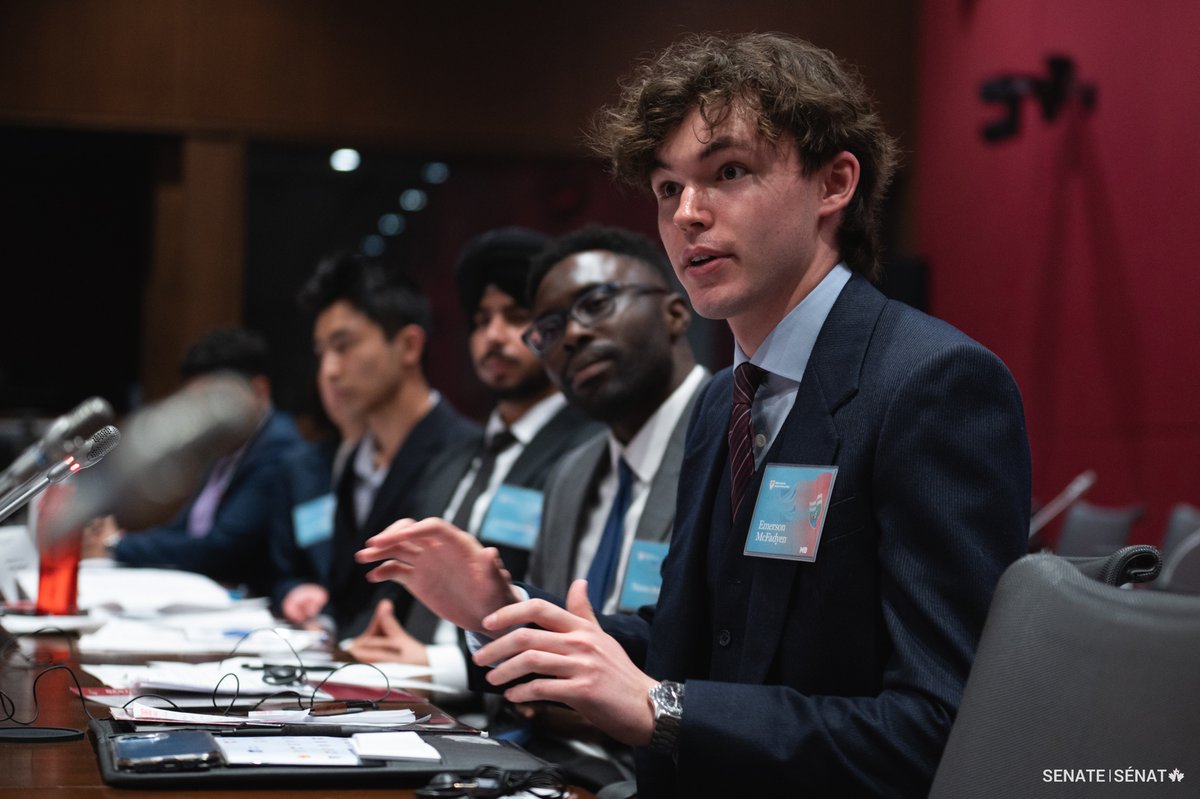
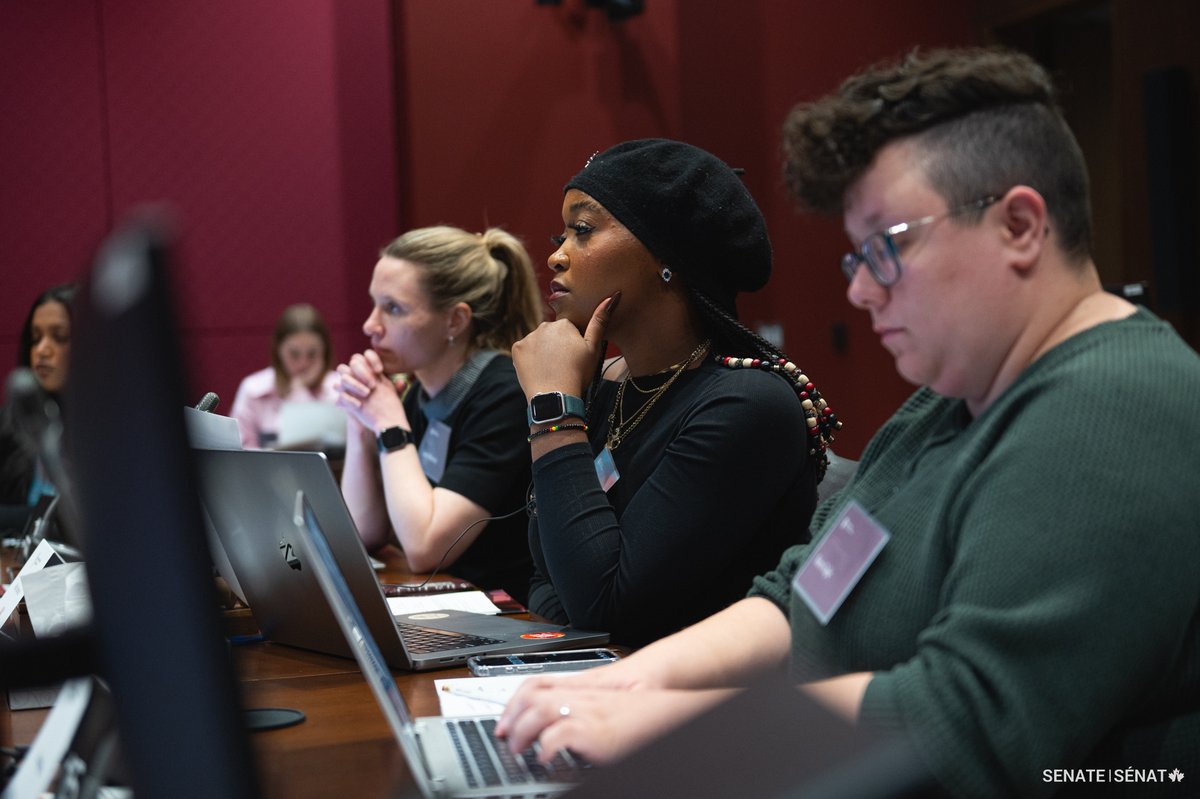
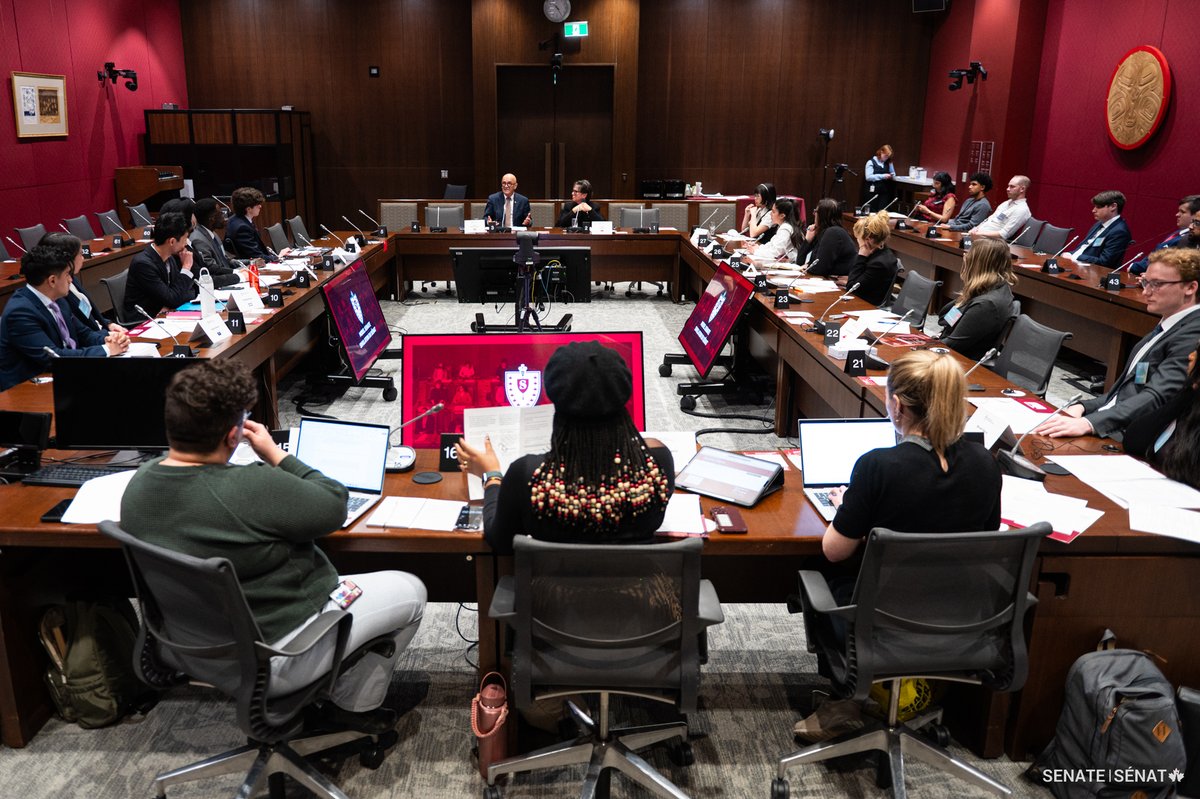
During a simulated meeting of the Senate Committee on Legal and Constitutional Affairs, participants questioned expert witness Senator Michèle Audette on the mock bill they were examining title ‘an Act to establish a national strategy on alternative treatment and rehabilitation programs for offenders with mental health conditions.’ The experience offered a hands-on lesson in how senators analyze, debate and refine legislation in committee.
Thank you, Senator, for sharing your wisdom!
#SenCA #ModelSenate2026
Today at #ModelSenate2026, participants simulated a meeting of the Senate Committee on Human Rights and received testimony from expert witnesses senators René Cormier and Kim Pate for their study of a mock bill titled ‘an Act to establish a national strategy on alternative treatment and rehabilitation programs for offenders with mental health conditions.’
The experience helped participants see firsthand how senators scrutinize and refine legislation before casting a final vote in the Senate Chamber.
Thank you, Senators, for sharing your expertise!
#SenCA
💼Day 2 at Model Senate 2026!
🏛️ Simulated sitting in the Chamber
💬 Remarks by @SenatorHousakos, Leader of the Opposition
❓ Question Period with Senator Iris G. Petten
🎙️ Pathways to Parliament panel
📝 Simulated committee with senators René Cormier and Kim Pate
A big thank you to senators Housakos, Petten, Cormier and Pate who shared their time and expertise. It made today even more inspiring!
#SenCA #ModelSenate2026