Chief AI Officer Alex Wang is subtly confirming that $META's previous AI paradigm failed, and they are executing a strategic shift to close their ecosystem, capture personal data, and build a regulatory moat.
For the last few years, Meta’s entire strategy was to open-source frontier-level models like Llama 2 and 3 to commoditize the foundational layer. Now that Meta is building highly lucrative Personal Agents, they are keeping their best tech proprietary.
Wait. Google is paying SpaceX $920 million per month for GPUs?
Google. The company that builds its own TPUs. That runs one of the largest cloud infrastructures on earth. Is renting 110,000 Nvidia GPUs from a rocket company.
I'm honestly not sure what to make of this. Either Google's AI compute needs have gotten so massive that even they can't build fast enough. Or SpaceX has built something in AI infrastructure that nobody was paying attention to. Or both.
$920M a month. $30B over the contract.
Whatever is happening behind the scenes at these companies is moving way faster than what we see publicly.
Those of you paying 50x to 100x NORMALIZED earnings for the AI "pick-and-shovel makers" because of "nearly infinite growth & pricing power" may want to have a quick look at this and consider the ramifications...
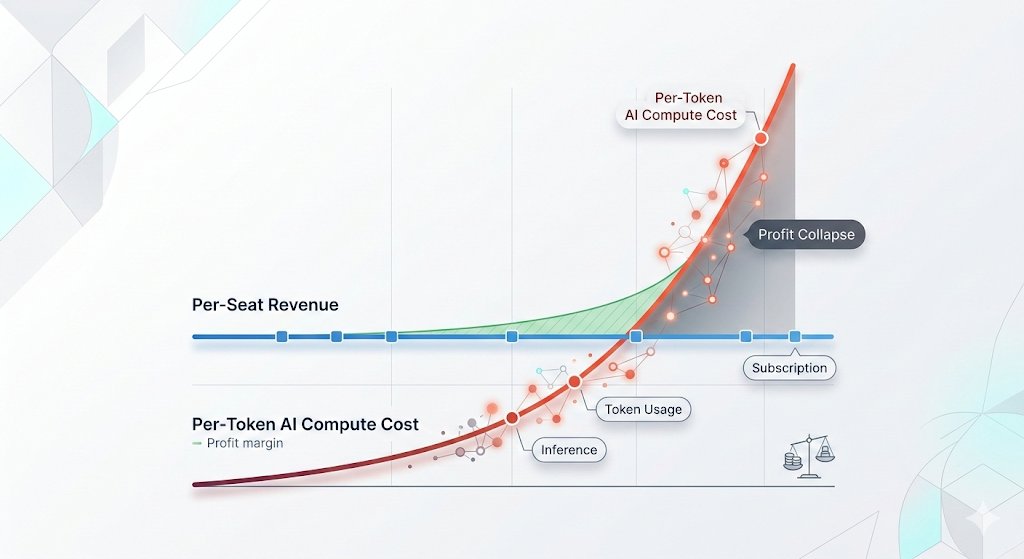
🦔GitHub Copilot switched to token-based billing this morning and users are already out of credits. Pro+ subscribers paying $39 a month are reporting 60% of their credits gone in two hours of normal use. One user lost 20% of their allowance from a single file review with no code changes. Another hit their monthly cap before the calendar even flipped to June.
Orgs with shared token pools have no way to see individual usage, so entire teams get cut off when one person runs a heavy prompt. Users are canceling and moving to Claude Code and Codex. GitHub community forums are on fire.
My Take
Flat-rate AI subscriptions were always subsidized. Everyone in the industry knew it. Today the subsidy ran out for a few million developers at once. The problem is a lot of companies already restructured around these tools. They cut headcount and told remaining engineers to lean on Copilot instead of building skills internally. Those companies now depend on a tool whose cost just became unpredictable and whose usefulness completely changes when you have to ration prompts to stay under budget.
The developers moving to Claude Code and Codex will hit the same wall eventually. Every AI provider faces the same unit economics. Anthropic filed its S-1 this morning, and the durability of its revenue depends on whether customers stick around once real pricing kicks in everywhere. If a $39 subscriber cancels after one day because the tool became unusable, multiply that across millions of seats and the churn risk becomes very real.
Today showed what happens when AI pricing meets reality. The companies that built their workflows around cheap tokens just discovered the tokens aren't cheap anymore and the people who knew how to do the work without them are already gone.
Hedgie🤗
🚨 BILL GURLEY: “I would encourage people to read as much as they can about Anthropic … I don't think they think they're writing software. I think they're midwifing a deity.”
JASON: “I know some of these folks … They believe they're so powerful, that they can create God.”
Rough week for the "AI is taking our jobs" narrative.
> Amazon just axed its AI leaderboard as costs soared with no clear payoff
> Starbucks' AI can't even count coffee cups right
> Uber burning a $3.4B AI budget in just 4 months with nothing to show for it
WE ARE SO BACK.
The AI numbers are starting to look very ugly.
Even under "best case" assumptions, FT's own data shows Microsoft AI ROI at -9%, Google at -15%, Meta at -28%, Oracle at -35%. Only Amazon barely comes out positive.
This is exactly why I keep comparing this to the dot-com era. Incredible technology does not automatically mean sustainable economics. The internet survived. Most internet companies didn't.
Right now hyperscalers are spending trillions hoping future demand catches up to present capex. That's not certainty. That's a leveraged bet.
This looks like the beginning of the end for OpenAI and Anthropic.
The Chinese AI wave did not just cut prices.
It destroyed the entire funding logic behind the American AI bubble.
If developers can move from thousands of dollars per month to a few dollars per week with 80% of the same output, how are these companies going to justify hundreds of billions in future capex?
They won’t.
I believe OpenAI and Anthropic are heading straight into a funding crisis.
Chinese AI just popped the American AI bubble.
$MSFT $GOOGL $AMZN $META $NVDA $AMD $AVGO $TSM $ASML $ARM $MU $SMCI #AI #AIBubble #OpenAI #Anthropic #DeepSeek #ChinaAI #Semiconductors #DataCenters #GPU #HBM #StockMarket #Investing
Seven companies that have pulled back on AI recently:
@Uber → burned its entire 2026 AI coding budget in four months
@Microsoft → canceled most of its internal Claude Code licenses when the token bill blew up
@github → moving Copilot off flat-rate to per-token billing
@cursor_ai → scrapped its "unlimited" plan after usage bills spiked
@Klarna → rehiring humans after its AI support quality dropped
@CommonwealthBank → rehired 45 staff, called the AI cuts an "error"
@duolingo → pulled AI back out of employee performance reviews
Every one launched chasing the same thing: PRODUCTIVITY. But productivity is subjective and hard to pin down, so companies measured what was easy to see instead. USAGE.
Microsoft, Meta and Shopify started scoring people on AI use in reviews. Amazon ran an internal token leaderboard. Nvidia's CEO said he'd be "deeply alarmed" if a $500k engineer wasn't burning $250k in tokens a year.
So people gamed it, running AI on everything to pump their numbers. Tokenmaxxing.
Except usage was never output. Jellyfish data has the cost per merged pull request rising from $0.28 with light AI use to $89.32 with heavy use. More tokens, not more shipped. Just a bigger bill.
And the bill was the one number that always came in clean. On time, to the cent, every month.
That's the streetlight effect. We count what's lit and treat it as the thing we actually care about.
But people don't keep spending $2,000 a month on something that isn't working. The value was real. It just doesn't land where the cost does. You feel it while you're using the tool. The bill lands on the company's books. So the company makes the call.
DO YOU UNDERSTAND WHAT JUST HAPPENED AT THE ENHANCED GAMES..
Peter Thiel and Donald Trump Jr. spent millions to create a steroid Olympics.
They promised to "redefine human limits" and put up $25M in prize money.
After 5 hours in Las Vegas, here’s the scoreboard:
- 1 world record (not recognized by anyone)
- Thor Björnsson failed his 515kg deadlift (managed only 475kg)
- olympic sprinter Fred Kerley missed the 100m WR by 0.4s - without even taking drugs
- the only "record" came from a Greek swimmer who finished 5th at Paris 2024. He wore a supersuit banned since 2009 and beat the clean record by just 0.07s
the whole pitch was that drugs would shatter the limits of clean sport.
instead they proved the gap between juiced and clean is now 7 hundredths of a second - in a suit banned 17 years ago.
the only thing they actually proved was how good the clean athletes already are.
You think the Enhanced Games exposed anything or just embarrassed themselves?
🚨BREAKING:
BLACKROCK CEO LARRY FINK SAYS TRILLIONS FOR AI DATA CENTERS AND POWER GRIDS WILL HAVE TO COME FROM AMERICANS’ SAVINGS AND PENSION FUNDS
SAYS “AMERICANS NEED TO THINK ABOUT GROWING WITH THE UNITED STATES”
Uber’s COO has said that it’s getting “harder to justify” its AI costs because there was no way to show a link between AI spend and any meaningful increase in useful features. This is the first time I’ve seen a company say this directly.
https://t.co/xUhZvtpwah
Microsoft didn't cancel Claude Code because it was bad.
They canceled it because it was TOO GOOD.
Engineers loved it so much that 84-95% used it monthly. Costs hit $500-$2,000 per person. Uber's entire $3.4B AI budget evaporated in 4 months.
The finance department killed what the engineering department unanimously praised.
Read that story again slowly.
AI tools are now so productive that companies literally cannot afford to let their employees use them freely.
This is the most bullish signal for solopreneurs I've ever seen.
Big companies will throttle, restrict, and ration AI access to control costs. Their engineers will be stuck on watered-down internal tools.
Meanwhile, you're sitting at home with Pro access to every frontier model on the planet for the price of a Netflix subscription.
The playing field isn't leveling. It's inverting.
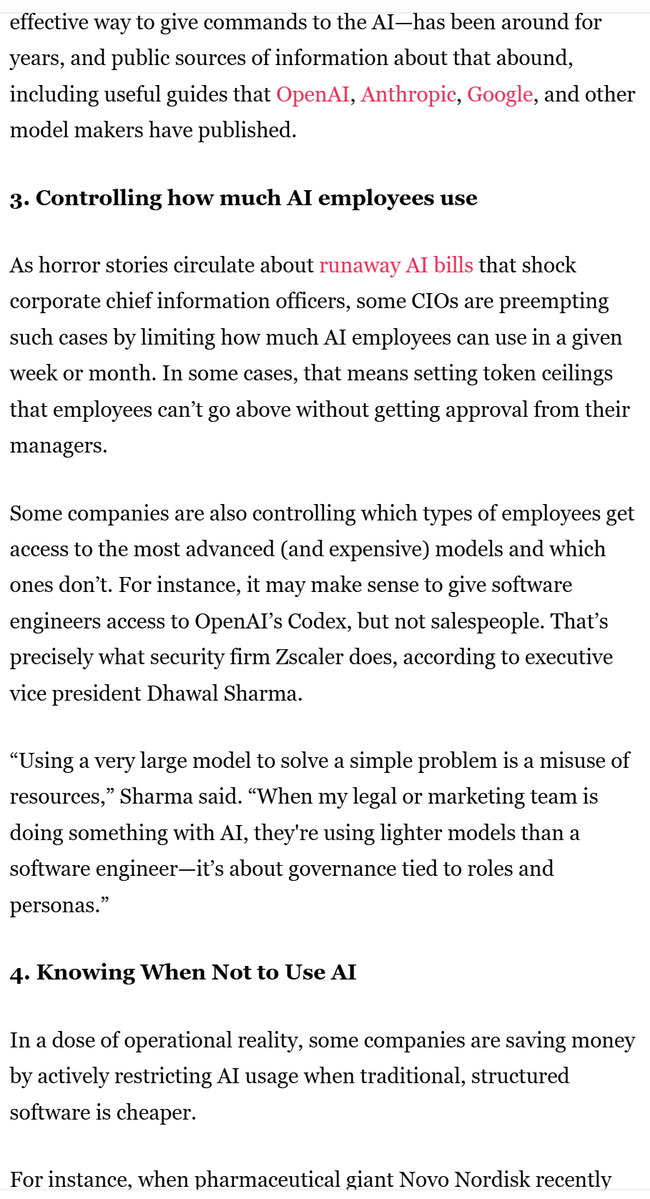
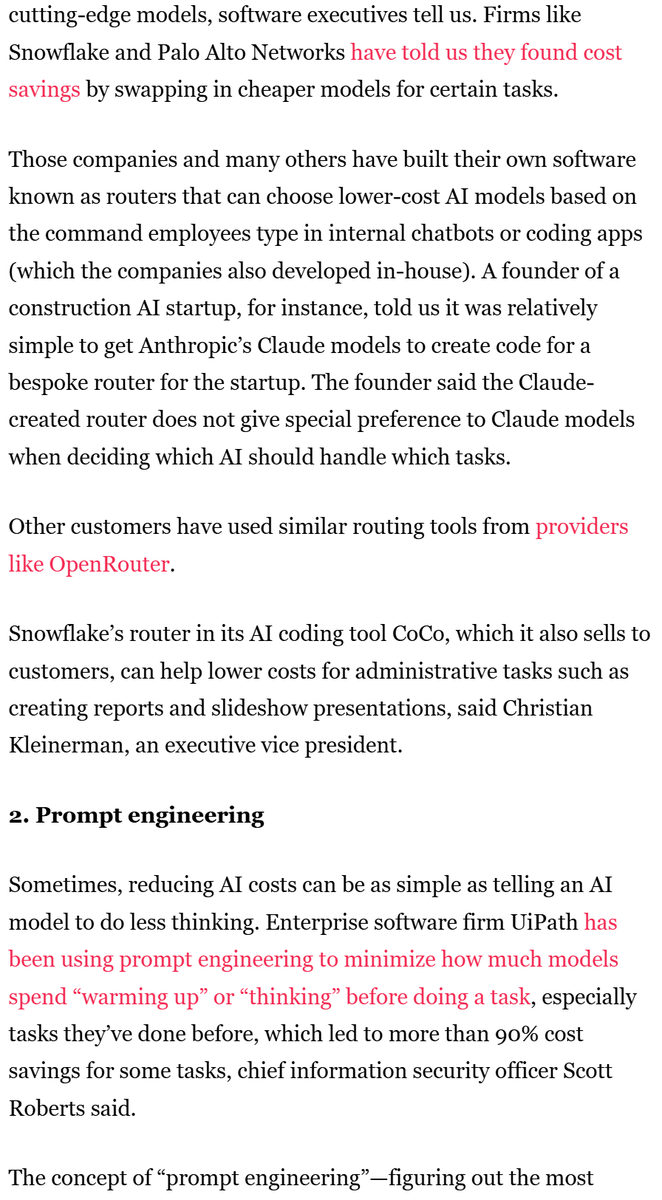
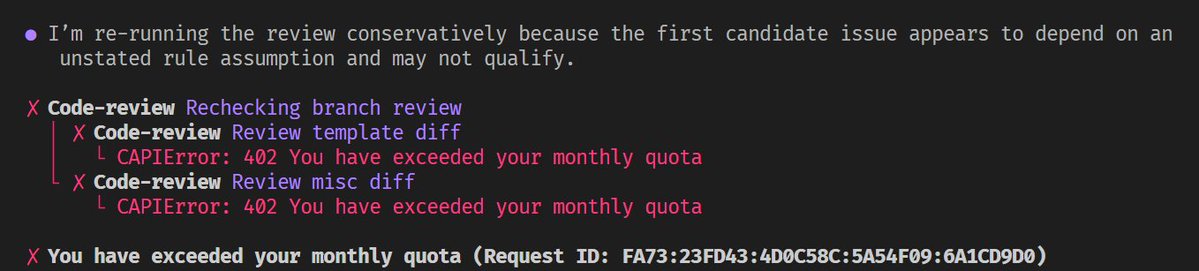
🚨 THE AI COST CRISIS HAS STARTED.
Microsoft reportedly told engineers to stop using Claude because AI bills were exploding, while Uber says its entire yearly AI budget was already destroyed by April.
🦔Microsoft canceled its internal Claude Code licenses this week after token-based billing made the cost untenable, even for a company with effectively infinite cloud resources. Uber's CTO sent an internal memo warning the company burned through its entire 2026 AI budget in just four months. American AI software prices have jumped 20% to 37%, and GitHub (owned by Microsoft) is dropping flat-rate plans for usage-based billing across its products.
My Take
The AI subsidy era is ending in real time. The same company that put $13 billion into OpenAI and built the Azure infrastructure powering most of Anthropic's compute just looked at the bill from a competitor's coding tool and decided it was not worth paying. That is not a productivity failure on Anthropic's end. Token-based pricing is forcing every enterprise customer to confront the actual cost of running these models at scale, and the number turns out to be far higher than the flat-rate experiments suggested.
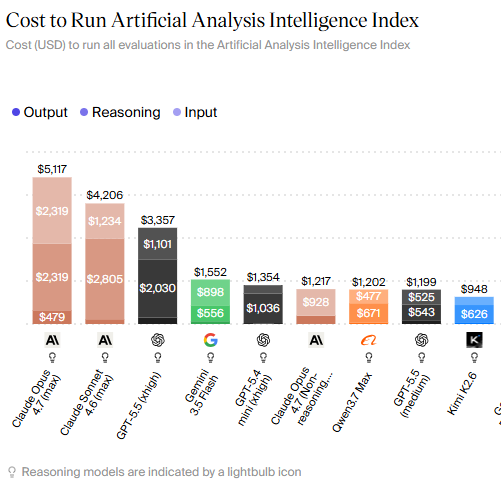
This ties directly to my Gemini Flash post yesterday. Anthropic, OpenAI, and Google all raised effective prices in the last six months. Enterprises that built workflows assuming AI costs would keep falling are now watching annual budgets evaporate in months. Two outcomes look likely from here. Either enterprises scale back AI usage to fit budgets, which slows the revenue ramp the labs need to justify their valuations ahead of IPOs, or the labs cut prices and absorb the losses, which makes the unit economics worse at exactly the wrong moment. Both paths land in the same place, the numbers stop working, and somebody has to take the writedown.
Hedgie🤗