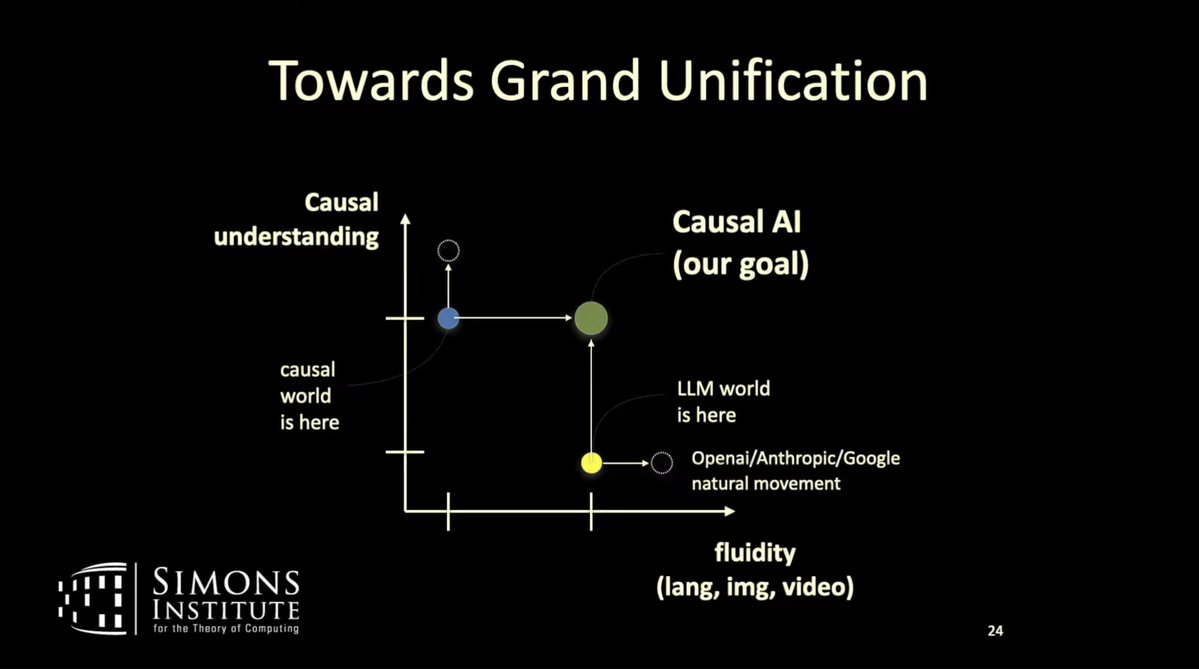
3/3 How can we build systems that have both fluidity and a causal understanding of the world? Why is this not easy? "Because there is the language of causality and the language of LLMs," said Bareinboim. "At the moment they don't fit...This is the generational challenge here."
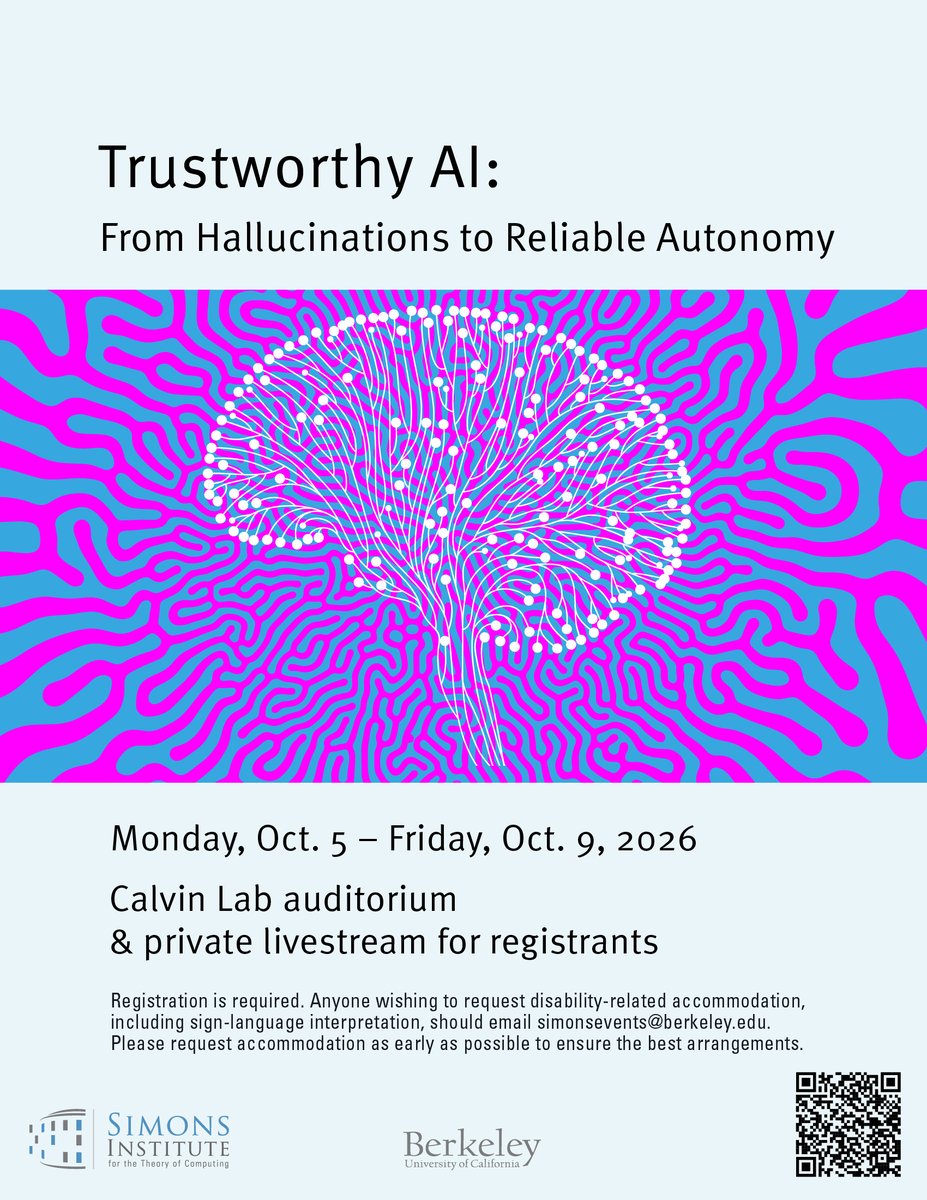
1/3 AI's Grand Unification Problem is about combining "fluidity" (the ability to generate language, images and video) with "causal understanding," said @Columbia's Elias Bareinboim at the Simons Institute workshop on Trustworthy AI: From Hallucinations to Reliable Autonomy.
2/3 "The OpenAIs, Anthropics and Googles of the world are trying to optimize to get more fluidity," said Bareinboim. But work on causal understanding moves along an orthogonal axis. "There's not much fluidity here, it's a mathematical language." Video: https://t.co/AWo3ZYUcEL
In the #1stproof third batch, frontier AI models solved up to 9 of 10 problems, while an open-weight model solved none.
Read the full story:
https://t.co/jbGBcv0uto
Thanks to all speakers, the audience for the sharp questions, my co-chairs @SharonYixuanLi , Dawn and Santosh, and the @SimonsInstitute team.
All talks: https://t.co/za2qKpi8nM Workshop: https://t.co/OGdko5dWP2
How can the math community forge the best path forward in the AI age? We're committing $15M to workshops and initiatives — plus free AI computing resources for foundation-supported researchers — through new partnerships with @AnthropicAI and @OpenAI: https://t.co/G8slrHoiad
#math #science #AI
Congratulations to Moni Naor on winning the Knuth Prize!
https://t.co/4hBW1hVxtM
Watch our Polylogue interview with him by @science_eye last year.
https://t.co/bJMWRdYznt
We all know that AI is a highly divisive issue. A working group convened at the Simons Institute earlier this month, to formulate concrete action items for TCS academia to take in response to AI. Remarkably, despite the wide range of opinions, participants were able to arrive at broad consensus on the list of recommendations here: https://t.co/53cGXLYC4N. Many apply more broadly to mathematics, and beyond.
This document is NOT a declaration or essay. It is a list of concrete proposals, fleshed out all the way from motivation to implementation. Its purpose is to provide a common reference point and shared baseline for the community to discuss and enact change.
The actions are intentionally designated to be taken in the short term (specifically, this academic year); they are not meant to represent a stable vision of the future. You do not have to like them; you just have to like them MORE than what will happen if nobody takes action. Not everybody at the workshop agreed with every action, but they ultimately came together through discussion and compromise.
For transparency, I was involved in this event in a purely organizational capacity. I did not come up with any of these actions, but I recognize their importance and I will support them however I can. I hope you do too.
Here are some of my main takeaways from the exciting #Cryptography reunion workshop I attended as a Science Communicator in Residence @SimonsInstitute this summer -
https://t.co/J1T9esNaRX
Many thanks to the organizers, Elette Boyle, Yuval Ishai, Abhishek Jain & Daniel Wichs!
In September, we hosted a working group to think about how the TCS community should respond to AI progress. Their report, released yesterday, highlights 12 near-term actions that received broad support among the participants.
https://t.co/4Ddf8lC78s