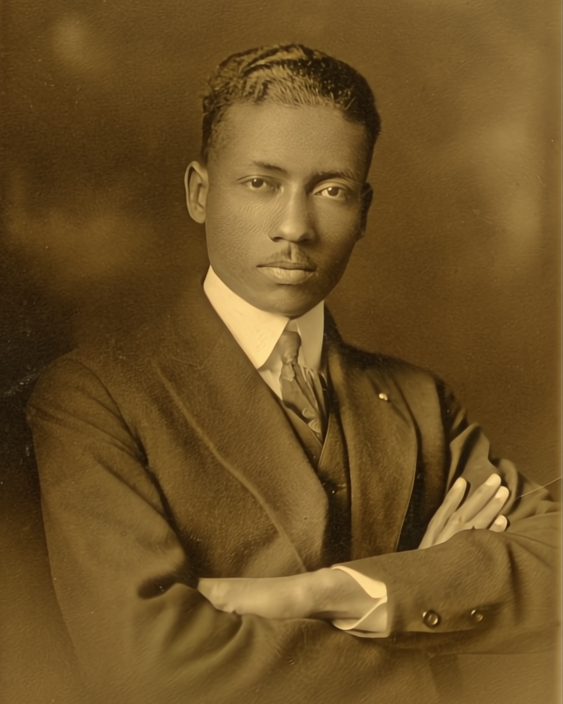
One of my favorite African American scholars is Lorenzo Dow Turner. He is best known for his groundbreaking research on the Gullah language of the Low Country in coastal South Carolina and Georgia, but his work also extended to Brazil and West Africa, where he traced the deep linguistic continuities across the Black Atlantic. This photo was taken when a 27-year-old Turner received his master’s degree in English from Harvard University in 1917. He appears in a sharply tailored dark three-piece suit, with broad lapels, a crisp high-collared white shirt, and a patterned tie secured neatly at the neck. https://t.co/g0g2HvdNW1
The World Cup is very, very good for big business. It's worth being reminded now and then. For example, Fox Sports is projected to make between $250 million and $600 million in advertising revenue strictly from the mandatory 3-minute hydration breaks introduced in this World Cup. https://t.co/gCU7Jlj1OZ
We have been told that there is about $21 billion to be recovered through ORAL. That could fund government spending for more than a year. That naturally raises questions about how the Attorney General’s Department is prioritizing its cases.
For example, how does the alleged $2 million Sky Train case become a priority over the multibillion-dollar allegations surrounding the Bank of Ghana’s cash printing? Or why does Wontumi’s galamsey-related cases receive early attention while other cases with potentially much larger financial implications appear to be moving more slowly?
It has been about 18 months since ORAL was launched, yet we are still waiting to see significant recoveries that can be directly attributed to it. Recoveries that would have occurred through the normal work of EOCO or other state institutions should not be presented as evidence of ORAL’s success.
The Attorney General’s Department has also not indicated how much it realistically expects ORAL to recover. Without clear targets and timelines, it becomes difficult for the public to assess whether the initiative is delivering on its promise.
The public deserves more transparency on the prioritization of cases, the value of assets targeted for recovery, the amounts recovered so far through ORAL itself, and the expected recoveries going forward!
Abuja was designed in the 1970s by American planning firms as a meticulously ordered city. The plan had zones for everything — except the people who would actually make the city work.
Fifty years later, those people are still being cleared to make room for the plan. https://t.co/mqd9DqBRCJ
https://t.co/fC0pNfUvGS helps curious Nigerians understand the present through the past, like discovering your grandparents complained about unaffordable rent in the 1970s, your parents complained about the same thing in the 1990s, and you're still complaining about it today.
STOP AND SEE THIS!
*********************
The Government of Ghana collected 1.7 BILLION CEDIS as the Sanitation and Pollution Levy. All the 1.5 BILLION cedis disbursed from this fund went to companies owned by only one person. Check who is behind these companies.
Kofi Asare writes .."In 2019, the World Bank approved a loan of US$92 million under Component 1 of the Greater Accra Resilient and Integrated Development Project (GARIP) to improve drainage and reduce flooding in the Odaw River Basin by 2024.
This was just the initial phase of Component 1. The entire project amount ended at about $350m after an extension in 2023.
The expected beneficiary areas included:
• Caprice
• Nima
• Kaneshie
• Circle/Kwame Nkrumah Interchange
• Korle Lagoon and its sea outlet
• Communities along the Odaw drain from Caprice to the sea
• Downstream sections of the Odaw tributaries
• Middle and upstream parts of the Odaw Basin
The component was expected to support dredging of the Odaw drain, repair of damaged drains, sand traps, bridge reconstruction, rehabilitation of the Korle Lagoon weir, flood detention basins and flood early warning systems. (World Bank, 2019).
The key accountability question is simple: after five years, how much of this US$92 million flood mitigation promise has actually translated into reduced flooding for these communities?
Between 2019 and 2024, Ghana’s sanitation sector was led by Cecilia Abena Dapaah, Freda Prempeh, and Lydia Seyram Alhassan as Ministers for Sanitation and Water Resources.
Why is the Odaw area still flooding today after sinking millions of $ ? The former ministers must answer!
The rain does not respect unfinished promises.-Larteh Proverb!"
It is hard to decolonize when you do not realize that the place you need to begin the process is with the nation-state. This is especially so if you are African. /1
The diaspora is not treating investment like charity. It is literally replacing the state. That $100 billion is not going to consumption out of a lack of financial vision. It is keeping families alive because African governments have abdicated every responsibility they were supposed to carry. School fees, hospital bills, housing, food: the diaspora is subsidising what governance failed to provide, mostly while barely surviving themselves in expensive cities abroad.
When we tragically lost eight Ghanaians in the helicopter crash, including two ministers, there were strong assurances that the fight against galamsey would be intensified. Yet beyond the initial statements, what has really changed?
If anything, the biggest change has been the decline in media coverage. When was the last time the government provided a comprehensive public update on the fight against illegal mining? One could easily assume the problem has disappeared, when in reality it has simply faded from the headlines. The next major environmental disaster will bring it back into public discussion.
The devastating floods in Accra will follow the same pattern. There will be public outrage, emergency meetings, directives, and promises of decisive action. Some short-term measures will be implemented. Then, as public attention shifts elsewhere, the urgency will fade until the next tragedy forces the issue back onto the national agenda.
This cycle of governing by crisis is one of our biggest governance challenges. We react to disasters instead of consistently managing the underlying risks. We announce interventions but rarely sustain the institutional focus, accountability, and follow-through needed to solve problems permanently.
Whether it is galamsey, flooding, power sector challenges, or road safety, the pattern is remarkably similar. The issue dominates the news after a tragedy, momentum builds briefly, then gradually dissipates before meaningful, lasting reforms are embedded.
Until we break that cycle and build institutions that focus on sustained implementation rather than episodic responses, many of the challenges Ghana has faced for decades will continue to resurface.
Reducing Accra’s flooding problem to “discipline and behaviour” is a convenient explanation for the government because it shifts attention away from the institutions responsible for preventing and mitigating these disasters in the first place.
Every major flood exposes failures across multiple areas: engineering and drainage infrastructure, building permit enforcement, urban planning, solid waste management, early warning systems, regulatory enforcement, emergency response etc.
Of course, individual responsibility matters. But the state’s responsibility to plan, regulate, monitor, and enforce matters even more. When politicians reduce the conversation to discipline alone, they turn a complex governance failure into a matter of individual behaviour rather than institutional accountability.
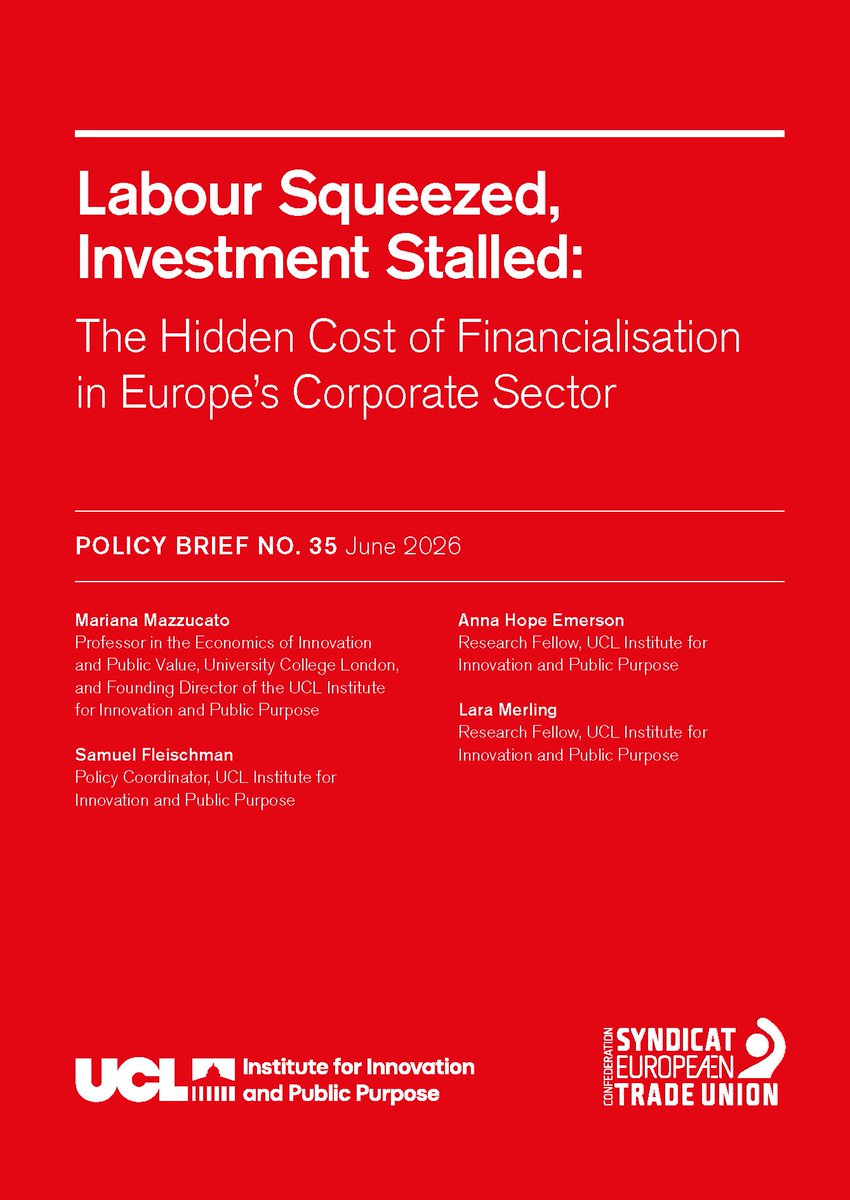
Europe’s largest companies are seeing record profits but low investment.
What do they do with the profits instead? Distribute them to shareholders, borrow to fund more payouts, and hoard earnings to maintain buffers for future distributions.
New policy brief, co-authored with @SamuelFleischm2, @AnnaHopeEmerson, and @LaraMerling, where we look at the social costs of misdirected capital and what to do about it. Link in replies.
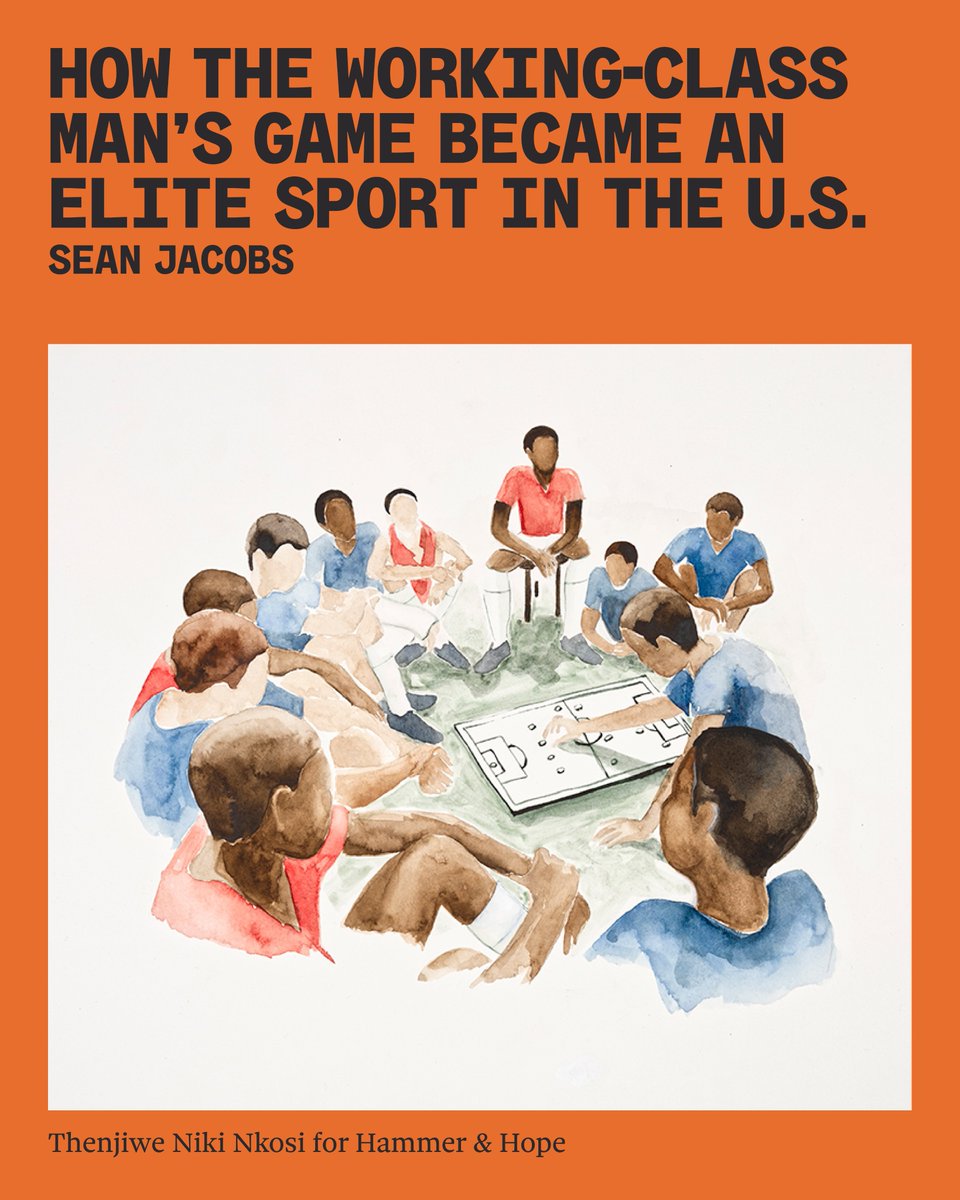
I wrote a piece for @HammerandHope about the class and racial politics of the USMNT. I was even more pleased that the artist Thenjiwe Niki Nkosi (I don't think she is on X) did the art for it. https://t.co/0Vs9C3sfa1
Mr. President,climate change may be beyond our control,but preparedness is not.Citizens must obey planning laws,but decades of weak enforcement,poor drainage management,and inconsistent urban planning are governance failures that cannot be overlooked.
On paper, there is an operational flood early warning system under the $350 million World Bank loan for addressing floods in the Greater Accra Region. This early warning system is supposed to provide advance notice to people living in flood-prone areas so they can relocate. Where’s that system that’s supposed to be in operation?
This is probably going to sound controversial but a lot of people have developed a sense of entitlement to other people's activism. I think one of the biggest problems we have is the delegation of activism. People have convinced themselves that civic responsibility belongs
And just like that, my mind goes back to the circle gas station fire during that flood some years ago. I don't know if something was done then but I'm see the same talk now. Painful
In the last 15 years, major World Bank financing, largely loans to Ghana, meant to improve Greater Accra’s flood resilience, sanitation and related urban systems totals approximately US$655m:
1. 2013: Greater Accra Metropolitan Area (GAMA) Sanitation and Water Project- US$150m
2. 2019: Greater Accra Resilient and Integrated Development (GARID) Project-US$200m
3. 2020: GAMA Sanitation and Water Project Additional Financing -US$125m
4. 2023: GARID – Additional Financing-US$150m
5. 2024: GAMA Sanitation and Water Project – Second Additional Financing-US$30m
Maybe this is the right time to impact-evaluate these huge projects.
“A lion counts the hunt by meat on the ground, not by the roar in the forest.”-Larteh Proverb!
Basically all the water have their courseways that lead to the sea. There were maps in schools that had the entire water courseways and drainage system of the country. Some were so detailed before you bought land, lawyers performing due diligence could use the maps and make enquiries to know whether the land was in a water course way or site or designated wetland under the Ramsar Convention. Now most people don’t bother or care.