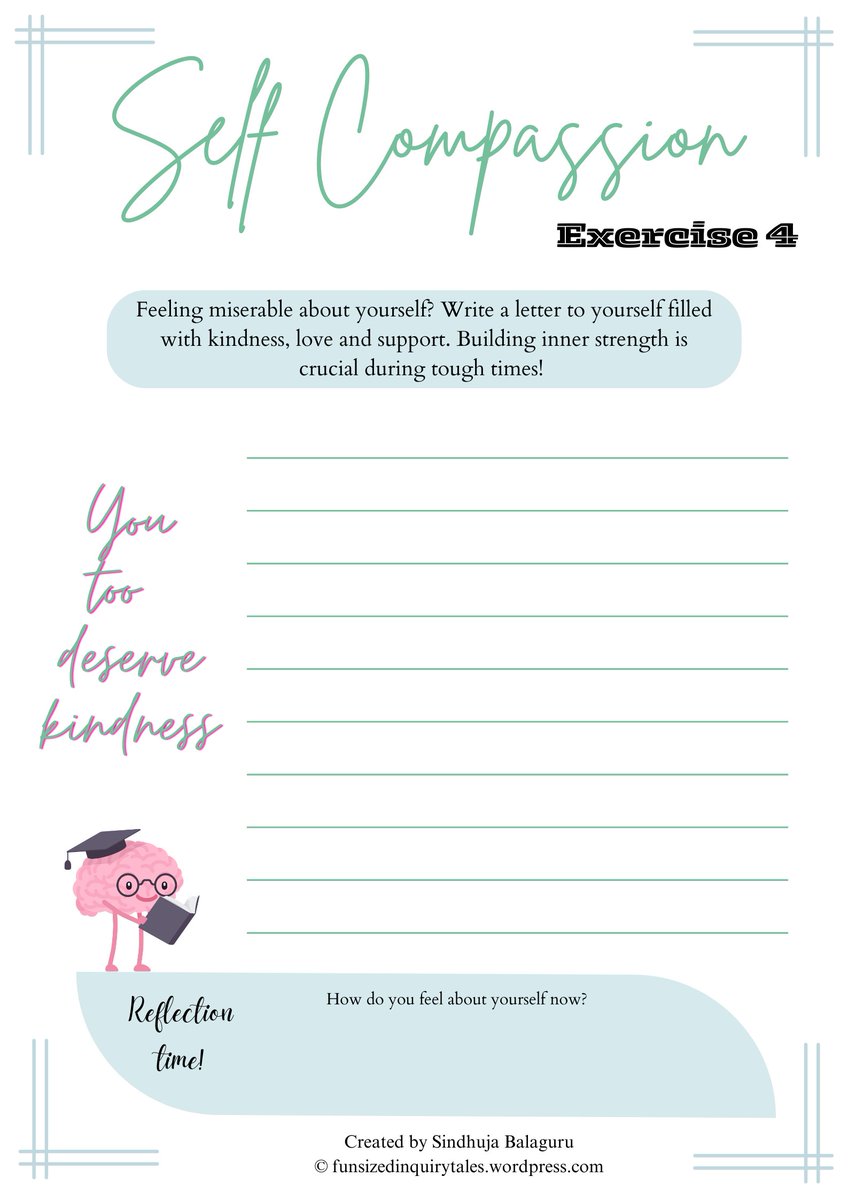
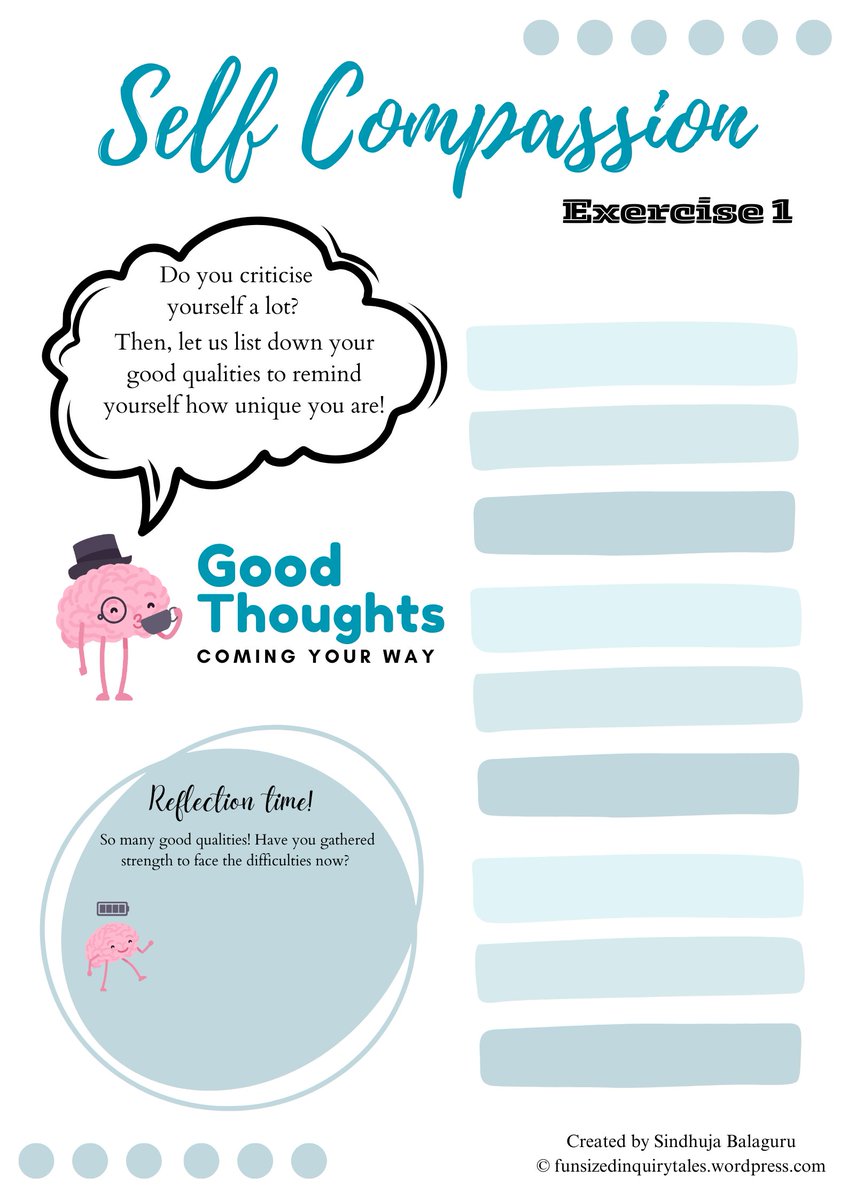
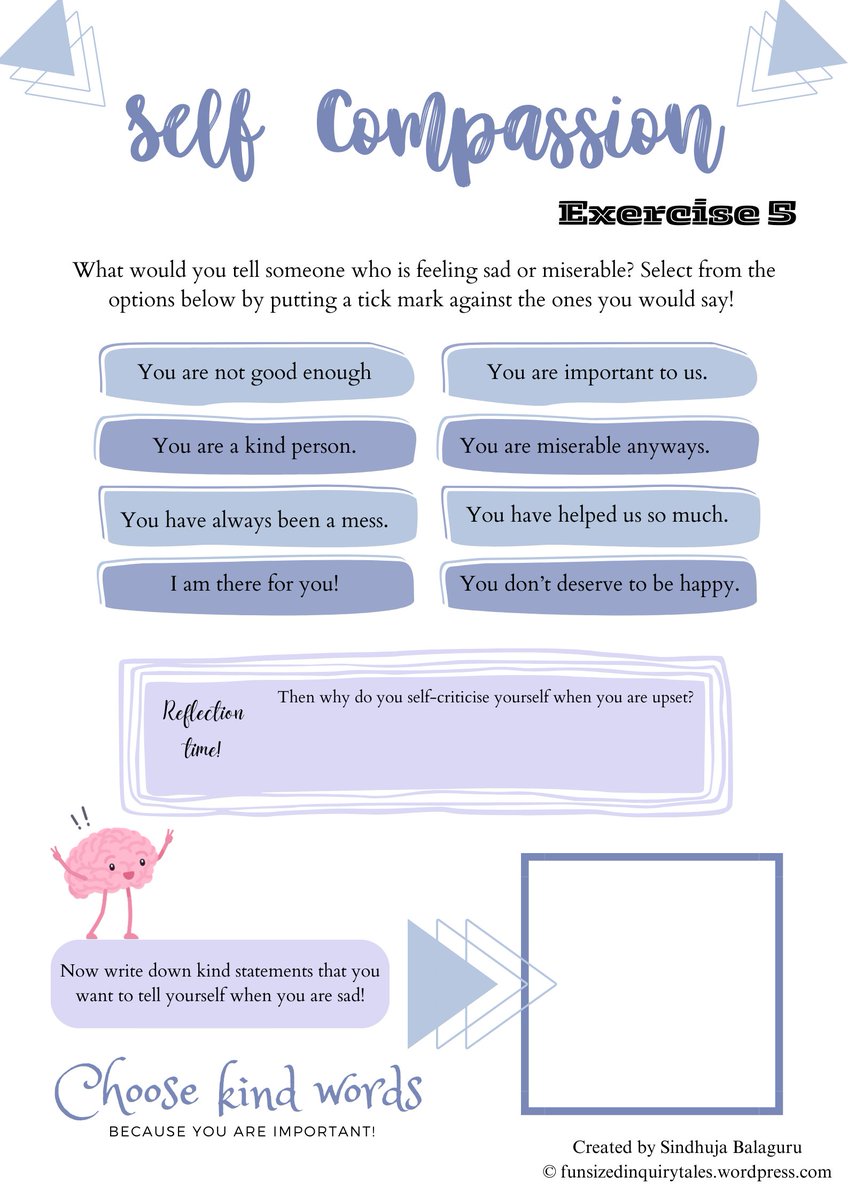
We often teach children to be kind to others. Do we teach them to be kind to themselves? What should they tell themselves when they feel sad or miserable? Here are few interactive worksheets that nurtures their self-compassion! Download PDF from link below
https://t.co/XqakdY5QxG
The most common response I get is, “You are a psychologist and you should not get angry!” or “I don’t understand how being a psychologist you can be emotional?!” When I shared this to my students, their response was empathetic. I’m so proud of my bunch ♥️
#IBPYP#Empathy
“Ma’am! Just because you are a psychologist, people can’t say that you can’t express anger or cry. You are a human being too. Psychologists also have emotions!” - Students of my class (PYP 5)
IB sure develops empathetic, caring and open minded human beings!
#IBPYP#Empathy
The discussion somehow lead to who goes to a psychologists to seek help. They reflected that anybody who needs help can go. Then I shared about my life. I told them about how people around me always accuse me for expressing my emotions.
Nothing can beat the power of powerful, authentic provocation on sparking students’ curiosity. To start the unit on Healthy Choices, a teacher was ‘found’ sleeping in the hallway, surrounded by evidence of his unhealthy choices, which generated many wonderings. #aisgz#pypchat
When students take #action, we realise the power of inquiry! PYP 3 enjoys writing down their happy learning moments and adding it to the HAPPINESS BOX that they have created. @ElaGreenSchool#IBPYP#inquirers
When the adults in a school acknowledge & greet each other kindly & genuinely, it’s a clear modeling & example for students to do the same to their fellow classmates.
This is #culture building one salutation at a time.
#edchat#education