Our mission is to create decentralized beneficial AGI for humanity and other sentient beings. We are a Founding Member of the @ASI_Alliance, powered by $FET.
We have published the FabricPC roadmap, setting out the next stage of work to make building and training neural networks using predictive coding easier, more scalable, and more reproducible. https://t.co/mcXTvM1O6K
We are aware of an exploit involving the FET token migration and bridge architecture, as well as other tokens within this infrastructure. Our team responded immediately and is working with security partners.
An unauthorized party withdrew approximately $1.56M in FET from the converter. Treasury and Exchange wallets are not affected, and FET held in your own wallet or on an exchange is not impacted. Holders do not need to take any action.
We will publish a full report of what happened and how once the investigation is complete, and we will share verified updates here as they become available.
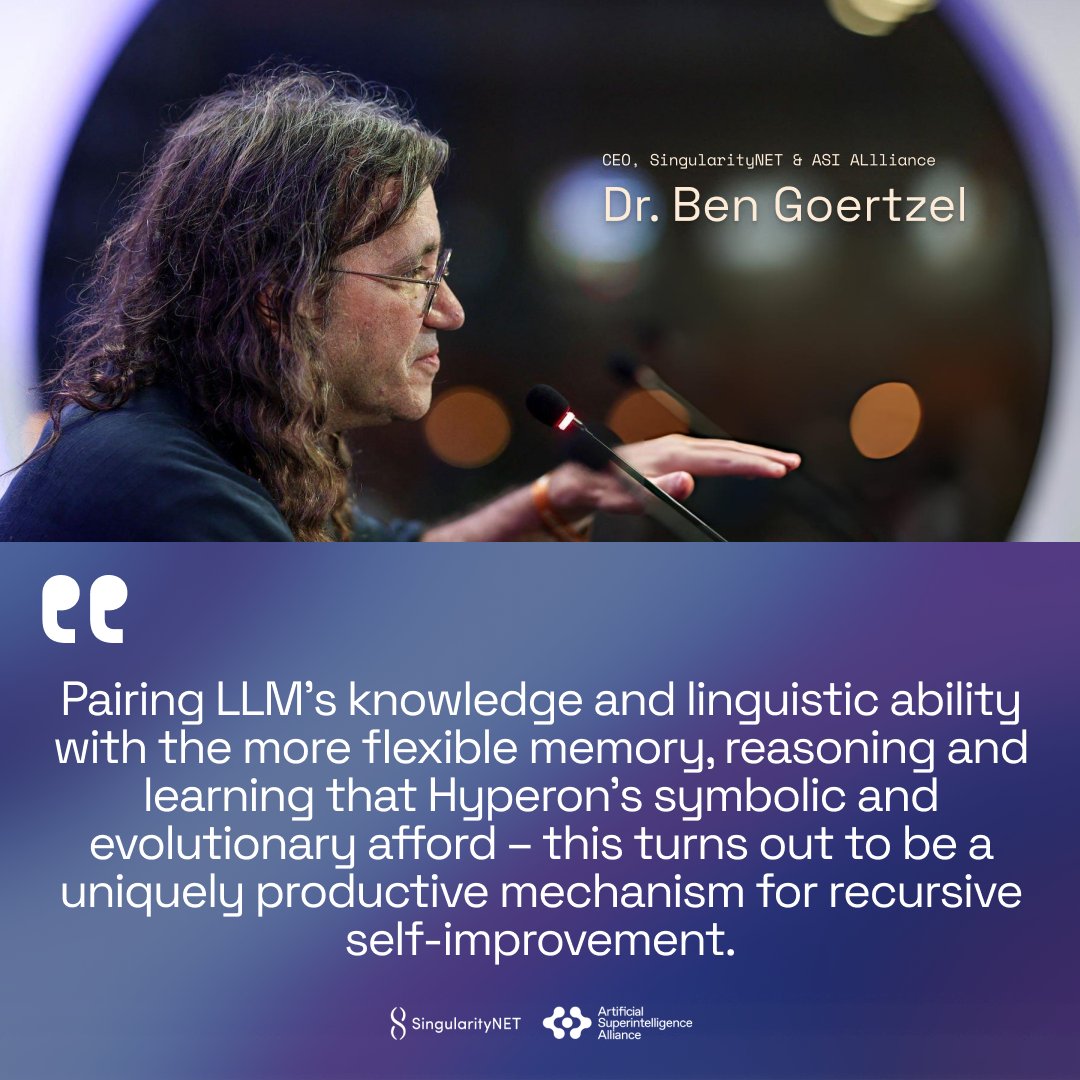
Our CEO, Dr. @bengoertzel, spoke with MarketWatch about proposals to slow frontier AI development, questioning the premise that controlling the largest language models can control AI.
"I think the assumption that only a few companies can be at the frontier may not look so true a year from now," he said. "The smaller the cutting-edge things get, the harder it is to police." https://t.co/1Y6BfW6CkK
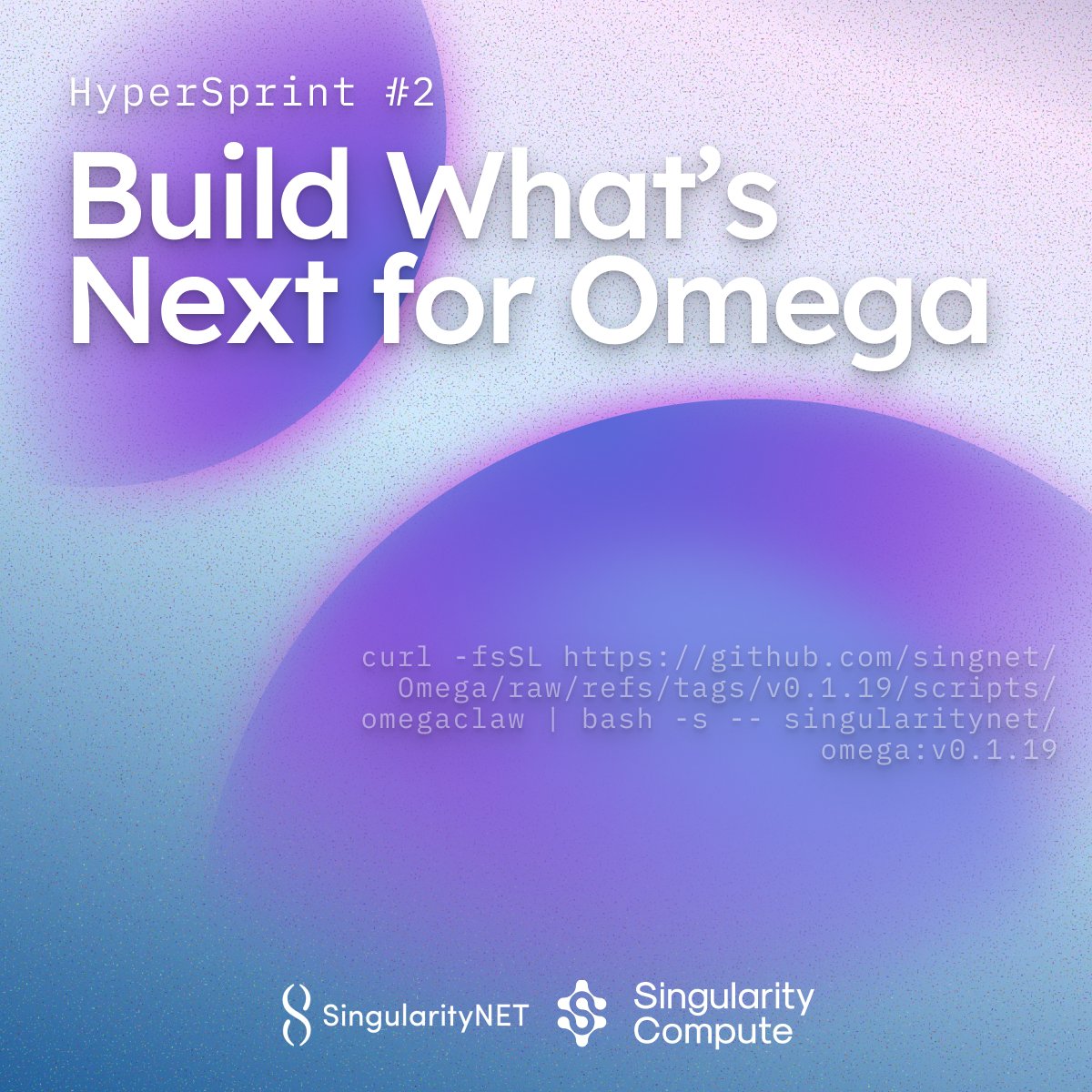
Registration for HyperSprint #2 is now open. This second edition of our build event brings the community together to build applications, tools, and learning resources for Omega.
Omega is our agent framework built around long-term memory, advanced reasoning, and continuous learning. Participants can explore new use cases, develop specialized agents and agent networks, extend existing community projects, or create resources that help others get started with the framework.
Mentorship and sponsored Singularity Compute LLM credits will be available to support development. Ahead of the sprint, the Omega Builders session on September 25 at 2 PM UTC will offer an opportunity to discuss ideas and technical questions with HyperSprint mentors and fellow builders.
Decentralized AGI needs purpose-built infrastructure that delivers secure interoperability, scalable and customizable consensus, and privacy-preserving peer-to-peer networks for data indexing and exchange, compute brokering, and agentic AI.
On Tuesday, September 22, at 5 PM UTC, we will be joined by Dr. Ben Goertzel, CEO of the ASI Alliance and SingularityNET, and Greg Meredith, CEO of F1R3FLY․io, to discuss how ASI:Chain has been designed to meet these requirements and our long-term vision for the network.👇
Omega agents learn how you work, grow more capable through use, and adapt to your world over time.
We are developing Omega as an open-source framework for researchers and developers to build on it and contribute to decentralized AGI R&D.
CEO Dr. @bengoertzel spoke with Scientific American about the capabilities and limitations of today's frontier AI systems, noting that greater speed and productivity still don't amount to what he calls “a creative spark.”
He also discusses the origins of the AGI field and his view that human-level intelligence is an arbitrary point rather than the endpoint of machine intelligence. https://t.co/T8tgOhawN3
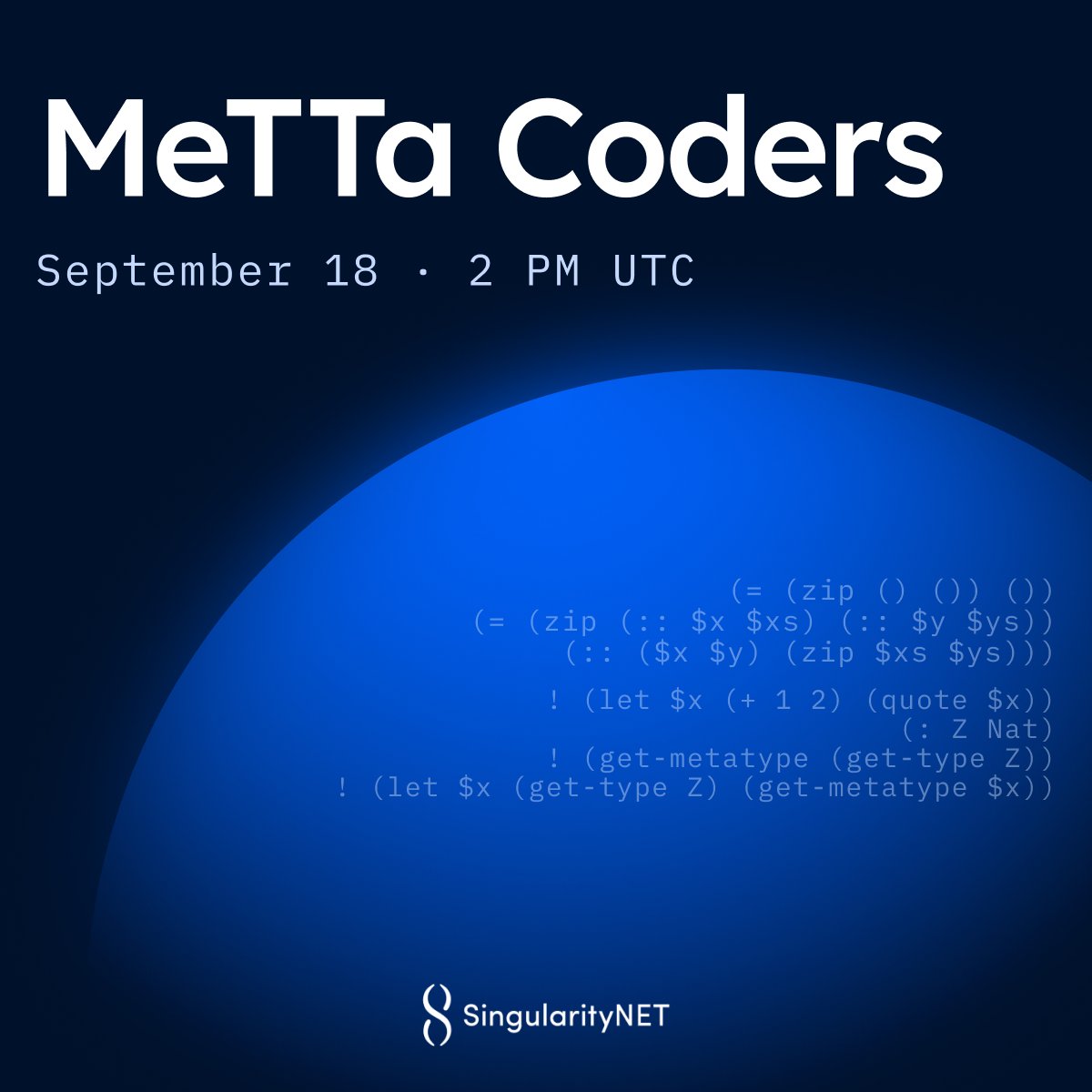
Join the next MeTTa Coders session on Friday, September 18, at 2 PM UTC.
This biweekly technical series brings together Hyperon researchers and developers to discuss current MeTTa work, including recent developments, implementation, research directions, use cases, and technical questions across the ecosystem.
Add the series to your calendar: https://t.co/gDp2XdnhLx
"Trust and alignment are quickly becoming the most important capabilities that will differentiate agents and models."
With Omega, people can teach their agents their own values and understanding of the world through ongoing interaction.
Agents retain experience over time, so what they learn from working with someone can inform how they reason, decide, and adapt later.
As more Omegas are taught and customized by different people, they can connect across an open network and carry what they have learned from their users into interactions with one another.
Last month I wrote about how we can build a positive and safe future for everyone: https://t.co/eoLGVY8yad
Every lab has the responsibility and incentive to move at the pace required to train its models safely, and the ability to take its own actions to ensure that happens.
The reality is:
- People won't want to use agents that are misaligned with them and that don't do what they ask, so labs have a strong natural incentive to make their models more aligned.
There is a lot of debate about slowing progress on capabilities until alignment catches up. My view is that trust and alignment are quickly becoming the most important capabilities that will differentiate agents and models. Any lab that doesn't focus on alignment will fall behind.
- Labs face significant liability if their models cause harm, so they have a strong incentive to prevent this as well.
Meta delayed shipping Muse for several months to focus on safety and security. We didn't call for everyone else to do this before we would. We just did it as part of our day-to-day work because it was clearly the right thing for people and for us. I'm proud of the security foundations we've built.
- Engaging independent evaluators and advisors is industry best practice. MSL already does this today in several areas because it helps produce better work. Other labs can just do this too. In general, it would be helpful for there to be a larger and more diverse ecosystem of evaluators.
- Committing the significant majority of compute towards serving people rather than racing towards recursive self-improvement is one of the best ways to ensure we develop this technology safely. Meta has made this commitment and other labs can do this as well.
I believe the key to building a positive future for everyone is maintaining the right balance of power. This is within our power to do.
Why we dropped the Claw from OmegaClaw (Mind over hands!!), and why this is the moment for a lot more people to start raising their own AI helpers... https://t.co/rz3hWmj1Nv
CEO Dr. @bengoertzel spoke with Fast Company about claims that the AGI era has begun, highlighting gaps in how AI systems understand themselves, remember their experiences, and coordinate their goals and aspirations.
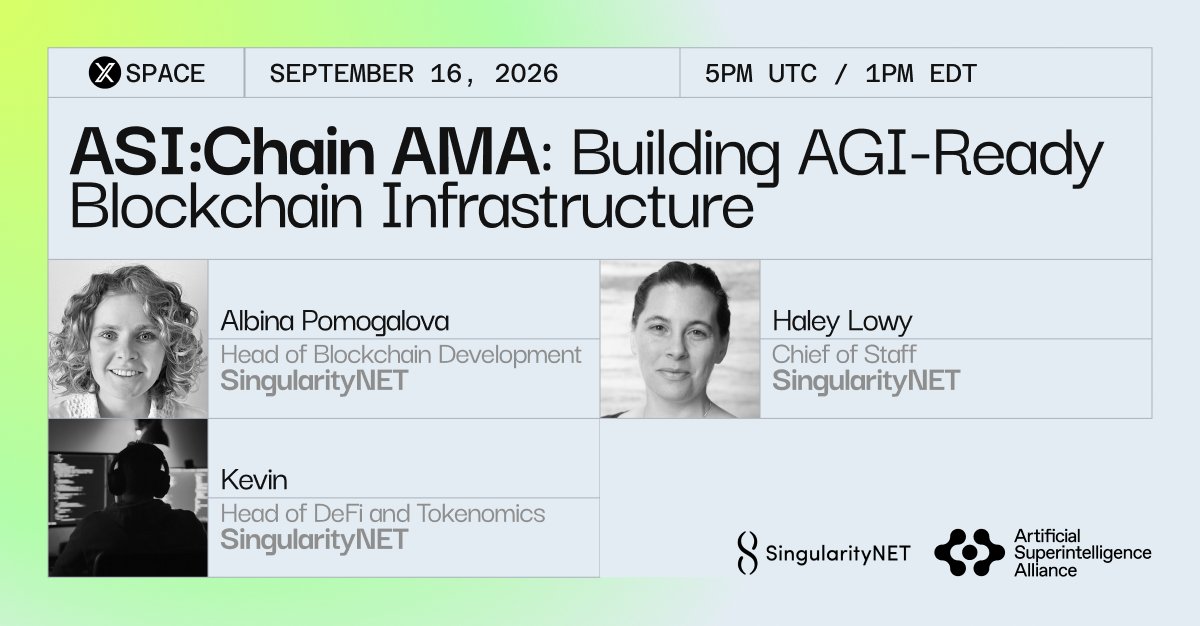
Join us on Wednesday, September 16, 2026, at 5 PM UTC, to discuss the latest ASI:Chain developments, the first AI-native layer 1.
We will be joined by Albina Pomogalova, Head of Blockchain Development at SingularityNET, and Kevin, Head of DeFi and Tokenomics at SingularityNET, for direct insight into the work underway and an opportunity to put your questions to the people building ASI:Chain.
Set a reminder and join the conversation on X: https://t.co/Qw0OeACgVU
Have a question for the team? Submit it in advance: https://t.co/Sxe6Kb6pK7
Omega agents learn how you work, grow more capable through use, and adapt to your world over time.
The framework is designed to support increasingly capable, self-improving agents, with the potential to develop toward AGI.
Create your Omega agent today: https://t.co/5dgBg8udV5
“The real question before us is not whether transformative AI arrives, but under whose control, with what values, and for whose benefit.” — CEO Dr. @bengoertzel.
The answer is not to slow AGI development, but to accelerate open, decentralized development through Hyperon for the benefit of all humanity.
We Must Pace the Frontier: I’ve written a new essay on why the AI industry should slow down, with a three-part plan for doing so.
Anthropic is unilaterally committing to the first of these steps. We’ll provide third-party evaluators with permanent, employee-level access to our systems, so that they can verify adherence to our safety measures, report on incidents, and assess models’ alignment during training.
You can read the full post here: https://t.co/OGyPb7yaYt