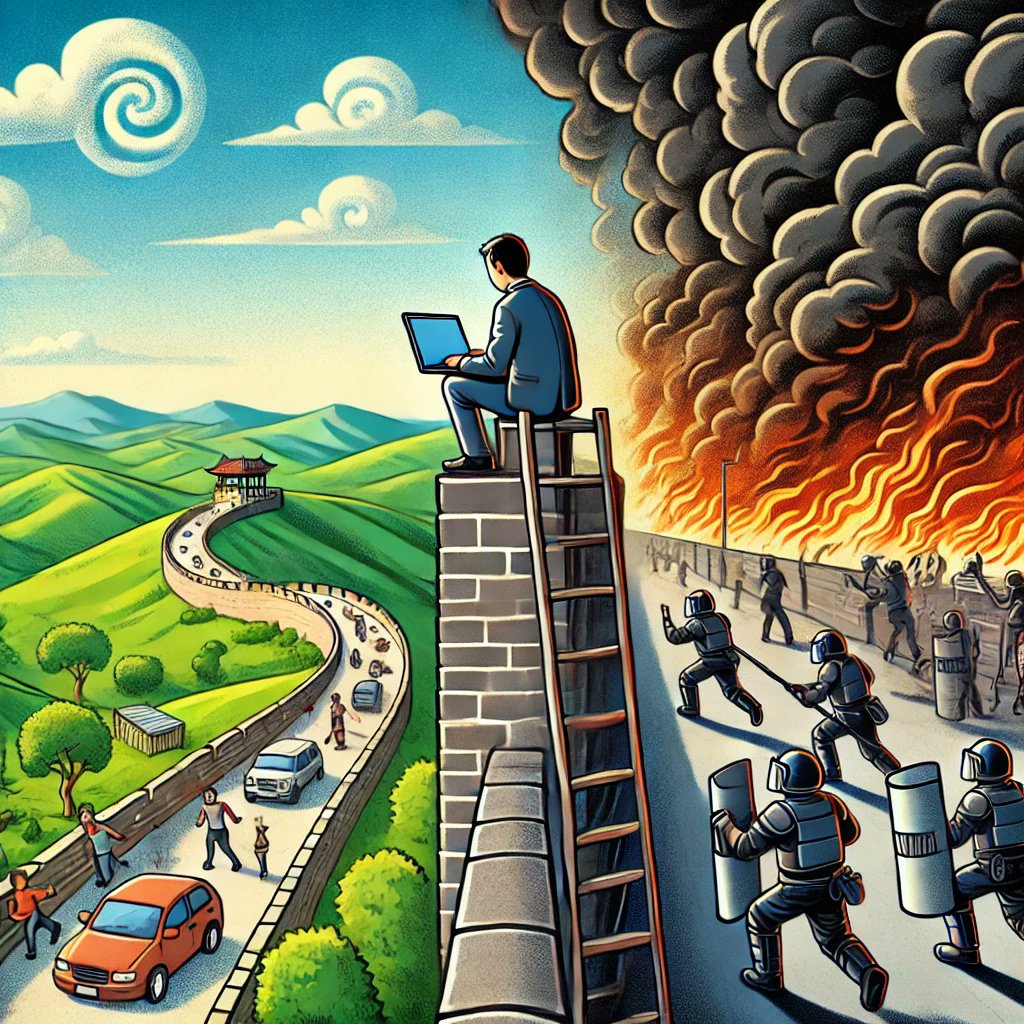
🧱🇨🇳 The Great Firewall or the Great Filter?
Why China Limits Western Influence
Since relocating to China, I’ve gained a deeper understanding of the country’s restrictions on Western social media and news outlets. These measures appear to be implemented not only to protect the youth from harmful online influences but also to shield the broader population from the predominantly negative narratives prevalent in Western media.
In China, media outlets often emphasise the nation’s achievements, progress and positive developments. This approach fosters a sense of national pride and unity among citizens. In contrast, Western media frequently highlight stories centred on crime, fear and societal issues, which can contribute to public anxiety and a sense of insecurity. This disparity in media focus reflects differing cultural values and governmental priorities.
Critics from Western countries often argue that China’s media restrictions infringe upon personal freedoms by limiting access to global information. However, it’s essential to recognise that Chinese citizens can access international content, albeit with filters designed to exclude material deemed harmful or destabilizing. This approach underscores a different conception of freedom, one that prioritises societal harmony and collective well-being over unrestricted individual liberties.
The Chinese government exercises significant control over media narratives to maintain social stability and promote positive societal values. This includes removing content that is considered detrimental to public morale or national interests. While this level of control may be viewed as restrictive from a Western perspective, it aligns with China’s emphasis on collective harmony and progress.
China’s restrictions on certain Western digital platforms and news outlets can be seen as proactive measures to protect its citizens from content that may be harmful or destabilizing. This protective stance offers a perspective on balancing freedom with responsibility, prompting a reevaluation of how societies can best nurture and safeguard their populations in an increasingly interconnected world.
Real-World Examples from the West:
The Blue Whale Challenge: A deadly online phenomenon that encouraged teens to self-harm and ultimately take their own lives. It spread across multiple Western countries in 2016–2017, resulting in real fatalities before being taken seriously by authorities. In China, it was quickly contained before gaining traction.
TikTok Trends Gone Wrong: From the “Benadryl Challenge” (which led to hospitalisations and even deaths) to “NyQuil Chicken,” dangerous viral trends have repeatedly emerged and spread unchecked on Western platforms, with young people copying behaviour for likes and views.
Self-Harm & Suicide Normalisation: Platforms like Instagram and Tumblr have been exposed for hosting communities that promote eating disorders, self-harm and suicide under the guise of “mental health awareness.” Investigations have shown these algorithms can push vulnerable users toward darker content.
Mass Shootings and Live-Streaming: In the West, violent crimes, including mass shootings, have been live-streamed or glorified online. The Christchurch mosque shooting in New Zealand was streamed on Facebook and clips still circulate years later.
News Saturated with Fear: Western news networks often lead with crime, division, or disaster. Sensationalism dominates headlines, reinforcing fear and anxiety in the public. In contrast, Chinese media tends to focus on achievements like poverty alleviation, infrastructure development and technological innovation.
Influencer Culture and Moral Decay: Western online influencers frequently gain fame through controversy, vulgarity, or promoting shallow materialism. Scandals, OnlyFans careers and public meltdowns are algorithmically rewarded, setting questionable examples for impressionable audiences.
Thankfully, this kind of rubbish and dangerous influence simply doesn’t exist in China in the way it does in the West. By limiting access to harmful online trends and toxic media culture, China has managed to preserve its wonderful cultural values and deeply rooted philosophies.
Rather than allowing chaos to spread under the guise of “freedom,” China has chosen to safeguard its people, especially its youth, and maintain the social fabric that continues to make the country strong, united and forward-focused.
Our 20 most read articles of all time
Researching educational policy and change in ‘new times’: using critical discourse analysis
By Sandra Taylor
https://t.co/l9OD9bmTqg
📣 OFFICIAL ANNOUNCEMENT
We're delighted to announce next year will be the #WERABERA2024 conference at The University of Manchester @OfficialUoM
And we're celebrating our 50th Anniversary!🎈🎉 #BERA50
Abstract submission is now open. Find out more: https://t.co/cKqkZjNDz0
Want to express my great gratitude for Stephen and Paul's kind invitation to enter the ELIP master's conference! As a PhD student who just started Year 2, this conference offered so many invaluable inspirations, lessons, and new networks ! Thank you Stephen!
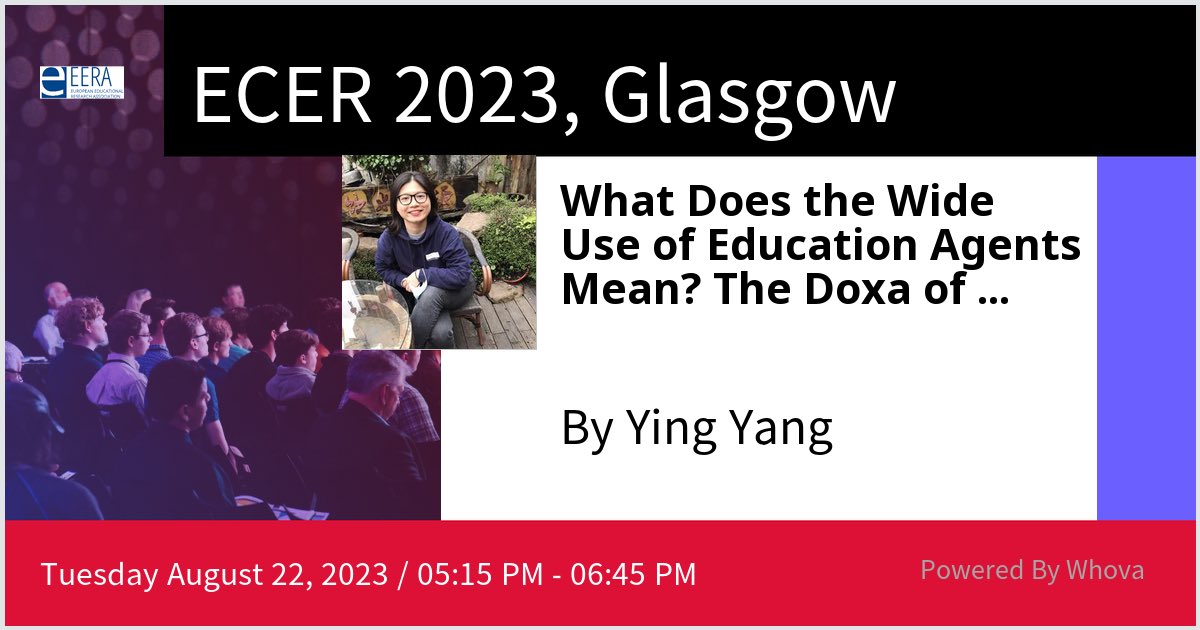
Looking forward to speaking at ECER 2023, Glasgow on What Does the Wide Use of Education Agents Mean for the Global Higher Education? Please check out my talk if you are attending the conference #ECER2023 - via #Whova event app
The following news mentioned the governmental website for normalizing private tutoring, which has been a newly settled measure for regulating shadow education. It tries to put the commercial affairs in the shadow education industry transparent:
https://t.co/GomQdBjaa2.
Happy to have my annual review meeting finished today. My deep impression from the AR was a lot of things needing to be finished for my next stage. I have also receive a very precious chance to have a coffee talk with my first supervisor. So grateful for all her support! :)
@SRayner11 Thanks a lot Stephen. I will go back to China for my data collection for half a year. 😊 Sincerely thanks for your warm help !🙏 and we will definitely meet soon!
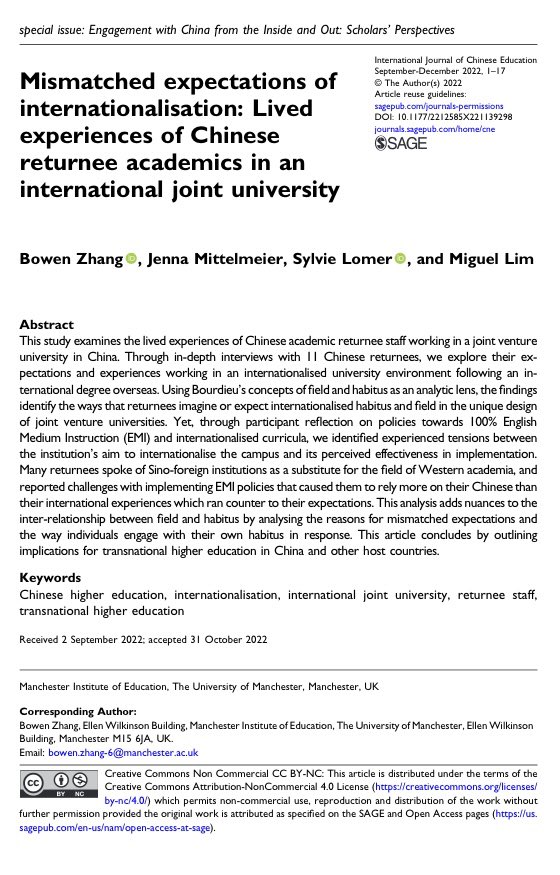
Elated to share my article with @JLMittelmeier@SE_Lomer@miguel_a_lim is out! It considers TNHE as a method to examine internationalisation in China HE, and shed lights on unique challenges faced by returnees in internationalised contexts. Open access: https://t.co/Jqm9uxXk47
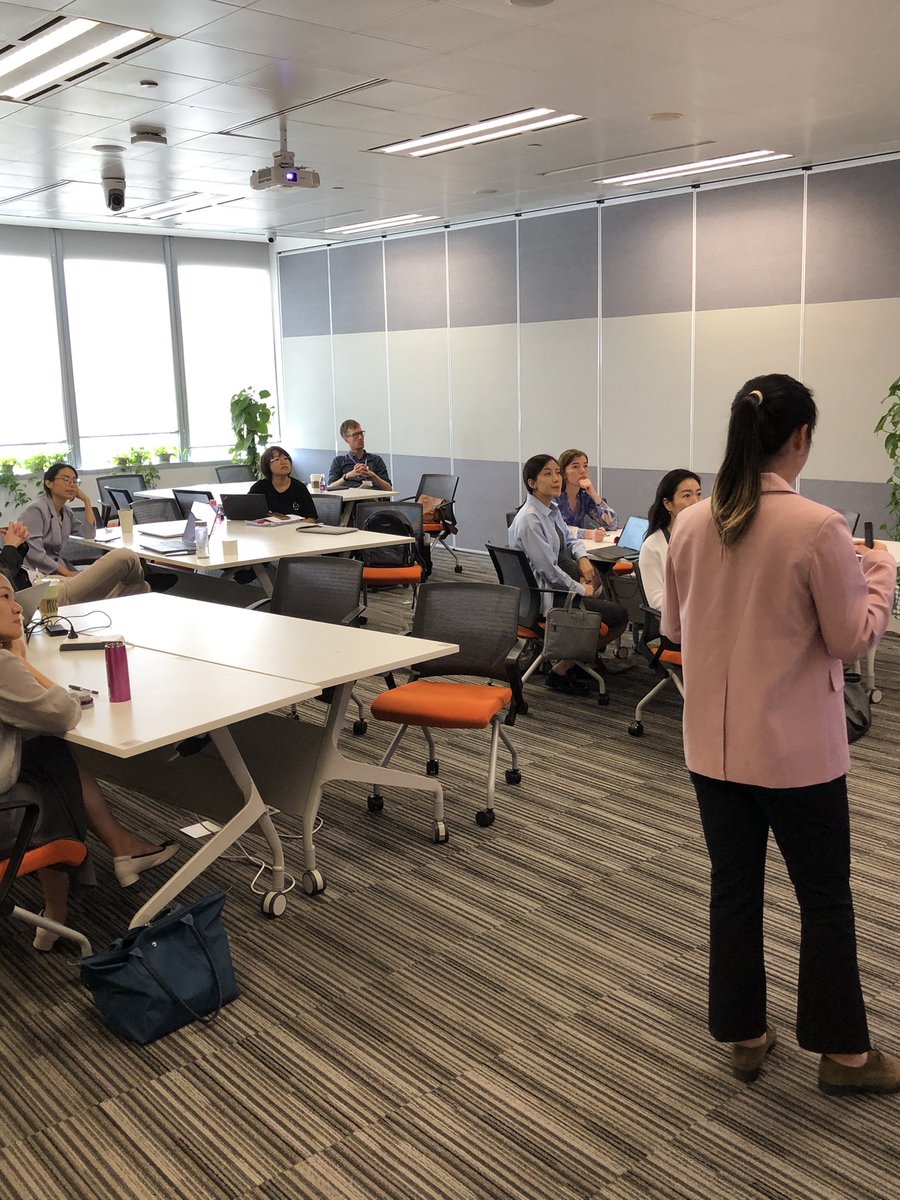
A record to speak at the method fair. This is the first time for me to try an academic speaking in front of a cohort of academic audience. Everything today was so impressive for me. :))
Fair details: https://t.co/87KfaFEFCh