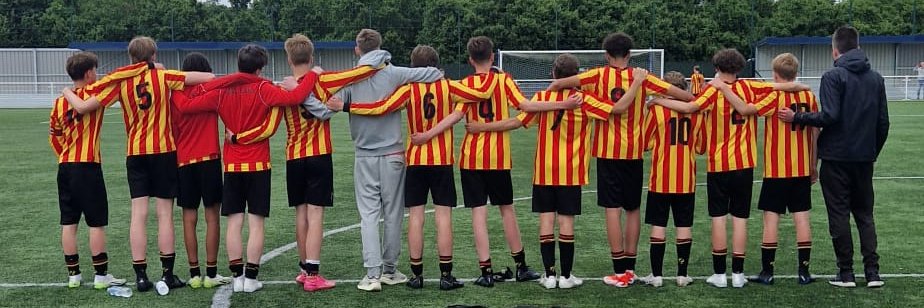
People tend to only shout about their successes on social media, so it's easy to get a distorted view of coaching, where everyone is doing well apart from you.
In truth, we all have our highs and lows. You aren't the only one who struggles at times.
#SundayShare
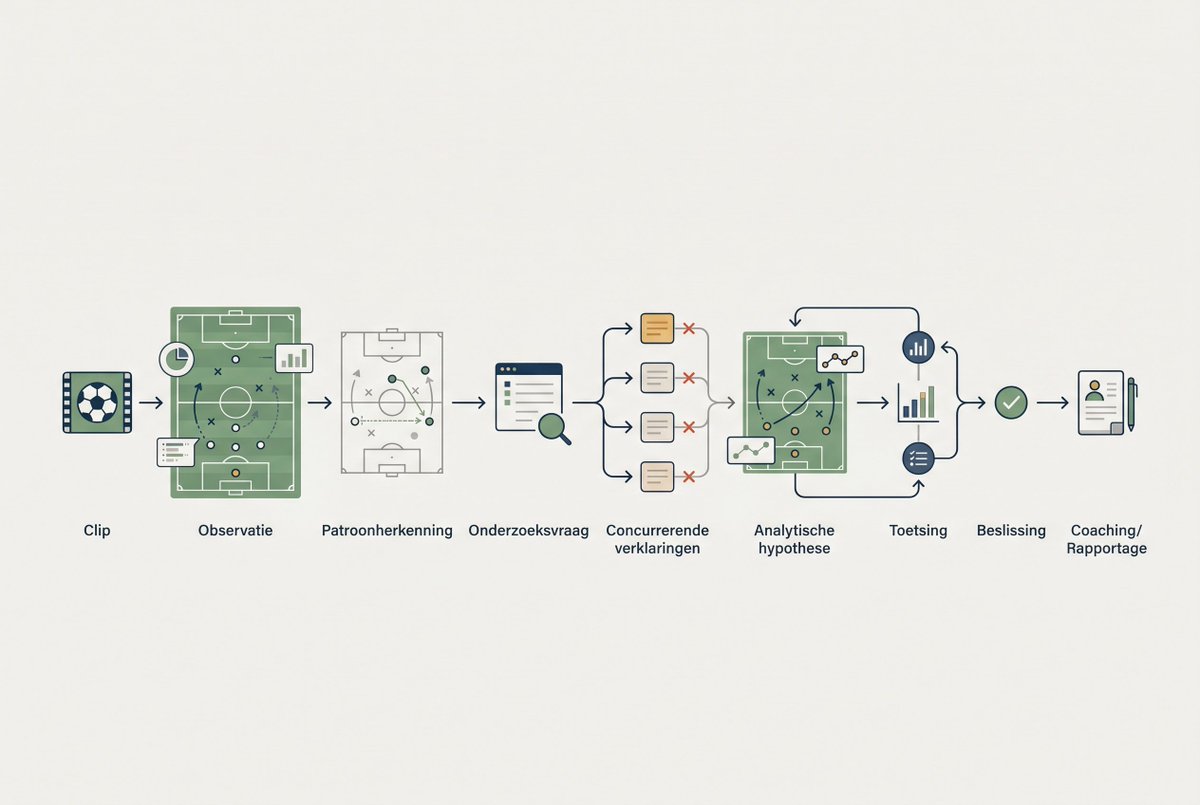
Tussen een clip bekijken en er een conclusie aan koppelen, zit voor mij het echte analysewerk.
Deze afbeelding toont het proces.
De moeilijkste vraag komt daarna: hoe pas je dit toe wanneer een wedstrijdsituatie niet zo duidelijk is als het schema?
👉 https://t.co/MWptzGvreP
Boxes | Fill 3 to Goal 👊
⚽️1 player in 1 box at any time
⚽️Pass and move
⚽️Quick connections to find the spare box
——
Create your exercises today at https://t.co/1uts5FIopc ! 👊
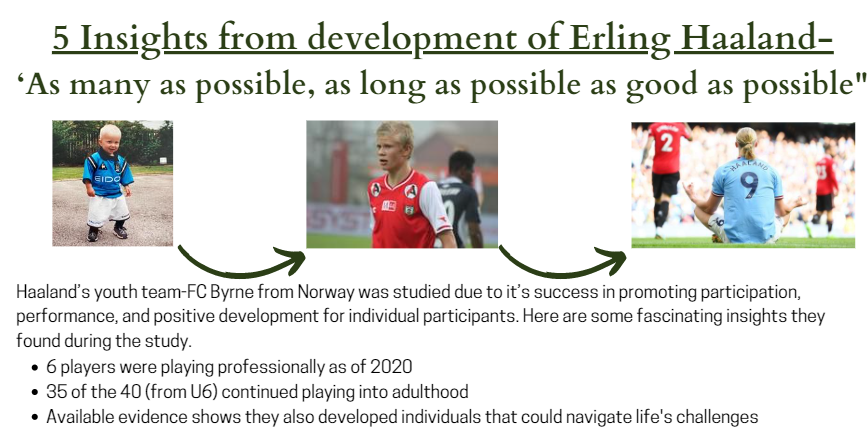
Erling Haaland has taken the Premier League by storm.
But contrary to popular belief he's not a robot that was created in a lab
A case study done on his youth team gives some interesting insights into his development
Here's 5 insights for coaches (of any sport)
👇🧵👇
Put a child who's still developing in among better players and they'll turn on him.
That's a comment that often turns up under most posts about mixed-ability football in the youngest age groups.
Wait. ✋
Walk into any primary school classroom in the country. Some children read fluently, others are still sounding out words. Nobody disputes that.
No school in the country treats it as acceptable for stronger readers to exclude or humiliate a child into leaving the classroom, because they're behind.
If a child was being frozen out by classmates during a lesson:
• Nobody would call that a natural consequence of ability differences.
• Everyone would call it a failure of how that classroom was being run.
Football doesn't get a special exemption just because there's a ball involved.
Children don't arrive at six years old believing a teammate who can't quite control the ball yet is a liability to be ignored.
That belief gets taught, by the culture that's set within that environment.
• What gets praised in training and games.
• Which players get spoken to more.
• The tone in a coach's voice when the better player makes a mistake, versus when the child still finding his feet does.
Children read what's actually valued, not what adults say they value. Then they build their behaviour around that.
So the question isn't:
"What happens when a weaker child plays alongside stronger ones?"
The real question is:
"What has this group of children been taught to do when that happens?"
Here's where most of this argument falls apart in the comments before it even gets going:
"Fine in theory, but you'll get beaten 20-0."
So let's actually look at that.
A heavy scoreline at six, seven, eight years old isn't a fact about the children on the pitch. It's a fact about how the adults chose to run the game.
• Did the stronger team's keeper roll it out, or smash it long every time?
• Did anyone tell the better players to take an extra touch, or just let them?
• Did the weaker team get put in positions where they could actually get on the ball, or just left to the side whilst on the field?
Foundation Phase doesn't record league tables, and there's a reason for that. The result is supposed to be the least important thing happening on that pitch.
So if the score genuinely doesn't matter at this age, it can't also be the reason a child gets removed from the squad.
The Foundation Phase is built around exactly this idea, that gap should be where learning happens, not where children get filtered out.
A child who's a step behind his teammates this season, surrounded by better players, trusted to keep showing up, has been given one of the most useful environments football can offer for catching up.
Steer him quietly toward a "lower level" instead, and you haven't solved a development problem.
You've just relocated a child who needed more, not less.
None of this means a coach pretends the gap doesn't exist.
It means the coach decides what the group does with it. Sets the standard for how teammates treat each other, regardless of who's quickest to the ball that week.
We protect and develop the six-, seven-, eight-, and nine-year-olds who show early promise, and quietly keep the rest out of the picture.
At the one stage of the game that's supposed to be for everyone.
If that's the cost of chasing a result that wasn't supposed to matter yet, the question isn't whether we can coach what's in front of us.
It's why we ever decided not to.
I don’t know what the game model is called.
But I want my team to play like this:
– Attack fast
– Take players on
– Win the ball back quickly
– Play with speed and control
– React instantly in transitions
– Combine, create, and commit
– Defend as a unit with urgency
– Move constantly to stretch opponents
– Play to score, dominate, and decide games
🚨 Arsenal are Premier League CHAMPIONS!
Mikel Arteta's process is COMPLETE! 🏆
Below, I revisit the ENTIRE process. From December 2019 to May 2026.
From the “Arteta Out” movement to worldwide criticism over many years, we have proved the doubters WRONG!! 💪
MEGA-THREAD! 🚨❤️
U9–U13 is the GOLDEN AGE for coaching principles. ⚽️
Not just technique anymore…
Not yet about complex tactics.
This is where players learn how to PLAY.
Here’s how to coach it 🧵
😬 Most sideline behaviour is about the coach - not the player
Shouting often regulates adult anxiety, not player performance.
📣 Emotional release
👀 Public control
🧠 Player overload
Called out honestly in Making the Ball Roll.
#MakingTheBallRoll
Rondos: What They Are (and What They’re Not)
Rondos are one of the most misunderstood practices in football.
At their best, they are decision making environments, not passing drills.
A well-designed rondo develops:
✅Awareness before receiving
✅Scanning and body shape
✅Weight, angle, and timing of passes
✅Reactions in transition (win it / lose it)
But only if the purpose is clear. Too often rondos become mindless one touch passing drills.
Good rondos always answer three questions:
1. What problem are we training? (press resistance, playing forward, support angles)
2.What decisions must the player make?
3.What happens when possession is lost or regained?
Key coaching points:
🗣️Encourage scanning before the ball arrives
🗣️Link success to decisions, not just pass completion
🗣️Coach transitions as much as possession
Rondos aren’t about keeping the ball for the sake of it, they’re about preparing players for the chaos of the game in a controlled environment.
The game has 4 phases and we need principles for all of them.
• In possession
• Out of possession
• Transition to in possession
• Transition to out of possession
The mistake is coaching actions without context. Good game models give players clarity in every phase.
That’s why we simplify the language by age and stage:
In possession… Play forwards, move forwards
To keep the ball… Retain possession
Out of possession… High press
When we lose it… Deny and delay
Simple words. Clear intent. Shared understanding. Players don’t need more information, just better cues.