The 1st HOME to renovate is your BODY
The science is simple: most chronic diseases are largely preventable through healthy daily habits:
- Move 1 hr/day (or 10,000 steps)
- Eat mostly whole foods
- Sleep 7-9hrs- aim for bed before 10pm
- Drink 2–3L of water
- Get outside daily
Sometimes i think poverty is not only about a lack of resources but also about the choices we make and the systems we choose to accept. For example, many of the trucks arriving at DP World (from Mombasa and Dar es salam) in Masaka today will not be processed. The same will happen on Monday because of the public holiday. Yet we continue to hear that unemployment remains a major challenge.
It raises a simple question; why not introduce part-time, causal or shift workers to keep operations running on weekends and public holidays? Instead, productivity comes to a standstill, and then we complain that countries like China are taking over our economies. China is what it is today because they took a deliberate decision to change their work ethics
If we are serious about economic transformation, we need to be willing to rethink our work culture, embrace productivity and move beyond our comfort zones. Otherwise, we should not be surprised when others outcompete us.
@RwandaFinance@RwandaTrade@rrainfo
Happy #Kwibohora32
A year and half ago, this Kigali mountainside looked like a semi-desert.
Today, it's a thriving food forest.
Here is how we did it:
- stopped rain water from washing away the topsoil
- built swales to harvest rainwater for our fruit trees
- planted grass to cover the soil and keep it healthy
It can be done anywhere 🇷🇼
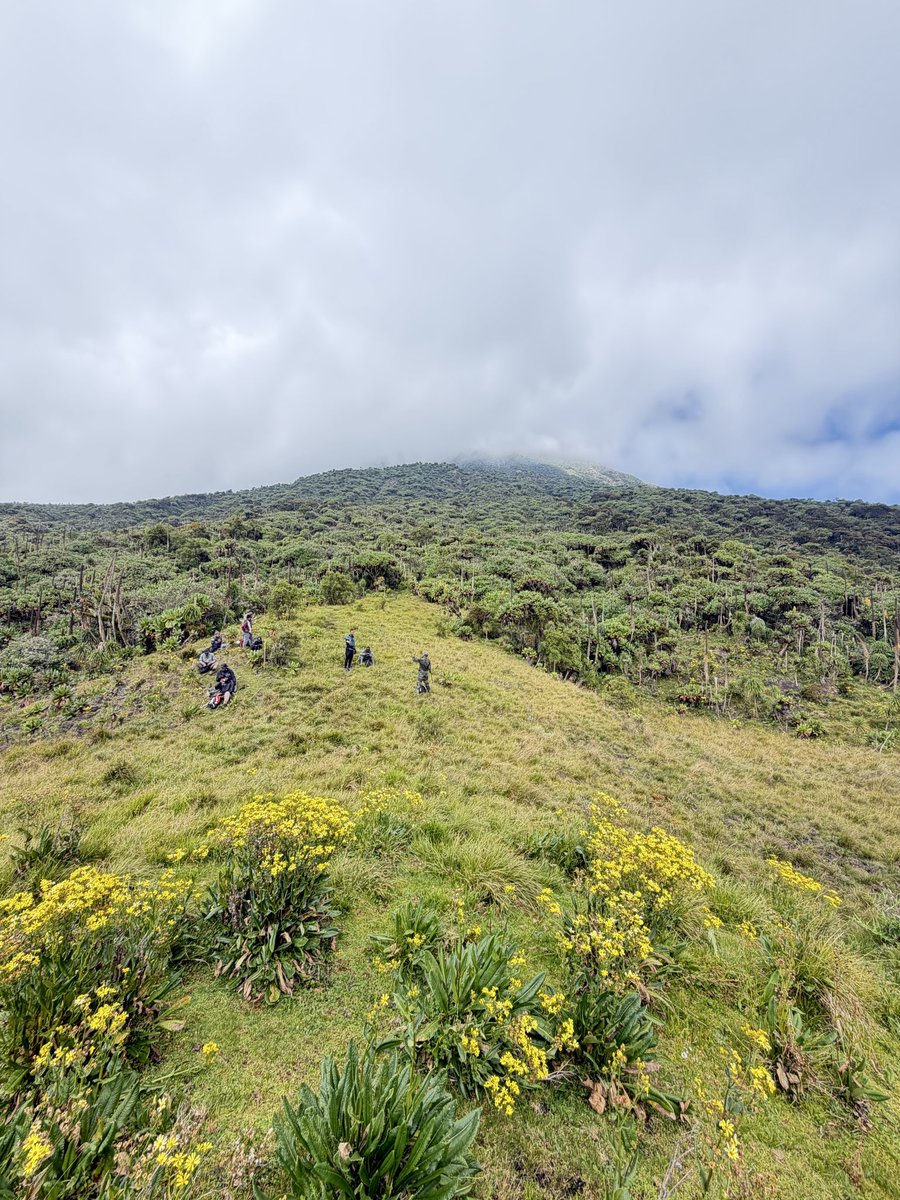
Healthy habits are the best gifts we can give ourselves.Ahead of my birthday,I gifted myself a hike to Mt. Karisimbi (4,507m) Rwanda’s highest peak—a non-stop 10-hour trek. My legs wanted to quit,but the summit kept calling. Thanks to the team and our guide,Mupenzi.#HealthyLife
Active citizenship begins with paying attention
As i listened to the Minister of Finance present Rwanda’s 2026/27 national budget to the @RwandaParliamnt on the 11th June 2026, one figure stood out to me; RWF 195.3 billion has been set aside to support the private sector, industrial parks, exports, and job creation, particularly for young people.
What surprised me, however was not the amount itself, but the lack of discussion around it.
Over the past week, social media has been full of debates about Bebecool, Kazungu, and other trending topics. Yet i have hardly seen young people asking what this RWF 195.3 billion actually means, where it will go, what opportunities it could create, who will benefit, or how its implementation will be monitored.
This matters because many of the challenges young people talk about every day, unemployment, lack of capital, limited business opportunities, and access to markets, are directly connected to the kinds of investments being proposed in the budget.
It is easy to say that government has not done enough, and sometimes such criticism is justified. But meaningful accountability starts with understanding what has been planned in the first place. If we do not take time to read, question, and debate government priorities, it becomes difficult to hold anyone accountable for the results.
A national budget is not just a document for economists, politicians, or public servants. It is a roadmap for the country’s future. It affects jobs, businesses, education, healthcare, infrastructure, and the opportunities available to ordinary citizens.
One of the things Rwanda has consistently encouraged is active citizenship. Active citizenship is not only about voting or commenting on political issues. It is also about taking an interest in public policies, asking questions, seeking information, and engaging in discussions that affect our lives.
Sometimes i worry that we are becoming more interested in what is trending than in what is transformative. We can spend days debating a celebrity story, but very little time discussing a budget allocation that could influence thousands of jobs and businesses.
If RWF 195.3 billion has been allocated for youth and private sector development, young people should be among the first asking questions. What jobs will be created? Which sectors will benefit? How can young entrepreneurs access these opportunities? What should success look like one year from now?
These are the conversations that help build a strong civic culture and ensure that public resources deliver real results for citizens.
After all, the future is not shaped only by the decisions governments make. It is also shaped by the attention citizens pay to those decisions.
Mu biganiro ku mihindagurikire y'ibihe bibera i Bonn mu Budage, ibihugu byaganiriye ku buryo bwo gutanga amakuru binyuze muri raporo zitangwa buri myaka ibiri. Ku ruhande rw'u Rwanda, ibigananiro kuri iyi ngingo byakurikiwe na @david_ukwishaka
Unemployment and mental health, the silent crisis facing many young people
A few days ago, i found myself talking to a young man at a social spot in Kigali. He was sitting alone with an Amstel in front of him and seemed in no hurry to leave. I watched him for a while before deciding to start a conversation because he had taken 12 bottles in almost 45 minutes. In most social places you ask for a bottle and they bring 2, so i was able to notice the intervals. What i thought would be a brief exchange ended up staying with me long after we parted ways.
As we talked he told me that he holds a bachelor’s degree in Biochemistry from the University of Rwanda. Like many young graduates, he left university with dreams, expectations and the belief that hard work and education would open doors. Instead, he has spent the last two years looking for a job without success.
The more he spoke, the more i realized that unemployment was affecting much more than just his career. His father lost his job during the economic difficulties that followed the COVID-19 pandemic and the family’s situation became increasingly difficult. Some of his siblings were forced to leave school because there simply was not enough money to keep them there. Listening to him it became clear that behind every unemployment statistic there is often a family struggling to hold things together.
At one point i asked whether he had considered starting a small business, perhaps making soap or producing local beverages because of his academic. His answer was immediate and honest, he told me that he had thought about it many times, but lacked the capital needed to buy raw materials and get started.
That response stayed with me because it highlighted a reality that many young people face. We often encourage entrepreneurship, innovation and self-reliance, but for someone who has no savings, no access to credit and no family resources to fall back on, even the smallest business idea can feel out of reach.
When we talk about unemployment, we usually focus on economic growth, investment levels, labour market figures and employment statistics. Those discussions are important, but they sometimes overlook the human reality behind the numbers. We rarely stop to think about what it feels like for a young person to wake up every day with qualifications, ambition and energy, yet have nowhere to apply them.
Employment is about much more than earning an income. It provides purpose, routine, social interaction, dignity and a sense of belonging. It allows people to contribute to their families and to feel that they are moving forward in life. When meaningful employment remains out of reach for months or even years, the consequences can be profound.
Confidence gradually fades and anxiety about the future grows. Family pressures increase. Some young people begin to withdraw from social circles, while others turn to alcohol or other unhealthy coping mechanisms in an attempt to escape feelings of frustration and disappointment. The issue is no longer just about money, it becomes a question of self-worth, identity and hope.
This is why the connection between unemployment and mental health deserves far more attention than it often receives. Studies conducted around the world have consistently shown that people who experience prolonged unemployment are more likely to struggle with stress, anxiety, depression and other mental health challenges. The longer someone remains unemployed, the greater the risk that these challenges will affect their wellbeing and outlook on life.
The young man i met is certainly not alone. Across our communities there are many educated, capable and hardworking young people carrying similar burdens in silence. Most are not looking for handouts, they are looking for opportunities, whether through employment, internships, apprenticeships, mentorship, affordable credit, or support to turn their ideas into viable businesses.
The way forward is to continue having important conversations about mental health, we should remember that creating economic opportunities is part of that conversation. Employment is not only an economic issue, it is also a social and mental health issue. When young people are given meaningful opportunities to work, earn a living and build a future, we are doing more than strengthening the economy. We are helping to restore hope, preserve dignity, strengthen families, and protect the wellbeing of an entire generation.
#MentalHealthAwareness #BreakThesilence #MensMentalHealth
📊 Did you know?
For every 100 Frw planned in Rwanda's FY2026/27 budget:
🔹 68 Frw will come from domestic revenues
🔹 25 Frw from external loans
🔹 7 Frw from external grants
This reflects Rwanda's continued efforts to strengthen self-reliance while leveraging strategic partnerships for development.
#RwandaBudget
Minisitiri @yusuf_murangwa: Ingengo y’Imari y’umwaka wa 2026/2027 ingana na miliyari ibihumbi 7,796.3 z’amafaranga y’u Rwanda, akaba aziyongeraho agera kuri miliyari 844.2 ugereranyije na miliyari ibihumbi 6,952.1 ari mu ngengo y’imari ivuguruye y’uyu mwaka wa 2025/2026. #RwandaBudget
🚨Bib pick up 🚨
Bib collection is now open at Amahoro Stadium. Come pick up your bib and get ready for an unforgettable Kigali Marathon experience!
#KIPM2026#Irun4Peace
Yes brother, you raise a fair point and i have seen it happen many times. Sometimes the excitement around an appointment is much bigger among friends, relatives and acquaintances than it is for the person who actually got the job. People celebrate as if the appointment belongs to the whole family or community.
I also agree that public office is often associated with influence, status and opportunity. That is probably why appointments attract so much attention.
My concern though, is that we rarely give the same attention to the decisions that come with those appointments. A cabinet resolution may contain a new loan, a major agreement, a draft law or a policy that will affect millions of people, yet the conversation quickly becomes about who got appointed.
You are right i have heard people assume that anyone who speaks frequently about governance or public affairs must be looking for a position. Sometimes people are simply interested in public issues. Sometimes they care about how decisions are made and what they mean for the country. Not every opinion is a job application.
What interests me is the imbalance. We can spend days discussing an appointment, but very little time discussing the policies, laws, debts, and priorities that will shape the country’s future. I would like to see a bit more curiosity about those decisions and a little less obsession with the positions. Have a great evening!
Age is just a number, but the spirit of running brings us all together. ❤️
Our grandma has a special invitation for you: Join us in just 2 days for the Kigali Marathon and be part of something bigger than a race.
Register at https://t.co/PaSTjdKoHz
#KIPM2026#Irun4Peace
I have always found it interesting how much attention political appointments receive. Every time there is a new cabinet or cabinet resolutions are announced, social media is flooded with congratulations for those appointed, and the appointees respond by thanking the appointing authority.
Yet in the very same resolutions, there may be decisions on loans, international agreements, policies, or draft laws that will affect millions of people, and hardly anyone talks about them.
Sometimes i wonder if this is because, in many African countries, politics is not just about public service. It is also closely associated with influence, status, networks, and economic opportunity. As a result, people become more interested in who gets the position than in the decisions being made.
Personally, i think we should pay more attention to the substance. A minister , a permanent secretary, a ceo, a director general, an analyst or ambassador may serve for a few years and move on. A loan can take decades to repay. A law can shape the lives of citizens long after the people who approved it have left office.
Maybe we need to spend less time asking, “Who was appointed?” and more time asking, “What was decided in the cabinet meeting and what does it mean for the country?”
We are excited to officially announce the routes for #KIPM2026!
Get ready to experience the beauty, energy, and spirit of Kigali 🔥
Whether you're taking on the Full or Half Marathon, or Run for Peace, an unforgettable journey awaits.
Register at https://t.co/PaSTjdKoHz
We look forward to welcoming the world back to Kigali for the 38th Meeting of the Parties to the Montreal Protocol - ten years after the historic adoption of the Kigali Amendment.
Murakaza neza mu Rwanda!
Agaruka ku mpamvu y’izamuka ry’igiciro cya mazutu, Umunyamabanga wa Leta, @Jadouwihanganye, yavuze ko igiciro cyari gisanzweho kitari kigishoboye gufasha Leta kugera ku ntego yo gukomeza kugira ibikomoka kuri peteroli bihagije. Ni muri urwo rwego hafashwe umwanzuro wo kukizamura.