A 35-year-old patient presents with a several-week history of intensely pruritic lesions on the bilateral lower extremities. Physical examination reveals multiple well-demarcated, round to oval, scaly, hyperpigmented plaques with surrounding xerosis.
Monday mystery!
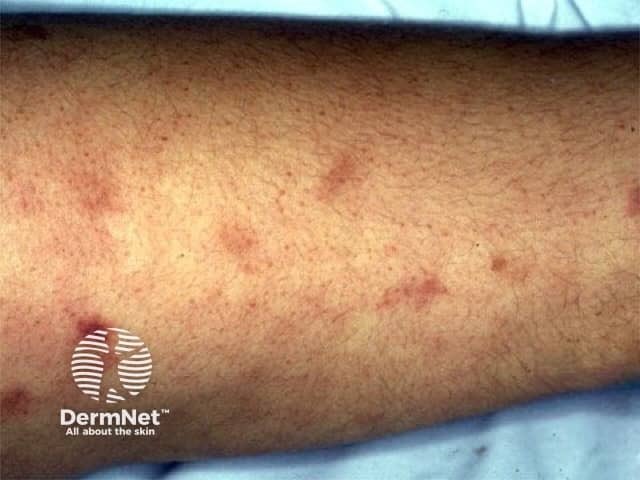
A patient presents with painful subcutaneous nodules, livedo reticularis, and ulcers on the lower legs without systemic involvement. What’s the diagnosis?
A. Cutaneous polyarteritis nodosa
B. Erythema nodosum
C. Leukocytoclastic vasculitis
D. Pyoderma gangrenosum
A patient presents with the following erythematous, annular plaques on the upper extremities. What is the most likely diagnosis?
A. Subacute cutaneous lupus erythematosus
B. Tinea corporis
C. Erythema multiforme
D. Granuloma annulare
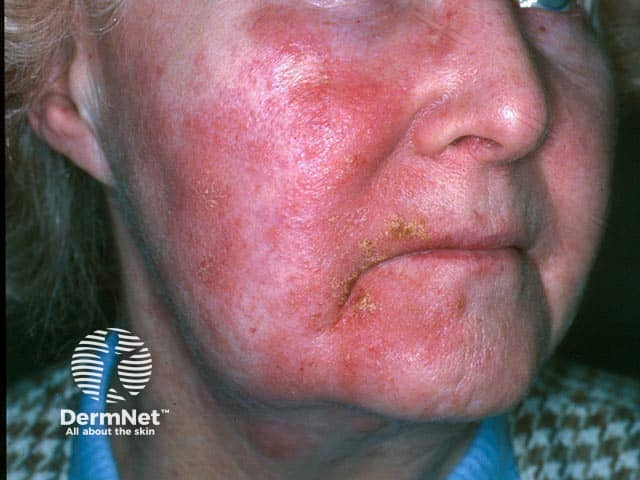
A patient presents with a pruritic, red, scaly facial eruption after exposure to a skincare product. Which mechanism best explains this?
A. IgE-mediated mast cell degranulation
B. T-cell-mediated delayed HSR
C. Immune complex deposition
D. Antibody-mediated epidermal damage
MONDAY MYSTERY!!
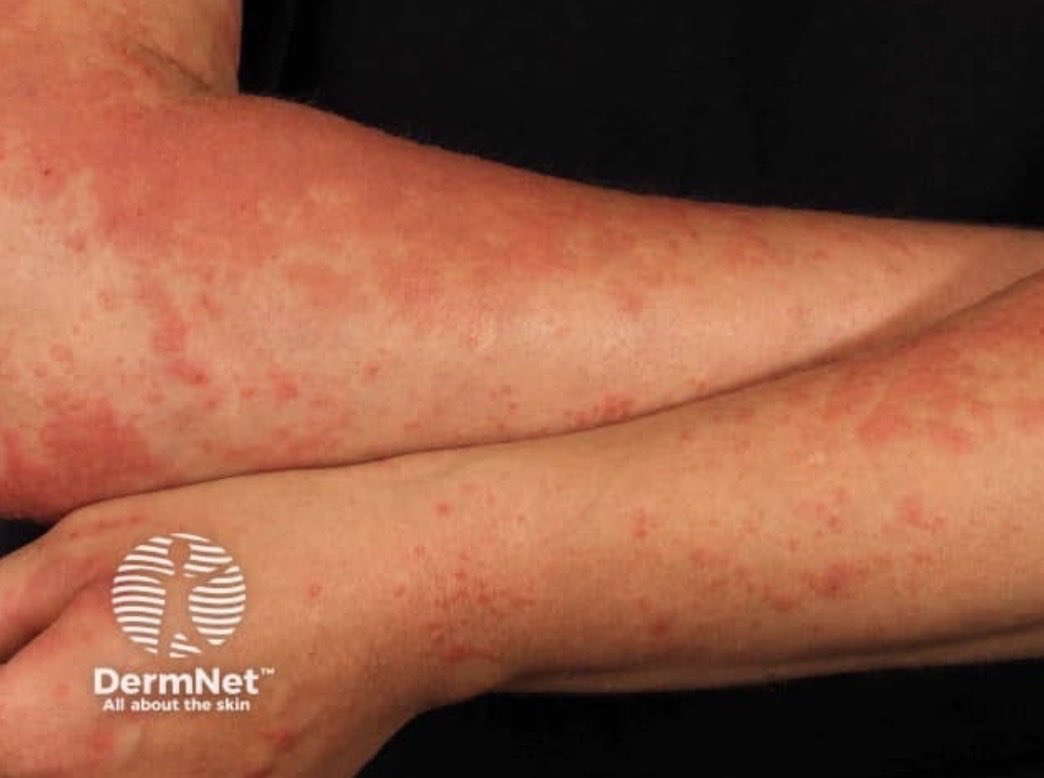
A patient develops an itchy, red rash on the arms after spending time outdoors in the sun. The rash appears several hours after sun exposure and tends to recur during the spring and summer.
The answer is B: Guttate psoriasis!
The sudden eruption of many small “drop-like” papules/plaques, erythema with fine scale, and trunk-predominance all point towards guttate psoriasis.
Monday Mystery!
A 23-year-old presents with the sudden onset of numerous small, scaly, erythematous papules across the trunk two weeks after a sore throat. What is the most likely diagnosis?
A. Pityriasis rosea
B. Guttate psoriasis
C. Tinea versicolor
D. Secondary syphilis
A patient presents with painless, whitish discoloration and separation of the distal nail plate from the nail bed. What is the most likely diagnosis?
A. Onychomycosis
B. Onycholysis
C. Leukonychia
D. Nail psoriasis
A 29-year-old woman presents with recurrent painful nodules and draining sinus tracts in the axillae and groin that have resulted in hypertrophic scarring over several years.
MONDAY MYSTERY!
A 6-week-old infant presents with a bright red, raised, warm, non-tender vascular lesion on the cheek that was not present at birth but appeared and began enlarging over the first few weeks of life. What is the most likely diagnosis?