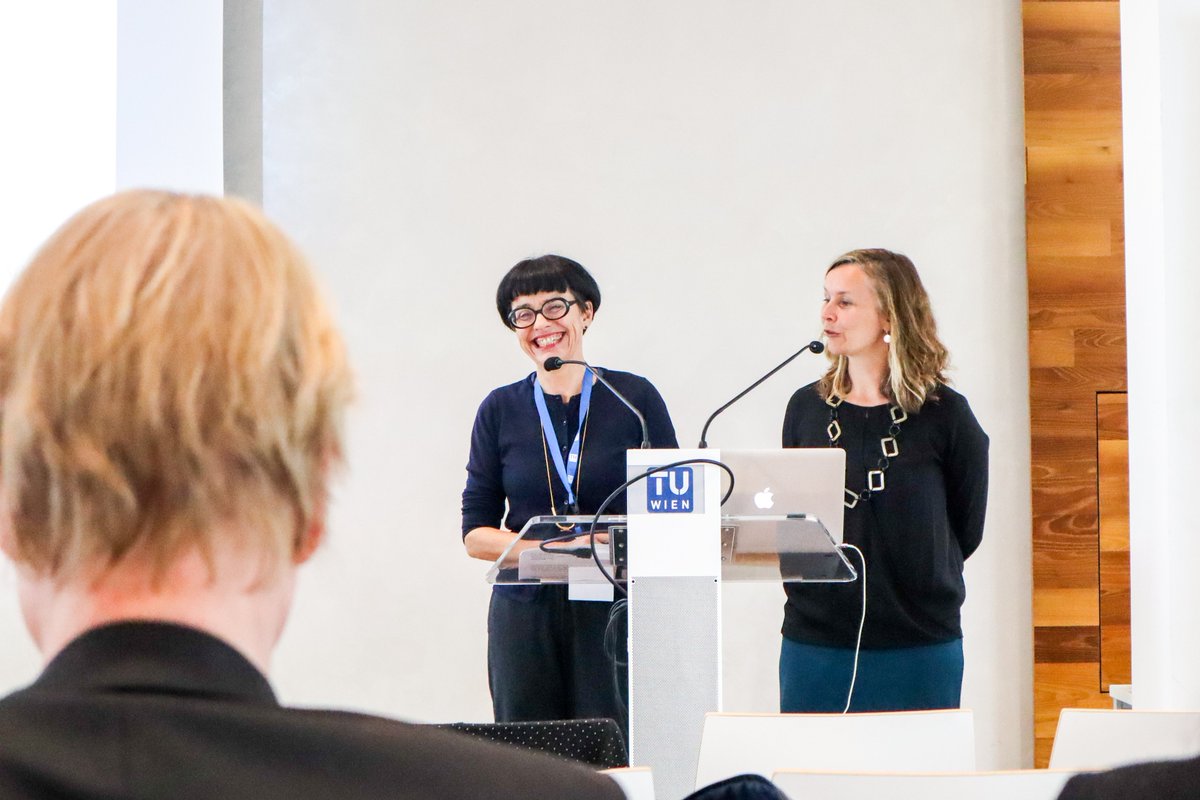
1/2 Day 2 of our conference ended with Ali Madanipour���s keynote with critical reflections on care. He discussed societal, economic and political matters around care, questioning efforts around care that are sometimes only good gestures for publicity reasons. #CAREwien
Dominique Peck presented the work of him and his colleagues on ‘Urban development and the care of urban forms of knowledge’. He offered deep insights in the way how engaged people in Hamburg highlight the caring capabilities of urban spaces. #CAREwien
In part 2 of Session 3 first Rivka Saltiel shared her work and experiences from her research on a refugees camp with the title ‘Care for and from whom? The Refugee Camp at the Park Maximilian as a space of everyday lives’. #CAREwien
Eva Mos gave exciting insights into her conceptualisations around digital platforms and care. Her presentation with the title ‘Situating home-based care platforms’ discussed different notions of how digitalisation, the welfare state and care are connected. #CAREwien
Micol Rispoli with her work ‘What does innovation stand for? New perspectives for the architectural project in a time of urgency’ pointed to the need for architecture and academic education to stage and explore issues, rather than try solving them. #CAREwien
In part 2 of Session 2: Struggles and contestations around care Mohamed Saleh illustrated his work around ‘How to anchor care for (in)justice in the curriculum of architecture design studios?’ #CAREwien
Niroopa talked about India on the topic of ‘Modernity or inclusive care? The conflicting realities of Delhi’s ‘Smart City’ future’. She highlighted that it is important to consider current socio-spatial struggles that are hindering the urban poor of India to get care. #CAREwien
In the second part of Session 1: Socio-spatial (in)equalities and the work of care Elena Marchigiani presented her work.
Towards a healthy and proactive city: Accessibility for all and the role of urban spaces in re-activating individuals’ capabilities. #CAREwien
Hanna Szemzö presented her and Loes Veldpaus’ work on Heritage as a matter of care. She pointed out that care in this context is part of collaborative processes and shared governance initiatives, that requires careful reckoning with histories. #CAREwien
In Session 3 on care and civic innovation Teresa Abbruzzese and Antony Riley presented on Libraries as sites of care and maintenance. They highlighted that libraries within the cutback of public social services are taking up care agendas and become precarious societal spaces.
Isabel Gutierrez Sanchez presented Infrastructures of caring citizenship in Athens. These self-organized initiatives, as a response to austerity, created spaces and affections which sustain everyday life and through which their member enact political imaginations. #CAREwien
Session 2 Struggles and contestations around care brought insights to Brazil and Greece. César Henriques Matos e Silva presented the project by him and Robertha Barros on
The public space and children: Who cares and who takes care of?
César stressed the fragmented and inequal state of the Brazilian society and the problems around public spaces. Projects were presented that try to bring the neighbourhood spaces closer to children, approach them and even rearrange them. #CAREwien
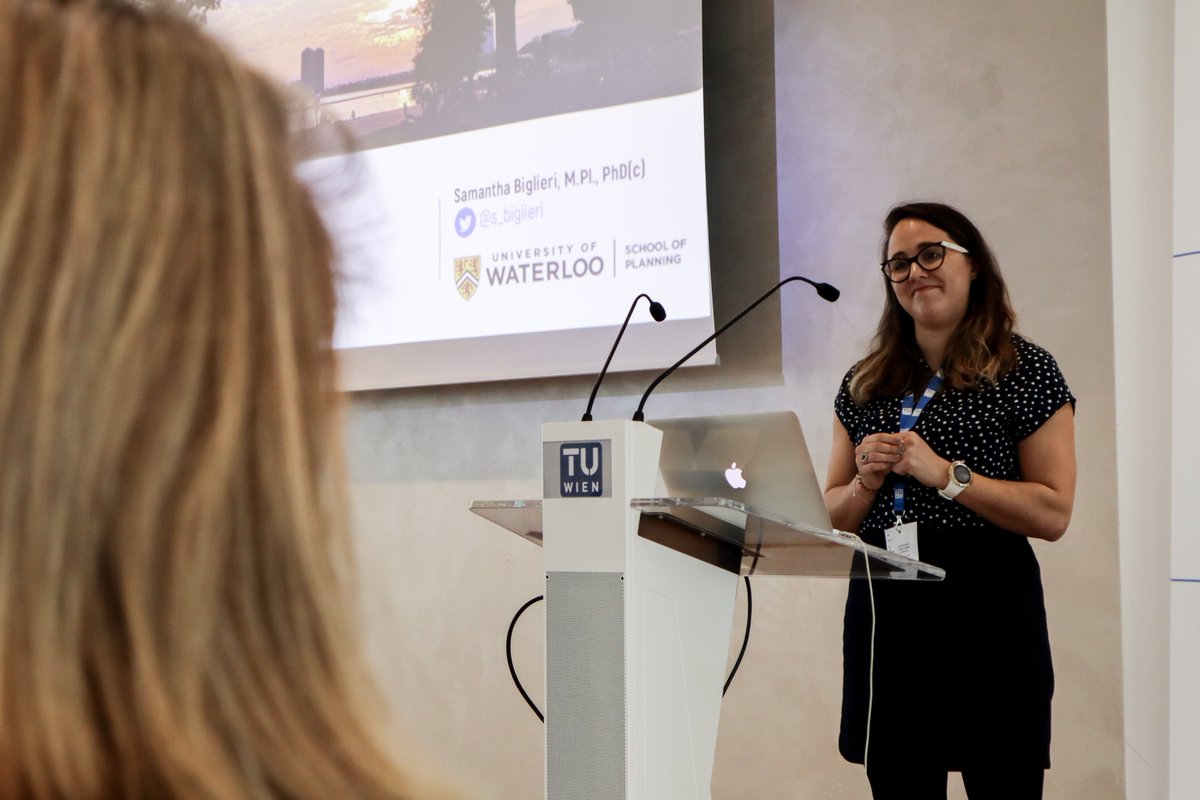
Samantha Biglieri’s research is on socio-spatial relationalities of suburban neighbourhoods for people living with dementia. She stressed that understanding their issues in public space can help us to built more inclusive structures and environments. #CAREwien
In Session 1 on Socio-spatial (in)equality and the work of care two papers were presented. Roos Pijpers advocated for the “Pink Passkey”, an equality and inclusivity scheme for LGBT-friendly elderly care provision. #CAREwien