FACTS:
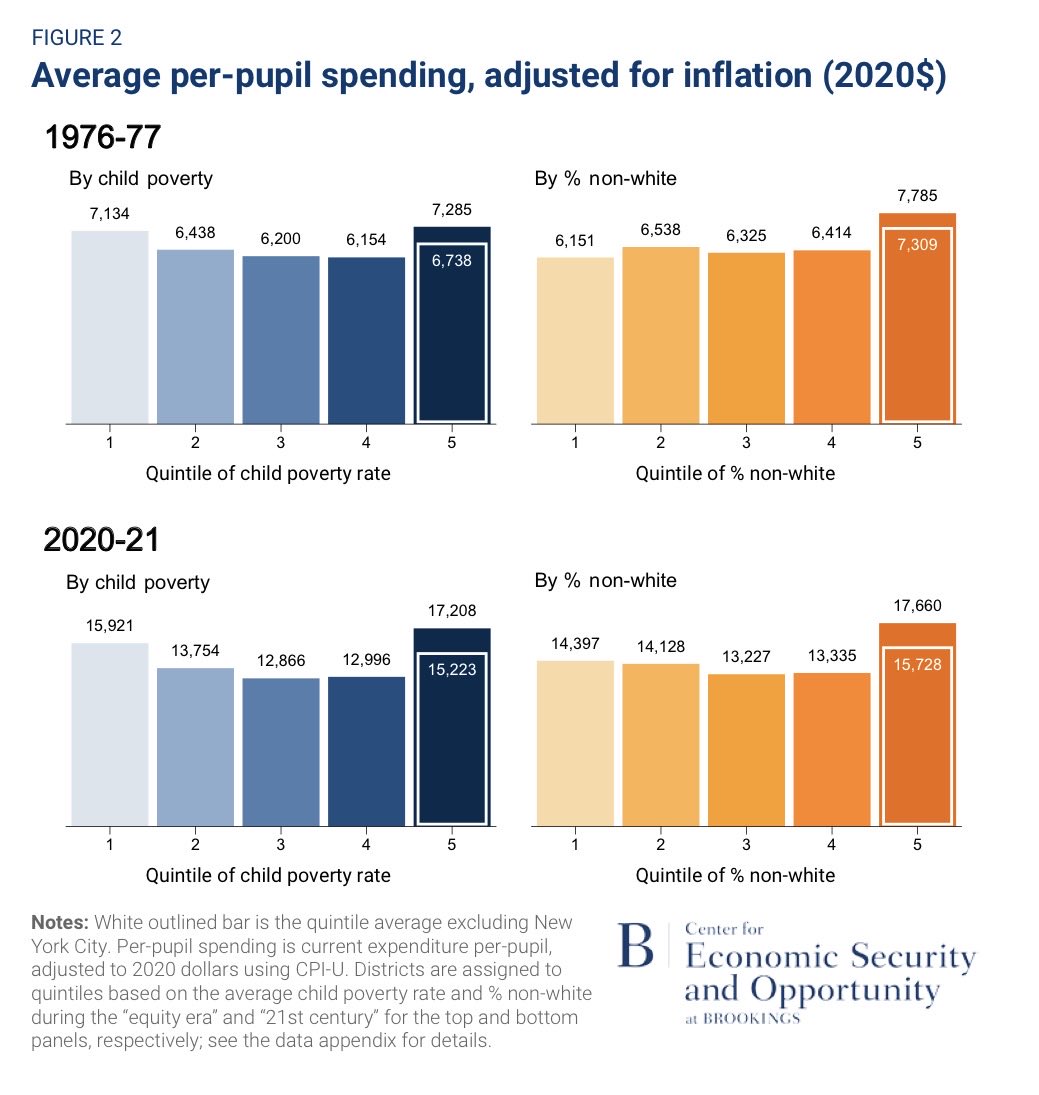
➡️ The offspring of Asians who didn't finish high school consistently outperform in SAT/IQ tests the children of black parents with academic degrees.
➡️ Kids from the poorest white families regularly achieve similar or better scores on exams/IQ tests than those from the richest black families.
Why does this happen?
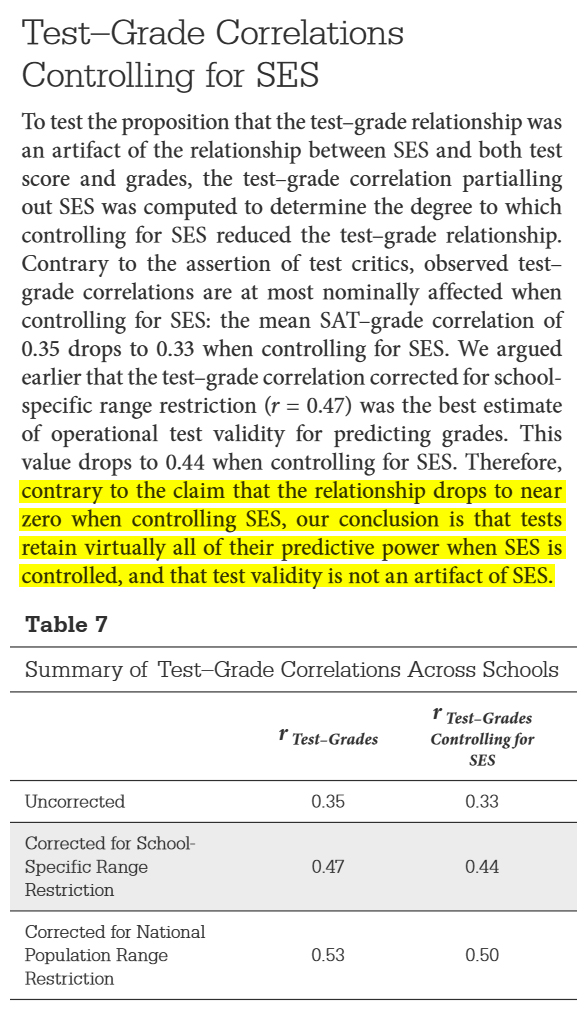
➡️ Because socioeconomic factors don't explain racial differences. Adjusting exam or IQ test results for wealth/education of the mother and father hardly weakens the predictive power of these rankings. In other words, SAT/IQ scores are almost entirely independent of family wealth or social status.
SOURCES IN THE NEXT COMMENT.
>while economics remains relatively scientific
I wouldn't be so optimistic about economics either.
Recently it was examined how much the file-drawer problem (publication bias: the distortion of scientific findings that comes from burying - i.e. not publishing certain results) shapes the conclusions of meta-analyses in four fields: medicine, environmental science, psychology and economics. Once the bias was corrected for, the probability that the effects claimed by economists in their papers actually exist dropped from 99.9% to 29.7%.
https://t.co/B1pzBaRwpC
Today's intellectual elites promote a so-called reckoning with the past of Western civilization and culture, presenting it as a string of crimes and oppression against other peoples, thereby reducing the history of Europe (and the USA) to racism. On the other hand, almost never is it mentioned what a given place looked like before the white man arrived there.
Let's take look at the Congo before the period of Belgian rule as en example. It was literally hell - probably the most inhospitable and hostile terrain for life in Africa.
The Arab-Swahili slave trade was a demographic catastrophe for the Congo. Tippu Tip (Hamed bin Mohammed) and other merchants from Zanzibar built in the Congo an apparatus of repression based on gruesomely brutal, predatory exploitation of ivory using slave labor. Sidney Langford Hinde documented Arab atrocities and destruction in the Congo in great detail in the book "The Fall of the Congo Arabs". His account is valuable because he was an eyewitness to these events. Hinde describes the system of Arab expeditions as regular plunder raids. Such expeditions burned villages, massacred resistant inhabitants, exterminated the elderly and the sick, and abducted the population as slaves. In most cases, after each attack only burned settlements and bodies scattered around the area remained. In short: Arab raids depopulated the Congo. The most interesting fragments of the book concern the participation of natives in this practice. Hinde emphasizes that the Arabs rarely acted alone. Arab caravans often consisted mainly of Africans ("Most of the fighting men in the caravans were natives"). It also happened that local chiefs invited the invaders against their neighbors. They supplied them with warriors and guides and helped point out targets for attacks. Some tribes treated the Arabs simply as a tool to destroy competitors and gain an advantage in the region. Hinde concludes that without these local allies the Arabs would never have been able to control such vast areas of the Congo.
Let us also clarify one thing right away: it is not the case at all that all blacks participating in the burning of villages and the elimination of rival tribes were forced to do so. On the contrary: natives often volunteered for such pacification units themselves, seeing their own interest in it. For example: the Zappo Zaps were a warlike group of trained mercenaries, a branch of the Songye people from the Kasai region. They filed their teeth because their diet often consisted of human flesh. They became key partners of the Arabs. They took an active part in the trade in ivory, rubber, and slaves. They acted as intermediaries, often kidnapping and murdering their own kinsmen from across the fence.
Further: Joseph Roelens, a Catholic missionary (White Father), worked in the Congo at the end of the 19th century. In missionary letters he described Arab raids on nearby villages: "On ne voyait guère que des villages incendiés ou abandonnés... Le long des routes gisaient les cadavres des faibles incapables de suivre… et ceux des enfants qui gênaient leurs mères..." (One saw almost nothing but burned and abandoned villages. Along the roads lay the corpses of those too weak to keep going… and those of the children who hindered their mothers.)
In the book "Five Years with the Congo Cannibals", Herbert Ward quotes Henry Morton Stanley, the outstanding cartographer and explorer, the most famous traveler of his era, who helped create the foundations of the Congo Free State. Stanley recalled that Tippu Tip, during a single slave-hunting expedition, attacked 118 villages, from which his men seized 2,300 slaves and slaughtered ~4,000 Africans.
It is into such a world that the Belgians then enter. But here again an important note: there are almost no whites there, especially in the first decade of the existence of the Congo Free State. In practice Leopold’s colony was governed and supervised by blacks. In other words, the real agency of the Belgians in the Congo was minimal. The entire white military personnel in a country of about 2.4 million km² and extremely difficult topography numbered at its peak only a few hundred officers. In 1891 there were ~120 of them. That works out to one white man per area of today’s Slovenia or Poland’s Podlaskie Voivodeship. This means an absurdly small European administrative-military presence. And after all, some of the personnel sat in bases, some were in river transport, some were on leave or in Europe, some positions may have existed only "on paper." On top of that came mortality from dysentery, malaria and African sleeping sickness. Gann and Duignan in the publication "The Rulers of Belgian Africa, 1884-1914" state that of the 2,260 members of the Belgian officer and NCO cadre who served in the Congo up to 1908, as many as 662 died - almost one third of all who went there at all. In the years 1877–1906 a total of 182 officers and 460 NCOs perished.
This is an insane statistic.
Conviction rates/arrests rates always understate the criminal histories of prisoners/felons. This is because of the unrecorded crime.
A highly replicated findings are that criminals self-report having committed many offenses for each police contact, and blacks are virtually the only demographic group in the US that faces the justice system less often than their share in the overall crime rate would suggest.
In other words, detection and conviction rates for violent crimes among black criminals remain disproportionately and radically low.
Data from 16 states show that only 9% of robberies involving black offenders result in the suspect (or suspects) being caught and arrested. This includes unreported robberies. For reported robberies, the rate is 17%.
It's hard to say much about the rates for non-Hispanic whites because the FBI routinely classifies 90-95% of Latinos as Europeans.
Sources:
https://t.co/BuvbZLYFXe
https://t.co/59VLEPeISN
Poland reports homicides much more accurately than Sweden. Sweden undercounts its homicide rates so much that after correction they jump by almost 40% and become the highest ever recorded in the country’s history. Poland’s police-reported rates, by contrast, remain unchanged even after a full battery of checks (medical data consistency, registration method, and legal definition).
Sweden: 1.5
Poland: 0.7
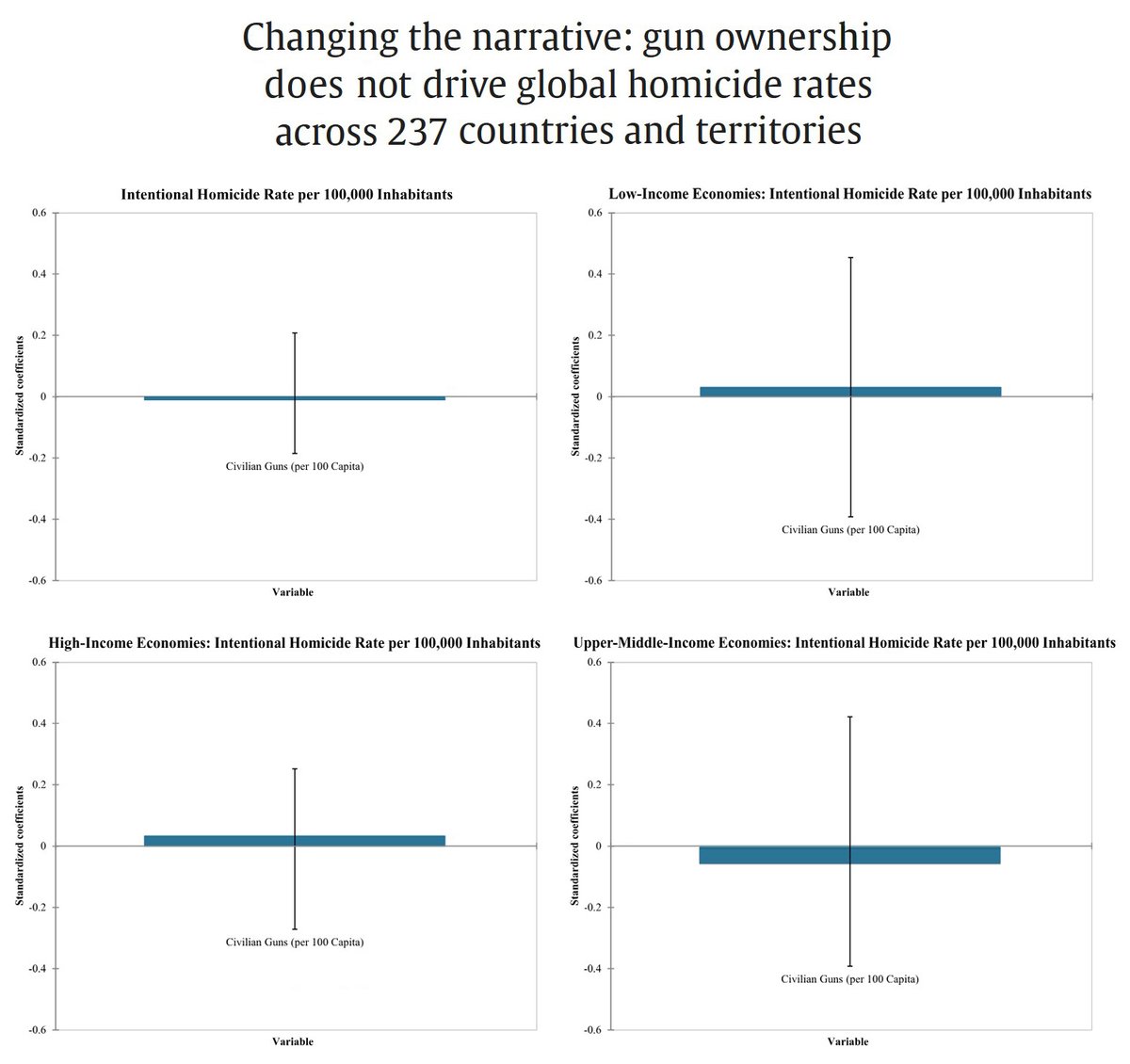
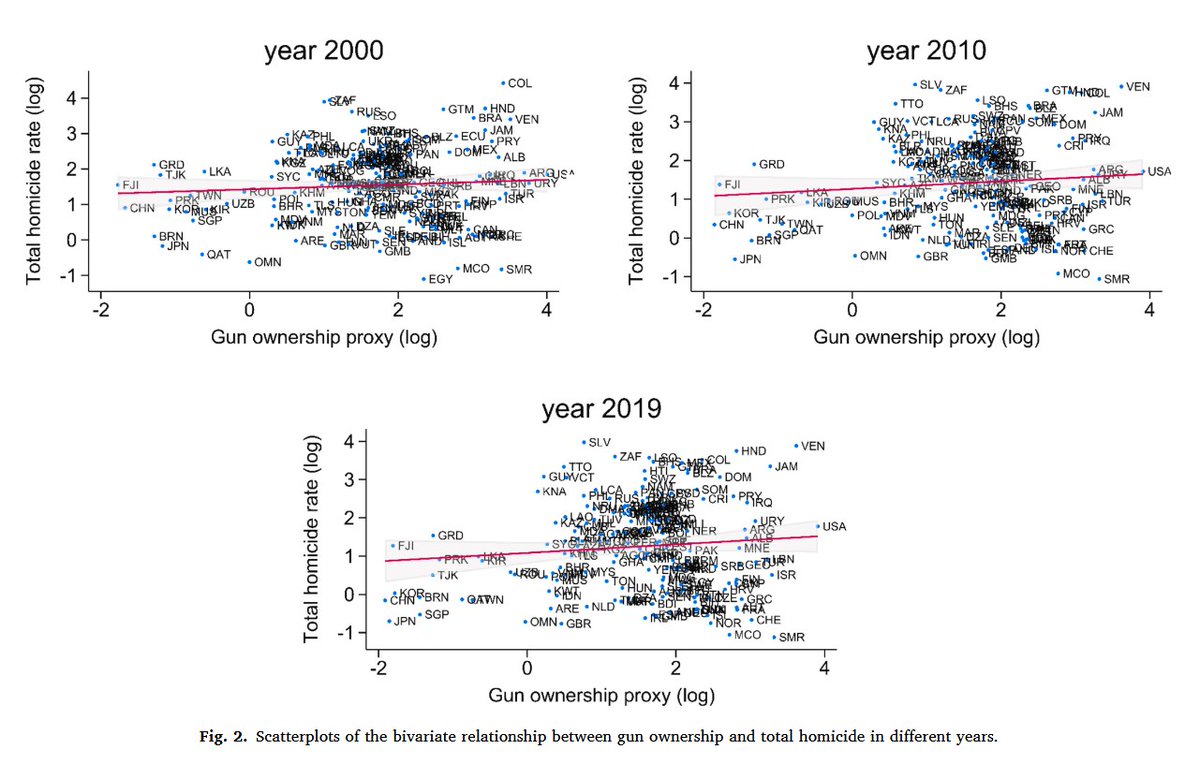
A periodic reminder: there is no relationship between guns and homicides.
The author presents a novel estimation strategy applied to a new cross-national dataset covering more than 100 countries and spanning 2000-2019, which is by far the largest global sample to date.
His conclusion: there is no statistically significant association between gun ownership and the total homicide rate, regardless of specification choices or gun-ownership measures.
Sources:
Kastle et al., "Changing the narrative: Socioeconomic determinants, not gun ownership, drive global homicide rates" (2026): https://t.co/XhmJ2QX5t9
Tibor Rutar, "Novel global evidence on the cross-national relationship between gun ownership and homicide" (2025): https://t.co/zXZEYZE3NY
Kovandzic & Kleck, "The Impact of Firearm Levels on Homicide Rates" (2021): https://t.co/zIf7tsySLD
Altheimer & Boswell: "Reassessing the Association between Gun Availability and Homicide at the Cross-National Level" (2012): https://t.co/Oo6OkamgBN
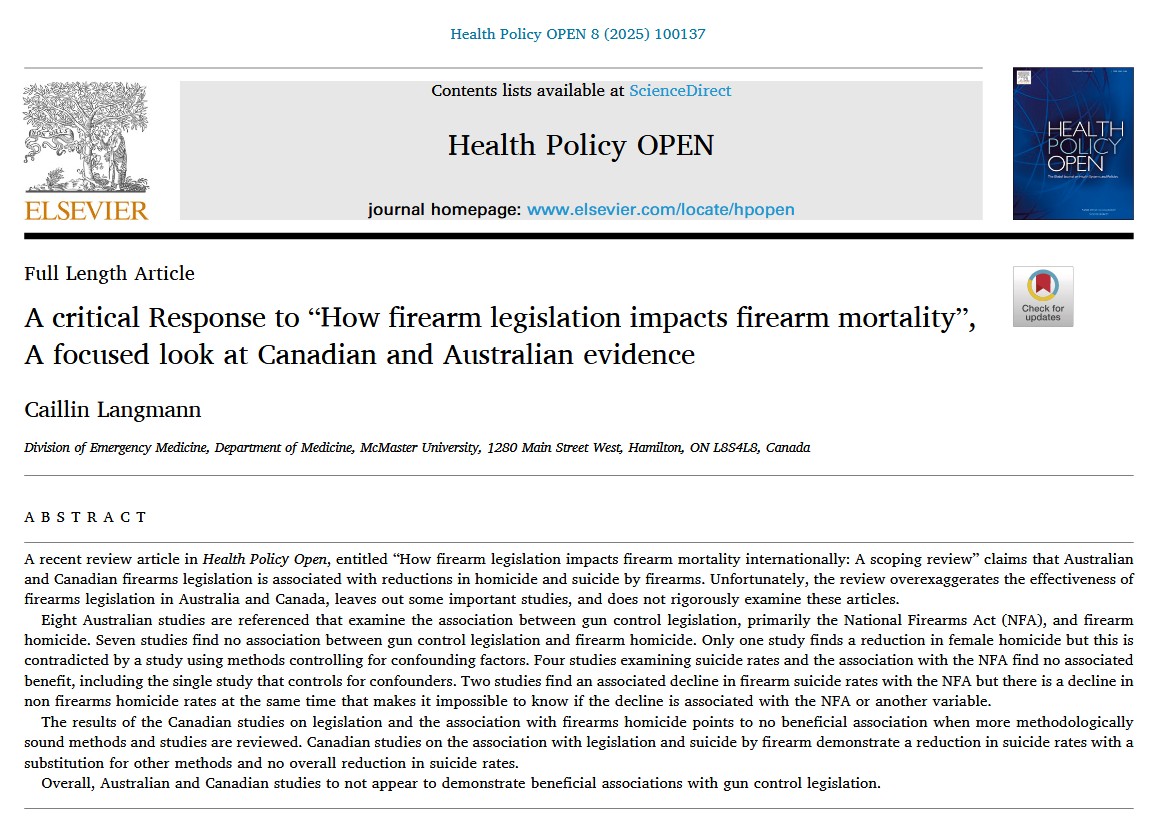
A new meta-analysis on firearms, homicide, and suicide in Canada and Australia is out.
KEY FINDINGS:
>Across both countries, gun restrictions (or the lack of them) have no effect on homicide and suicide rates.
>When guns are harder to access, people switch to other suicide methods that are just as effective. In other words, suicide method substitution occurs.
>Firearm murders declined slower than non-firearm murders, pointing to other forces driving the overall decline.
>Restrictions just followed trends - they didn't drive them. There's zero evidence they caused or accelerated them.
>Best peer-reviewed studies show no causal impact.
One of the longest-lasting myths about crime in the United States - especially on the political right - is the notion that America was less violent in the past, particularly in the post–World War II era.
This belief relies on police statistics (FBI UCR). Victimization surveys (NCVS), which also capture the so-called "dark figure" of crime, tell a very different story: while police statistics indicate rising violence in the 1970s and 1980s from a low baseline, NCVS data show declining violence from a very high baseline - suggesting that earlier levels of violence may have been even higher.
Figures based on data from Lauritsen et al., "When Choice of Data Matters: Analyses of U.S. Crime Trends, 1973–2012" (published in Journal of Quantitative Criminology).
In 2011, a study of mosques in America was conducted. The research surveyed 100 randomly selected mosques across the US.
81% of the surveyed mosques were, in one way or another, preaching jihadism and hatred of non-Muslims- including calls for establishing a Sharia-based political order by force, or portraying violent jihad as a religious duty.
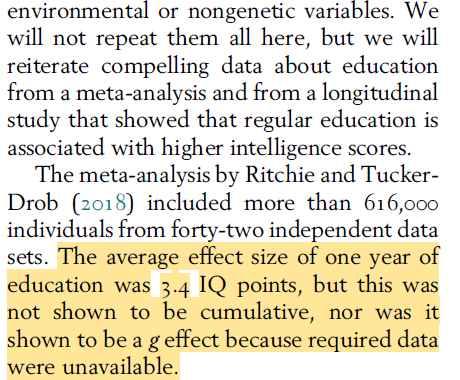
The IQ score-education link is mostly about links from IQ scores to education rather than from education to IQ scores.
Richard J. Haier & Roberto Colom, "The Science of Human Intelligence" (2023)