The @ISTAART Sleep and Circadian Rhythms Professional Interest Area (PIA) focuses on associations between circadian rhythms, sleep quality & AD pathophysiology.
🧠💤 Have you published or read a great article on sleep, circadian rhythms, and dementia?
We’d love to share it! Submit it via this link: https://t.co/9HaeEkZXNu and we’ll feature it on our socials and in our next newsletter!🔁📢 #SleepResearch#Dementia#CircadianRhythms
🌙 Sleep & Circadian Rhythms PIA Webinar
“Sleep Research Recommendations in Aging & AD”
📅 Feb 13, 2026
⏰ 7:30 AM (Canberra/Melbourne/Sydney)
Featuring results from a Delphi consensus study.
🔗 Register: https://t.co/PJXg3T1CYe
Learn about advancements in Sleep and Circadian Rhythms in 2025 and the predictions for 2026 during @ISTAART’s free Year in Review webinar series. Register for our webinar on January 9th, and see all available webinars in the January series at https://t.co/VDooq6JJhd.
📢 ISTAART Sleep & Circadian Rhythms PIA Year in Review Webinar: Jan 9, 2026, 12 PM CT.
Got research at the intersection of sleep/circadian & Alzheimer’s? Share your highlights by Dec 5!
📝 Form: https://t.co/PTgVPD1vpu
🚨 Submit Today!
🏆 Celebrate neuroscience excellence at #NeuroNext2026!
Nominate a mentor or rising star for:
🔹 Excellence in Neuroscience Mentoring Award
🔹 AAIC 'One to Watch' Award
📅 Deadline: Oct 31
📣 Abstracts due Oct 22 (ISTAART: Oct 26)
🔗https://t.co/OYBhvmzgqW
Neuroscience students, postdocs & early career researchers, abstract submissions are open for the @alzassociation’s AAIC Neuroscience Next, Feb. 23-26! Accelerate the future of neuroscience & forge connections across the globe. Learn more: https://t.co/6sYxOy2MsA #AAICNeuro
Sleep is one of the earliest systems to go awry in neurodegenerative diseases—yet remains vastly under-recognized and under-studied. Excited for Sharon Naismith's #AAIC2025 plenary: a wake-up call to the field on why sleep matters🧠💤 #sleepresearch#Dementia@SleepPIA@ISTAART
🧠 Interested in getting more involved with @ISTAART & #AAIC?
Join us this week for one of two ISTAART All-Member Town Halls spotlighting PIA leadership & opportunities to engage with our global dementia research community.
📅 Aug 26 | 5–6 p.m. CDT
📅 Aug 27 | 9–10 a.m. CDT
🧠💤 New in Journal of Sleep Research from @kristinehpc's lab: Older adults with insomnia show disrupted rest-activity rhythms—but not necessarily worse cognition.
📄 Read more: https://t.co/BUSBBOjqGW
🧠 New research alert!
@Chris_Lisgaras
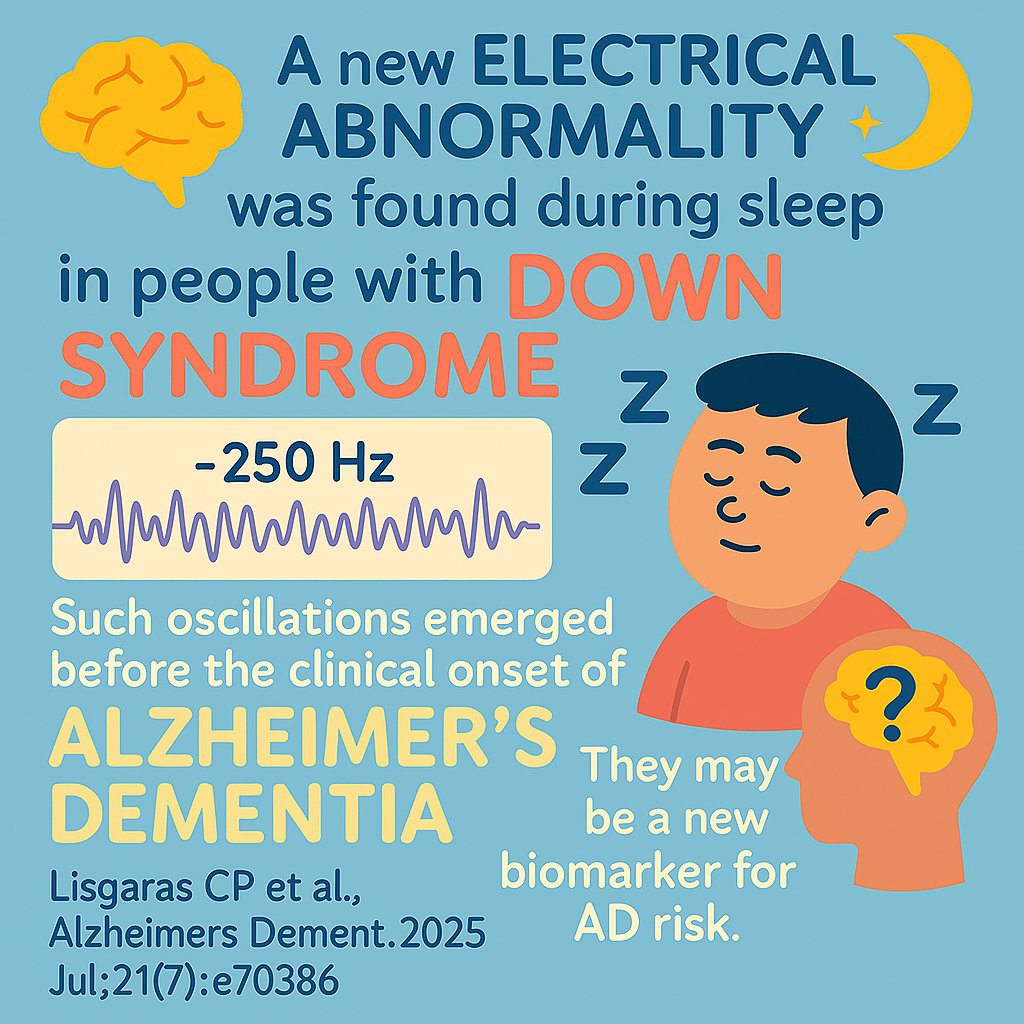
and team found a novel electrical abnormality during sleep in people with Down syndrome—high-frequency oscillations (>250 Hz) on scalp EEG. These may predict Alzheimer's dementia before symptoms appear. 📷 PMID: 40642994
🚀 Fantastic start to #INSS2025!
Loving the deep dive into neuromodulatory subcortical systems, sleep & the glymphatic system—key themes for @NSS_PIA & @SleepPIA.
If you're not a member of @ISTAART yet, now’s the time!
🧠 Don’t miss out on opportunities like this. #SleepResearch
@HeidiJacobsLab kicks off the integrative @NSS_PIA/@SleepPIA meeting in Boston—reminding us it all began in 2017 with just 10 people. Incredible growth, top-tier science, and momentum in #ADRD research. Grateful to @ISTAART & @alzassociation for their unwavering support!
Fascinating new research on sleep across the Alzheimer's continuum in people with Down syndrome 🧠💤 — check out this collaborative work with @SantPauMemory in Alzheimer's & Dementia!
📄 https://t.co/weQ2DqTwyL
@alzdemjournals@alzassociation
Interested in how sleep is affected across the Alzheimer's disease continuum in people with Down syndrome? 💤🧠
Check our new publication with @SantPauMemory collaborators out in Alzheimer's & Dementia: The Journal of the Alzheimer's Association! @alzdemjournals@alzassociation@SleepPIA
https://t.co/d2Wkjn2bqS
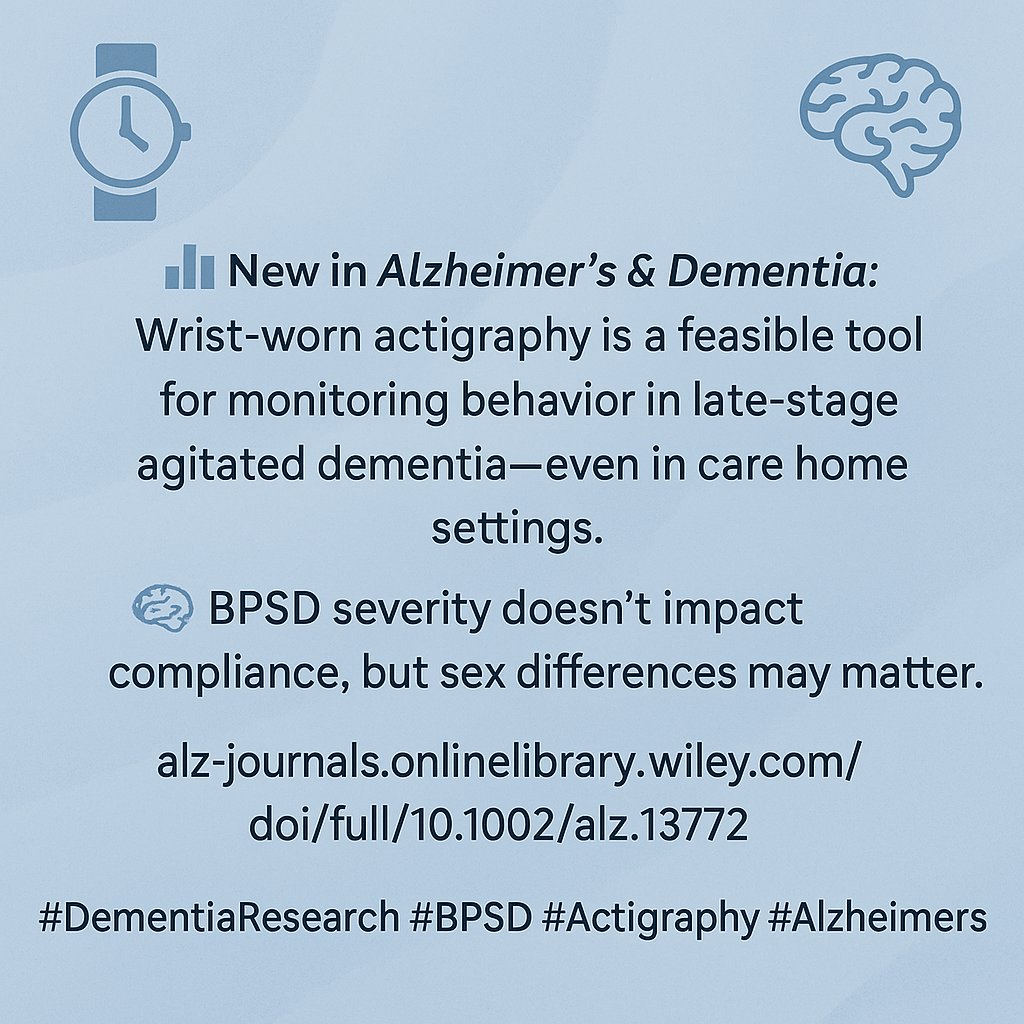
📊🚨 New research from @TW_Guu:
Wrist-worn actigraphy is a feasible tool for monitoring behavior in late-stage agitated dementia—even in care home settings.
🧠 BPSD severity doesn’t impact compliance, but sex differences may matter.
Submit your latest research to be featured!
Excited to see this special issue on Sleep and Alzheimer’s in Alzheimer’s & Dementia! 🧠🛏️ If your research touches on sleep, circadian rhythms, and AD, don’t miss this opportunity to contribute. Submissions now open! #SleepResearch#Alzheimers#CircadianRhythms#ENDALZ
👇👇
I'm excited to serve as a guest editor with @YueLengsleep, @Prof_Naismith, and Brendan Lucey for a special issue of Alzheimer’s & Dementia on Sleep and AD. Call for papers is open below! Don't forget the circadian clock! @alzassociation#ENDALZ
https://t.co/tFb0gNojVA
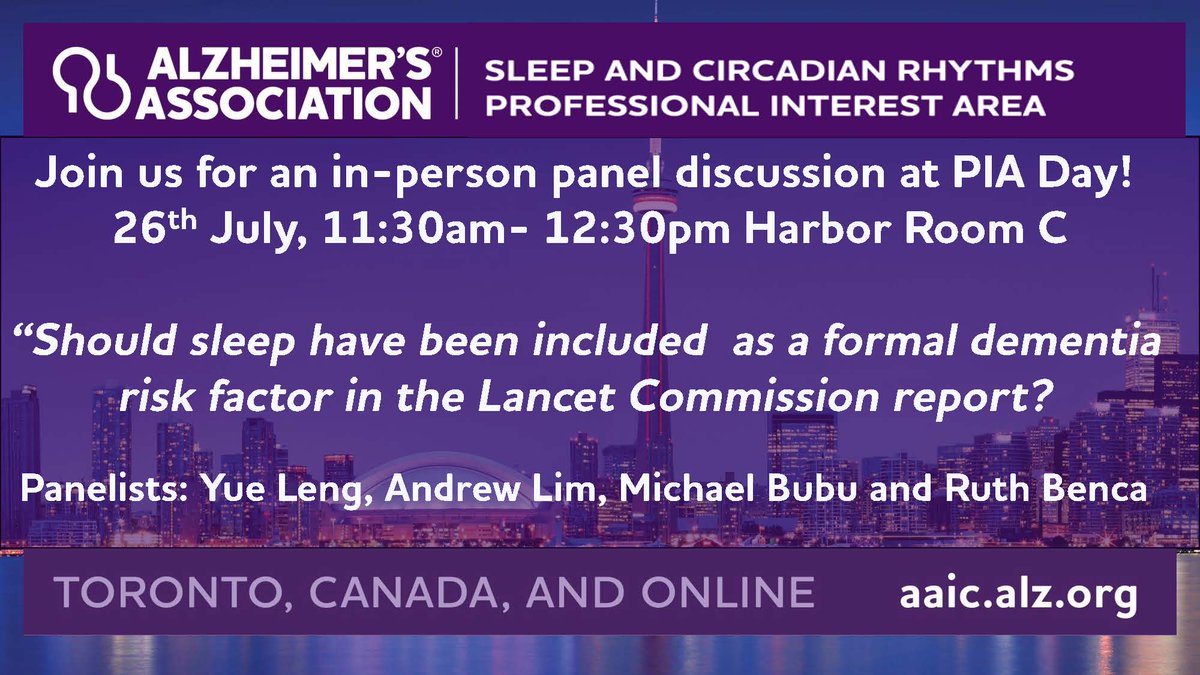
🧠 Sleep & dementia risk—should it be formalized?
Join us at #AAIC2025 for a panel hosted by the Sleep & Circadian Rhythms PIA:
🗓️ July 26 | ⏰ 11:30am | 📍 Harbor Room C, Toronto
With Yue Leng, Andrew Lim, Michael Bubu & Ruth Benca
🔗 https://t.co/Bpwc3uV91a
During today’s House Energy & Commerce Health subcommittee hearing, Health and Human Services Secretary Robert F. Kennedy Jr. made several inaccurate remarks regarding Alzheimer’s and the current state of research, including:
❌ Mischaracterizing Alzheimer's as Type 3 Diabetes
❌ Expressing that he was not familiar with Alzheimer's Disease Research Centers (ADRCs), which have already experienced funding reductions
❌ Claiming that there have been no cuts to any Alzheimer's clinical trials, though delays to ADRCs' funding has impacted clinical trials
The Association is committed to our bipartisan work to ensure progress in Alzheimer’s and dementia research continues. Read our full statement ➡️ https://t.co/VADpJodCyM.
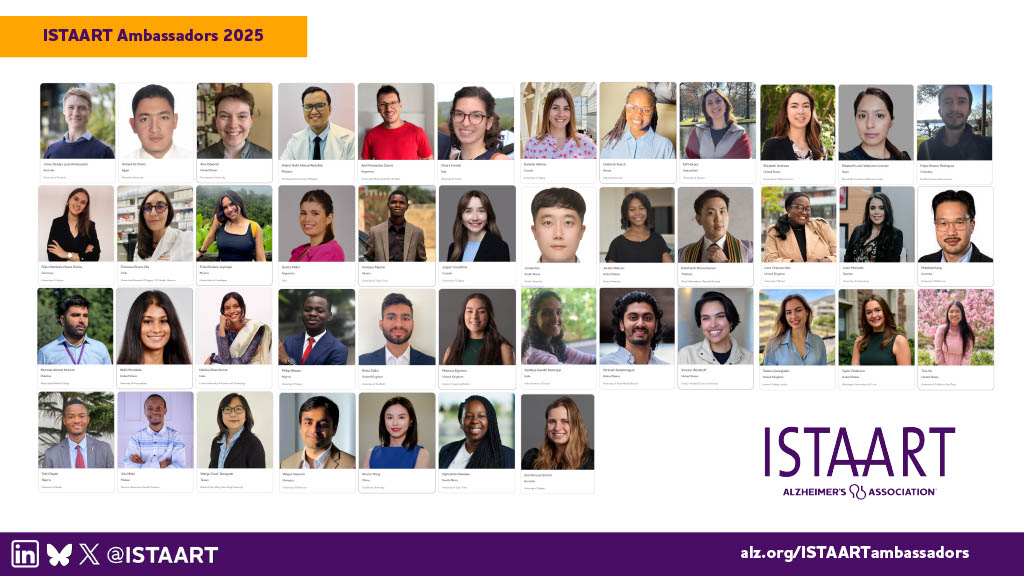
Delighted to welcome our new class of ISTAART Ambassadors! This year's 43 Ambassadors represent 27 countries across the globe. They'll work with us at #AAIC25 Toronto / online, and we'll be mentoring them over the next year!
Meet them at https://t.co/Pb71EZPMpD!
@alzassociation
Dreaming of a good night's sleep? Here is a reason you may want to prioritize getting one.
According to a new study, the risk of Alzheimer's may rise when the amount of deep sleep someone experiences falls. Scientists found that a lack of two stages of sleep -- slow-wave and rapid eye movement (REM) -- appears to shrink parts of the brain. While more research is needed to confirm these findings, they add to a growing body of research aimed at understanding how sleep and brain health are connected.
Get the full story: https://t.co/8qJlvnGtb1.