MS: UST yields are rising with nominal GDP, a relationship that has held across cycles. With growth near 6%, higher rates seem to reflect strength, not stress.
Houthis are sticking with their asymmetrical strategy: hitting Saudi infrastructure while losing territory near Red Sea.
For Riyadh, it reinforces desire to go all the way in Yemen, take back Sanaa. 2/3
China is experiencing a balance sheet recession on a scale the world has never seen before. Economist Richard Koo coined the term to explain Japan’s stagnation in the 1990s.
At its core, it describes a collective shift in economic behaviour: households and companies prioritise repairing their balance sheets over spending, borrowing and investing, even at near-zero interest rates.
The result is chronically weak aggregate demand, against which conventional monetary policy loses much of its effectiveness. It is not merely a financial problem. It is a profound shift in economic psychology. Deeply structural and profoundly scary.
It is also the key reason I don’t buy the copper “supercycle” narrative. China accounts for roughly 50% of global copper consumption, much of it historically tied to construction and infrastructure. Nothing can compensate for a structural collapse in that demand. Not even close.
Nor can the West afford the much-advertised “green transition” at the scale and speed promised. By now, much of it has become a face-saving exercise for bureaucrats in Brussels, increasingly divorced from economic and fiscal reality.
It won’t survive the rebellion in government bond markets, already visible in French sovereign debt. In that sense, many European governments face their own balance sheet constraints, although these are not balance sheet recessions in Koo’s original sense.
When the AI mania finally slows, copper, among others, will nosedive. For now, the scramble to front-run US tariffs and the speculative demand it generates keep the mirage alive. It won’t last forever.
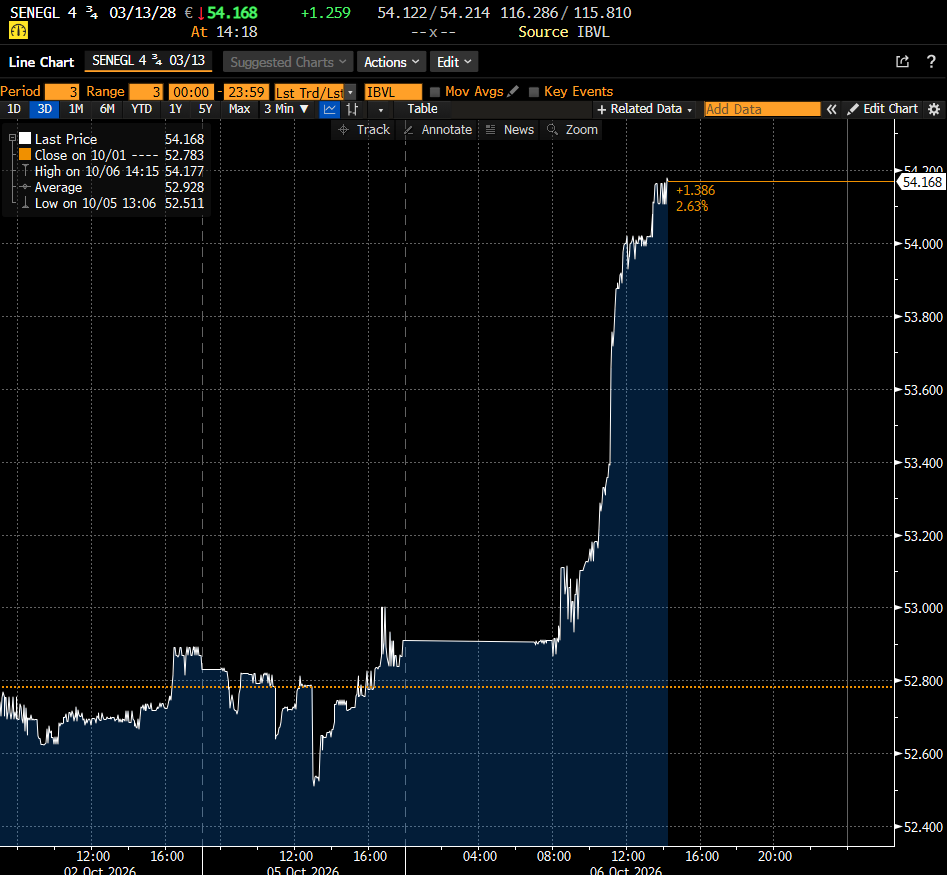
Senegal aims for an agreement in principle with its official lenders and bondholders by December, three sources said on Tuesday, two years after the emergence of misreported debt that analysts estimate totals $13 billion. https://t.co/z8HCJDJMtI
Non esistendo un bond europeo il mercato monetario della zona euro funziona con i bond dei singoli Stati come collaterali.
BTP e OAT coprono circa 1/4 dei 14 trilioni di €repo.
È chiaro che la Bce non può non intervenire se ci dovessero essere movimenti bruschi.
€zone countries with the most restrictive fiscal policy stance in 2026 (i.e. fiscal consolidation) according to the EU Commission: France, Belgium, Slovakia, Luxembourg, Austria. RRF-financed expenditure contributes to more expansionary stances, but this will end after 2026.
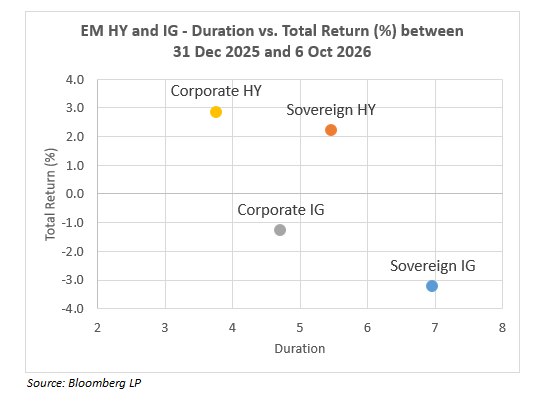
Spread cushion and lower duration - rather than IG's rate sensitivity - have been the winning formula for EM High Yield hard currency bonds (both corporate and sovereign) this year