Every valuable economic flow has a source, a structure, access points, requirements, transformations, constraints, and capture points.
And:
A subsystem can sit inside a larger flow while itself containing its own flows, constraints, access points, and capture mechanisms.
A good political system is not one that guarantees good rulers. It is one that continuously exposes rulers, policies, and institutions to reality and can replace or modify them faster than their errors accumulate.
"... and we found about 2.4 billion dollars worth of fraud, so we refused to pay. That then led to threats to me and then, my mother got kidnapped. I was told that for her to be released, I should resign and leave the country..."
DG of the WTO, Dr. Ngozi Okonjo-Iweala speaks about her time as Nigeria's Finance Minister.
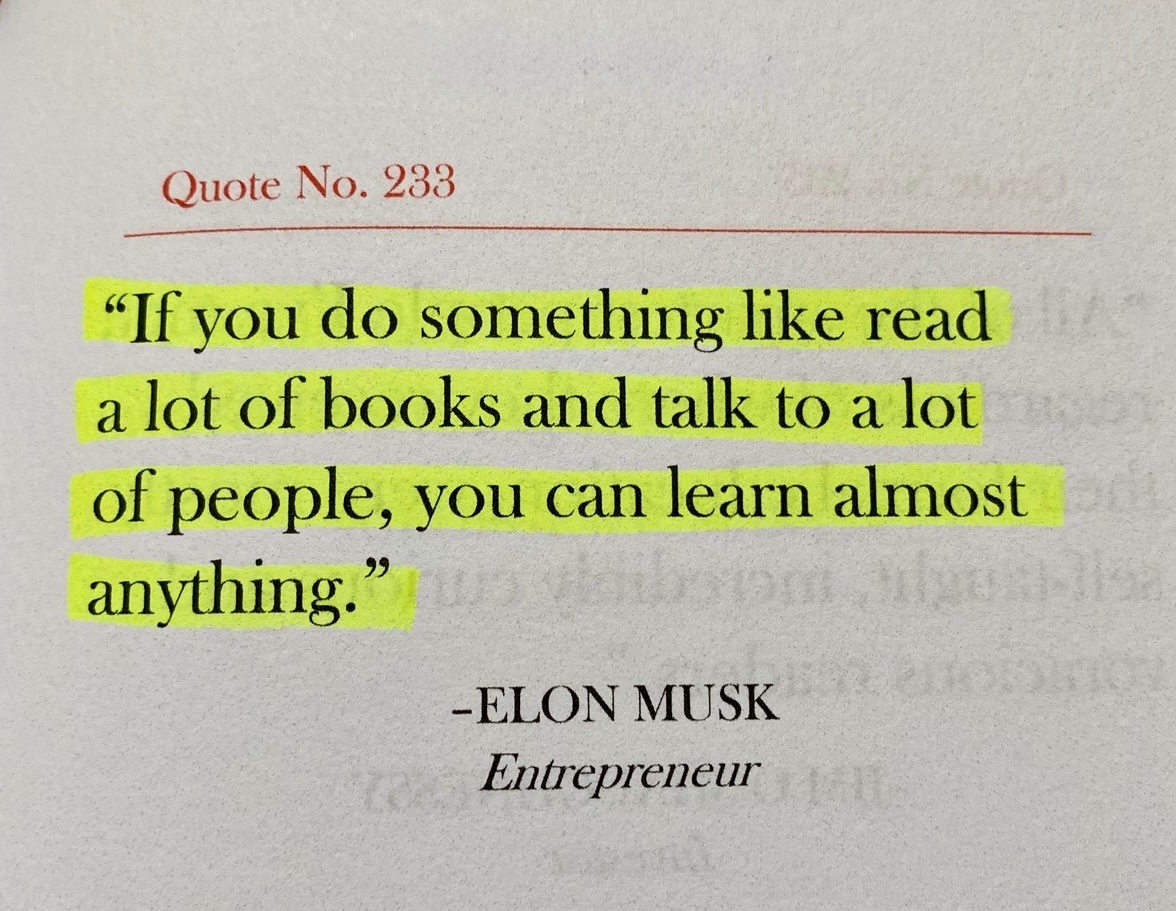
Imagine a highly advanced game where the objective is deliberately not shown to the player. Instead, the player is given intelligence, curiosity, limited information, consequences, and freedom.
Then discovering what is worth pursuing becomes part of the game.
@elonmusk
Imagine a highly advanced game where the objective is deliberately not shown to the player. Instead, the player is given intelligence, curiosity, limited information, consequences, and freedom.
Then discovering what is worth pursuing becomes part of the game.
This paragraph by Richard Feynman hits so hard:
“Fall in love with some activity, and do it! Nobody ever figures out what life is all about, and it doesn’t matter. Explore the world. Nearly everything is really interesting if you go into it deeply enough. Work as hard and as much as you want to on the things you like to do the best. Don’t think about what you want to be, but what you want to do. Keep up some kind of a minimum with other things so that society doesn’t stop you from doing anything at all.”
:
Don’t learn technology first.
Find a problem.
Define the desired outcome.
Remove ambiguity.
Decompose the process.
Identify the required capabilities.
Choose the technology.
Build the smallest working version.
Then automate and improve it.
1. Observe the economy
↓
2 Find where value/money is already flowing
↓
3 Identify the bottleneck / unmet demand
↓
4 Determine what productive asset can solve it
↓
5 Acquire/control the asset
↓
6 Produce the output
↓
7 Capture the value
↓
8 Reinvest → acquire more capacity
Don’t answer the sentence you think you heard. Answer the sentence that was actually said.
That sounds trivial.
But practising it deliberately could be an extremely powerful form of cognitive training.
Build enough economic leverage to buy back your time, then spend that time becoming increasingly capable of understanding, creating, and experiencing reality.
For a long time, a lot of your thinking has been organized around economic productivity: How do I make money? How do I build leverage? How do I escape trading time for money? How do I become economically independent?