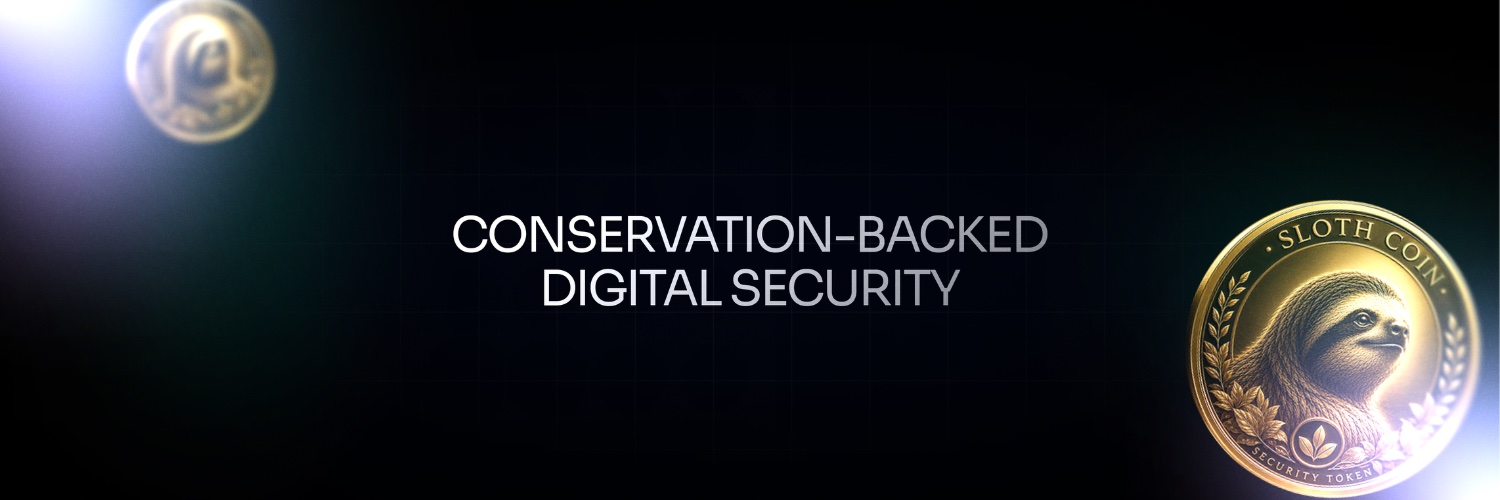
Welcome to the official X account of SlothCoin (SLOC).
SlothCoin is a conservation-backed security token built around the long-term protection of rainforest land in Peru.
The model is designed to direct capital into securing and managing rainforest, supporting conservation and rehabilitation work, and developing environmental-credit projects.
As verified environmental credits are generated and sold, that activity creates the economic engine behind SLOC, with capital expected to be reinvested into expanding conservation over time.
Here, we’ll share the progress, the conservation work, the token structure, and how the model develops from the ground up.
One of the biggest problems in conservation is that people see the outcome, but not the process.
Here’s the process SlothCoin is built around:
- Protect rainforest land - Support long-term conservation - Create the conditions for verified environmental credit generation - Keep the forest worth more standing than destroyed
That’s the bigger picture: turning conservation into something durable, not temporary.
This is a major step toward making regulated tokenization practical at scale.
The real breakthrough isn’t just moving assets onchain. It’s building investor eligibility, transfer restrictions and compliance directly into the infrastructure.
That’s what could open the door for entirely new categories of real-world investment.
Tokenization is only half the equation.
Bringing federally regulated banking infrastructure directly into the issuance and settlement process is a significant step.
For private-market securities, the real opportunity is combining compliant investor access, enforceable rights and efficient settlement into one seamless experience.
Removing the waiting is a major breakthrough. But removing friction without removing investor protections is where this becomes truly powerful.
For regulated digital securities, 24/7 markets also require enforceable ownership rights, investor eligibility and compliance.
Speed opens the door. Trust allows institutional capital to walk through it.
Citi is highlighting what could become the real breakthrough in tokenization.
It’s not simply putting assets onchain. It’s making those assets financially useful.
For regulated private-market securities, the next challenge is combining that utility with enforceable investor rights, reliable valuations and compliance.
That’s where this gets interesting.
Cross-chain interoperability is powerful. But for regulated securities, moving tokens is only half the challenge.
The real breakthrough comes when investor eligibility, transfer restrictions and issuer controls can function across networks and jurisdictions.
Could compliance portability ultimately become more valuable than transaction speed?
@elonmusk A baby sloth holding onto its mother in the rainforest. No filters. No flashing graphics. Some things are already worth stopping your scroll for. 🌿
Why “Sloth” Coin?
Because the name says something important.
The project isn’t built around speed, noise, or short-term attention.
It’s built around patience, protection, and the kind of long-term thinking real conservation actually requires.
The sloth is more than branding.
It’s a reminder of what’s at stake if rainforest habitat is lost. 🦥🌿
Harpy eagles above the canopy.
Jaguars moving through shadow.
River otters cutting through blackwater streams.
Sloths climbing slowly through ancient trees.
These forests are not empty land. They are living systems full of species that can’t simply relocate when destruction moves in.
SlothCoin is rooted in protecting the kind of rainforest that still gives those species a place to exist.