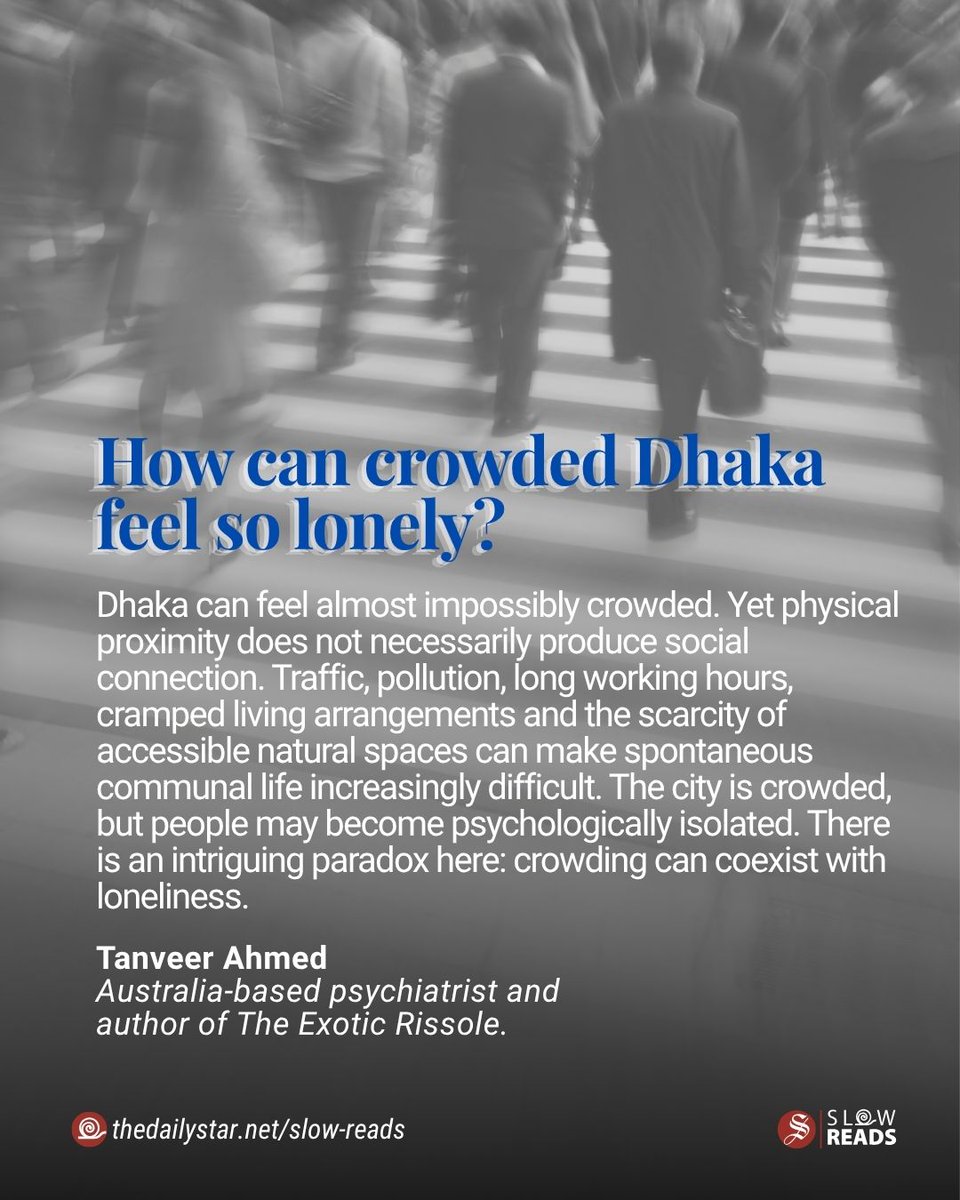
"Tension" is English, but it has been thoroughly absorbed into Bangladeshi Bengali. It is not quite the same as the English word "stress." In context, it can describe ordinary worry, physical discomfort, emotional suffering, social pressure and, at its extreme, something very close to what a psychiatrist would call major depression or an anxiety disorder.
In this essay for The Daily Star Slow Reads, psychiatrist Tanveer Ahmed explores how a single word provides a socially acceptable language for psychological distress, revealing how cultural expectations, family relationships, and social pressures shape mental health.
Read the full article: https://t.co/t2MtNzUR7z
#TheDailyStar #SlowReads #MentalHealth #Bangladesh #Psychology
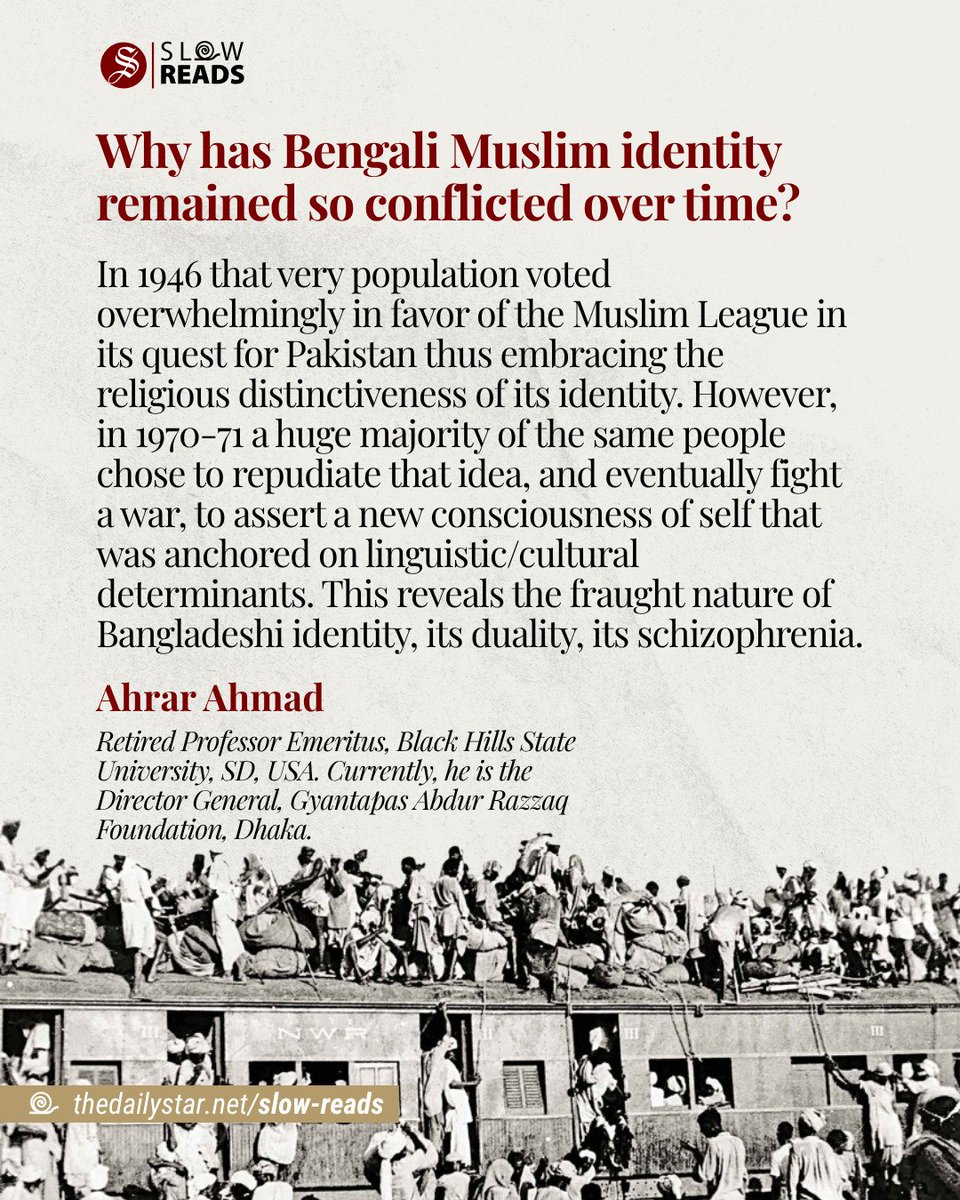
One of the grand paradoxes facing Bangladeshis is expressed in the negotiations and contestations on the simple question about who they are, particularly in the context of the strains caused by the Universalist claims of their religion on the one hand and the particularist demands of their ethnicity and culture on the other.
Explore the deep historical roots of this duality and how nineteenth-century colonial policies shaped the complex identity of Bengali Muslims today.
Read the full article: https://t.co/nU3s3bW5zf
.
.
.
.
.
#TheDailyStar #SlowReads #BengaliMuslims #BangladeshHistory #IdentityPolitics
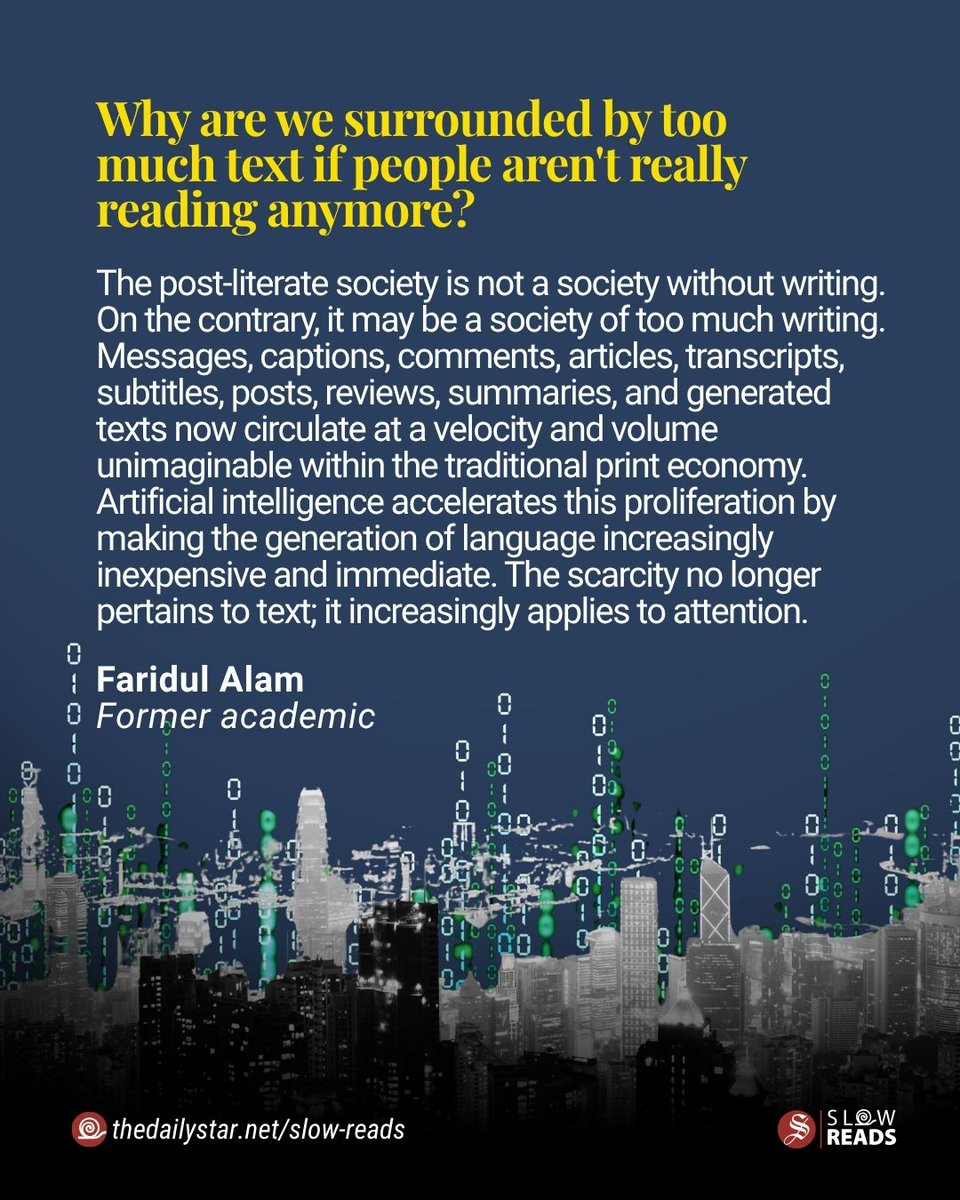
At the very moment when sustained human reading appears to be losing cultural centrality, textual production is becoming virtually inexhaustible. The scarcity no longer pertains to text; it increasingly applies to attention.
This article explores how AI and digital media are reshaping our relationship with language—and why the true challenge of a post-literate society is preserving deep engagement in an age of endless content.
Read the full article: https://t.co/Zb4rPYvotB
#TheDailyStar #SlowReads #PostLiteracy #FutureOfReading #ArtificialIntelligence
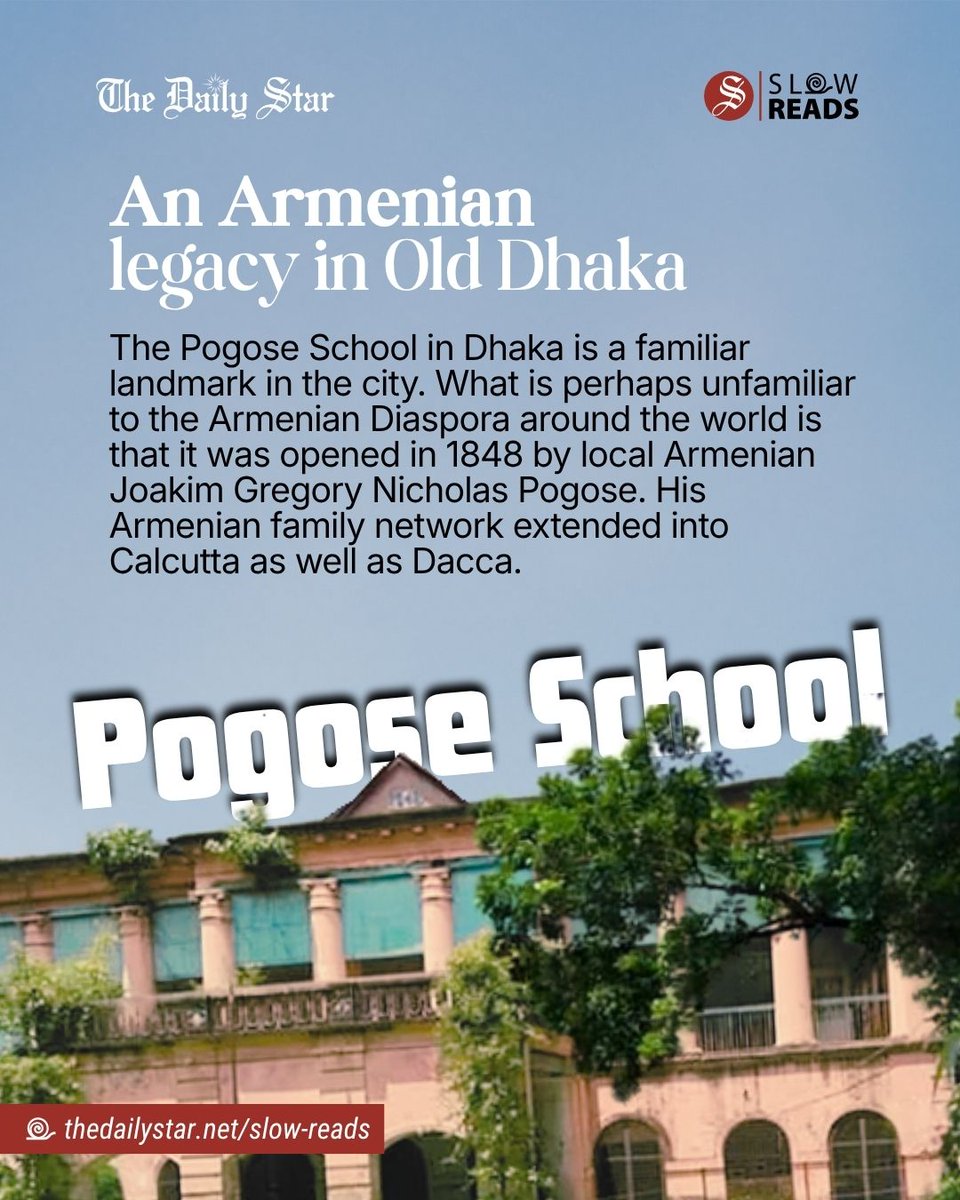
The Pogose School in Dhaka is a familiar landmark in the city. What is perhaps unfamiliar to the Armenian Diaspora around the world is that it was opened in 1848 by local Armenian Joakim Gregory Nicholas Pogose.
This Slow Reads piece traces the rich history of Old Dhaka and how one family's dedication to education left a lasting legacy that continues to thrive today.
Read the full article here: https://t.co/WItbBUdPWX
.
.
.
.
.
#TheDailyStar #SlowReads #OldDhaka #ArmenianHistory #Heritage
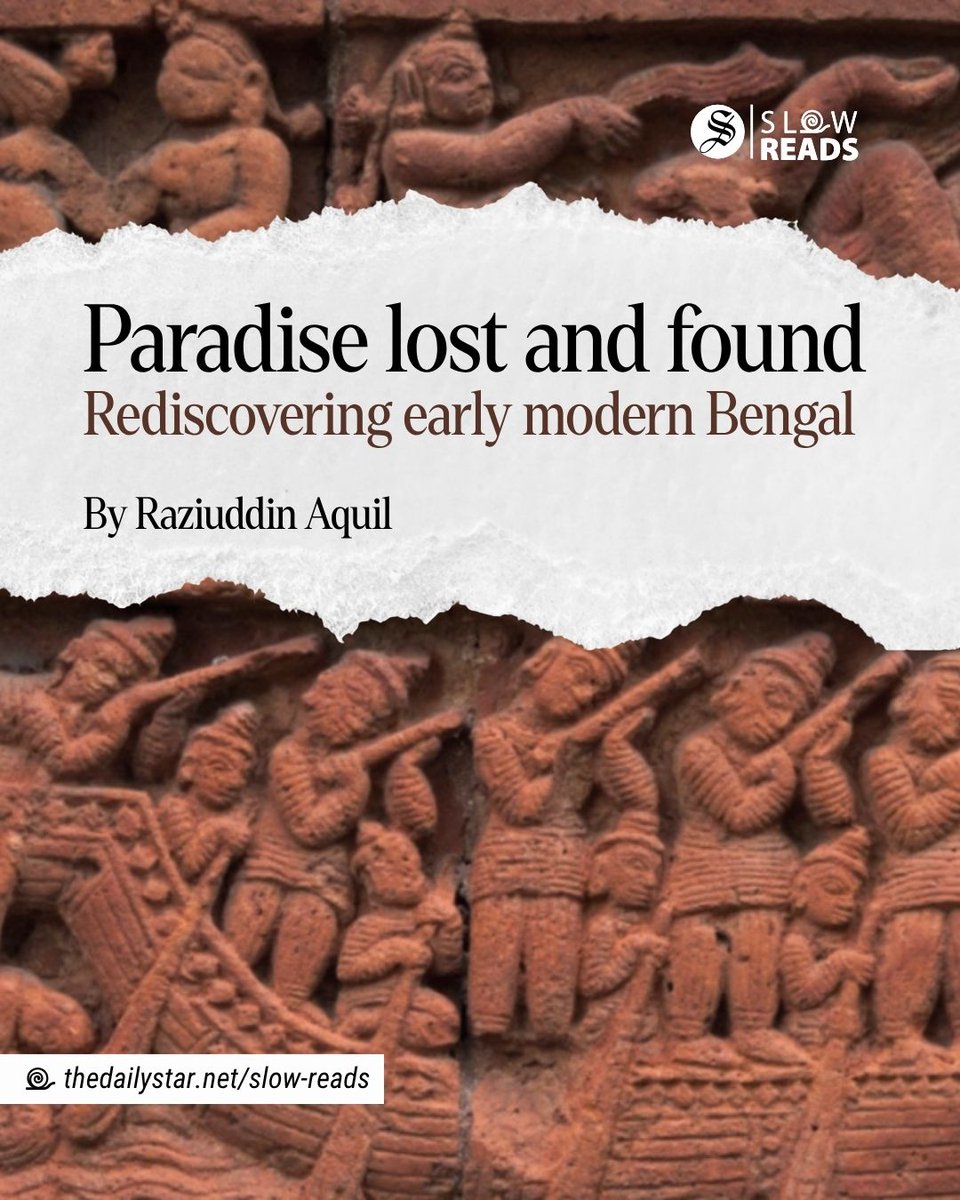
In eighteenth-century Bengal, markets, waterways and pilgrimage centres formed a closely connected commercial world. Hats, ganjs and bazars linked regional trade, while river fleets moved grain and salt, and places such as Gaya, Puri and Kalighat drew pilgrims, cash and foreign coin. Merchants, zamindars, fakirs, sanyasis and gossains were part of these networks, with some also working as lenders and traders in goods such as silk and coral.
Raziuddin Aquil explores Tilottama Mukherjee’s research into this dynamic economic and cultural landscape, and how indigenous enterprise and regional markets continued to function through early colonial disruptions.
Read the full article here: https://t.co/wDtRnRTeJt
.
.
#SlowReads #EarlyModernBengal
“South Korea seems to be largely an afterthought in the otherwise sound emerging ‘Bangladesh First’ strategy. Instead of being lumped into the ‘other regional actors’ category, the ROK should be a leading target in Bangladesh’s push to go beyond the ‘big three’.”
With Seoul unlikely to prioritise South Asia proactively, the burden of initiative lies partly with Dhaka, which needs to direct greater attention and effort towards South Korea.
Read the full article here: https://t.co/m0f5byURkX
#SlowReads #Bangladesh #SouthKorea #ForeignPolicy
Rising per capita incomes do not reduce the amount of water coming over a coastal dyke. They also do not slow down a riverbank collapsing into the Jamuna River, nor do they push salt back out of a farmer’s fields in southern Bangladesh. The first demand Bangladesh should make at COP31 is therefore simple: let eligibility for climate finance be based on risk, not income.
As Bangladesh prepares to graduate from its least developed country (LDC) status, the nation faces a critical crossroads in international climate negotiations.
Read the full article here: https://t.co/5joRURzWH3
.
#TheDailyStar #SlowReads #COP31 #ClimateFinance #Bangladesh
The history of Bangladesh’s Liberation War has often overlooked poor urban workers, despite their activism in the 1960s and participation in 1971. From the Dacca District Scavengers Union’s 18-point strike in 1969 to the 66 “freedom fighter sweepers” listed after the war, Azizul Rasel traces their struggles, mobilisation and the historical silencing of their voices. Their demands for rights, wages and dignity reveal a lesser-known history of working-class participation in the making of Bangladesh.
Read the full article here: https://t.co/TSOLwQzEjK
.
.
#SlowReads #BangladeshHistory
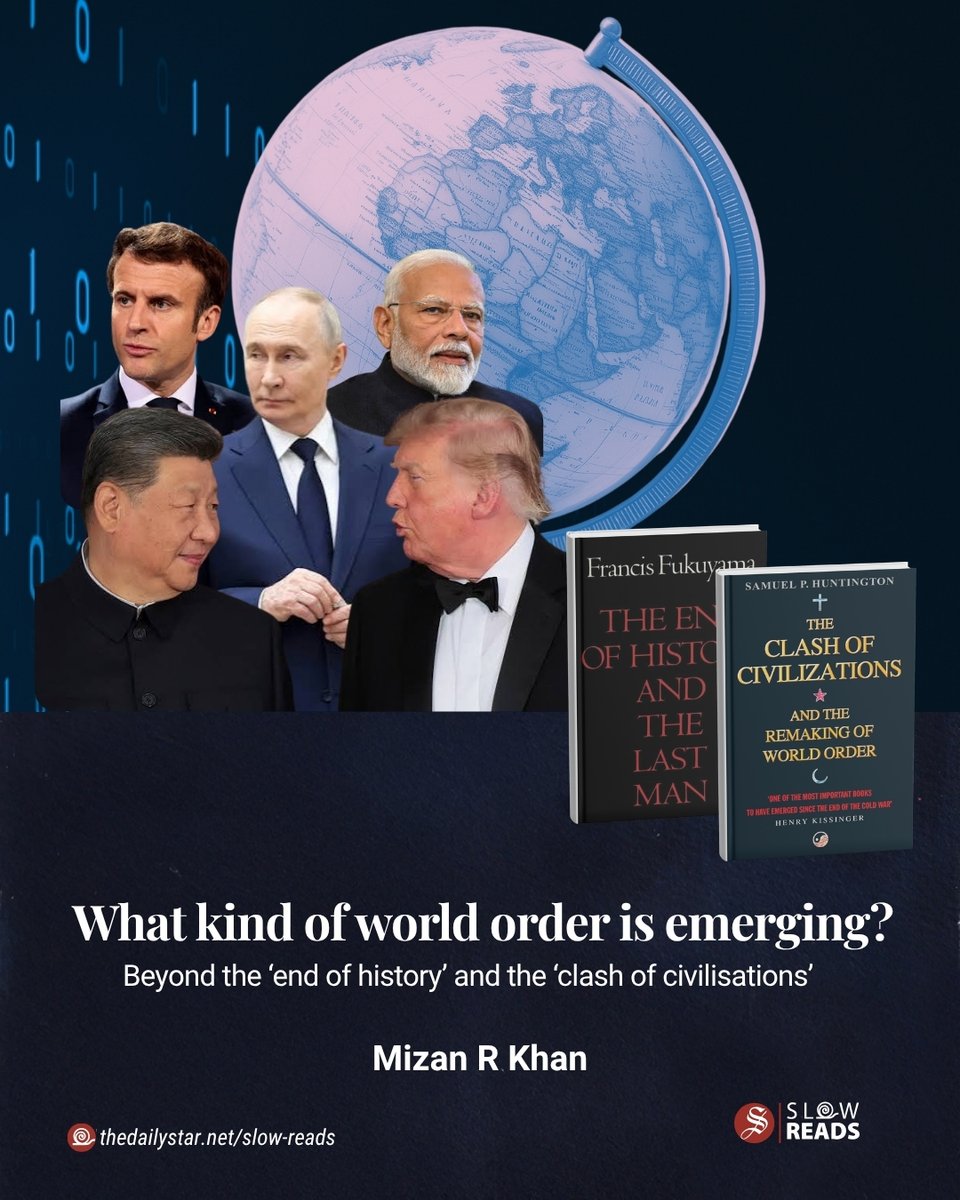
Francis Fukuyama's 1989 thesis, The End of History, argued that Western liberal democracy represented the final stage of human political evolution. Today, it reads as a period piece. What is emerging instead is a multipolar world—contested and shaped simultaneously by the meteoric rise of China, a resurgence of nationalism, the erosion of multilateralism, and a technological revolution centered on AI.
In this Slow Reads essay, Mizan R. Khan examines how shifting global power, climate disruption, and rapid technological advances are redefining international relations in the 21st century.
Read the full article: https://t.co/H3WfR9k3Yu
#TheDailyStar #SlowReads #Geopolitics #Multipolarity #GlobalOrder
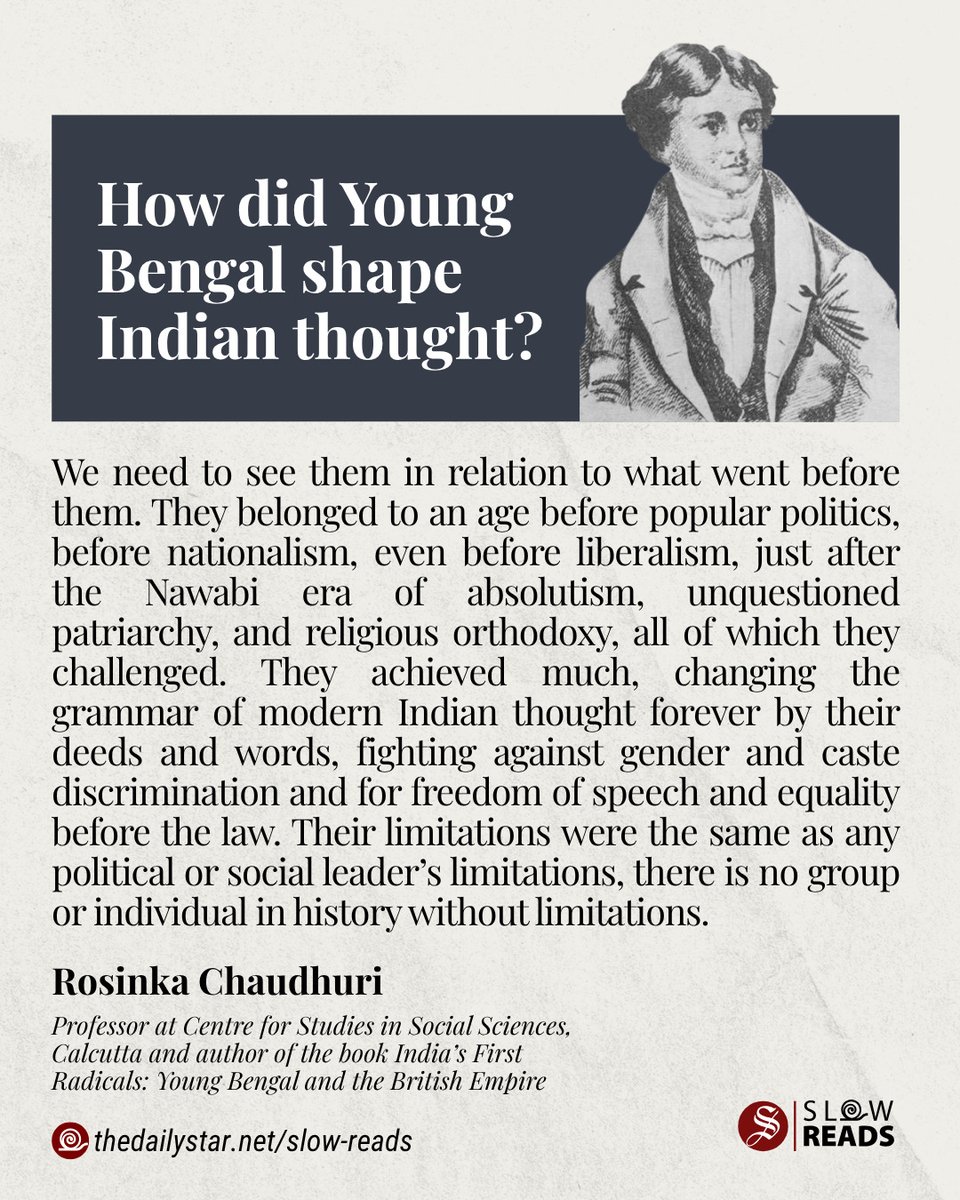
Young Bengal’s radicalism was shaped not only in the classroom, but by a remarkable intellectual world that extended far beyond the college syllabus.
“They read extensively – both in English political thought (Ricardo, Bacon, Locke, Hobbes, Milton) and the Scottish Enlightenment (Hume, Stewart, Reid, Brown) and of course in Romantic Poetry (Byron, Shelley, Burns) – as well as Indian texts rediscovered and reprinted by Orientalist scholars like Jones, Colebrooke, and Wilson.”
Read the full interview here: https://t.co/lXMSTD0NSh
#SlowReads #YoungBengal #BengalHistory
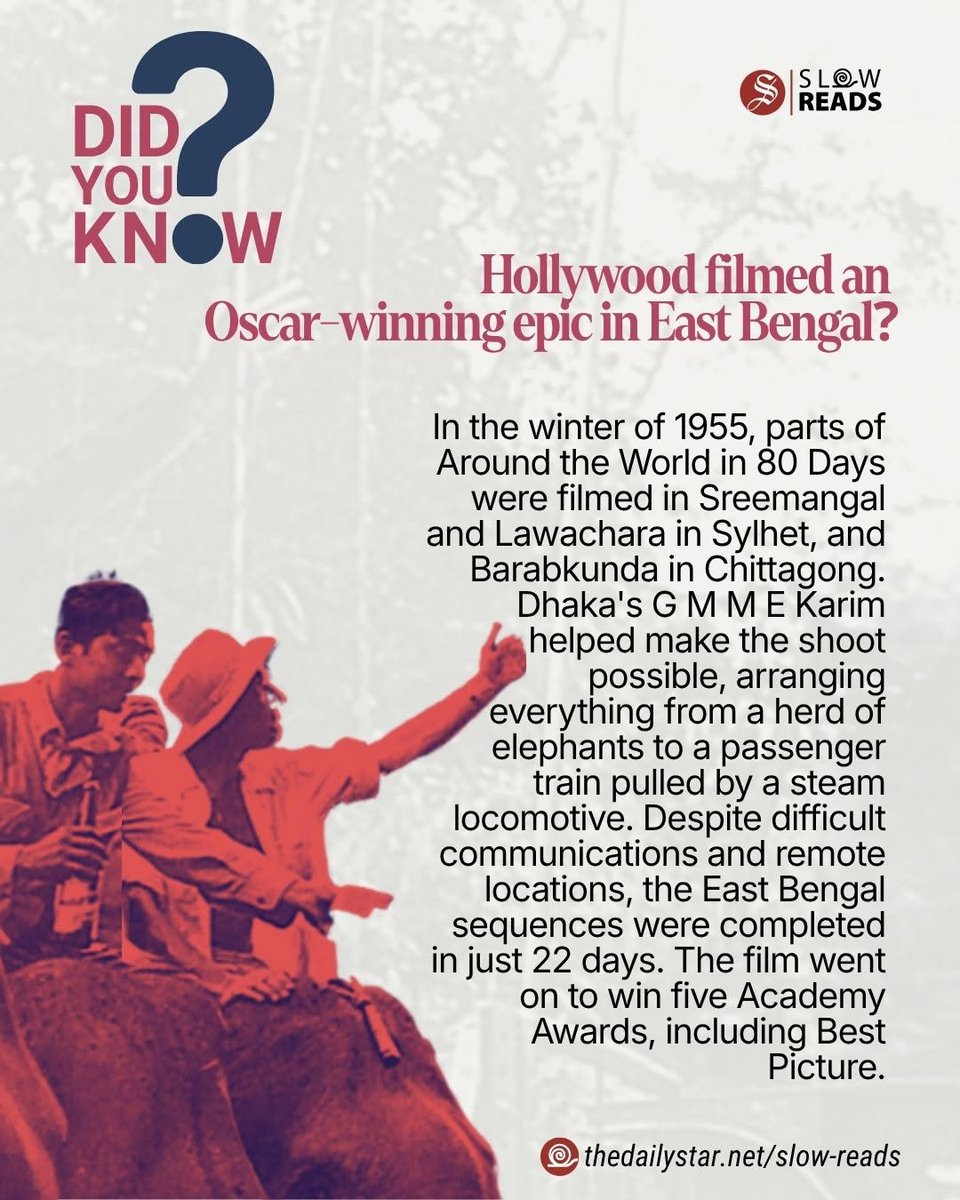
Did you know parts of an Oscar-winning Hollywood film were shot in what is now Bangladesh?
In the winter of 1955, Around the World in 80 Days was filmed in Sreemangal, Lawachara and Barabkunda, with local organisers arranging everything from elephants to a steam-powered passenger train. The film went on to win five Academy Awards, including Best Picture.
Read the artcile: https://t.co/RZjNvJif5h
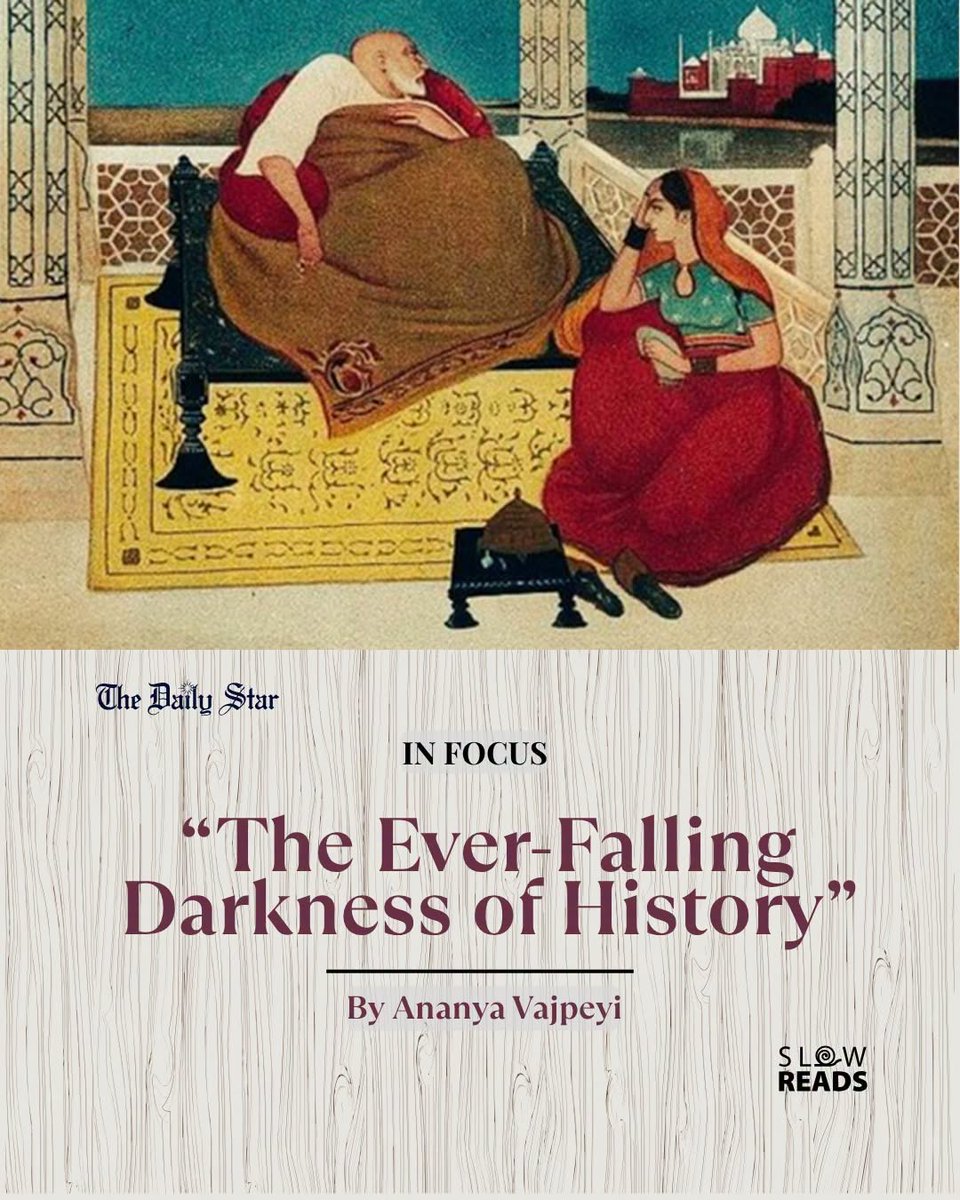
Abanindranath Tagore’s paintings of Shah Jahan and the Taj Mahal were more than historical portraits — they were meditations on power, grief, beauty, and mortality. Through works like The Passing of Shah Jahan, he captured the fading grandeur of the Mughal Empire while subtly reminding colonial India that no empire lasts forever. Blending history, memory, and emotion, Abanindranath transformed Mughal imagery into a profound reflection on time, loss, and the search for an Indic self.
Read the full article here: https://t.co/ytvLiEeMg7
#SlowReads #AbanindranathTagore #ThePassingOfShahJahan #BengalSchool #RabindranathTagore #MughalHistory
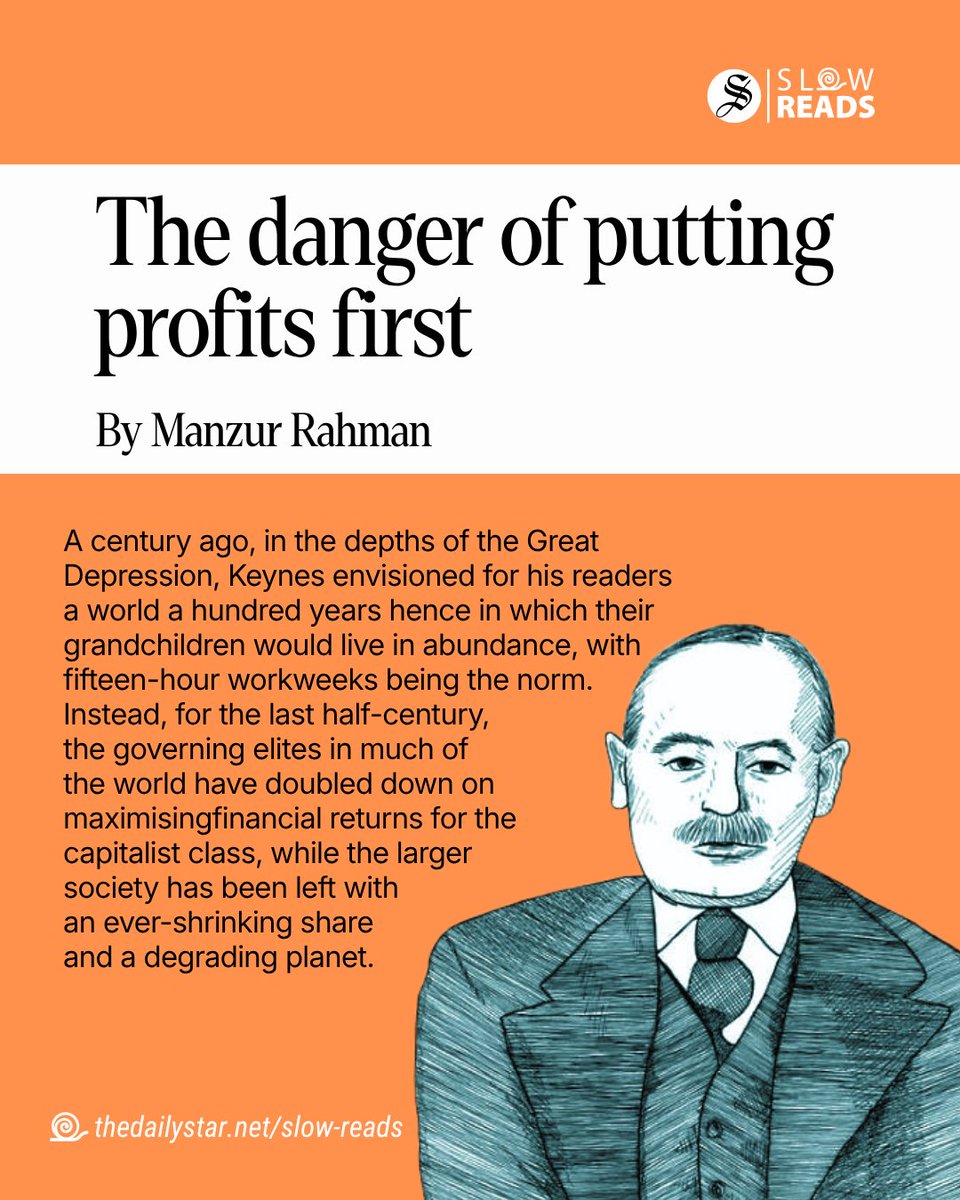
The damage and destruction to lives, livelihoods and communities in their aftermath seemed to be of little concern to the business and financial elite, as they simply moved on to the next financial, well, by now there really is no other way to call it, scam. A finance professor and former investment banker pulls back the curtain on the relentless pursuit of profit that continues to destabilise our global economy.
Read the full article: https://t.co/lzYiBlw72V
.
.
.
.
.
#TheDailyStar #SlowReads #FinancialCrisis #WealthInequality #GlobalEconomy
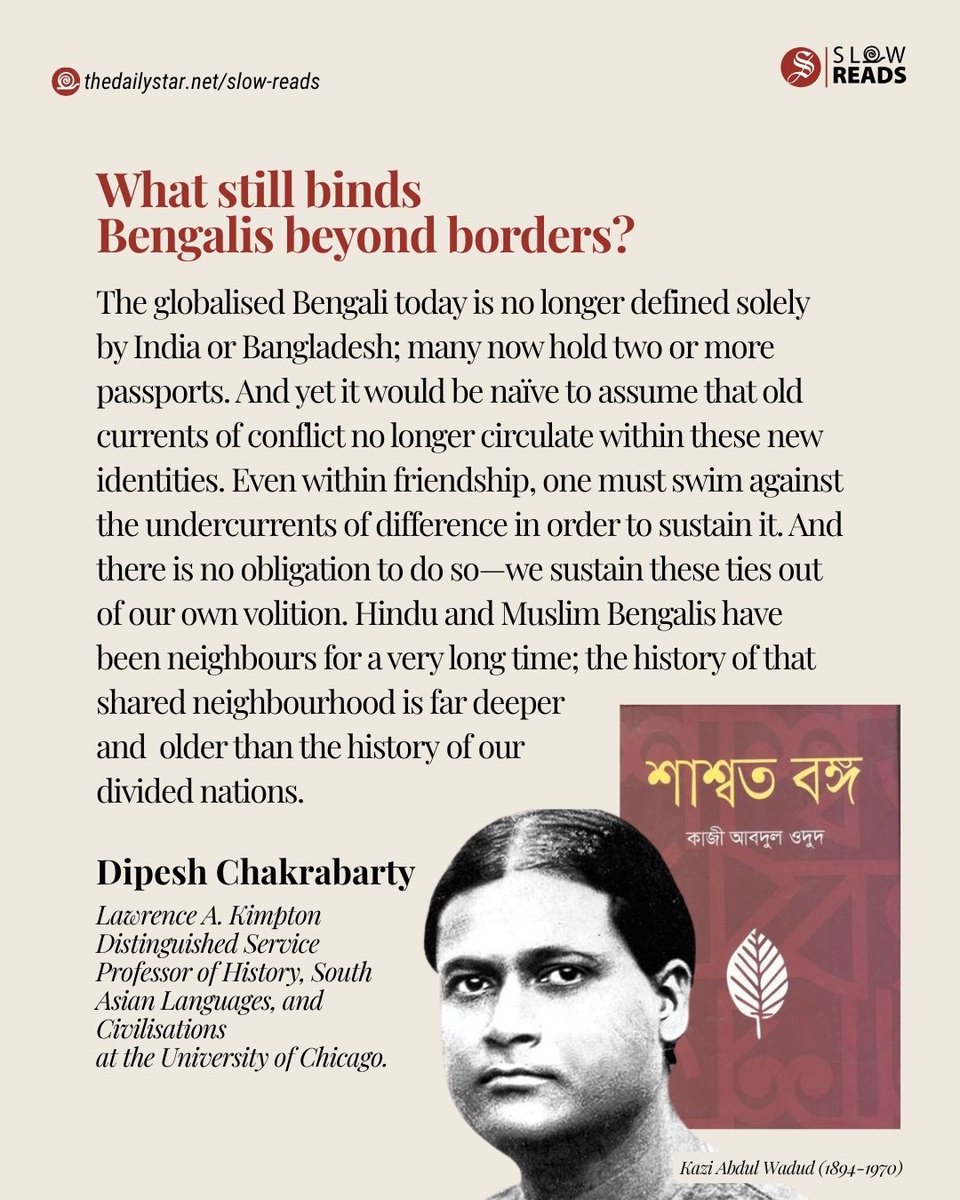
What still binds Bengalis beyond borders?
Writing on the centenary of the Muslim Sahitya Samaj, historian Dipesh Chakrabarty reflects on the shared history of Hindu and Muslim Bengalis, the divisions created by Partition, and what it means to be Bengali in an increasingly globalised world.
Read the full article: https://t.co/NEV9eNw9xX
#TheDailyStar #SlowReads #MuslimSahityaSamaj
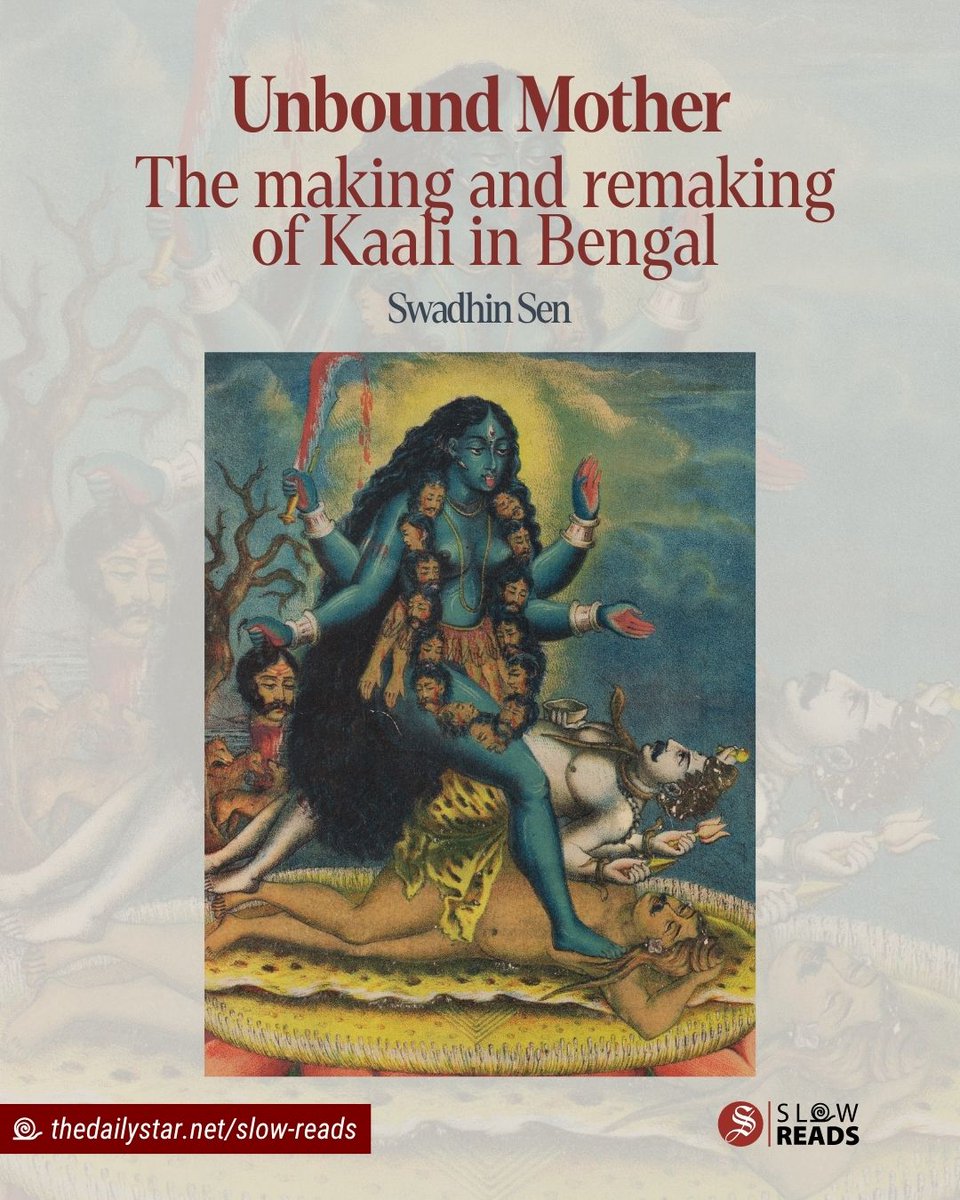
Kali has never been a stable, unified figure. She has been “a figure of terror and tenderness, cosmic sovereignty and intimate domesticity, transgression and devotion” — shaped through iconography, text, ritual and the embodied lives of her devotees.
Across Bengal, her many indigenous forms and seasonal rituals are dwindling. What remains is a question of what is lost when a vibrant, messy, multifaceted spiritual ecosystem gives way to a monolithic, comfortable uniformity.
Read the full article here: https://t.co/R7IIR8NKXo
.
#SlowReads #Kali #BengalHistory #ReligiousHistory #CulturalHistory
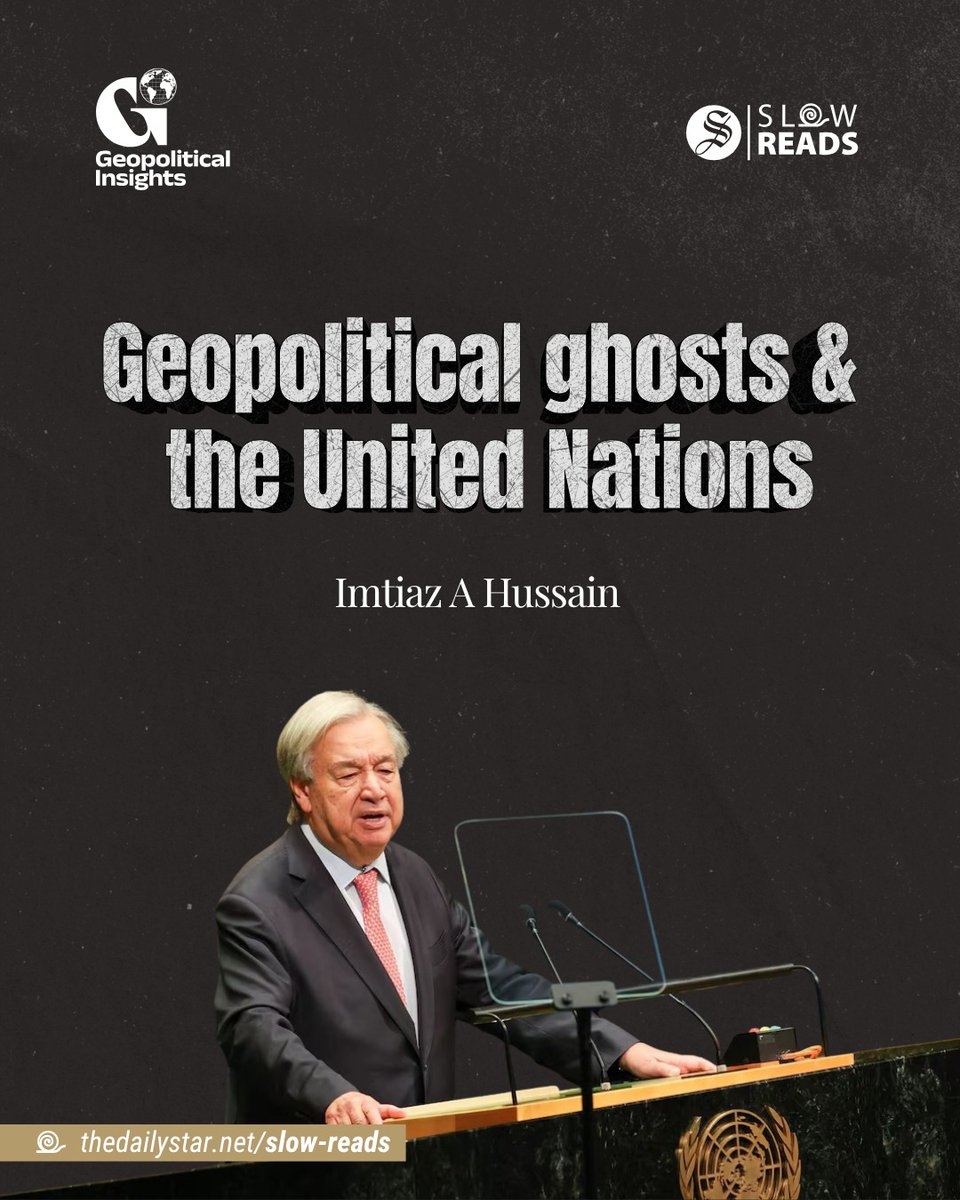
"Portugal’s António Guterres finishes his tenure amid anything but routine circumstances. He sturdily channelled UN principles to give multilateralism a belated, perhaps final, glow. Evolving circumstances unfortunately leave the United Nations at the same crossroads today as the League of Nations in the 1930s: geopolitics in control, multilateralism in the back seat or the trunk."
The United Nations faces a world where rivalry among major powers increasingly challenges collective action and the pursuit of peace.
Read the full article here: https://t.co/Fhe0qb9cWA
#SlowReads #UnitedNations #Geopolitics #Multilateralism