The real money (millions vs billions) is made by those who know how to trade extreme backwardation (e.g. Hormuz) or extreme contango (e.g. COVID). That’s a whole different game. How does one do that? See future post!
Commodity Trading Concepts: Backwardation and Contango
Backwardation and Contango are two of the most basic yet misunderstood concepts in commodity trading.
Most beginners know the simple version:
Backwardation = higher prices in the front, lower at the back.
Contango = the opposite.
This is what we call market structure. But there are some big misconceptions. Let’s dive in:
Contango attracts everyone. Storage becomes profitable → barrier to entry drops → massive competition → retail margins get crushed. Your upside is capped by the contango itself. You’re basically just renting tanks. Not much value added.
Backwardation is a real test. Carrying cost is high, so you must buy fast and sell fast. Strong demand usually makes selling easy. The edge comes from buying at a lower physical premium than you sell at — in a short time window.
Weaker players can’t churn their volumes quickly enough and get punished. Result? Less competition and better margins for the skilled traders.
Giving some context to this; indeed the strait of hormuz is important for the supply of bunker fuel in Singapore, which is why supplies are depleting.
However, SG experienced very high Russian fuel oil (v suitable for bunkers) arrivals in March and April, and in addition to that, China teapots also rejected taking Russian recently due to the high flat price. Due to that, some China bound Russian fuel oil cargoes changed their end destination to Singapore, which in turn will be absorbed into the bunker market.
No doubt, the price environment is elevated due to narratives and panic buying due to the closure of SoH, but now suppliers are facing pressure to dispose of excess cargoes due to high backwardation, against a shipping environment where owners start to “slow steam” and consume less bunkers.
In essence, the SG bunker market is stuck in a place where suppliers are rushing to clear oil, but possibly in a months time, if status quo remains, we might be empty, and prices might go parabolic.
I’m Singapore based “shipping” fuel trader. Not seeing shortage of any kind on the bunker fuel front, In fact we are seeing lower than normal demand with slightly high inventories(albeit depleting) for now. Unless you are refering to marine gasoil, but that is a small percentage of our overall market. What is being shown on the y axis of this chart?
I get asked often (in the context of the world of physical oil), what makes a good trader? Most people would have heard of trading from movies like the Big Short, Wolf of Wall Street , Billions on Netflix .. etc. But oil trading is a mystery to many, and yet it is highly competitive. In microeconomics, it would almost be described as a perfectly competitive market with relatively low barrier to entry, perfect information and razor thin margins. These are 6 personal characteristics one needs to thrive.
Thread🧵
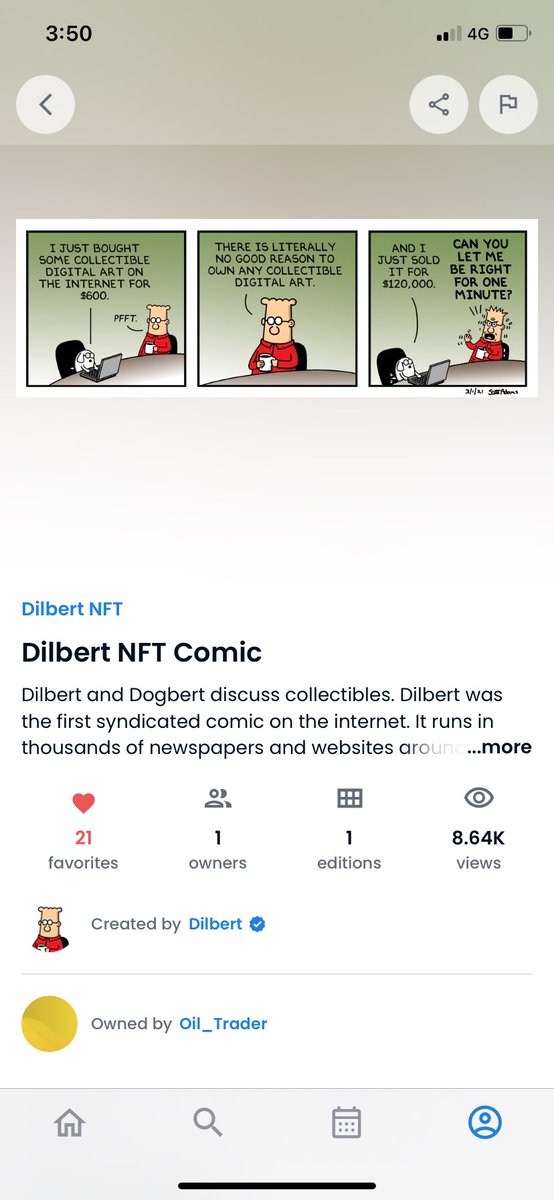
I am the owner of an NFT of Scott Adams though I never really bought in to the NFT hype. His books and ideas have helped to reframe my mind and “hacked” the game of life. So no @ScottAdamsSays , I’m not betting against you!
Recently seeing plenty of youtube ads for investment courses in SG. As much as investment in financial products is important, it should not be the focus of the average young person straight out of school.
Fact is, Investment in one self's various skills and abilities is way more important at the start of one's working journey. The focus should be to scaling your income up as fast as you can, then building up that nest egg for investing. Paying for courses on investing doesn't "pay off" until you have a substantial amount of money to "invest".
Depending on lifestyle goals, the threshold for starting to invest is actually high in SG due to the high cost of living . That includes buying a place to stay, and supporting one self and the family (if you have one). Only then we're talking about money that is truly investible.
Investment courses should be responsible in educating young people on that fact, as much as it might mean pushing away business.
6/ Energy
Energy levels are vitally important. It is the fuel that helps achieve all of the above. There are many vice traps in the oil industry; partying and drinking at the fanciest places in town is almost a daily affair if you wanted it. Keeping a clean diet and getting enough quality sleep requires plenty of discipline here, especially when you feel FOMO after hear your peers share their wild drunken escapades.