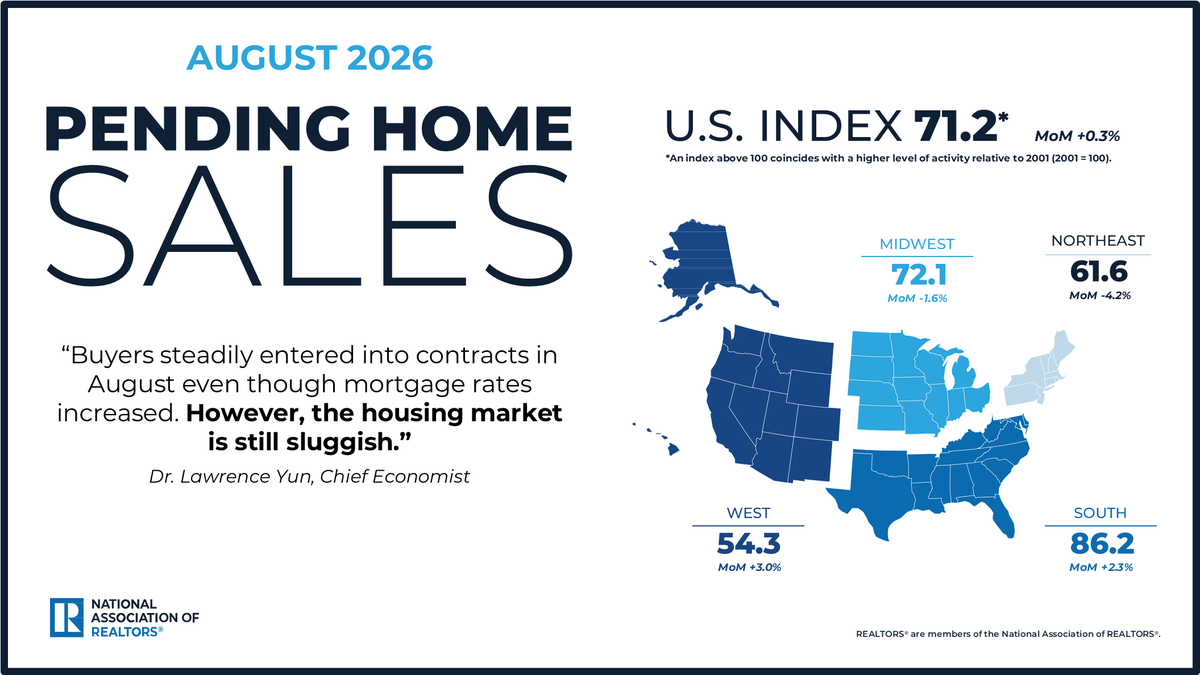
Housing market conditions weakened in September as fast-rising mortgage rates prompted many buyers to pause their search. #NARPHS
https://t.co/EhilWN1LDw
Today’s housing market is giving buyers a little more room to negotiate. 🏡
21% of U.S. home sellers cut their asking price in the four weeks ending Sept. 20. But the bigger story? More sellers are adjusting to today’s market and pricing realistically from the start.
“Those who sell their homes quickly are the ones who are getting savvier about pricing right from day one,” said Redfin Senior Economist Asad Khan.
See what’s happening 👇 #realestate
https://t.co/M3sscNfqMZ
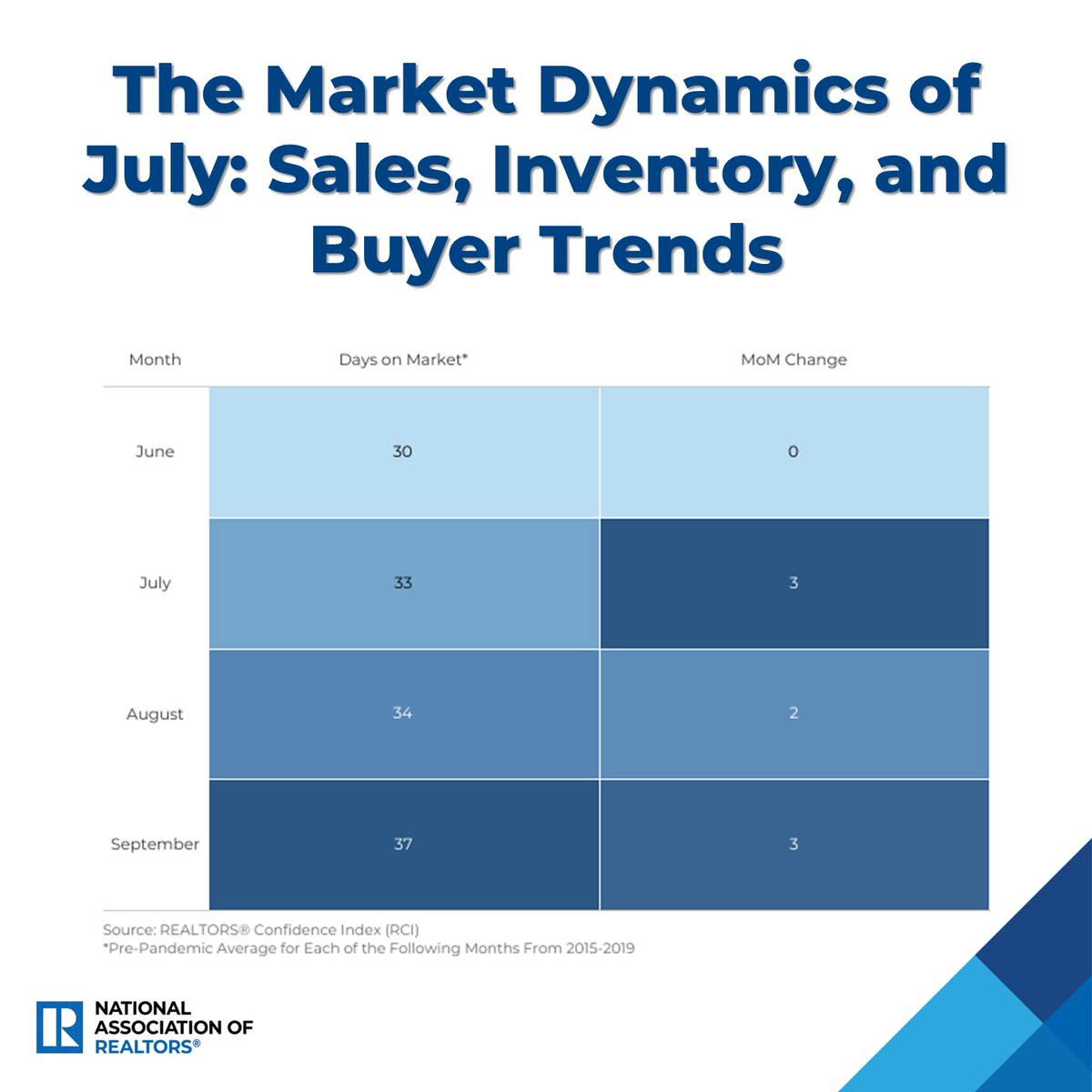
First-time buyers made up 30% of home purchases, up from 28% a year ago. Meanwhile, 27% of buyers paid all cash, and contracts continued to close in a typical 30 days.
See more of what's happening in the housing market: https://t.co/I6os6pmQnO
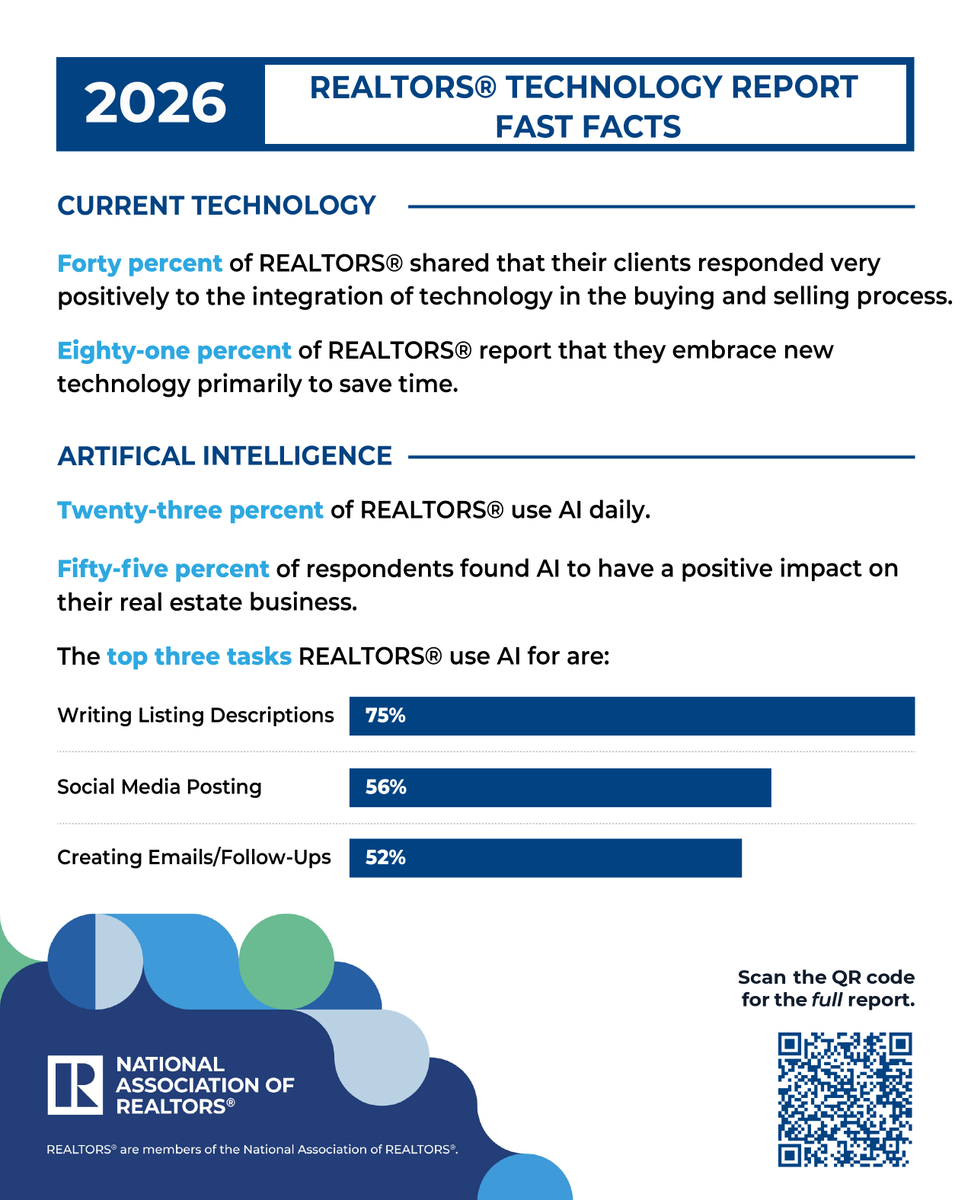
REALTORS® are turning to technology primarily to get time back and to give clients a better experience, according to the 2026 REALTORS® Technology Survey. 81% said saving time is their primary goal in embracing new technology, up from 66% a year ago. https://t.co/SCERCj74Lx
Pending home sales in August increased by 0.3% month-over-month and decreased 4.7% year-over-year, according to the National Association of REALTORS® Pending Home Sales report. https://t.co/XJNVMXTUpp #NARPHS
Nearly 80% of major metros saw more home-purchase mortgage applications in 2025. Decatur, IL and Abilene, TX jumped 17.3%, Billings, MT rose 13.8%, while Port St. Lucie, FL fell 11.0%.
https://t.co/XLbZEdDbqK
In July, 1 in 7 home-purchase agreements fell through, the highest share in nearly three years. But cancellations aren’t suddenly surging, the bigger story is that buyers have more negotiating power.
With nearly 51% more sellers than buyers, homebuyers have more options and more leverage when inspections uncover problems, appraisals come in low or the terms of a deal aren’t right. Redfin Chief Economist @FairweatherPhD, and Redfin Lead Agent Vanessa Leimback, break down what’s happening, and what buyers and sellers can do to navigate today’s housing market.
https://t.co/Mp6pI0IqZQ
Buyers have more room to negotiate. 🏡
Sellers outnumbered buyers by 51% in July, while the number of buyers in the market fell to a record low. Nearly 80% of major U.S. metros are now buyer’s markets, and in most of them, the balance shifted even further in buyers’ favor last month.
Still, real estate is local. Just six major metros remain seller’s markets, led by the New York City suburbs.
See where your market stands in Redfin’s latest analysis. #realestate
https://t.co/Mmw4U1fpFn
In July 2026, existing-home sales edged down 1.7% from the previous month but remained slightly above year-ago levels, while the median sales price rose to $431,400 and inventory held at a 4.6-month supply. #NAREHS
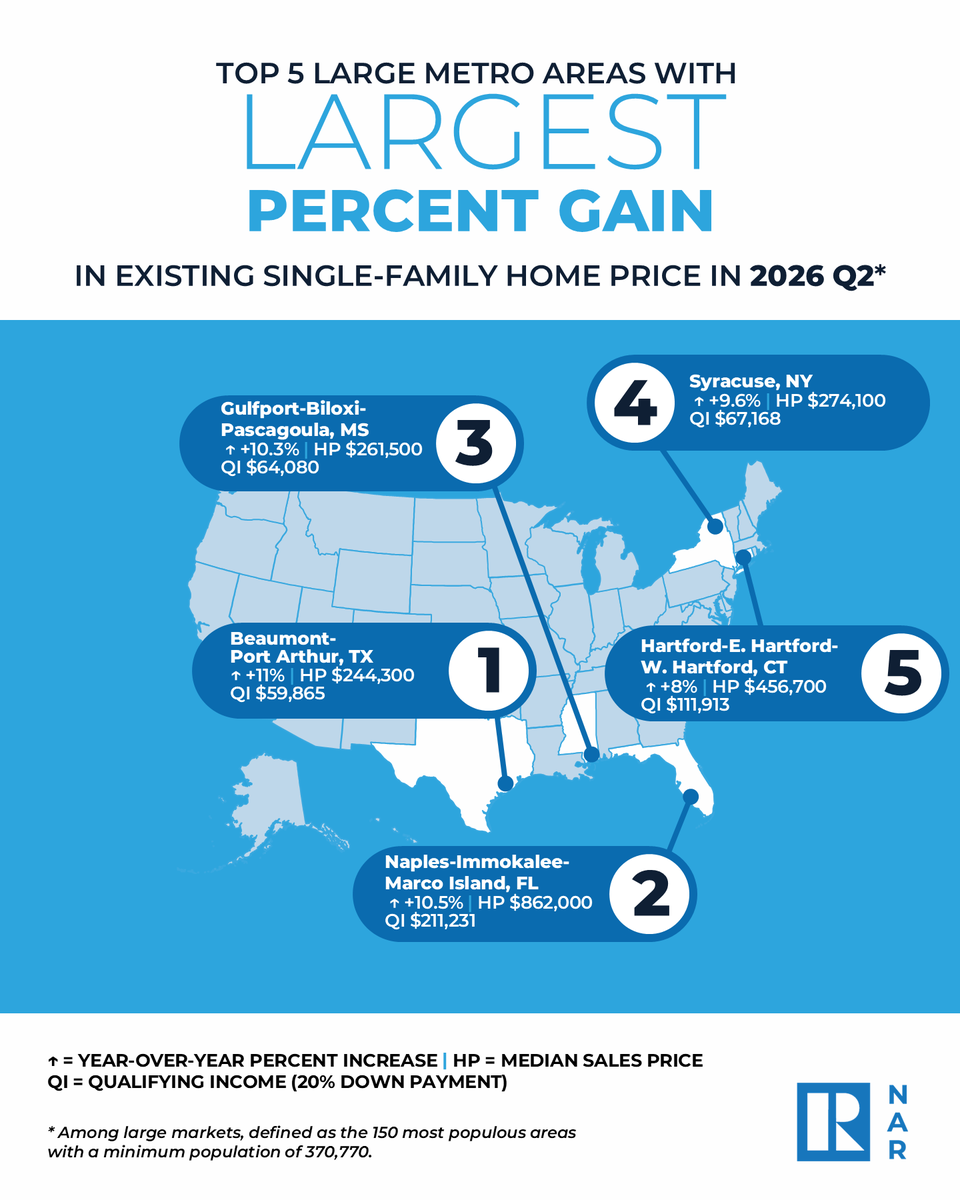
Home prices rose in 80% of metro markets during the second quarter of 2026. Five percent of metro areas recorded double-digit price gains, unchanged from last quarter.
https://t.co/er2qLjt2NP
Gen X buyers are driven by life’s many transitions. While 22% bought simply to own a home, 11% wanted more space, 10% moved closer to family and friends, and 9% purchased due to family changes.
https://t.co/1FAWs4CuIG
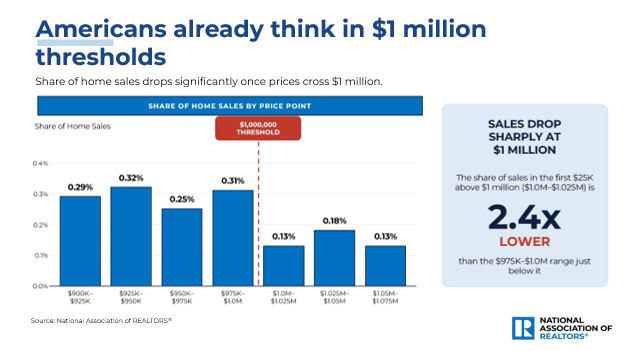
Home sales cluster below the $1 million mark. Since 2015, about 2.4 times more homes have sold just under $1M than just above it, showing how even a small price difference can influence buyer decisions.
https://t.co/S086vRTrxf
With supply still limited relative to demand in some housing markets, 21% of homes sold above list price, flat from last year and down from 25% in May. 25% of buyers paid all-cash, which is unchanged from May and down from 29% one year ago.
https://t.co/I6os6pmQnO
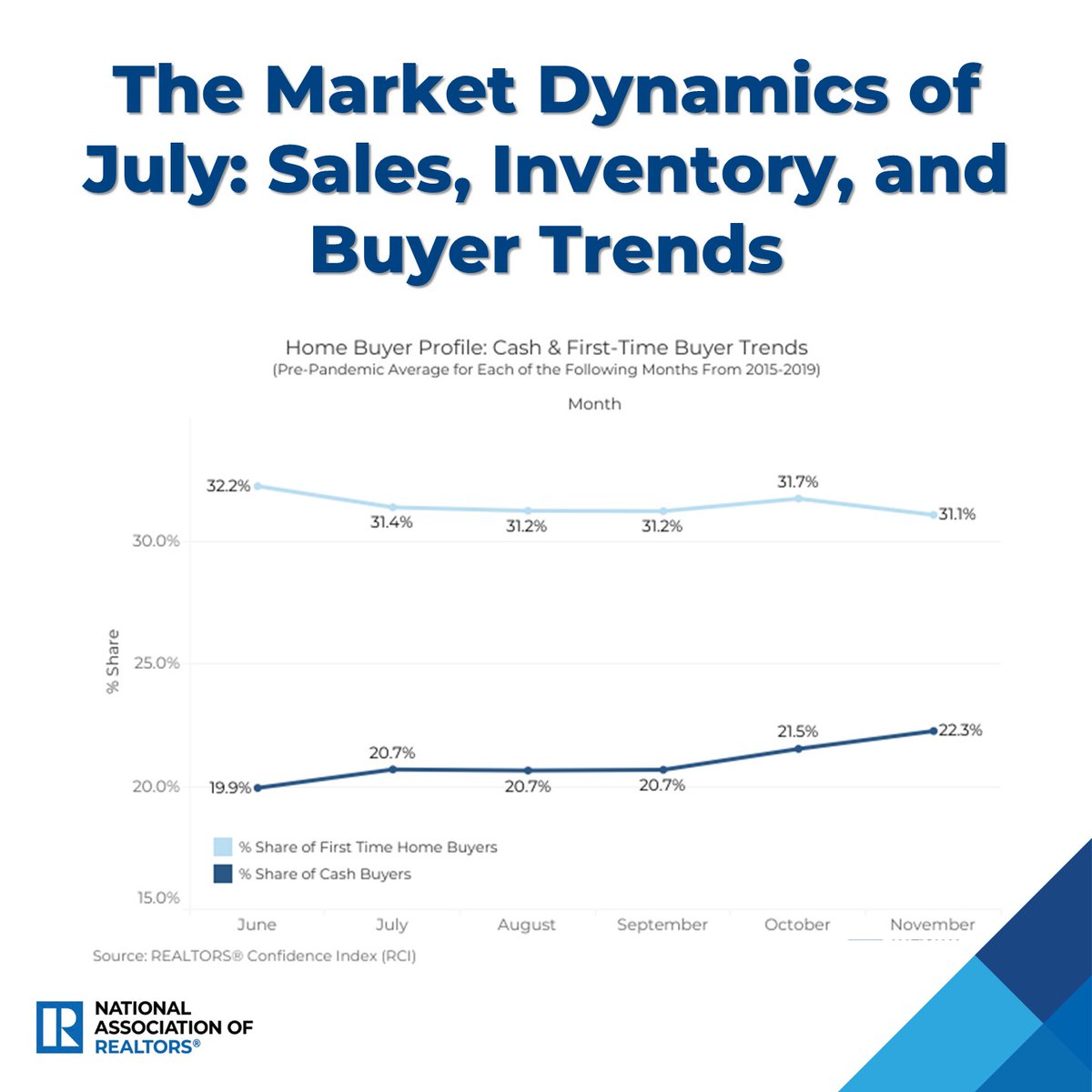
July brings a seasonal cooling: home sales typically dip 6.3%, while inventory edges up to 2.59M homes. Prices ease about 0.9%, but July still posts the year's second-highest median home price, offering buyers more options and sellers strong conditions.
https://t.co/7oZcgQAB2B
Nearly 1 in 5 U.S. house hunters looked to relocate to a different metro area in the first quarter, up 18.9% from a year earlier. Where are they headed? More often than not, it's Florida. #realestate
https://t.co/i28TrPEaZ5
The “lock-in” myth isn’t just rates: homeowners now stay 11 years vs. 6–7 pre-recession. Buyers from 2016 may be nearing a move as tenure lengths reset.
Check out more insights in NAR’s Profile of Home Buyers and Sellers: https://t.co/hwHsUjVOP6
First-time buyers climbed to 35% of all buyers (the highest share since June 2020) as modest inventory improvements opened new entry points in the housing market. Catch up on the latest market metrics: https://t.co/I6os6pmQnO
Existing-home sales increased by 3.2% month-over-month and year-over-year in May. Month-over-month sales increased in the Northeast, Midwest and South, and were unchanged in the West. #NAREHS
https://t.co/2I3fevLPIY
June’s housing market hits peak season as sales typically jump 8.2% and prices typically rise 3.9%. Inventory nears 2.6M and homes sell in about 30 days, with first‑time buyers reaching 32%.