At SneakersFi, we’re revolutionizing the sneaker industry by integrating crypto and blockchain technology into the footwear game.Not a financial advice,RESEARCH
It’s the late seventeenth century, and Newton, living in a world without calculators, is inventing everything. In his quest to understand celestial mechanics, he develops his interpolation method to estimate values from limited data. He’s thinking about divided differences while the ink is barely dry on his other masterpiece—calculus! By around 1670, Newton has this interpolation trick under his belt, but he keeps his notes close. It wasn’t exactly a time of easy scientific collaboration.
Fast forward to the eighteenth century, 1795, over a century after Newton, and Joseph-Louis Lagrange is on the scene. Lagrange, a mathematician of the Enlightenment, takes interpolation in a new direction. His method—constructing a single polynomial directly using the basis functions we now call Lagrange polynomials—is part of his broader goal to systematize and refine mathematical tools for future generations.
Now, imagine the conversation they could have had. Newton might have said, “Your method is elegant but cumbersome. Who wants to rebuild the entire polynomial every time you add a point?” Lagrange might have countered, “Well, Sir Isaac, at least my method lays the whole polynomial bare, clear for all to see!”
The truth is, Newton and Lagrange tackled interpolation for different reasons. Newton needed something practical for his astronomical calculations. Lagrange, on the other hand, was focused on formalizing math into a beautiful, cohesive system.
And here’s the twist: by the time Lagrange introduced his method, Newton had been gone for nearly seventy years. So, Newton didn’t have the chance to “figure out what was happening.” Instead, Lagrange built on Newton’s legacy, unknowingly giving us two complementary methods—Newton’s efficient and incremental approach, and Lagrange’s clear and elegant construction.
It’s fascinating to see how their methods embody their personalities: Newton’s pragmatic genius and Lagrange’s systematic elegance. How’s that for a historical math rivalry?
#Mathematics #MathHistory #MathIsFun #ScienceAndMath #MathematicsLovers #MathGenius #Interpolation #MathFacts #StoryTime #HistoricalFigures #MathLegends #NewtonVsLagrange #HistoryOfMath #HistoricalRivalry #TimelessGeniuses #IntellectualGiants #FunFacts #DidYouKnow #MindBlown #LearnSomethingNew #ViralStory #EducationMatters #KnowledgeIsPower #ForYou #MathNerd #ScienceNerd #MathEnthusiast #GeeksUnite #MathInspiration #STEMEducation #MathTeachersOfInstagram #ScientificThinking #ViralContent #ContentCreator #ExplorePage #InstaEducation #SocialMediaLearning
#Illinois #Chicago #Chicagoland #EnjoyIllinois #ExploreIllinois #IllinoisLife #IllinoisGram #IllinoisPhotographer #IllinoisNature #IllinoisPride #IllinoisLove
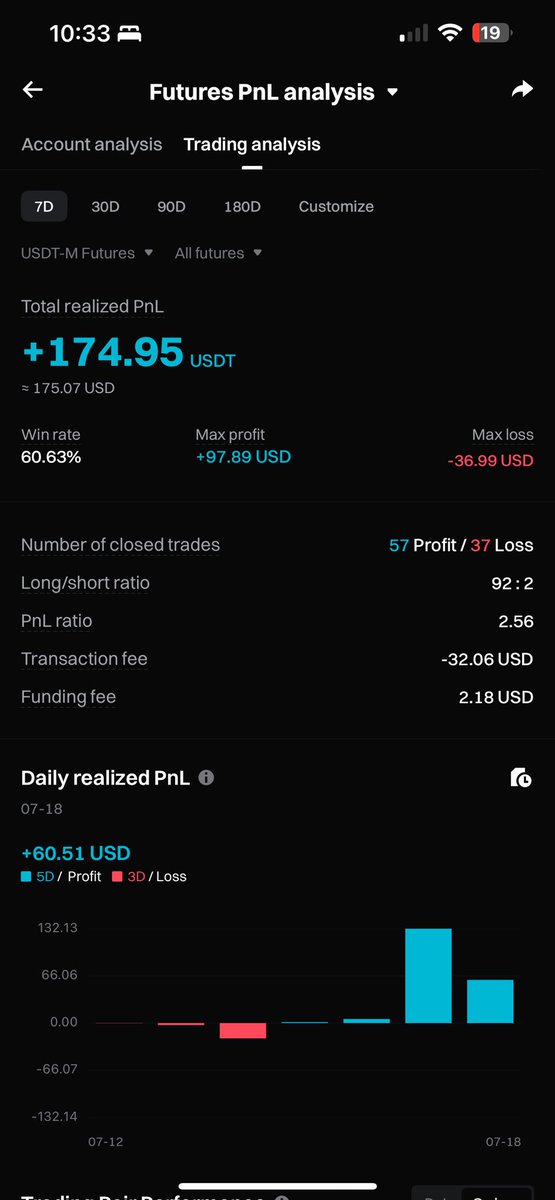
there is only 2 way to lose trading futurs,1. closing when your trade is in the negative and 2. being liquidated. One is driven by fear, the other by greed. I follow my plan and i always prepare to edge my position . I dont lose
While margin debt naturally rises with money supply, the current spike is excessive — a classic sign of late-cycle leverage that likely ends in a drawn-out correction. The best defense: no leverage, cash reserves, and tactical patience.
@signals_top Thanks for the advice. I have really improved my trading since I got a response from you. I guess people don't listen to right people. I just smile when I see your account activities. Great Guy 👍