Thrilled by the incredible turnout at our Web3 Career Session! 🚀
Packed venue of ambitious professionals exploring Web3!
Thanks our speakers @zxcasd12451@zozosfriesverse@0xfomor @MG_Alfaro_ for sharing valuable insights on career transitions, salaries & remote work!
(1/2)
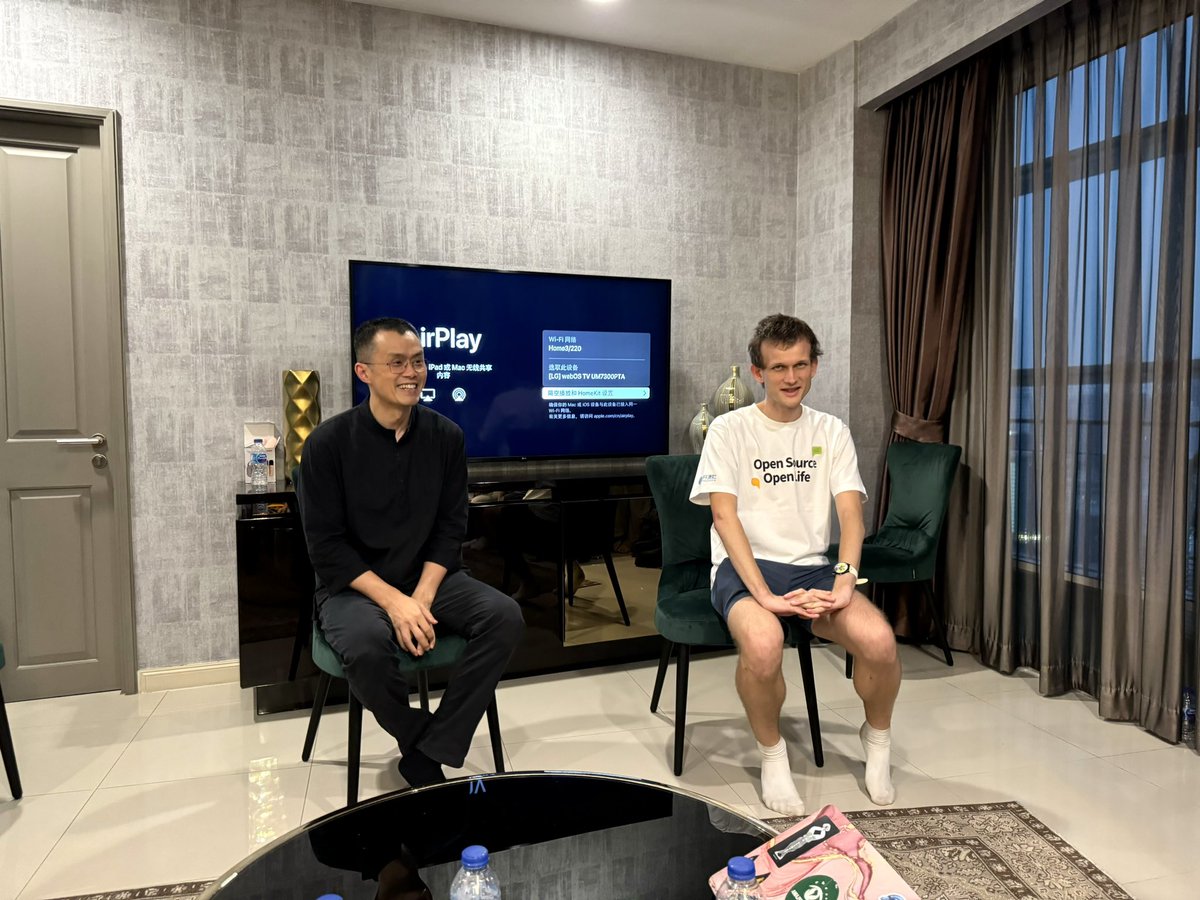
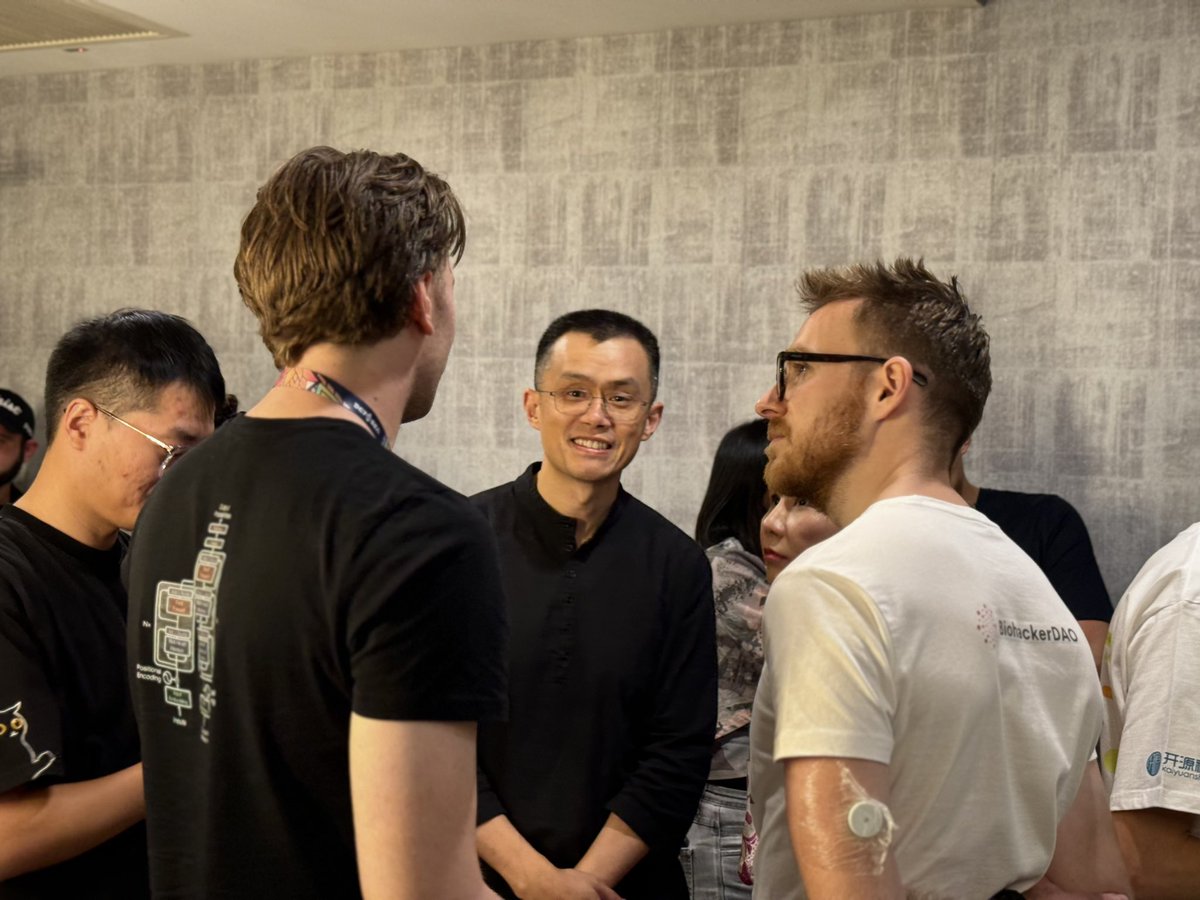
What an unreal day at our BUIDLer House in Bangkok. Just when we thought our DeSci Day event couldn’t get any better, GOATs @cz_binance and @VitalikButerin dropped in to join the session.
Our guests not only had the chance to hear directly from DeSci project teams but were also treated to an impromptu Q&A with two of crypto’s most inspiring visionaries on all things #Web3.
Marketing, at its core, aims to build brand equity and drive growth. The challenge is balancing long-term brand value with short-term growth targets. Team structure has no one-size-fits-all solution—requiring strategic adjustments to align with each stage of the project lifecycle
I’ve been marketing for 2.5 years in crypto now, previously did 2 years at Google.
There’s still a profound lack of clear messaging.
A lot of people ask me how I’d go about building a crypto marketing team and what sort of skill sets I’d look for.
This is my ideal team/skills blend:
- social media manager
- community manager
- growth marketer and marketing ops
- content marketer
- product marketer
Product marketing is the least mentioned but super important. It’s what makes crypto accessible to the mainstream.
What is product marketing?
Product Marketing is the function of bringing products and features to market.
That doesn’t just mean “making an announcement” - it’s an entire process, which includes:
- prioritization and deciding how much marketing resource an announcement requires
- capturing the key benefits and audience which the product targets
- naming the product/feature (!)
- working with product management, sales and engineering to align on the narrative for the product and how you’ll launch it
- creating messaging and copy to communicate those benefits to the relevant audience
- creating content to educate the audience on the benefits
- picking the right channels to announce and distribute the announcement eg is just a blog enough? what about a video guide? or a page in the docs? what about building an app or tool to show the product in action?
This is an extremely important skillset which is lacking in crypto today.
Many projects are struggling to clearly communicate the value of their product/features, and some are even more unclear about who exactly the product is for.
Product naming is an important step most teams skip - it’s crucial to think carefully about who the feature is for and to pick a name that resonates. Don’t just go with what the engineering team have internally decided. And make sure you’re constantly telling people if they’re not using the right term.
Before every feature and product launch, I sync with the engineers to capture the following for the upcoming two sprints:
- what are the upcoming new features?
- what marketing support do they need?
- what should we call the feature?
- what is the problem and what is the benefit?
- who does it benefit?
- what are the current alternatives?
Then I go away and think about how I will message the feature in the market and how I will launch it.
Ask these questions regularly for upcoming product launches and you’ll be much more aligned with the rest of your team.
The more product marketers we onboard to crypto - the easier it’ll be for everyone to finally answer: “What is the use of crypto?”
Do you guys have steps for your product marketing? What have you found to be helpful for delivering clear messaging?
Great article!
'Fast, Cheap, Global' captures the core of stablecoins. Could future salaries be paid hourly or even by the minute? This idea is both interesting and practical!
This essay has been in draft for months, but the news on Stripe acquiring Bridge gave me the push to finally publish it.
In it I cover the purpose of money, why digital money is a better form factor, and the opportunity stablecoins have.
https://t.co/rg2sIcIoEE
Scalability is a key challenge in Web3. But does new infrastructure really solve it, or just further fragment the ecosystem?
This article is worth a read, offering insights into the root causes of the industry’s bottlenecks.
https://t.co/wI0z0f2EUf
I have lots to say about the @a16zcrypto report, but the marketer in me is screaming rn. Only 5-10% of crypto holders are active users—we're failing the other 90%. And I say we because this is everyone's responsibility.
Devs: We don’t need another L2 or staking platform. Improve the ones we have or build something new with real-world value/impact.
UX/UI: Web3 is young, but we don’t need to design like infants. This area needs to be improved exponentially.
Marketers: Stop focusing on the tech, start telling stories that show how your product improves lives.
Founders: Product Eduction is VITAL. People can’t use what they don’t understand. Simplify the learning curve for new users.
Communities: Be more welcoming. Referring to new users as 'normies' might seem funny at the moment, but it can be humiliating and alienating for them.
What else am I missing?
Worth reading – Web3 teams often fall into two extremes, either overly focused on technology or heavily reliant on memes.
@Berachain is one of the few projects striving to strike a balance between the two.
https://t.co/ev4w9Th1c3
Mastering the art of building trust and community engagement takes precision.
I hope to see more projects willing to invest in crafting content that sparks both curiosity and conversation—rather than the typical flood of event updates and partnership announcements on Twitter.
At the YC Alumni Reunion, I got lots of questions from new founders about how to build a successful company, but realized that they all had the same answer. And it’s this:
—————————————————
DO TOO MUCH
As a new founder, I’d often look at the CEOs of successful companies and wonder, “How do they do it?”
As Scale grows and as I learn on the job, I’ve come to realize that leaders of great organizations never just do it. They overdo it.
As a leader, you are the upper bound for how much anyone in your company will care. You need to do more, care more, attempt more than would seem reasonable. It will seem like overkill. But too much is the right amount.
This is true in big and small ways.
- What people say is overoptimism is just optimism.
- What people say is overcommunicating is just communicating.
- What people say is overdelivering is just delivering.
- What people say is micromanagement is just management.
- What people say is ruthless prioritization is just prioritization.
Actually living this way will seem crazy, and that’s ok. There is no Apple without Jobs’s “obsessive” attention to detail. There is no SpaceX or Tesla without Elon’s “maniacal” drive for execution. I have never seen ordinary effort lead to extraordinary results.
If we had not done too much, Scale would not be the company it is today.
When AI really started to take off in 2022 and “generative AI” became a thing, within 6 months Scale shifted the vast majority of our team to working on generating data for scaling LLMs.
Most companies would go through quarters of bureaucratic planning cycles and only move after a competitor started eating their lunch. In our case, the change was drastic and abrupt — some might say jarring or extreme.
What people might have reasonably described as overreacting was just reacting. And in hindsight, that reaction to developments in AI was what made Scale’s subsequent path possible, including growing 4X over the last year.
What we’ve accomplished to date represents the compounded results of everybody embracing the culture of overdoing. Scale will do things incumbent companies wouldn’t, because it’s simply too scary or painful, but others not going to the same lengths is a feature not a bug.
Creating something meaningful is a beautiful, and yes, scary and painful thing. And if you’re not overdoing it, you’re underdoing it.
Web3 marketers notice a trend of founder-led marketing, and the X algo really picks it.
3 founders of 3 blockchains showed up on my news feed. All have desirable reach and engagement that makes social media interns go cry a river.
Web3 marketing is slowly shifting from promotions, campaigns, incentives, and crypto enthusiasts to storytelling, personal trust, intangible assets, and specific targeted user base.