bunun tek bir tedavisi var, dopamin döngümüzü normale döndürmek için internetten, film ve müzikten, arkadaş ortamlarından, abur cubur ve keyif veren her şeyden uzakta, yalnızca okuma, derin düşünme ve bolca sıkılmakla geçen min iki haftalık aralıklı inzivalar. denendi, onaylandı.
🔴 Çin'de bir mühendis sivrisineklere karşı hava savunma sistemi geliştirdi.
▪️Hava savunma sisteminin öldürdüğü tüm sinekler bir “ölüm defterinde” toplandı.
"If you’re afraid, don’t do it.
However, if you’re doing it, don’t be afraid". - Genghis Khan
Genghis Khan (1162–1227 AD) and Mongols are invariably associated with terrible tales of conquest, destruction, and bloodshed. This famed clan leader and his immediate successors created the largest empire ever to exist, spanning entire Asian continent from Pacific Ocean to modern-day Hungary in Europe. Such an empire could not have been shaped without visionary leadership, superior organizational skills, swiftest and most resilient cavalry ever known, an army of superb archers (“devil’s horsemen” in Western sources), existence of politically weakened states across Asia and of course, havoc and devastation.
Yet, legacy of Genghis Khan, his sons, and grandsons is also one of cultural development, artistic achievement, a courtly way of life, and an entire continent united under so-called Pax Mongolica (Mongolian Peace). Few people realize that Yuan Dynasty in China (1271–1368 AD) is part of Genghis Khan’s legacy through its founder, his grandson Khubilai Khan (r. 1260-1295 AD). Mongol empire was at its largest two generations after Genghis Khan and was divided into four main branches, Yuan (empire of Great Khan) being central and most important. Other Mongol states were the Chagatai khanate in Central Asia (1227–1363 AD), Golden Horde in southern Russia extending into Europe (1227–1502 AD), and Ilkhanid Dynasty in Greater Iran (1256–1353 AD).
Mongols were remarkably quick in transforming themselves from a purely nomadic tribal people into rulers of cities and states and in learning how to administer their vast empire. They readily adopted system of administration of conquered states, placing a handful of Mongols in top positions but allowing former local officials to run everyday affairs. This clever system allowed them to control each city and province but also to be in touch with population through their administrators. Seat of Great Khanate in Dadu (Beijing) was center of empire, with all its pomp and ceremony, whereas three semi-independent Central and western Asian domains of Chagatai, Golden Horde, and Ilkhanids were connected through an intricate network that crisscrossed continent. Horses, once a reliable instrument of war and conquest, now made swift communication possible, carrying written messages through a relay system of stations. A letter sent by emperor in Beijing and carried by an envoy wearing his paiza, or passport, could reach the Ilkhanid capital Tabriz, some 5,000 miles away, in about a month.
The political unification of Asia under the Mongols resulted in active trade and the transfer and resettlement of artists and craftsmen along the main routes. New influences were thus integrated with established local artistic traditions. By middle of 13th Century AD, Mongols had formed largest contiguous empire in the world, uniting Chinese, Islamic, Iranian, Central Asian and nomadic cultures within an overarching Mongol sensibility.
Genghis Khan’s grandson Hülegü (d. 1265 AD) subdued Iran in 1256 AD, and conquered Baghdad, capital of ‘Abbasid caliphate, in 1258 AD. Hülegü’s Dynasty, the Ilkhanids or Lesser Khans, ruled this area, called Greater Iran, until about 1353 AD. After their rapid gain of power in Muslim world, Mongol Ilkhanids nominally reported to Great Khan of Yuan Dynasty in China and in process imported Chinese models to better define their tastes. However, new rulers were greatly impressed by long-established traditions of Iran, with its prosperous urban centers and thriving economy and they quickly assimilated local culture. Mongol influence on Iranian and Islamic culture gave birth to an extraordinary period in Islamic art that combined well-established traditions with new visual language transmitted from eastern Asia.
- Subscribe for Weekly Newsletter -
https://t.co/QSjn4yGpeh
#archaeohistories
In China, rather than towing illegally parked vehicles, the valet robot, a compact, extendable cart with wheel grippers, re-parks them in the closest legal parking spot.
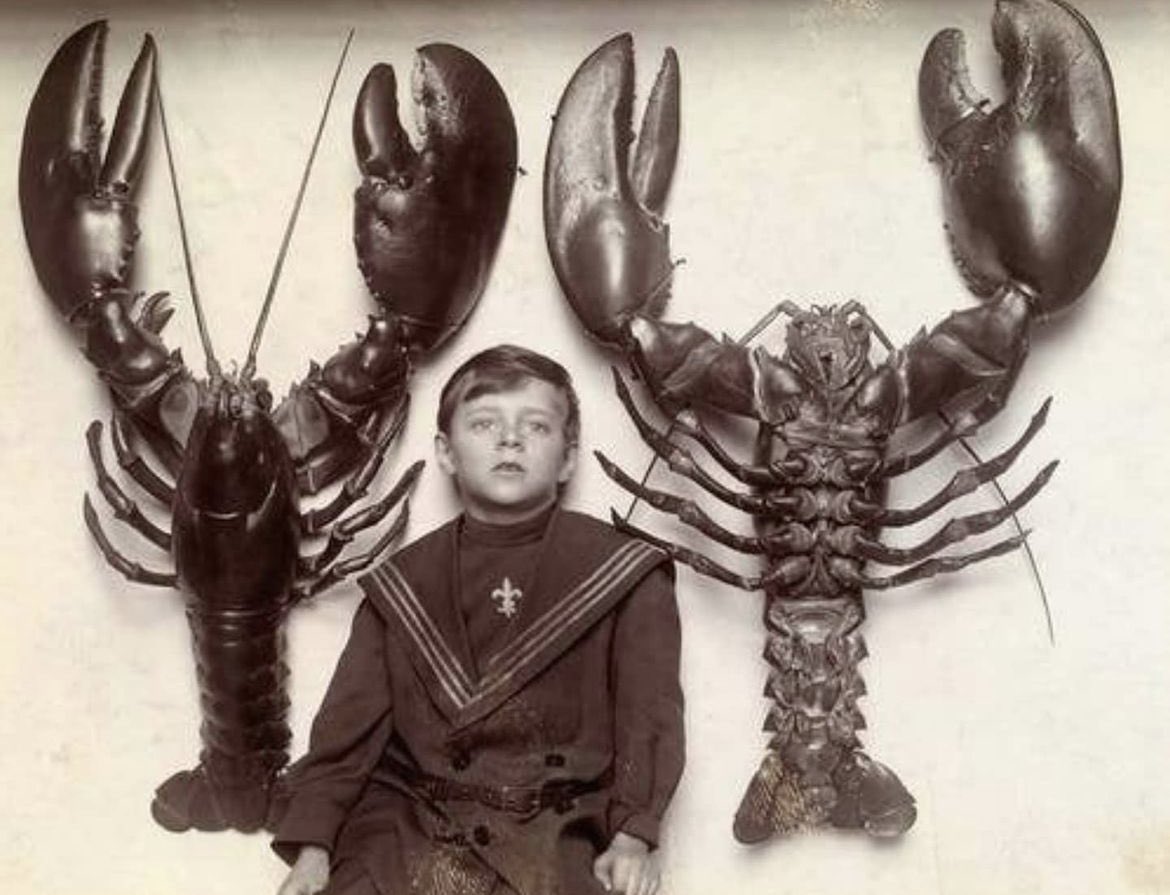
During the American colonial era, lobsters were considered "garbage meat" and were eaten by indentured servants, prisoners, and poor families that couldn't afford anything else. Even the indigenous tribes that lived near the coast would use lobsters as fertilizer or fish bait rather than consume them.
19th-century Kentucky politician, John Rowan, once said, "Lobster shells about a house are looked upon as signs of poverty and degradation." It was common for people to bury lobster shells in their backyard to prevent their neighbors from seeing them.
In one Massachusetts town, indentured servants even sued their owners because they were feeding them too much lobster. They won the lawsuit and got it in ink that they could only be fed lobster—at most—three times a week.
Lobsters had such a bad reputation because they were extremely plentiful. Early colonists could just walk up to the shoreline and collect them because they would wash up onto the shore in droves. The lobster also had a reputation for being a bottom feeder that would literally eat anything. It also didn't help that during this time, people ate lobster by grinding it up entirely and eating it as a paste or stew.
In the early 19th century, people paid 53 cents a pound for Boston baked beans and paid just 11 cents for a pound of lobster. It was quite common for lobster to be served to cats.
Towards the end of the 19th century, the opinion of the lobster began to change. As railroads began to expand across America, the railway companies decided to serve lobster because it was cheap, plentiful, and largely unknown to inland passengers who found it delicious and demanded more! It was during this time that lobster meat was also being canned and sold all across the country, which pushed demand even higher.
By the 1920s, there were fewer lobsters yet demand continued to increase. By the 1950s, the lobster had cemented its status as a delicacy and became something that was eaten by movie stars and the wealthy.
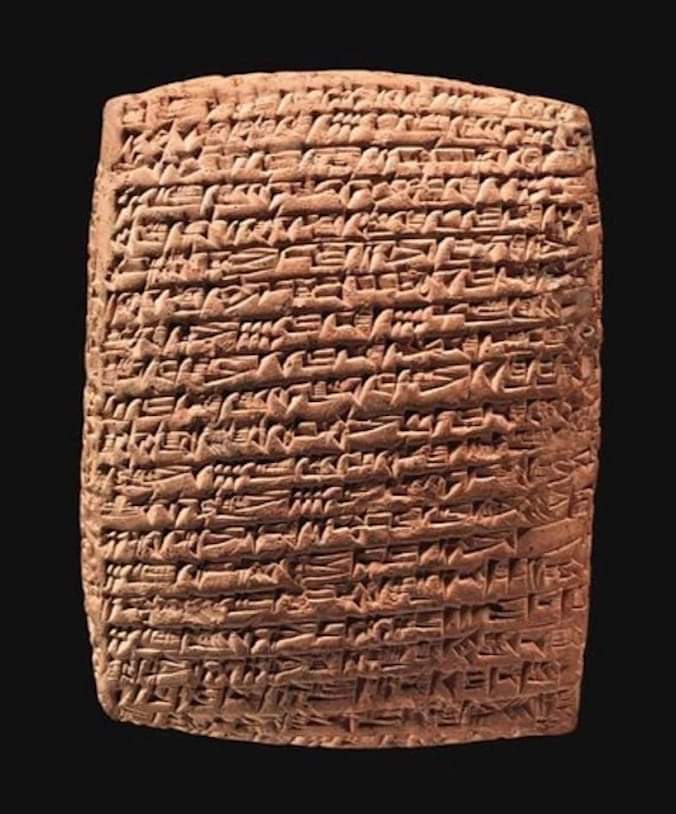
Assyrian Cuneiform Tablet (2800 BC)
"The earth is degenerating today; Bribery and corruption around. Children no longer obey their parents, every man wants to write a book, and it is evident that the end of the world is fast approaching."
British Museum
#drthehistories