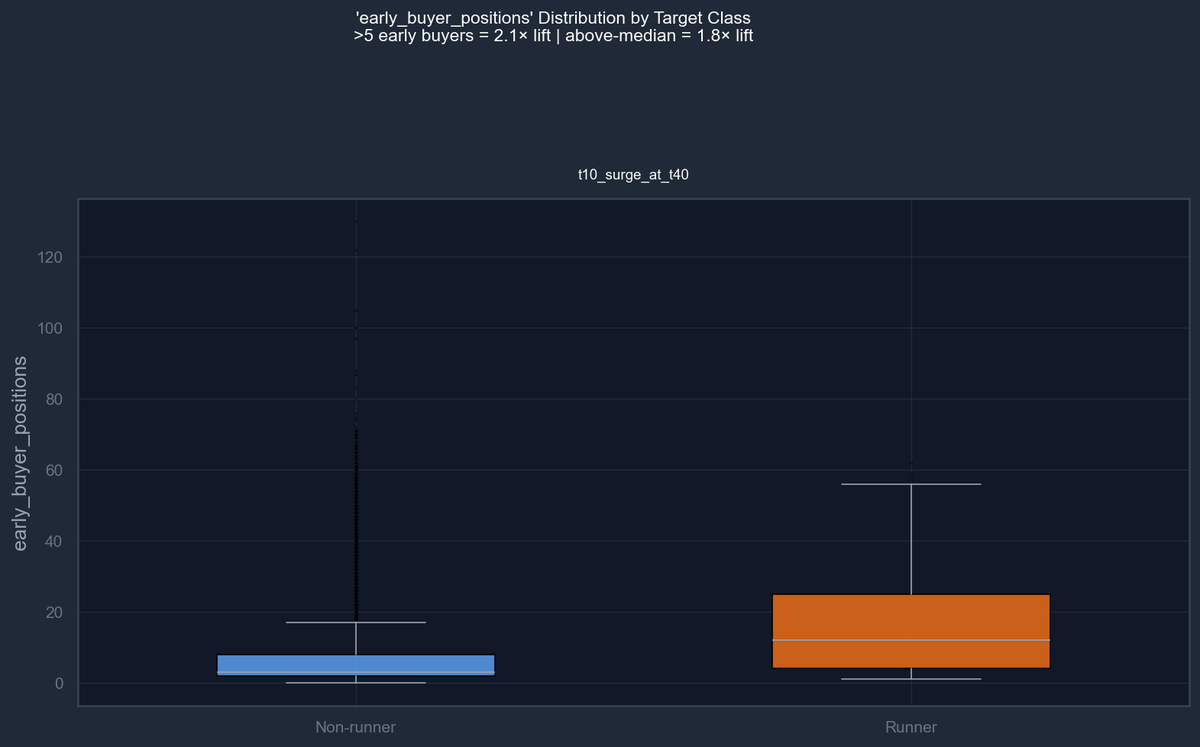
One of the strongest signals: early buyer positions.
→ Tokens with >5 early buyers: 2.1× lift over base rate
→ Above-median early buyer count: 1.8× lift
Early buyer wallets = concentrated, intentional capital entry in the first minutes.
Social buzz does not predict success. On-chain capital flow does.
The lesson: engagement metrics measure noise. Volume, wallet activity, and early buyer positions measure signal.
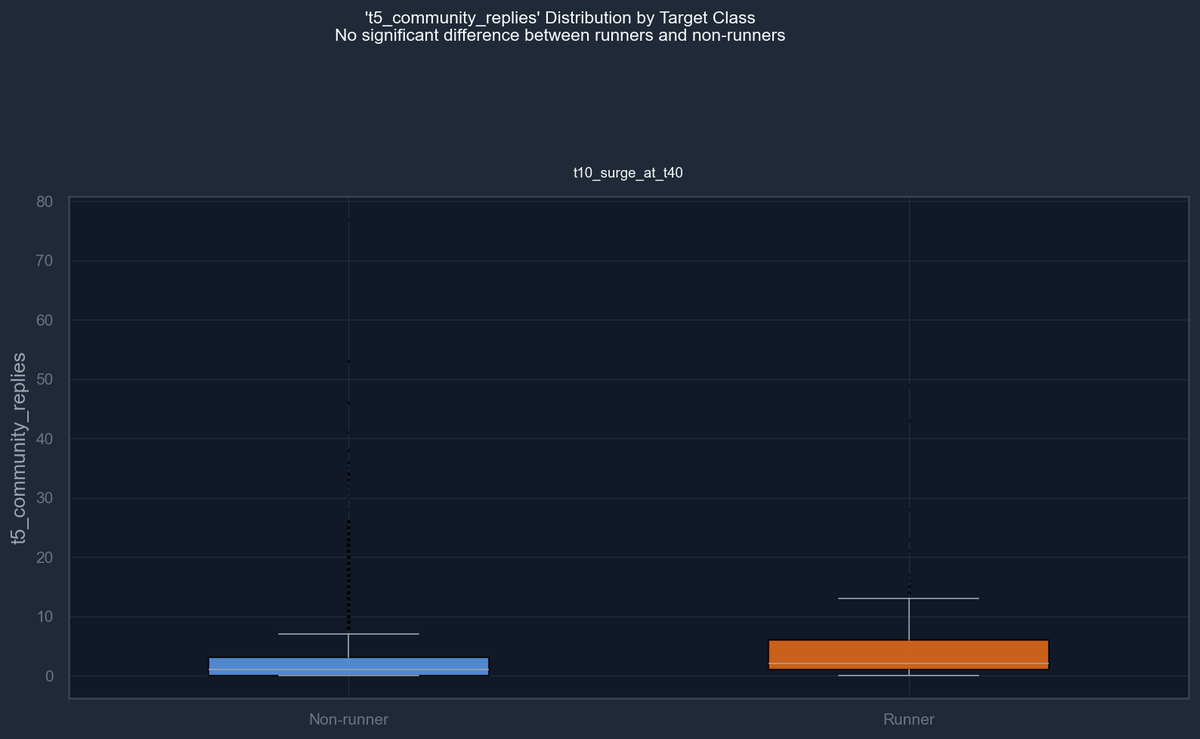
"More replies = more community interest, right?"
We tested this across 46,890 tokens.
Community reply count at 5 minutes showed **zero statistical difference** between runners and non-runners.
The distributions are nearly identical.
@kunoo Rough. For context: across 46,890 Solana tokens, only 0.46% were genuine runners — 1 in 217.
The expected outcome isn't bad luck. It's the base rate.
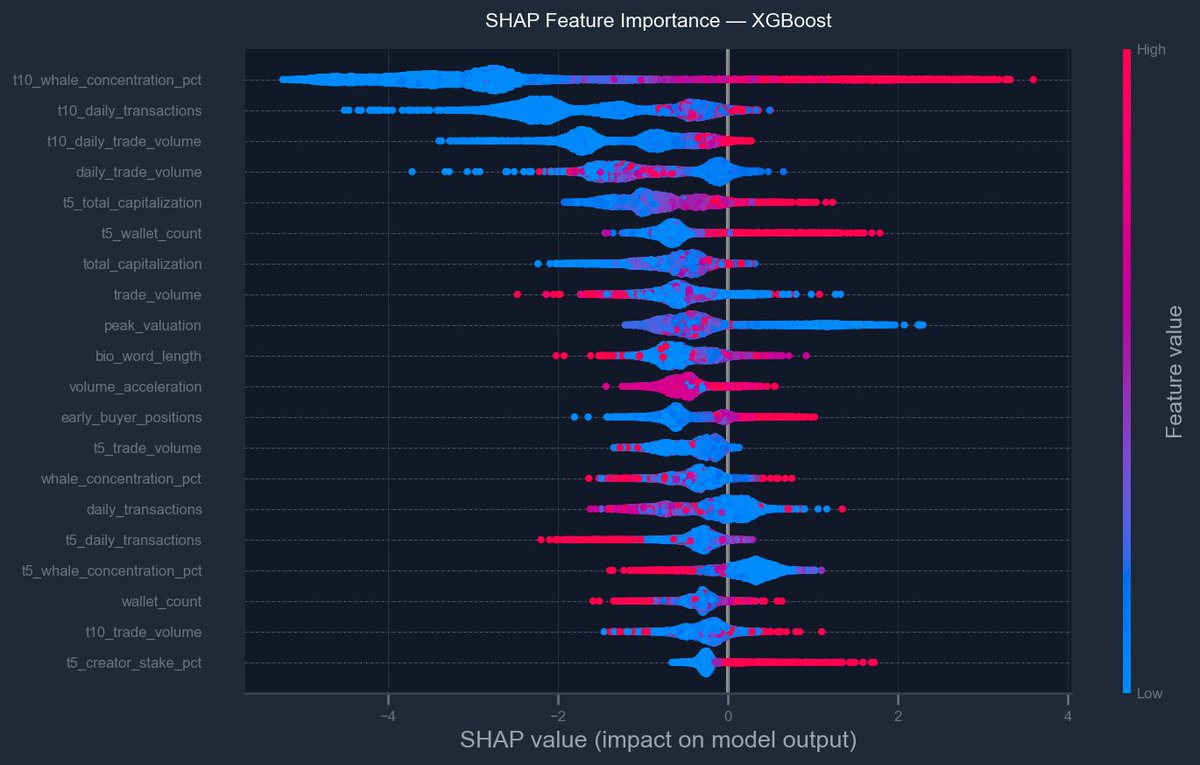
Which features drive our model?
SHAP analysis on XGBoost:
→ Trade volume and transactions dominate at t5 and t10
→ Early buyer positions rank high across all snapshots
→ Wallet count anchors the prediction
→ t5/t10 features outweigh t0 metrics
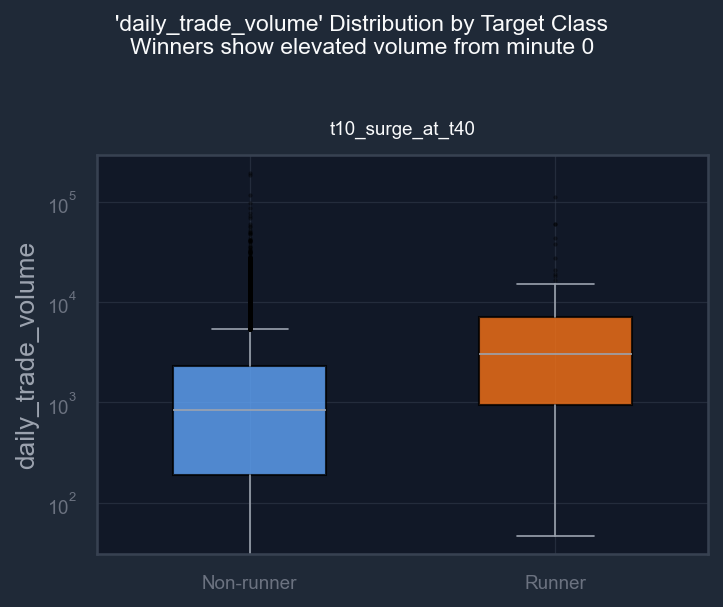
Runners show elevated trade volume from minute 0.
Volume doesn't lie. It represents real capital moving, not narrative.
If volume is absent at launch, the data says: move on.
The single strongest predictor of a meme token runner?
Trade volume in the first 10 minutes.
From 46,890 tokens:
→ Volume above P90: 3.8× lift over base rate
→ Volume above P95: 4.7× lift over base rate
When I first saw 99.5% accuracy I thought something in the pipeline was wrong.
Then I looked at the confusion matrix. True positives: 0. Recall: 0%.
It had learned one rule: predict "not a runner" for everything — correct 99.5% of the time.
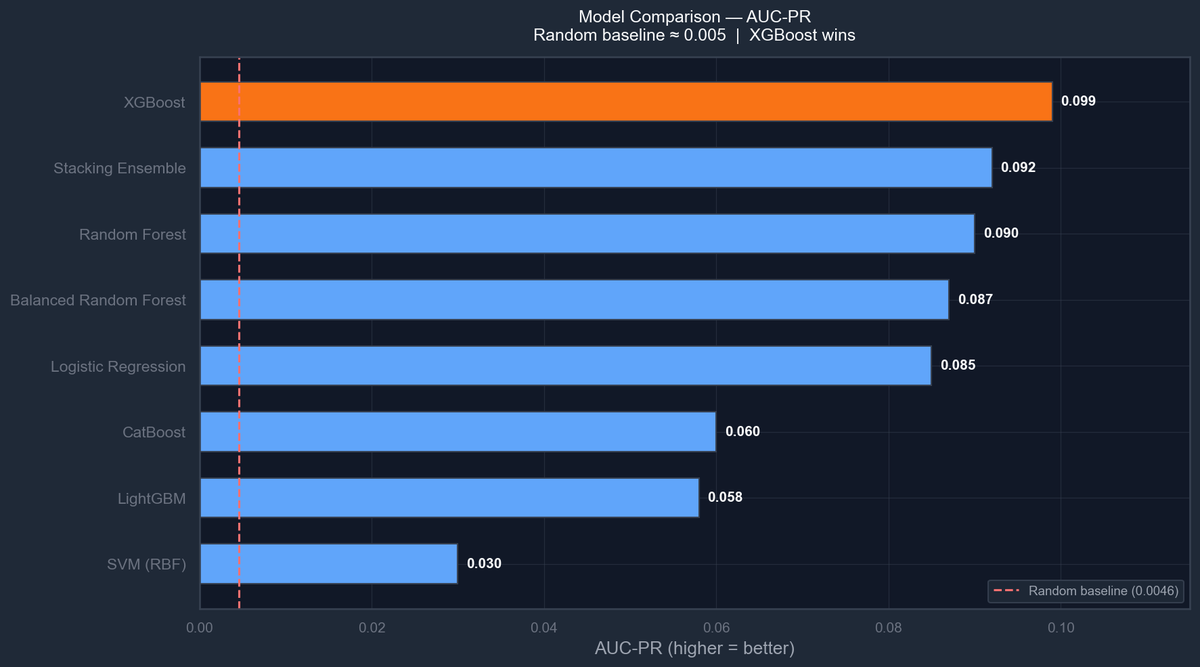
The real metric: AUC-PR (area under the precision-recall curve).
→ Random baseline AUC-PR: 0.005
→ Best model (XGBoost): 0.099
That gap — tiny in absolute terms, massive in relative terms — is where the signal lives.
Our worst model achieved **99.5% accuracy**.
It also detected zero actual winners. Every prediction: "not a runner."
With 215:1 class imbalance, always saying "no" is right 99.5% of the time. Accuracy is meaningless here.
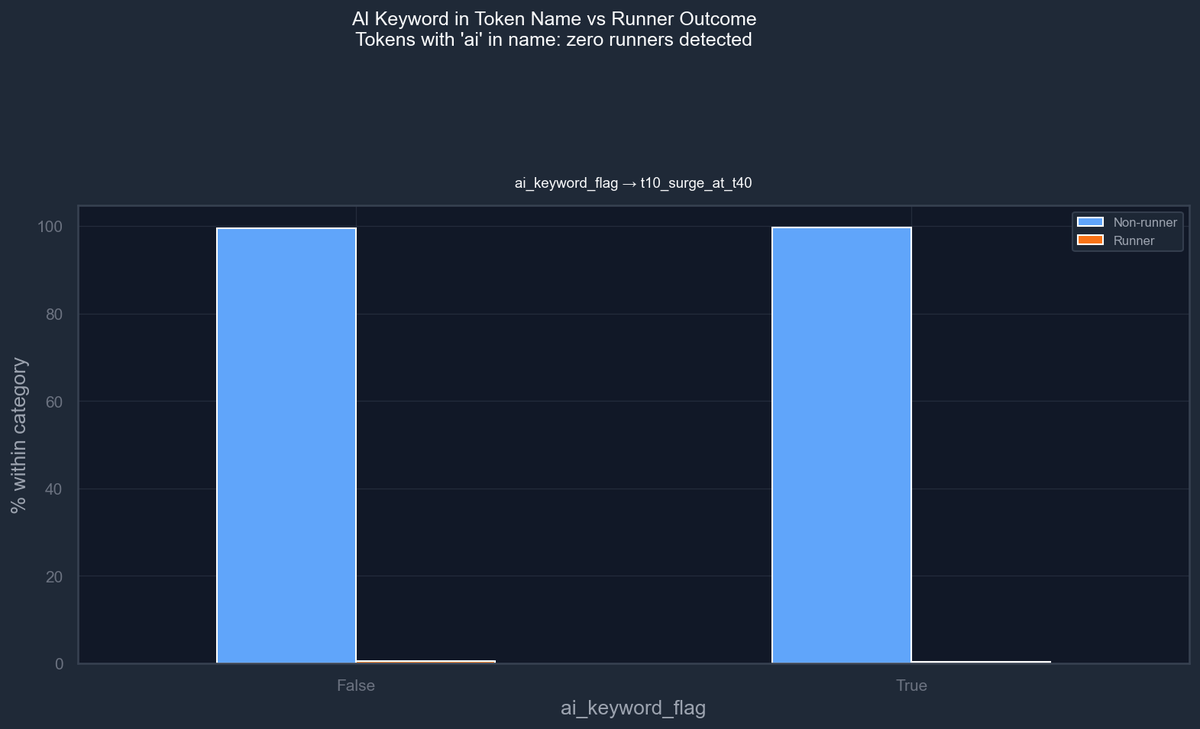
Putting "AI" in your meme token name is not a signal of innovation. It's a flag for lazy deployments chasing narratives.
On-chain fundamentals don't care about your ticker.
Someone asked us: "Does having 'AI' in the token name help?"
We checked across 46,890 tokens.
Tokens with 'ai' in the name that became runners: zero.
Not one. Out of the entire dataset.
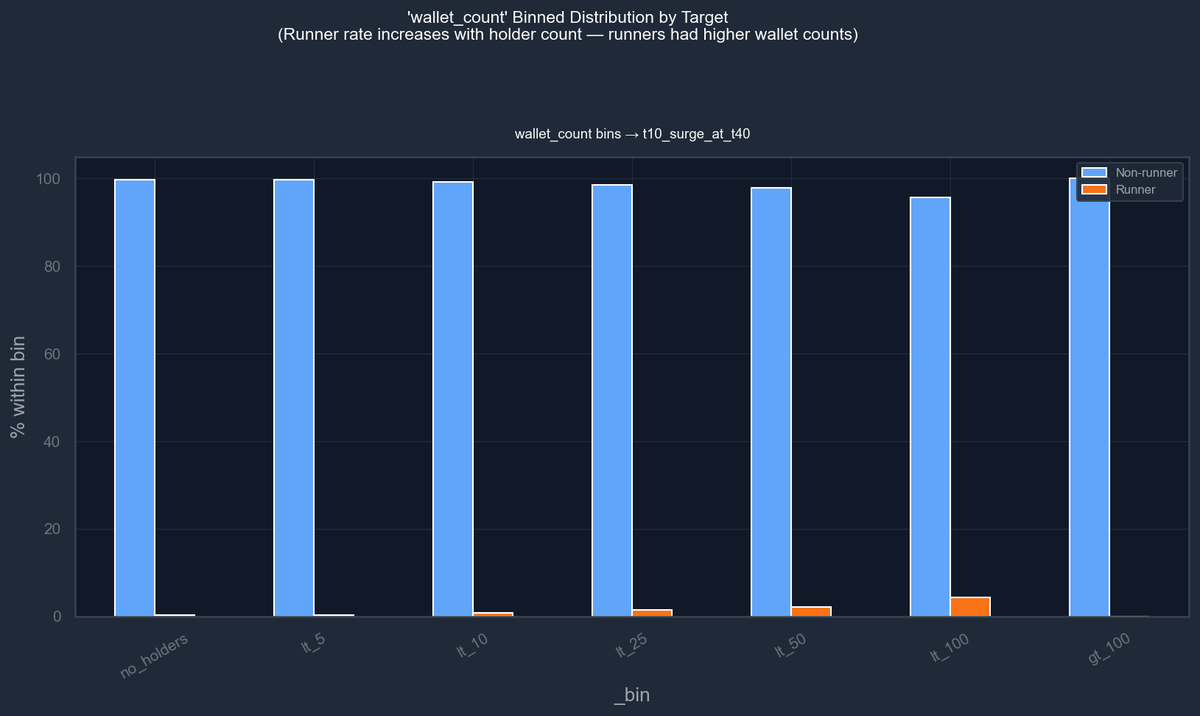
"Fewer holders = hidden gem."
We hear this constantly. We decided to check.
Across 46,890 Solana meme tokens:
→ Runners median: 6 wallets at launch
→ Non-runners: 2 wallets
→ Tokens with 50–99 wallets: 9.5× more likely to succeed
@kilorippy "Being early" on a token with no on-chain activity isn't early. It's the baseline for 99.54% of tokens that go nowhere.
Full data here: https://t.co/6KYWxmSjgm
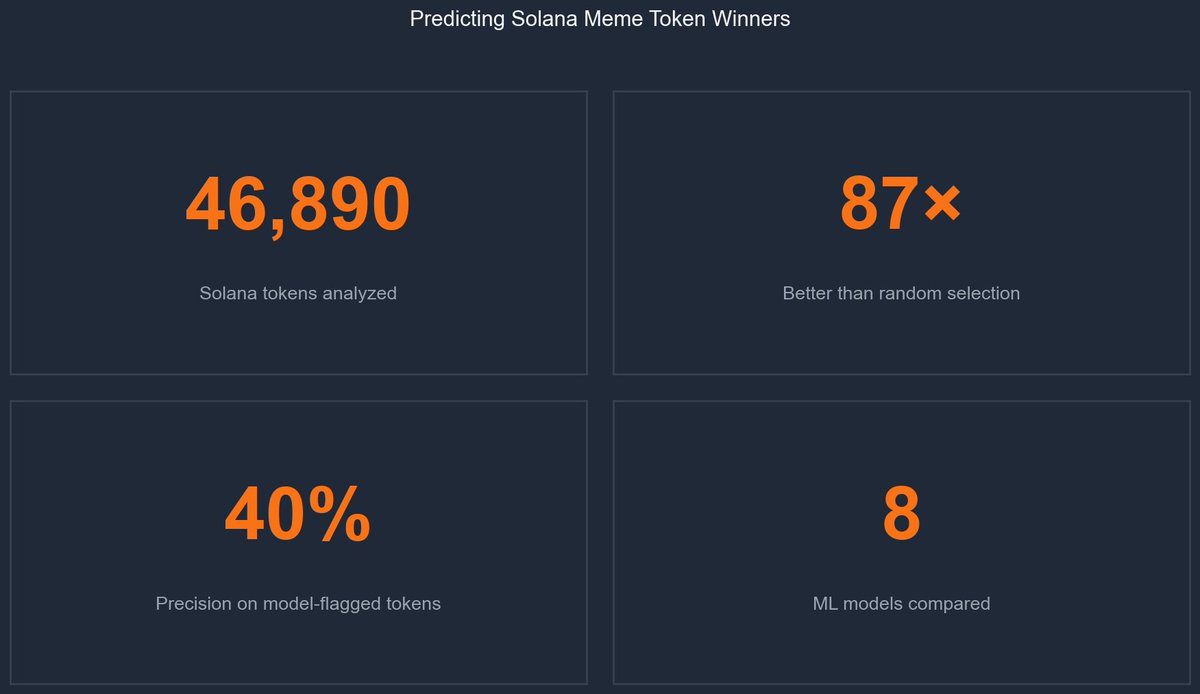
We analyzed 46,890 Solana meme tokens launched on-chain.
The question: can you predict which ones will pump in the first 40 minutes?
Short answer: yes. Our best model is 87× better than random selection.
Here's everything we found. 🧵
https://t.co/KnylyHnVi2
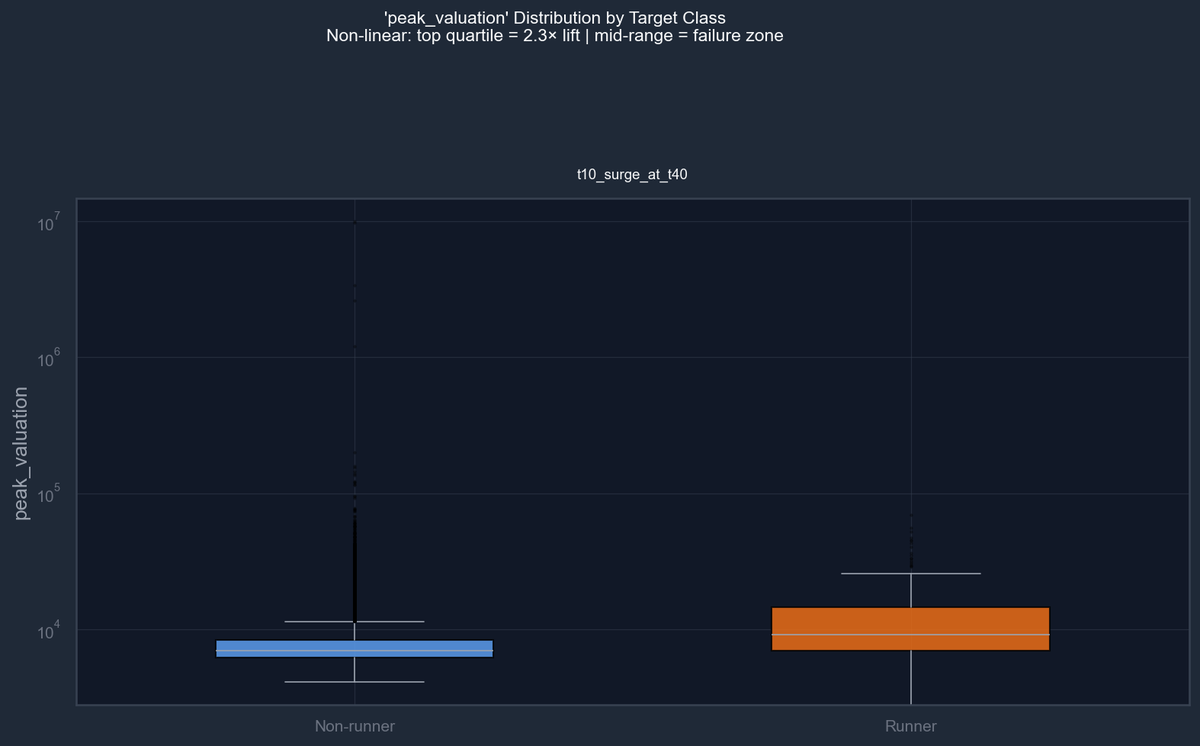
@kilorippy Counterintuitive finding: mid-range peak valuation (~$7,000 ATH) was the *failure zone* — worse than random.
Runners: higher ATH medians ($9,150 vs $7,000), elevated wallet count and volume from minute 0.