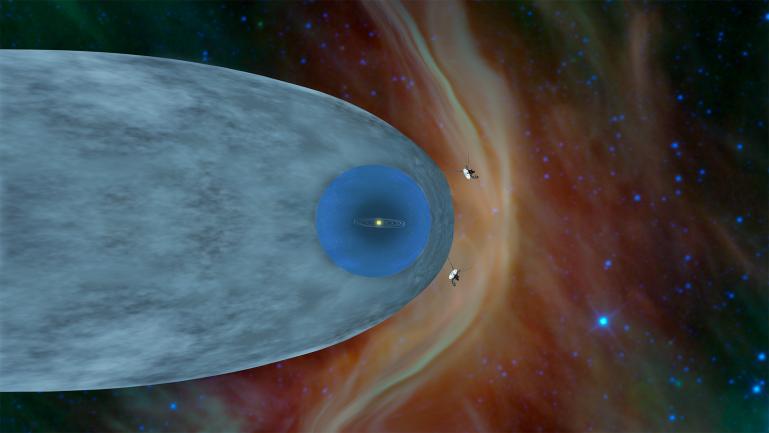
#COSPAR22 Session D1.6 will bring together observers and theoreticians to discuss the developments in understanding of the physics of the acceleration and transport of energetic particles in the heliosphere and local interstellar medium.
Read more: https://t.co/Wt9Gae5pb2
A fellow Airline Pilot friend just sent me this from one of his colleagues at a foreign airline. They were over the South China Sea & were issued a last-minute hectic call from ATC: “turn left 90 degrees immediately!!” Chinese sea launched ballistic missile from a PLAN Submarine!
Detecting precursors to filament eruptions & CMEs? With a chance to provide scientists with an extra day to predict the arrival of a #CME? Read our new blog to learn more featuring Dr. Shuo Wang's research on the initial phase of #filament eruptions! https://t.co/dNoWDirB4h
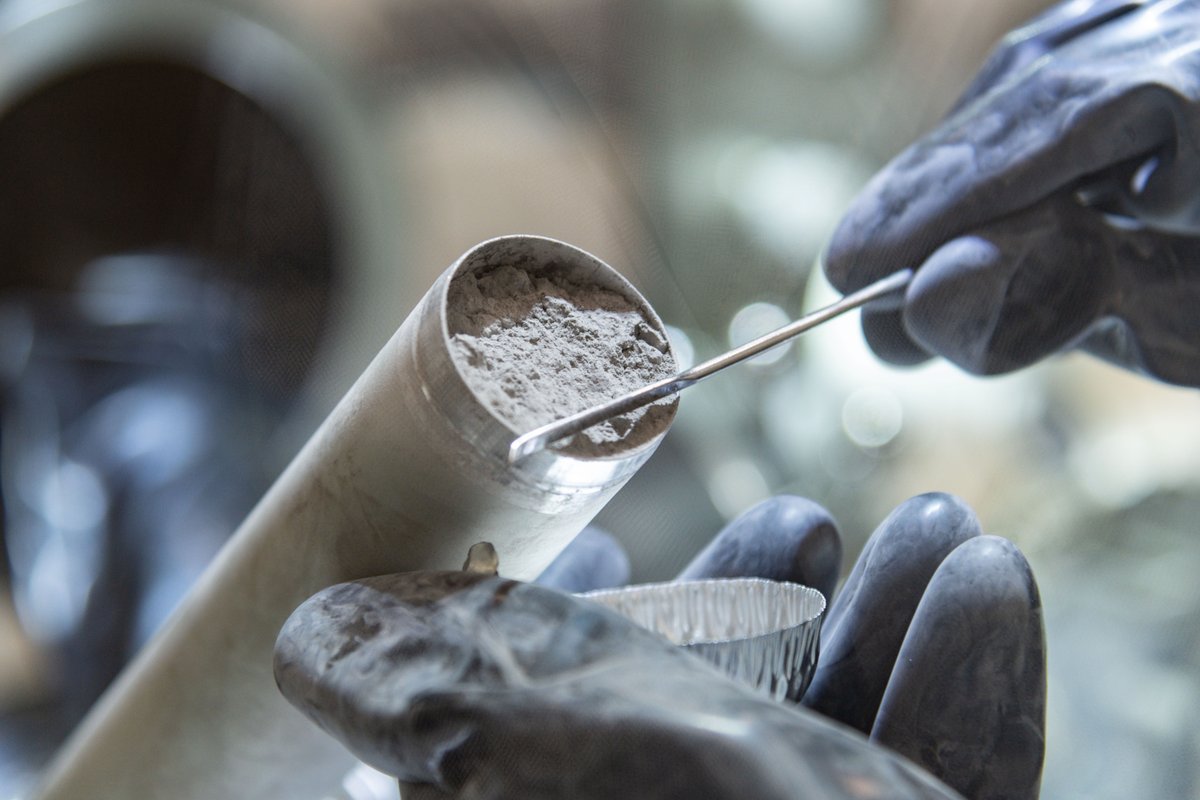
After nearly 50 years, one of the last vacuum-sealed samples of the Moon collected during Apollo 17 has just been opened!
Scientists can now study layers of ancient lunar history with modern tools.
https://t.co/gKNx9WH8G2
Deadline approaching!
IAU Symposium 372, “The Era of Multi-Messenger Solar Physics”
Busan, Republic of Korea, August 2-5, 2022.
Deadline for oral contributions: March 31.
For E-poster and e-talks abstracts: May 31st.
https://t.co/gbGgyx9DfP
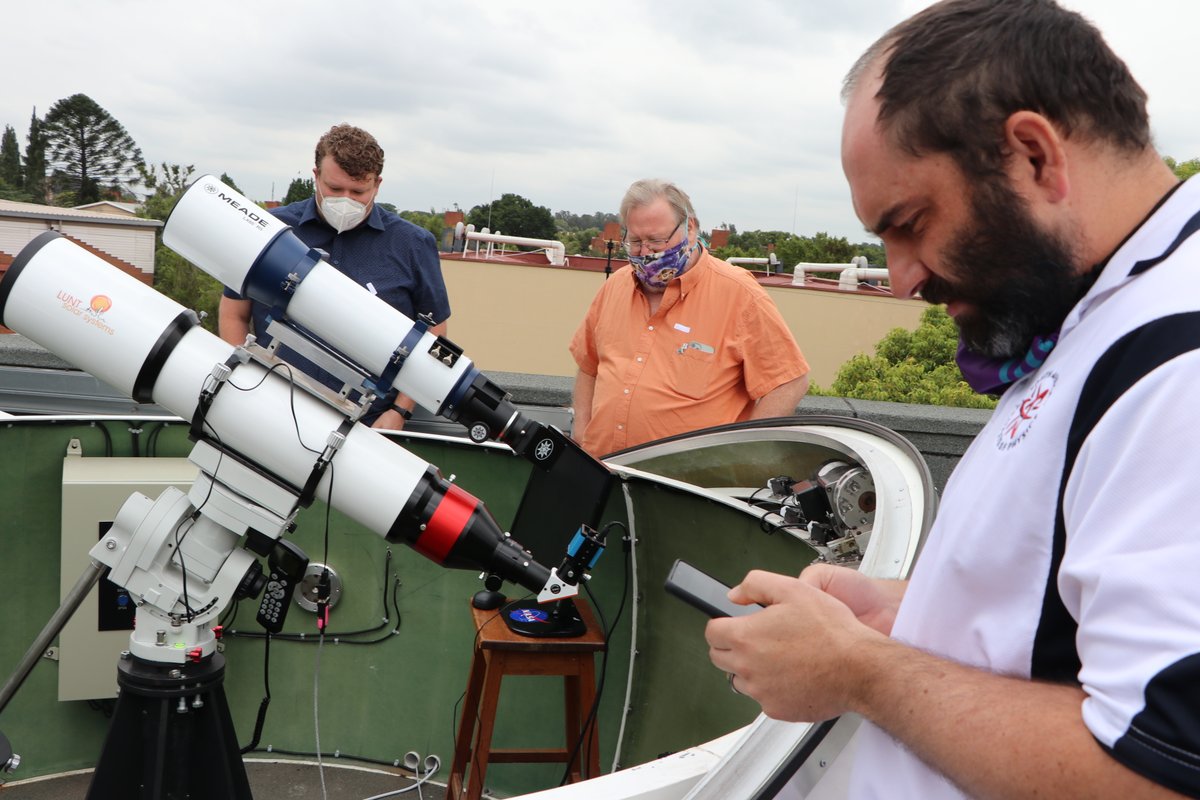
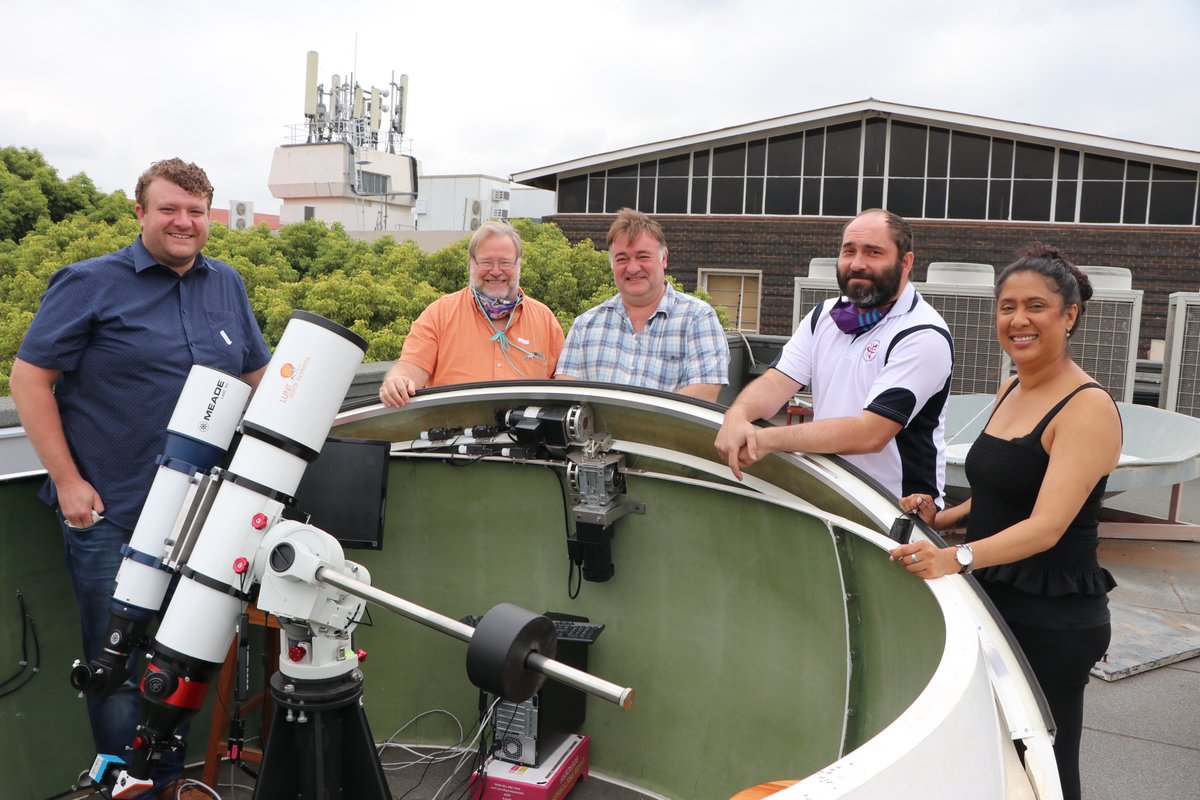
SANSA Solar Physics Roadshow for the WIN! Such an amazing bunch of people over at @theNWU who so enthusiastically welcomed @SansaMartin and the rest of @SpaceweatherSA
.
Video of newly released sunspot image captured by @NSF Inouye Solar Telescope on #Maui, #Hawaii.
Watch: https://t.co/lb1VCVqBCC
.
It's the highest resolution image of a sunspot ever taken, & the very 1st by the most advanced solar telescope on Earth. https://t.co/cAmnxbt4Xf
Just look at that HUGE explosion of solar particles!! LHS is the LASCO instrument, RHS is the 171AIA instrument and at the bottom is the Soft-X-ray flux. This event occurred on 6Sept'17. Credit: @Helioviewer
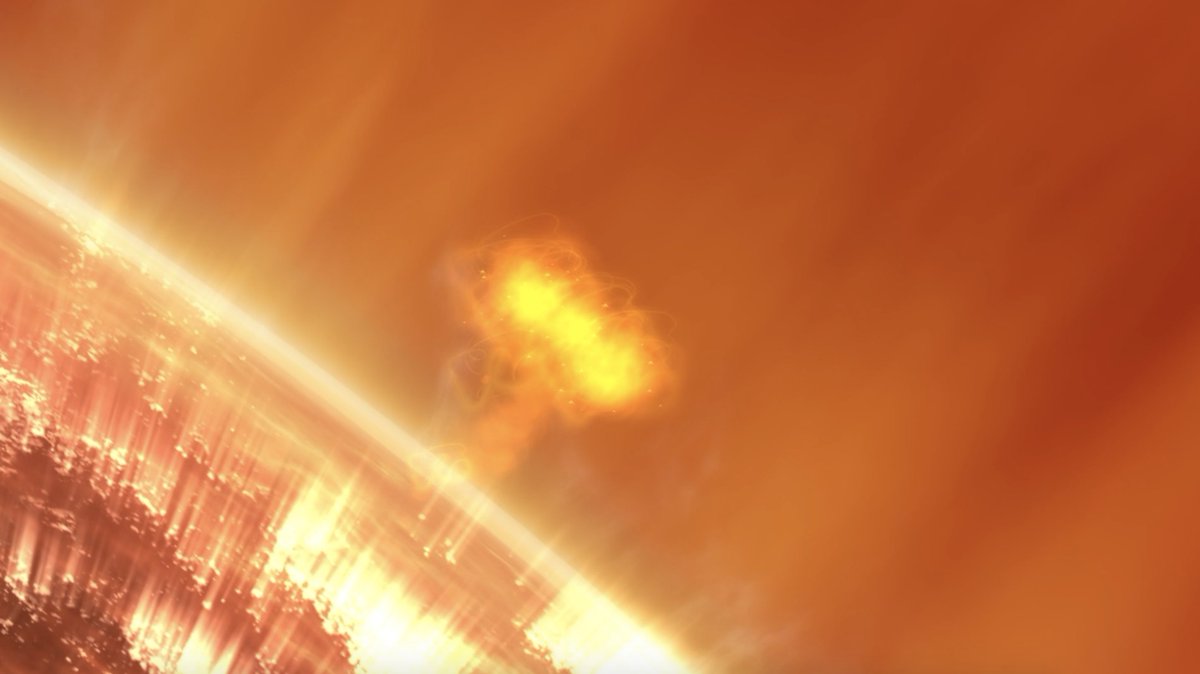
A new NASA mission called SunRISE will study what drives solar particle storms – giant surges of solar particles that erupt off of the Sun – as depicted in this illustration. Understanding how such storms affect interplanetary space can help protect spacecraft and astronauts.
Today, #NASARemembers our colleagues who lost their lives in the pursuit of exploration and discovery.
These 7 craters in the Moon's South Pole-Aitken basin are named after the Space Shuttle Challenger crew. https://t.co/dTmmCmhSSX
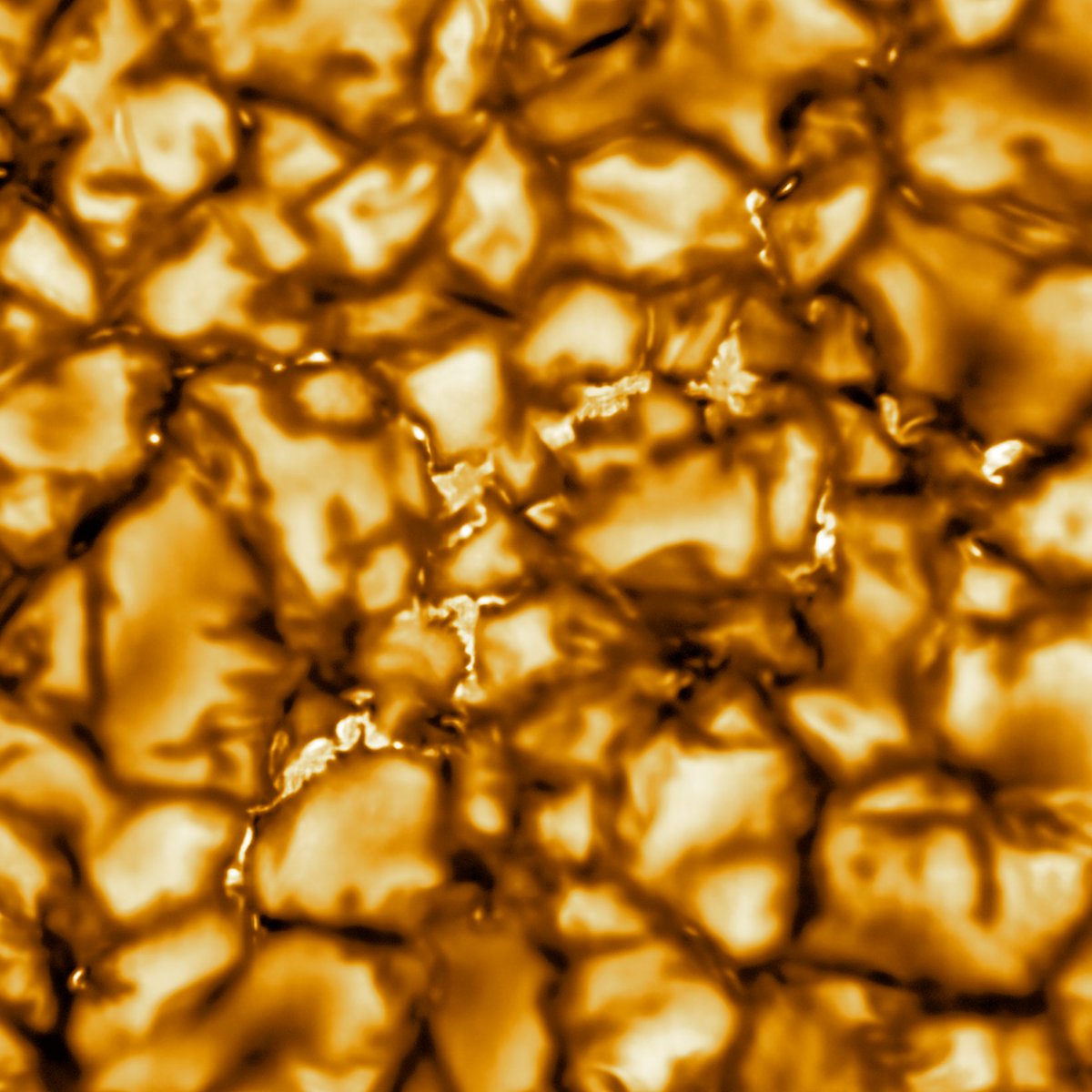
See the Sun like never before! @NSF’s Inouye Solar Telescope produces first detailed images of the sun’s surface. https://t.co/c3SPB6gg8w #SolarVision2020
📷: @NatSolarObs/ @AURADC/ NSF