Men and women have done this even since the dawn of the time , a lot of people like to be in the shoes of main character not just in anime game , even in other games like call of duty or TV shows , you're just some meathead who think you can shame others for doing it.
I mean if it's self inserting that someone wants to do then they can always get involved in yumetwt, it's not stigmatized anymore by a long shot. And now that it's not stigmatized anymore that's when we gotta ask ourselves why one would still be so preoccupied with
@morganshibaIN@Akamanto35 These likes are all botted by twittertards and foids who want shipping in game he is also a centrist and normie.
Shit like these is one of the reason why hoyoverse should release one male every 2 years , it keeps pests like him away from the game.
@nodcrying This scene alone is why Aether CAN'T BE Protagonist because this scene with a MALE in a bathtub surrounded by NAKED women is so fucking awkward!
Ayaka Misses Traveler A Lot
Ayaka missed the Traveler so badly, well it's been awhile since they met. I wonder how will she reacts if she meets up with Citlali being so clingy towards Traveler and vice versa.
Not to mention if she knew that Traveler princess carrying Yoimiya in her story quest in Sumeru
Credit - u/Old_Reindeer_3337
#Genshinlmpact #Genshin #GenshinMemes
The entire post being a joke.
Meanwhile the replies being a bunch of Aether haters crashing out.
I need HoYo to double down on this even more the next time.
I need the Tourists and Larpers to Mald harder.
Last thing you see before you leak all the information about Fairy ai and Roscaelifer's data to your chinese "girlfriends" from Yunkui Summit
Zenless Zone Zero sfw イラスト
关于漫画灵感的来源以及沃雅妮莎故事的分析,中文往下翻
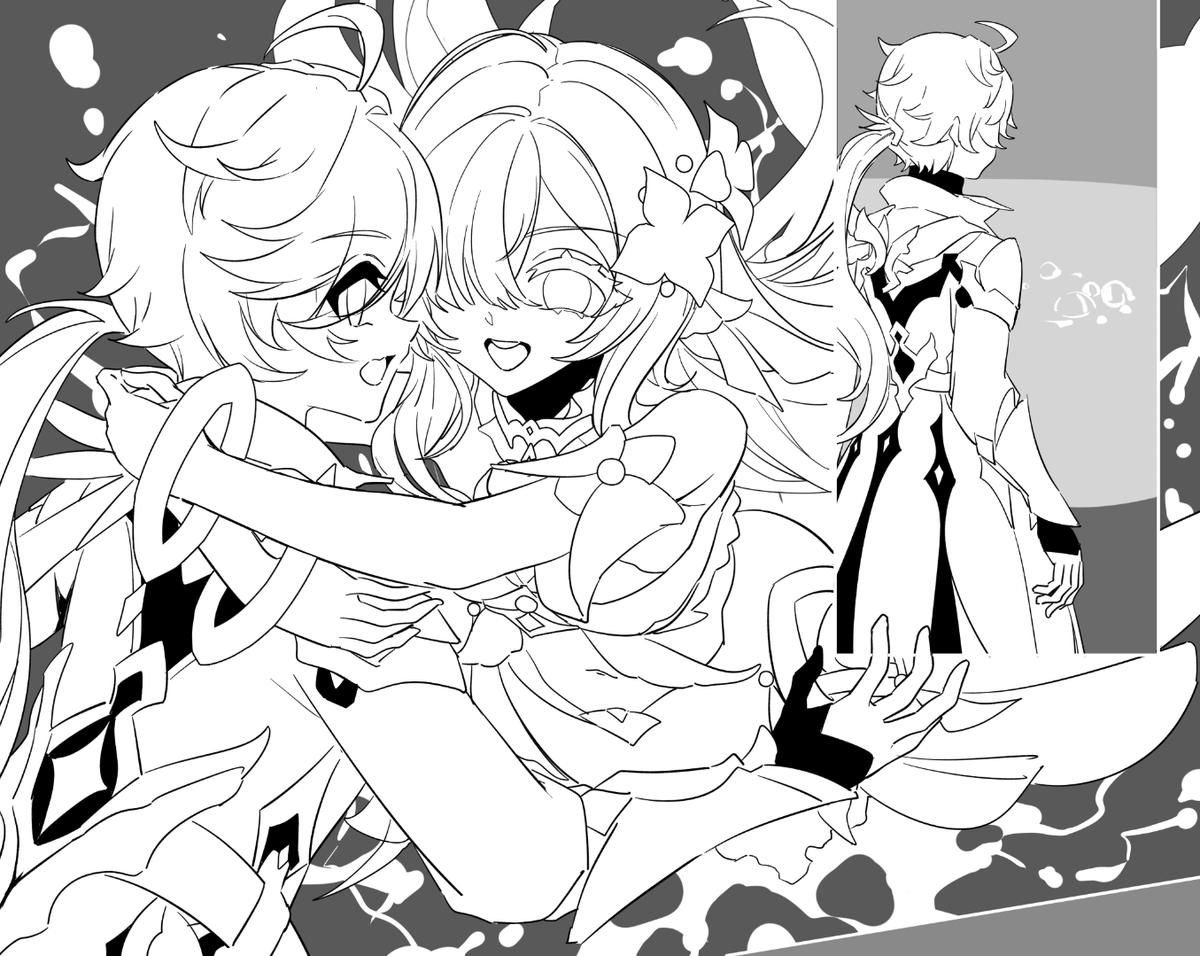
This comic is titled The Water Imp's Contract. Despite being named a "contract," its content primarily focuses on the "curse" that Vodyanitsa jokingly mentioned to Aether in Travelers' Tales. Vodyanitsa's real-life prototype originates from Dvořák's opera Rusalka. In fact, throughout the game's text, Vodyanitsa makes very direct references to plot points related to Rusalka, and her weapon's lore also contains clear records of the related story. In the original Rusalka, the water nymph Rusalka, having fallen in love with a human prince, accepts a curse that renders her forever mute in exchange for the right to walk on land. Furthermore, should the prince betray her, both she and the prince will be cursed and doomed to eternal ruin. After Vodyanitsa declares that she has signed a contract with Aether, she says that if Aether breaks the curse, he will lose his voice forever and dissolve into foam under the sunlight. The loss of voice corresponds to Rusalka, while the curse of turning into foam corresponds to Andersen's The Little Mermaid. Both stories are tales of a prince and a mermaid falling in love. Just like in Zenless Zone Zero, where Alice uses the love story of Cooknus and Phaethon to refer to the relationship between Wise and herself. If you are familiar with these stories, their contract and a direct confession of love are essentially no different.
Immediately after, Vodyanitsa changes her tone and laments that even if she is betrayed, she can only cry alone in the water. This corresponds directly to Rusalka, who, after being betrayed by the prince, cannot bring herself to kill him to gain salvation and can only hide alone in the water, sobbing quietly. In the ending of Rusalka, the repentant prince comes to seek out Rusalka. The two can no longer escape the curse; after a passionate kiss, Rusalka embraces the prince, and they sink into the water forever. Vodyanitsa jokingly asks Aether more than once whether he wants to try being dragged into the water by a water imp, as if hinting at what will happen to Aether if he betrays her. Although the original story is a cautionary tale of cause and effect, Vodyanitsa's words and actions are always extremely possessive, carrying a slightly yandere-esque sense of gravity. But just as the curse is merely a joke, her true feelings are simply hiding in the water and crying alone. Even though those people are using her, she not only refuses to punish them but cannot even bear to lose such friends. Her outwardly cheerful and mischievous demeanor cannot conceal her inner sensitivity and vulnerability; the yandere and gravity are merely a protective coloration for her inherently gentle and selfless nature. Fortunately, she has met a prince who will never betray her, one who is firmly bound by her gravity.
What attracts me to Vodyanitsa's story is not only the desire to protect this girl who is mischievous on the outside but gentle on the inside. From a narrative perspective, reality and the adapted story echo and connect with each other. Through the tragic tone of the original work, it uses a "suppress first, then elevate" approach to tell a romantic and sweet story. Why is it named a "contract" when its content is actually a "curse"? Because the curse remains forever a verbal joke, while the contract is like Vodyanitsa's gravity—a bond that binds the two together forever.
这篇漫画的名字叫做《水妖的契约》。名为契约,内容却主要聚焦沃雅妮莎在游逸旅闻中对空开玩笑说的诅咒上。沃雅妮莎的现实原型来源于德沃夏克的歌剧《水仙女》,实际上在游戏的文本各处沃雅妮莎都有很直接的对《水仙女》相关剧情的提及,在沃雅妮莎的武器文本中也有很明确的相关故事的记载。在《水仙女》原著中,爱上了人类王子的水妖露莎卡为了获得在陆地上行走的权利,接受再也无法说话的诅咒,并且一旦遭到王子的背叛,她和王子将承受诅咒双双万劫不复。在沃雅妮莎宣布与空签订契约之后,沃雅妮莎说如果空违反诅咒将再也无法说话,并且将在阳光的照射下化为泡沫。失声对应《水仙女》,化为泡沫的诅咒则对应着安徒生《海的女儿》,这两篇故事都是王子与美人鱼相爱的故事。就像是在绝区零里面,爱丽丝用库克努斯和法厄同的爱情来代指哲和自己的关系一样。如果你了解这些故事,二人的契约和直球的示爱也基本上没有区别了。
而紧接着,沃雅妮莎话锋一转,哀叹就算被辜负,她也只能在水里独自哭泣。这正对应露莎卡在被王子背叛之后,她不忍心杀害王子让自己获得救赎,只能一个人躲在水里暗自啜泣。在《水仙女》的结局,悔悟的王子前来寻找露莎卡。两个人已经无法逃脱诅咒,在深情一吻之后,露莎卡抱着王子,永远的沉入了水中。沃雅妮莎不止一次的和空开玩笑要不要试试被水妖拖入水中,就像在暗示如果遭到背叛,空的下场会如何一样。虽然对应的原著兰因絮果,沃雅妮莎的言行也总是占有欲极强,带着点病娇的重力感。但就像诅咒不过只是玩笑话,真心话也只不过是躲在水中独自哭泣一样。明明那些人在利用她,她不仅不愿意惩罚对方,甚至不忍心失去这种朋友。外表的开朗调皮掩盖不住内在的敏感和脆弱,病娇和重力也只是内在温柔无私的保护色。而幸运的是,她遇到了永远不会背叛她,被她的重力牢牢绑住的王子。
沃雅妮莎的故事吸引我的点不仅在于对这个外表调皮,内心温柔的女孩油然升起的保护欲。从叙事的角度来说,现实与改编的故事遥相呼应,彼此串联。通过充满悲剧色彩的原著基调,欲扬先抑来讲述了一篇浪漫又甜蜜的故事。为什么名为契约,内容却实为诅咒。因为诅咒永远是停留在口头的玩笑话,契约就像是沃雅妮莎的重力,是将两人永远捆绑在一起的羁绊。