Somalia’s structural gap to drive multinational coordination to protect commercial shipping
The recent joint operation by European Union Naval Forces (Operation ATALANTA) and the Indian Navy marked one of the most significant counter-piracy interventions in the Western Indian Ocean this year and underscores a renewed international willingness to respond decisively to maritime threats around Somalia.
The region has witnessed a gradual uptick in piracy incidents since late 2023, driven by maritime security priorities and regional instability linked to the Red Sea crisis.
By intervening early and coordinating across multiple naval forces including surveillance support from Japan, Seychelles and Combined Maritime Forces, the operation prevented a potentially damaging escalation in hijackings during a period of heightened geopolitical tension in adjacent shipping lanes.
This has further highlighted Somalia’s ongoing structural gap: while the federal government has passed an updated anti-piracy law and strengthened legal cooperation with partners, its maritime enforcement capacity remains limited, leaving regional authorities and international missions to fill critical security roles.
As naval deployments increase in response to Red Sea disruptions, piracy risks may rise in unpatrolled areas.
It means that sustained multinational coordination would remain essential to protect commercial shipping transiting between the Gulf of Aden, the Indian Ocean and major global trade routes.
Somalia: Why the national weapons and ammunition management strategy matter?
The approval of the new WAM strategy marks a critical step toward addressing one of Somalia’s most persistent structural vulnerabilities: the proliferation of illicit arms and the weak accountability mechanisms surrounding state-held weapons.
Weapons management is central to stabilisation efforts, notably as Somalia prepares for an eventual post-AUSSOM security environment and seeks greater autonomy over force generation, stockpile oversight and arms procurement.
The strategy provides a framework for improving chain-of-custody controls, standardising national registries, strengthening armoury infrastructure and reducing diversion risks.
Such issues have historically undermined military cohesion and facilitated al-Shabaab’s access to state-grade weapons.
Improved WAM practices would also support compliance with international benchmarks such as the UN Security Council requirements tied to the gradual lifting of the arms embargo.
Beyond the reform aspect of the strategy, the initiative reflects a broader push to professionalise Somalia’s security architecture.
As the government navigates political fragmentation and expanding security responsibilities, coherent weapons governance becomes an essential foundation for institutional credibility.
Although implementation will depend on resources, political will and effective coordination between federal-state members, international partners view the strategy as a positive step.
Analysis: Why Egypt’s AUSSOM deployment matter as Red Sea tensions rise
In a recent meeting between Egyptian Foreign minister Badr Abdelatty and African Union commission chairperson Mahmoud Ali Youssouf in Giza, Cairo reiterated its commitment to securing sustainable international funding for the operation, which succeeded ATMIS in 2024.
The meeting coincided with the inauguration of the Grand Egyptian Museum, offering a high-profile diplomatic venue as Egypt steps up its regional engagement.
Egypt’s preparations come at a moment of shifting geopolitical dynamics around the Red Sea and Horn of Africa, where maritime insecurity, regional rivalries and conflict in Sudan are reshaping threat perceptions.
Cairo’s deployment to AUSSOM deepens its direct security footprint in Somalia and reinforces its position as a consequential actor in the western Red Sea corridor, an area it views as strategically linked to Suez Canal security, Nile Basin politics and broader regional influence.
For Somalia, Egyptian participation offers an additional source of military support at a time when the federal government faces internal political fragmentation and persistent al-Shabaab insurgency.
The move also signals an emerging recalibration of external security partnerships. With Gulf states expanding economic and security investments in Somalia, Ethiopia seeking maritime access and Turkey playing an increasingly entrenched role, Egypt’s contribution reflects a desire to remain a central stakeholder in Horn security affairs.
AUSSOM’s success, however, hinges on funding and coherent coordination both of which have historically constrained African Union missions.
If Cairo can leverage its diplomatic weight to mobilise resources and political backing, its involvement may help stabilise the mission’s trajectory during a sensitive transition period.
The 7th African Union–European Union Summit is taking place in Luanda, marking 25 years since the AU–EU partnership was formally launched in Cairo in 2000.
The anniversary arrives at a moment when both continents face converging pressures—from insecurity in the Sahel and Horn of Africa to economic headwinds, migration governance and shifting global power dynamics.
Co-chaired by Angola’s President João Lourenço and European Council President António Costa, the meeting has gathered 42 heads of state and government, including 14 leaders from Europe.
The high-level turnout underscores the political weight attached to the relationship as both sides seek to recalibrate cooperation on peace and security, trade, energy transitions and institutional reform.
Such summit provides an opportunity to assess the effectiveness of past commitments while charting a more coherent framework for the next decade of AU–EU engagement.
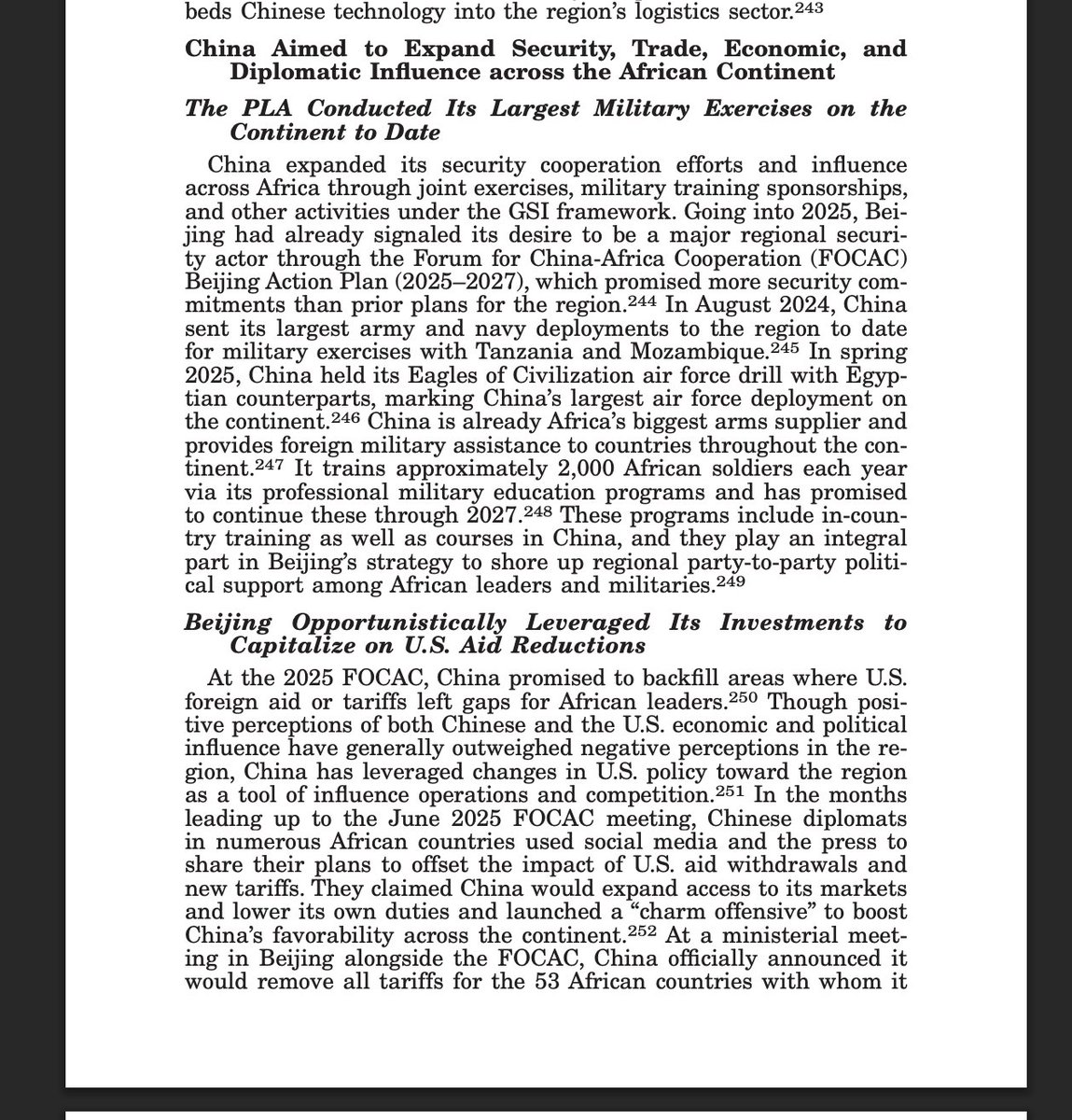
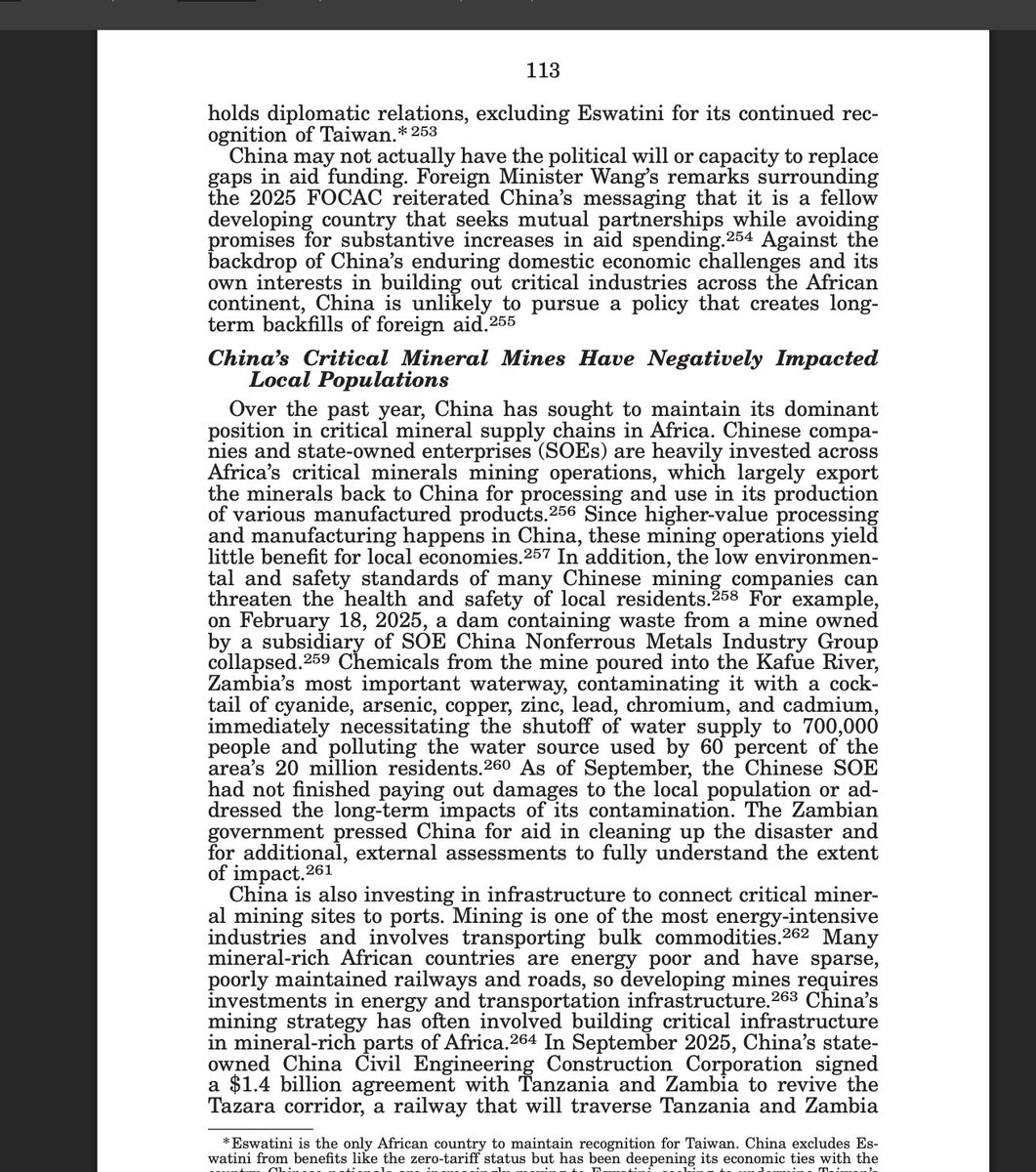
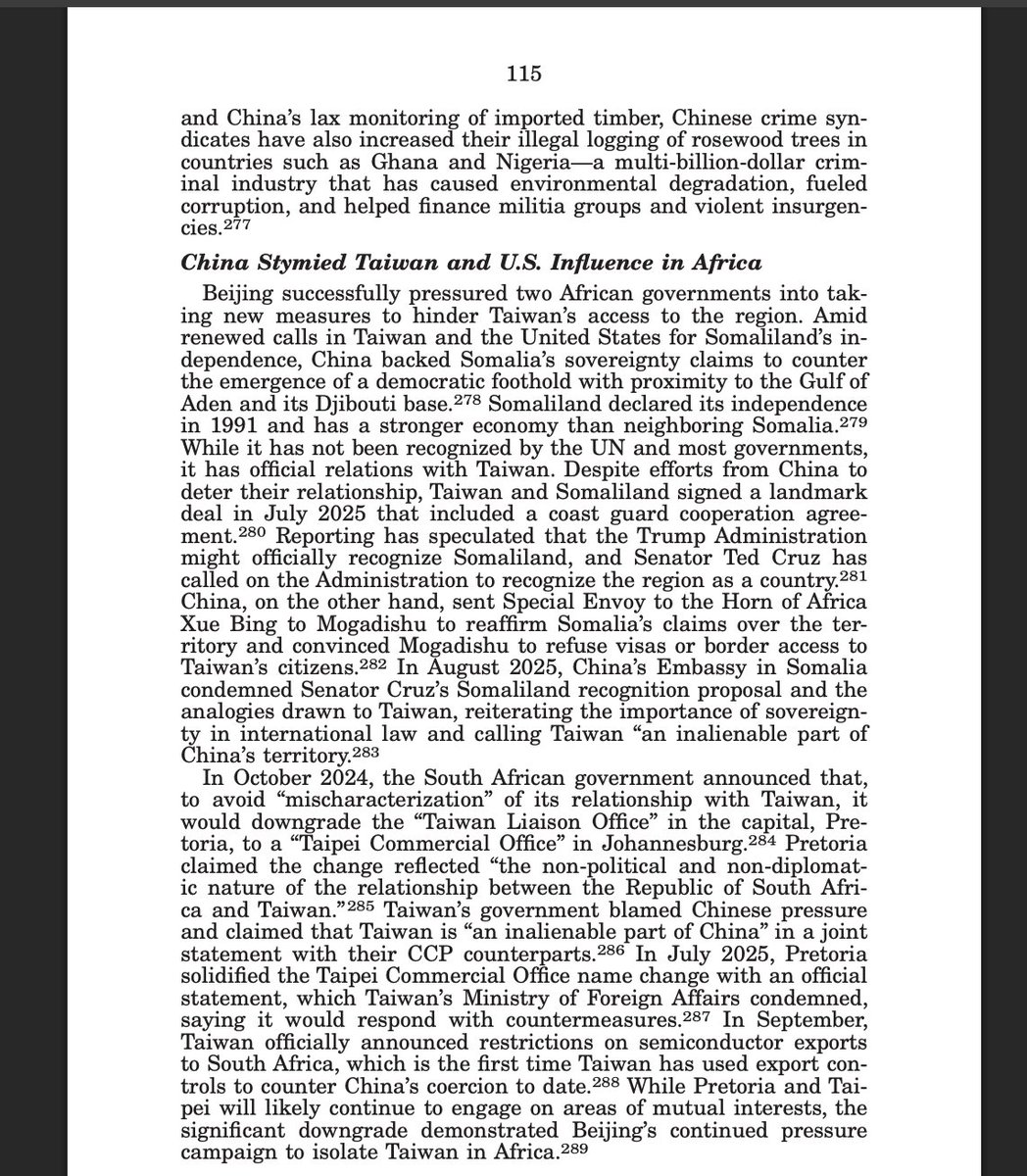
#BREAKING
The US Congress has published a massive 745-page report detailing the nature of the strategic rivalry between the US and China and America's threat perception and vulnerabilities.
Here are a few excerpts of the report on Chinese activities as pertaining to Africa.
Africa is crucial to China for strategic minerals, and increasingly the race to dominate space.
The report also notes Beijing's assertive Red Sea diplomacy, the move to undercut Taiwan and Somaliland ties and undermine Somaliland's recognition.
https://t.co/y9fwzRWvWj
Extending the horizon: Somalia’s move to 24-Hour port operations and its strategic economic significance
Somalia has launched 24-hour operations at the Port of Mogadishu for the first time, a shift that officials say will ease congestion, shorten turnaround times and improve the country’s position in an increasingly competitive regional trade environment.
The move follows a series of infrastructure upgrades, with senior officials from the ministry of ports and marine transport, the port authority and security agencies gathering to announce the transition to uninterrupted operations.
As one of East Africa’s oldest, the port, has undergone steady improvements in recent years, including modern equipment, expanded docks and the introduction of enhanced management systems.
Extending operations around the clock represents the next stage in a wider strategy to modernise Somalia’s maritime infrastructure and restore confidence in a sector long hindered by insecurity and underinvestment.
The significance extends beyond reducing bottlenecks. Efficient port operations lie at the centre of maritime trade competitiveness: lower dwell times and faster vessel handling reduce shipping costs, improve logistics reliability and strengthen Somalia’s appeal as a regional transit point.
In a trading environment shaped by volatile shipping rates, shifting supply chains and rising competition from neighbouring ports, operational efficiency is no longer optional. It is foundational to market relevance.
Somalia’s adoption of enhanced systems, though still modest by global standards, offers a platform for future upgrades.
If sustained, these improvements could yield faster, cleaner and more predictable services, generating higher revenues and improving the port’s asset value over time.
For a country still recovering from decades of conflict, efficiency carries strategic weight.
A well-run port lowers operational costs for businesses, supports domestic industries and expands revenue without proportionate increases in expenditure.
Contextual assessment of Somalia’s security gains and the political constraints on electoral progress
Somalia’s Danab commandos, operating alongside Jubbaland regional forces, have seized several key positions, including the strategically important Araare Bridge, which connects government-controlled areas to Jamaame district.
Jamaame and nearby Jilib remain the strongholds of Al-Shabaab group and are widely believed to house elements of the group’s senior leadership.
Despite losing ground in parts of central Somalia, the group’s endurance across the southern rural belt continues to hinder state-building and development efforts.
The government’s “total war” campaign, launched in the first year of the current administration, achieved notable gains before stalling amid operational overload and political fragmentation.
Its central objective—creating a secure environment for both local and national elections—remains only partially met.
While federal leaders continue to press ahead with popular elections, the security landscape remains mixed, and the group’s adaptive capacity has prolonged instability in several regions.
Security in Somalia, however, cannot be separated from politics. Military progress rarely delivers strategic change without parallel political consensus among federal and regional actors.
The push for one-person-one-vote elections has instead exposed deep fractures within the federation.
Jubbaland and Puntland, together with influential political organisations, reject the current electoral model, accusing the federal government of unilateralism.
Their opposition persists even as Mogadishu alone has registered nearly one million voters.
The planned municipal elections in the capital at the end of November will therefore be a defining test.
They will signal whether Somalia can credibly advance toward nationwide elections for the first time and whether the state can demonstrate readiness to assume security responsibilities as the African Union’s peace support mandate nears its end.
Tactical gains such as those in Lower Jubba underscore the potential for progress, but without political consensus, they risk becoming isolated victories within an unresolved national contest.
Highlights: Political, security and economic
Regional and security developments
A major naval drill, Red Wave 8, began in the Red Sea involving Egypt, Saudi Arabia, Jordan, Sudan, Yemen, and Djibouti, aimed at improving joint maritime operations and countering unconventional threats.
The exercise which is part of an Egypt��Saudi-led alliance that also includes Somalia and Eritrea reflects intensifying strategic competition in the Red Sea corridor.
Ethiopia has voiced unease, accusing Cairo of using the alliance to isolate Addis Ababa diplomatically.
In the western Indian Ocean, EU Naval Forces (Operation ATALANTA) achieved a major success after rescuing 24 crew members from the hijacked tanker Hellas Aphrodite and seizing an Iranian-flagged dhow used as a mother ship.
The operation, supported by India, Japan and Seychelles, marks one of the most coordinated counter-piracy responses since 2012. Somalia’s Parliament also passed a revised Anti-Piracy and Anti-Kidnapping Bill, updating legislation first ratified in 1975.
Political and institutional developments
The National Independent Electoral and Boundaries Commission announced plans to distribute voter cards to more than 900,000 registered residents in Mogadishu. This marks a progress toward district-level elections.
Also, the Office of National Security endorsed the National Strategy for Weapons and Ammunition Management (2025–2030), to pave the way for stronger oversight of arms proliferation in coordination with the UN and partner governments.
International cooperation deepened
Somalia and Algeria signed new agreements covering sectors like energy, livestock and agriculture. The agreement also includes visa-on-arrival arrangements for Somali diplomats.
Meanwhile, Somalia and Italy launched the Somali Oceano-Hydrographic Office (SOHO) which will serve as a national maritime data centre, modernising charting, ocean mapping and navigation safety capabilities.
Economic and infrastructure developments
Regional trade dynamics remain uneven: Kenya’s miraa exports to Somalia fell nearly 17% in early 2025 as Ethiopian suppliers gained market share through lower costs and faster logistics, a trend exposing Kenya’s dependence on Somali demand and Somalia’s shifting trade networks.
At the operational level, Somali authorities intensified use of the PISCES border management system, training immigration officers to enhance identity verification at ports and airports.
The Criminal Investigation Department also launched new measures to disrupt human trafficking networks exploiting unregistered travel agencies and online recruitment.
Finally, Uganda and Somalia continued deep defence cooperation with Somali officers graduating from a year-long command training programme in Kampala.
The US embassy in Somalia has indicated that the personal information of thousands, including American citizens, might have been exposed following reports of "credible allegations" that unknown hackers breached Somalia's e-visa system.
The embassy stated it cannot verify if an individual's data was compromised in the breach.
https://t.co/KlLovNmlX5
Somalia moves to modernise Anti-Piracy Legislation amid renewed maritime threats
Somalia’s House of the People has approved the revised Anti-Piracy and Anti-Kidnapping Bill, a milestone in the country’s effort to modernise its maritime security framework and align with international law.
The Bill, which passed unanimously with 140 Members of Parliament in attendance, updates legislation first enacted in 1975, a period long before Somalia’s coastline became a focal point of global security concern.
This comes amid renewed piracy incidents in the western Indian Ocean including the hijacking of a Malta-flagged vessel. Although EU Naval Forces successfully intervened, the incident revived memories of the 2008–2012 piracy surge that once paralysed global shipping lanes and drew in multinational naval task forces.
The new law is designed to close major legal gaps that have hindered prosecution and deterrence. It criminalises a broader spectrum of maritime offences such as hostage-taking, facilitation and financing of piracy while enabling closer coordination with international naval missions and maritime courts.
It also lays the groundwork for developing a national maritime authority and specialised prosecution units, a requirement for long-term governance of Somalia’s vast territorial waters.
The Bill’s passage is more than a legal reform: it is a political signal.
Somalia remains largely dependent on foreign navies for maritime enforcement, but the new legislation asserts national ownership over a domain critical to sovereignty and economic recovery.
It also strengthens the country’s credentials in regional maritime frameworks such as IGAD’s Blue Economy Strategy and the Djibouti Code of Conduct.
In a region where piracy, arms trafficking and illegal fishing intersect, establishing a credible legal framework is a crucial step forward to future capability building.
Somalia’s limited enforcement capacity makes this reform essential groundwork which would be vital for an institutional anchor on which deterrence, partnerships and eventual self-reliance must be built.
Somalia charts course toward a sustainable Blue Economy
The Intergovernmental Authority on Development (IGAD), with support from the Swedish International development cooperation agency (Sida) and Somalia’s ministry of fisheries and Blue Economy, convened a two-day consultation workshop in Mogadishu focused on strengthening national Blue Economy governance and coordination.
The meeting brought together senior officials, coastal representatives, civil society and private-sector actors to discuss institutional reforms and the implementation of Somalia’s Blue Economy Strategy.
The workshop forms part of IGAD’s wider Regional Blue Economy Strategy (2021–2025), which seeks to promote sustainable use of aquatic resources, maritime connectivity and ecosystem resilience across the Horn of Africa.
Somalia’s coastline, the longest in mainland Africa, offers significant potential for fisheries, logistics, tourism and offshore energy.
Yet institutional fragility, illegal fishing and limited maritime infrastructure continue to constrain growth.
The emerging national strategy aims to address these challenges by linking ocean resource management with livelihoods, trade facilitation and climate resilience.
Somalia’s engagement positions it within a growing Horn-wide effort to integrate maritime security, fisheries management and port development.
IGAD’s coordination role is crucial for tackling shared threats such as marine pollution and unregulated (IUU) fishing, while aligning with the African Union’s 2050 Africa’s Integrated Maritime Strategy.
The Blue Economy is estimated to exceed USD 1.5 trillion annually with forecasts suggesting it could double by 2030.
Somalia’s participation in this expanding sector offers opportunities for investment, technology transfer and environmental stewardship, provided governance systems remain transparent and inclusive.
However, strengthening institutional capacity will be vital for translating Somalia’s vast ocean potential into sustainable national prosperity. @IGADPeace
Somalia acknowledges unregistered cargo flights to Sudan
In Mogadishu, defence minister Ahmed Moalim Fiqi acknowledged before the Upper House that the government had limited knowledge of a series of unregistered flights between Bosaso town of Puntland and Sudan.
This is the first formal admission amid speculation about arms or logistics transfers linked to Sudan’s conflict.
Lawmakers have requested a full investigation following reports that UAE-linked IL-76 cargo planes had landed frequently in Bosaso since 2023.
The admission illustrates the complex intersection of domestic oversight and regional conflict economies affecting Somalia’s airspace management.
However, the internal governance gaps from unmonitored cargo flights to inconsistent of federal-state coordination continue to limit policy coherence.
The East African nation remains a high-risk for investors but strategically significant frontier where security management, compliance diligence and political engagement remain essential to sustaining progress.
Egypt to finalise deployment of forces to Somalia
Egypt’s foreign minister Badr Abdelatty met African Union Commission Chair Mahmoud Ali Youssouf in Giza to finalize the deployment of Egyptian forces under the African Union Support and Stabilisation Mission in Somalia (AUSSOM).
The discussion emphasized the need for sustainable international funding to maintain operational continuity as the mission replaces the former ATMIS structure.
Egyptian troops are expected to arrive before year-end, bolstering efforts to secure urban centres and strategic corridors.
Regionally, Egypt’s imminent troop deployment under AUSSOM and Saudi Arabia’s development engagement highlight growing Arab involvement in Somalia’s stabilisation and reconstruction agenda.
“Somalia has never transitioned to a UN peacekeeping operation from the AU mission that's currently in place, and I don't think it ever will.”
🗣️@SeraGaid on obstacles to peacekeeping in Somalia.
https://t.co/NgTe8zoAKe
It's been on the tip of my tongue so let me just say it: there may well be more than one permanent seat for Africa in the UN Security Council. But as things stand today, only Nigeria can bear the weight of generations-long possession of such a seat, with the power of the veto/🧵
M23 launched an offensive against the Congolese army (FARDC) and allied militia fighters in South Kivu in early August, violating the mid-July Qatari-brokered ceasefire.
M23’s offensive undermines the US-backed peace framework between the DRC and Rwanda and escalates the risk of large-scale fighting breaking out again in the eastern DRC. 🧵
Armed tribal militias and security forces clash in Mogadishu, Thursday.
The clashes erupted due to the militia's opposition to the government's order to seize land that has been occupied by civilians for decades.
The clashes took place at the former base of the Somali military's football team.
Several months ago, the government issued an eviction notice for residents to leave the Horseed stadium to for the purpose of a redevelopment project.
The residents' refusal to comply with this order has led to the ongoing clashes. @Somalia_Focus
Somalia Alert:
The fifth round of negotiations between the Somali government and the opposition alliance concluded without agreement, extending a two-month political impasse.
The main sticking point remains proposed constitutional amendments that would formalise a multiparty system and introduce a one person, one vote electoral model.
While both sides broadly support returning to the 2012 Provisional Constitution, the government has made clear its intention to move ahead with the universal suffrage plan, despite opposition reservations.
In the mid of these talks, the president publicly registered as a voter, launching a campaign to enrol residents in Mogadishu and the federal member states.
This impasse reflects deeper disputes over the sequencing and legitimacy of constitutional reform, the balance of federal and regional powers, and the credibility of the electoral process; issues with direct implications for Somalia’s political stability and state-building course.