Melómana empedernida. Amante del tango y de mover los pies.
Music, food intake, & crossmodality.
Sociologist (FCPyS-UNAM). PhD student in Music Cognition (UNAM)
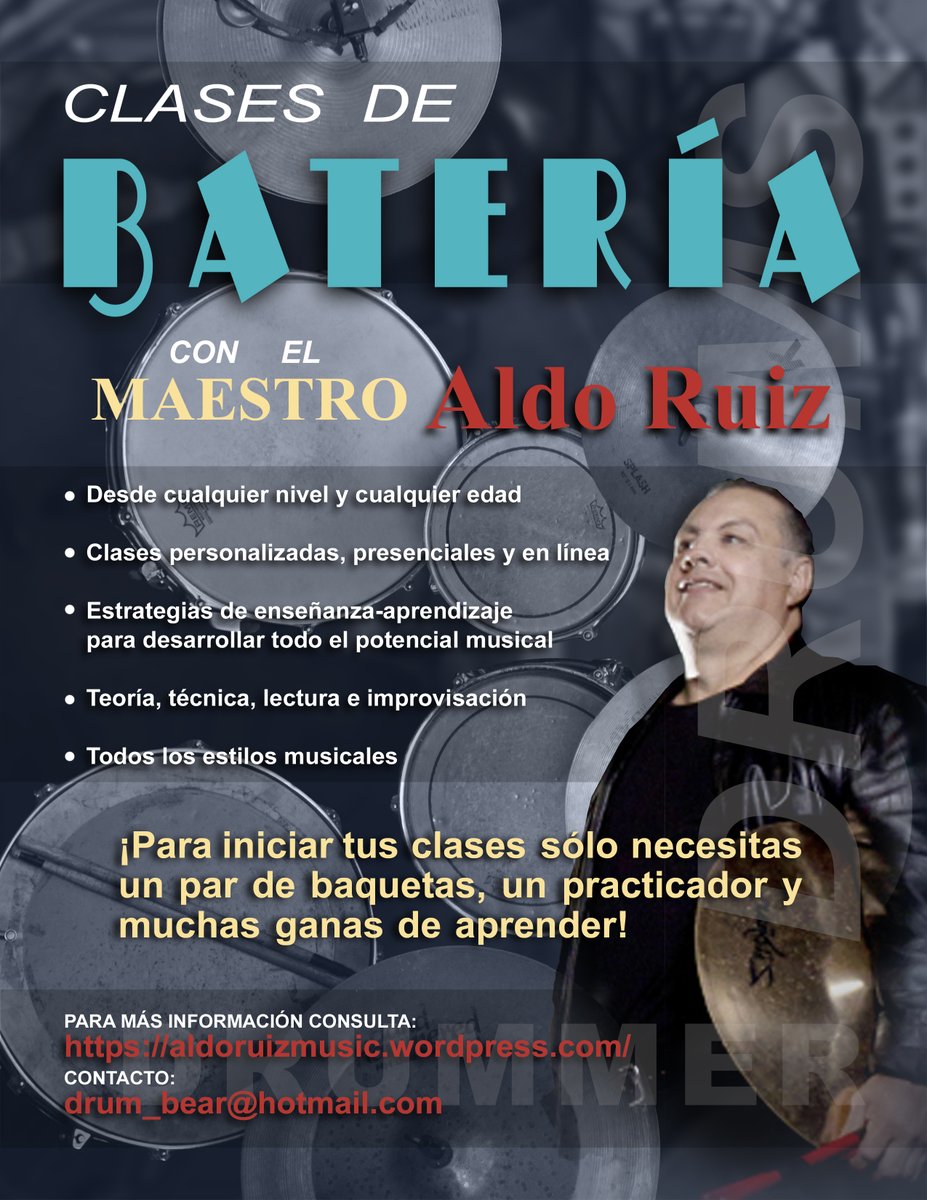
Para quedarse en casa y darle consuelo al corazón, clases de batería en línea 🥁🎧🥁🎼
Siempre es tiempo para empezar y sus cerebros, oídos, músculos y articulaciones lo van a agradecer :) ¡Gracias por sus retweets!
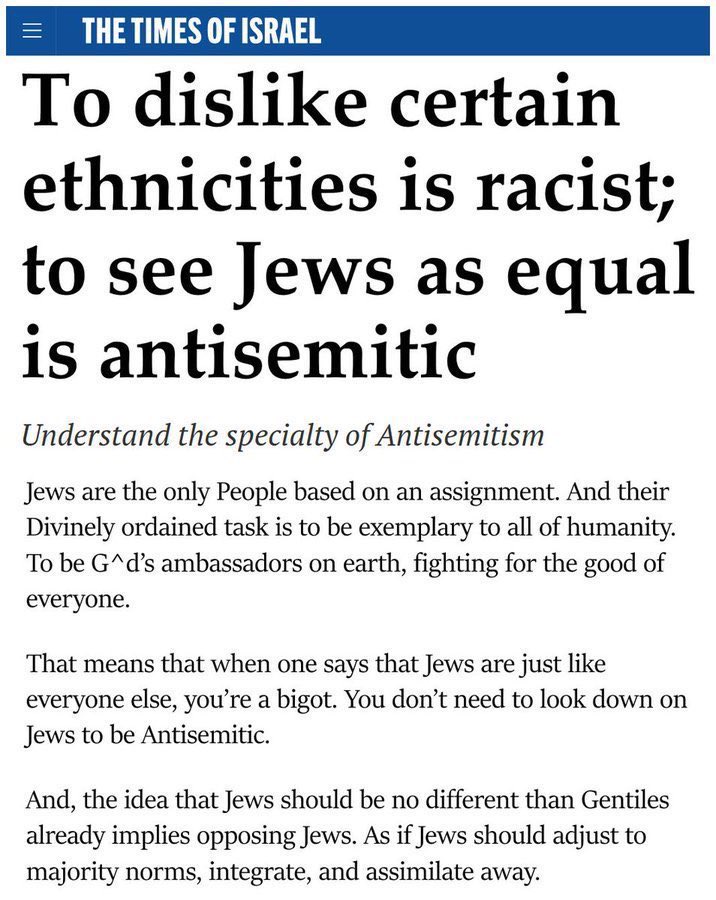
The Russian Revolution was not "Russian." It was a war on Russians by Jews. And the Jews won. That victory was followed by the greatest extermination of human life since Genghis Khan.
DYK around half of the brain is not made of neurons? Among the other half is the octopus-like microglia.
In this visualization by our Electron Microscopy team, microglia (green) wraps around a pyramidal cell (blue), one of two types of excitatory neurons in the brain.
I really enjoyed this article from @nehaludyavar, which explains (at the molecular level) how blood carries oxygen through the body.
In general, I think more people should use AI tools to make (scientifically accurate and informed) interactives for their articles. This is a refreshing example.
🇮🇩🇵🇸 ¡Indonesia no se calla!
Un valiente aficionado irrumpió en pleno partido y levantó con orgullo la bandera de Palestina frente a todos.
A pesar de la represión y las amenazas, el pueblo indonesio sigue demostrando su solidaridad inquebrantable con Palestina.
Miles de personas en las gradas y en las calles siguen alzando la voz y la bandera palestina.
Mientras algunos gobiernos árabes guardan silencio o se arrodillan, Indonesia (el país con más musulmanes del mundo) sigue en la primera línea de la solidaridad.
¡Respeto total al pueblo indonesio!
⚽ La FIFA promete derrama económica, pero las ganancias suelen concentrarse en derechos de transmisión, patrocinios y venta de mercancía. Mientras ciudades y gobiernos asumen costos e incluso conceden beneficios fiscales, los grandes ingresos terminan en manos de la organización y sus socios comerciales. El negocio del fútbol global deja una pregunta abierta: ¿quién gana realmente cuando llega un Mundial?
@Mario_Campa, Economista
📺 #SINSONTE | https://t.co/mT5F2ZbFUQ
Noruega le da una paliza histórica a Israel y dona TODAS las ganancias del partido a Palestina.
Noruega aplastó 5-0 a Israel y celebró con una alegría que se sintió en todo el mundo.
Pero lo más poderoso no fue solo el resultado: el equipo y la federación noruega decidieron donar el 100% de los ingresos del partido a Palestina.Esto no es solo fútbol.
Es una declaración política clara y valiente en medio del Mundial 2026. Mientras Israel sigue con su campaña de destrucción en Gaza y Líbano, y amenaza a Irán, Noruega elige ponerse del lado correcto de la historia.Un país que entiende el valor de la solidaridad y la justicia.
Un equipo que transforma una victoria deportiva en ayuda concreta para un pueblo que sufre ocupación y masacres.
Este gesto contrasta fuertemente con la hipocresía de la FIFA y de varios gobiernos occidentales que protegen a Israel pese a todo.
Gracias, Noruega.
El mundo necesita más acciones concretas como esta.
¿Qué opinas tú?
¿Crees que más selecciones deberían seguir el ejemplo de Noruega?
Comenta, comparte y celebra esta victoria con significado.
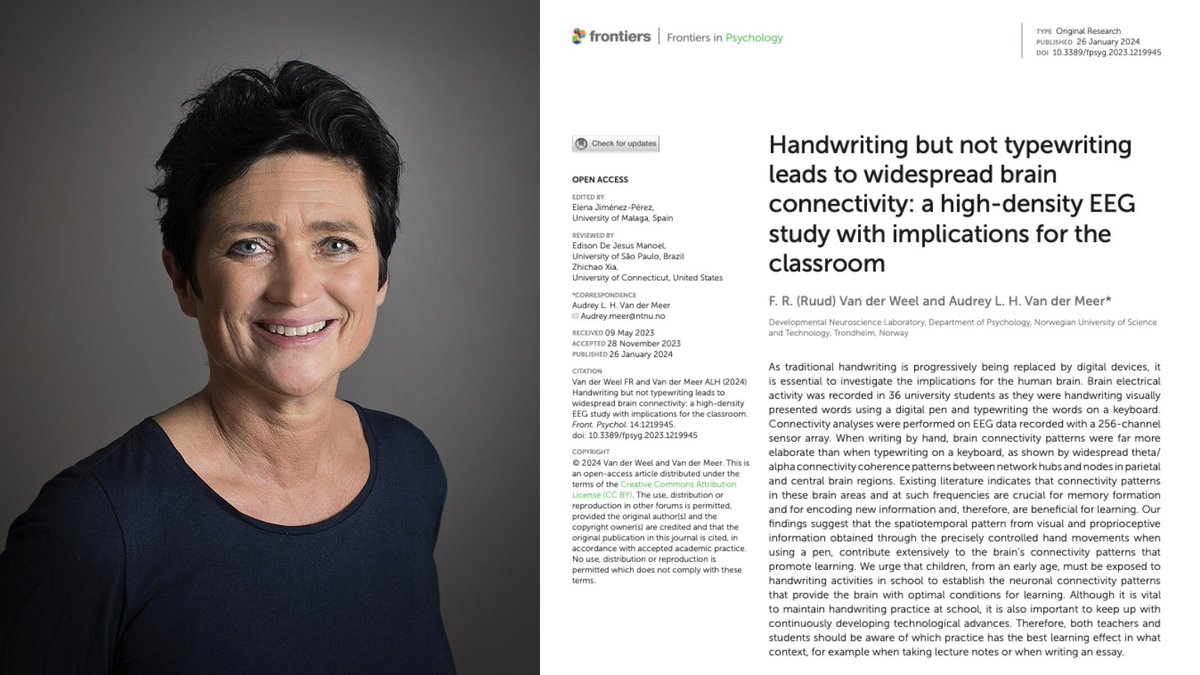
A Norwegian neuroscientist spent 20 years proving that the act of writing by hand changes the human brain in ways typing physically cannot, and almost nobody outside her field has read the paper.
Her name is Audrey van der Meer.
She runs a brain research lab in Trondheim, and the paper that closed the argument was published in 2024 in a journal called Frontiers in Psychology. The finding is brutal enough that it should have changed every classroom on Earth.
The experiment was simple. She recruited 36 university students and put each one in a cap with 256 sensors pressed against their scalp to record brain activity. Words flashed on a screen one at a time.
Sometimes the students wrote the word by hand on a touchscreen using a digital pen, and sometimes they typed the same word on a keyboard. Every neural response was recorded for the full five seconds the word stayed on screen.
Then her team looked at the part of the data most researchers had ignored for years, which is how different parts of the brain were communicating with each other during the task.
When the students wrote by hand, the brain lit up everywhere at once.
The regions responsible for memory, sensory integration, and the encoding of new information were all firing together in a coordinated pattern that spread across the entire cortex. The whole network was awake and connected.
When the same students typed the same word, that pattern collapsed almost completely.
Most of the brain went quiet, and the connections between regions that had been alive seconds earlier were nowhere to be found on the EEG.
Same word, same brain, same person, and two completely different neurological events.
The reason turned out to be something nobody had really paid attention to before her work. Writing by hand is not one motion but a sequence of thousands of tiny micro-movements coordinated with your eyes in real time, where each letter is a different shape that requires the brain to solve a slightly different spatial problem.
Your fingers, wrist, vision, and the parts of your brain that track position in space are all working together to produce one letter, then the next, then the next.
Typing throws all of that away. Every key on a keyboard requires the exact same finger motion regardless of which letter you are pressing, which means the brain has almost nothing to integrate and almost no problem to solve.
Van der Meer said it plainly in her interviews.
Pressing the same key with the same finger over and over does not stimulate the brain in any meaningful way, and she pointed out something that should scare every parent who handed their kid an iPad.
Children who learn to read and write on tablets often cannot tell letters like b and d apart, because they have never physically felt with their bodies what it takes to actually produce those letters on a page.
A decade before her, two researchers at Princeton ran the same fight using a completely different method and ended up at the same answer. Pam Mueller and Daniel Oppenheimer tested 327 students across three experiments, where half took notes on laptops with the internet disabled and half took notes by hand, before testing everyone on what they actually understood from the lectures they had watched.
The handwriting group won by a wide margin on every question that required real understanding rather than surface recall.
The reason was hiding in the transcripts of what the two groups had actually written down.
The laptop students typed almost word for word, capturing more total content but processing almost none of it as they went, while the handwriting students physically could not write fast enough to transcribe a lecture in real time, which forced them to listen carefully, decide what actually mattered, and put it in their own words on the page.
That single act of choosing what to keep was the learning itself, and the keyboard had quietly skipped the choosing and skipped the learning along with it.
Two studies. Two countries. Same answer.
Handwriting makes the brain work. Typing lets it coast.
Every note you have ever typed instead of written went into your brain through a thinner pipe. Every meeting, every book highlight, every idea you captured on your phone instead of on paper was processed at half depth.
You did not forget those things because your memory is bad. You forgot them because typing never woke the part of the brain that would have made them stick.
The fix is the thing your grandmother already knew.
Pick up a pen. Write the thing down. The slower road is the faster one.
Is categorization something the brain does after perceiving the world, or is it how perception happens in the first place?
A groundbreaking Perspective by Lisa Feldman Barrett and Earl K. Miller in Nature Reviews Neuroscienceargues that categorization is completely "baked" into our neural infrastructure.
Rather than a final-stage sorting process, categorization occurs from the very moment a sensory signal enters the brain. Driven by predictive feedback loops that start at the limbic core, the brain continuously constructs functional context to optimize energy and anticipate metabolic needs (allostasis).
In short: meaning and metabolism are deeply intertwined, and your brain is constantly grouping the world to keep your body running efficiently. @MillerLabMIT https://t.co/S3e5ag5nlI
#Neuroscience #CognitiveScience #BrainResearch #Categorization #Allostasis #PredictiveProcessing #Neuroanatomy
A British biologist looked at 200,000 years of human history and found that the entire reason humans broke out of poverty was not intelligence, not language, not even agriculture, but one mechanism so simple a 6-year-old could explain it.
His name is Matt Ridley.
He is a zoologist by training, an evolutionary biologist by career, and in 2010 he wrote a book called The Rational Optimist that quietly argued the most important fact about human progress had been hiding in plain sight for the entire history of economics.
Naval Ravikant has been telling people to read everything Ridley has ever written for the last 15 years. The reason is the argument inside this one book.
For 200,000 years, anatomically modern humans walked around with the same brain you have right now. Same skull size. Same neural architecture. Same raw capacity for language, planning, and abstract thought.
For roughly 190,000 of those years, almost nothing happened. Generation after generation lived and died inside the same Stone Age toolkit their great-great-grandparents had used. Then somewhere around 50,000 years ago, the line on the chart of human progress started to tick upward. Then it bent. Then it exploded.
The question Ridley spent years on was the only question that mattered. What changed.
It was not the brain. The brain had been the same for 190,000 years. It was not language, which had existed long before the takeoff. It was not even agriculture, which arrived only 10,000 years ago and was actually preceded by the upward bend, not the cause of it.
What changed was that humans started trading with strangers.
This sounds too small to be the answer. Ridley argues that it is the answer to almost everything. The moment one human exchanged a useful object with another human from a different group, something happened that no other species on earth had ever done.
Two ideas that had developed in isolation came into contact. The flint knapper learned what the spear maker had figured out. The fisherman from the coast learned what the hunter from the forest had figured out. The two pieces of knowledge fused into something neither side could have produced alone.
Ridley calls this ideas having sex. The phrase sounds frivolous and it is meant to. The point is that ideas, like genes, get better when they combine with other ideas from different lineages.
An idea sitting inside one head, no matter how brilliant the head, eventually hits a ceiling. The same idea exposed to ten thousand other ideas does something genes do under sexual reproduction. It mixes. It recombines. It produces offspring nobody planned.
The cleanest proof of this argument is the most uncomfortable case study in the book. Tasmania.
Around 10,000 years ago, rising sea levels cut Tasmania off from mainland Australia. A population of roughly 4,000 humans was now isolated on an island, with no possibility of contact with the rest of humanity. They had the same brains. The same language. The same starting toolkit as their cousins 150 kilometers north. The natural experiment was now running.
What happened next is something no economist or geneticist had ever predicted.
The mainland Australians kept inventing. Boomerangs. Spear-throwers. Fishing nets. Bone needles for sewing fitted clothes. Watercraft with paddles. Their technology compounded slowly across the centuries.
The Tasmanians went the other way. They did not just fail to invent the new tools their cousins were developing. They started losing the tools they already had. Fishing was abandoned within a few thousand years. Bone tools disappeared. Fitted clothing disappeared. They forgot how to make fire from scratch and started carrying lit firebrands from camp to camp instead, relighting their fires from a neighbor's whenever their own went out.
By the time European explorers arrived in the 17th century, the Tasmanians had the simplest toolkit of any human society ever recorded. Their material culture had gone backward for 8,000 years.
The archaeologist Rhys Jones called it a slow strangulation of the mind.
Joseph Henrich at Harvard later proved with formal mathematical models that there was nothing wrong with Tasmanian brains. There was something wrong with their network. A toolkit requires a critical mass of people exchanging skills to maintain itself.
The act of teaching a skill is imperfect. Every generation loses a small percentage of what the last generation knew. If your population is large enough and trading widely enough, those losses get caught and corrected by someone else who still remembers.
If your population shrinks below a certain threshold and stops mixing with outsiders, the small losses compound until entire technologies disappear.
This is the part that should haunt anyone reading this in 2026.
Intelligence is not a property of the individual brain. Intelligence is a property of the network the brain is connected to. A genius in isolation will produce less than a mediocre thinker inside a dense exchange of other mediocre thinkers.
The thing your ancestors needed in order to break out of 190,000 years of stagnation was not better brains. It was better connections between brains they already had.
The implication for any individual is direct and uncomfortable. If you are smart and isolated, you will be outproduced by people half as smart who are connected.
The most successful people in any field are almost never the smartest people in it. They are the ones positioned at the intersection of the most idea flows. They are reading more authors than their competitors. They are talking to more people from more disciplines. They are in the rooms where ideas from different lineages bump into each other.
Ridley ends the book on the line that sounds optimistic but is actually a warning its this "The future will be invented by people who connect ideas, not by people who guard them."
If capitalism is so great, why do corporations need tax breaks, subsidies, exemptions, grants, bailouts, legal protections, and trade barriers to survive? And when ordinary people ask for help, why is it suddenly called socialism?
@DaniMayakovski La mayor mina de cobalto explotada en el Congo, que utiliza mano de obra esclava, está dirigida por un judío sionista de origen europeo, agente del Mossad y residente de Tel Aviv, cuya familia hizo una fortuna explotando minas de oro en África, también utilizando esclavos.
Los amigos comparten más genes entre ellos que con otras personas, incluso después de controlar por etnia o antepasados comunes.
Los humanos forman amistades con personas genéticamente más similares de lo esperado por azar, con un nivel de similitud equivalente al de primos cuartos. Este estudio demostró una homofilia genética a lo largo del genoma: los amigos tienden a compartir más variantes genéticas (SNPs) que extraños. Esto sugiere que la amistad actúa como una forma de “parentesco funcional”. Además, ciertos genes muestran heterofilia (diferencias), y los SNPs más homofílicos presentan mayor evidencia de selección natural positiva reciente, indicando que elegir amigos similares ha sido evolutivamente ventajoso.
Entre los conjuntos de genes más relevantes destacan tres:
- Olfativa (transducción olfativa) → Homofilia: genes relacionados con el olfato; las personas que “huelen” el mundo de forma similar tienden a ser amigos.
- Metabolismo del ácido linoleico → Homofilia: metabolismo de grasas y sustancias ingeridas; posible ventaja en preferencias alimentarias o metabolismo.
- Sistema inmune → Heterofilia: respuesta inmune; ventaja en complementaridad (resistir diferentes patógenos).
En conjunto, estos hallazgos indican que los amigos no solo se eligen por rasgos claramente visibles, sino también por una compatibilidad genética sutil a nivel molecular que no es directamente perceptible, la cual favorece tanto la sinergia (cuando son similares) como la complementariedad (cuando son diferentes en lo clave), influyendo en la evolución humana reciente.
Many of you asked how we create those pretty whole-brain plots with the cortical outline.
We just made it available as a Python package:
https://t.co/7jPX0BtqSm