Hey Creative, need breakthrough?
Put down the phone and pick up the cards.
I’m building a list for preorders. You can learn more here:
https://t.co/augbe5U1q3 #Creatives#creativity#getunstuck
Judith Love Cohen was an American aerospace engineer who helped create the Abort-Guidance System that rescued the Apollo 13 astronauts.
When she went into labor, she went to work.
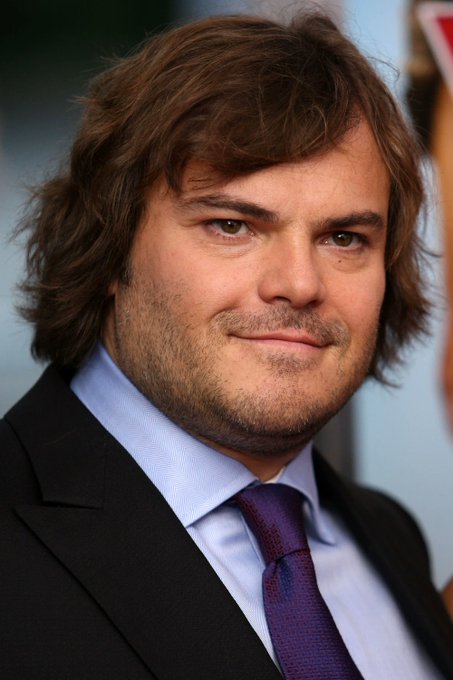
She took a printout of a problem she was working on to the hospital. She called her boss and said she finished the problem and gave birth to Jack Black
I don’t journal to “be productive.” I don’t do it to find great ideas, or to put down prose I can later publish. The morning pages aren’t intended for anyone but me.
Morning pages are, as author Julia Cameron puts it, “spiritual windshield wipers.” It’s the most cost-effective therapy I’ve ever found. To quote her further, from page viii:
“Once we get those muddy, maddening, confusing thoughts [nebulous worries, jitters, and preoccupations] on the page, we face our day with clearer eyes.”
Please reread the above quote. It may be the most important aspect of trapping thought on paper (i.e. writing) you’ll ever encounter. Even if you consider yourself a terrible writer, writing can be viewed as a tool that you can and should use. There are huge benefits to writing, even if no one—yourself included—ever reads what you write. In other words, the process matters more than the product.
On the 27th straight day of filming “Forrest Gump,” Tom Hanks was tired & worried.
During a scene on the famous park bench, Hanks stopped & said to director Bob Zemeckis,
“Hey, Bob…is anybody going to care about this movie? I don’t think anybody’s going to care.”
Bob replied,
“It’s a minefield, Tom. You never know what’s good…It’s a minefield! It’s a goddam minefield! We may be sowing the seeds of our own destruction.”
Tom Hanks told this story after he was asked, “When I ask for a memory from your career, what’s the first thing that comes to mind?”
He said that what Zemeckis said was true of every movie he’s worked on:
“There’s never any guarantee...You do not know if it is going to work out.”
Takeaway 1:
Hanks is the 5th-most highest-grossing actor of all time.
And yet, the stickiest memory of his career is the feeling of uncertainty.
Rarer than talent or work ethic, the poet John Keats wrote, is the ability to step into and push through doubts and uncertainties.
In 1817, Keats wrote a letter to his brothers to share this exciting realization.
“At once it struck me,” Keats wrote, “what quality went to form a Man of Achievement … Negative Capability.”
Keats explains that “Negative Capability” is “when a man is capable of being in uncertainties, mysteries, doubts, without any irritable reaching after fact and reason.”
Takeaway 2:
Those who possess Negative Capability, who can sit with uncertainty, who can spend months or years in the minefield that is working on something while knowing that there is a real possibility no one will care about it—they often possess another quality.
They do what they do, not as a means to some end (money, fame, awards, etc.), but for the sake of doing it.
When asked about one of his movies that commercially failed, Hanks said,
"I loved making that movie. I loved writing it, I loved being with it. I love all the people in it."
As Ryan Holiday once told me, "The work has to be the win."
You control the effort, he says, not the results.
"So ultimately, you have to love doing it. You have to get to a place where doing the work is the win and everything else is extra.”
- - -
“Life is like a box of chocolates: you never know what you're going to get.” — Forrest Gump
Follow @bpoppenheimer for more content like this!