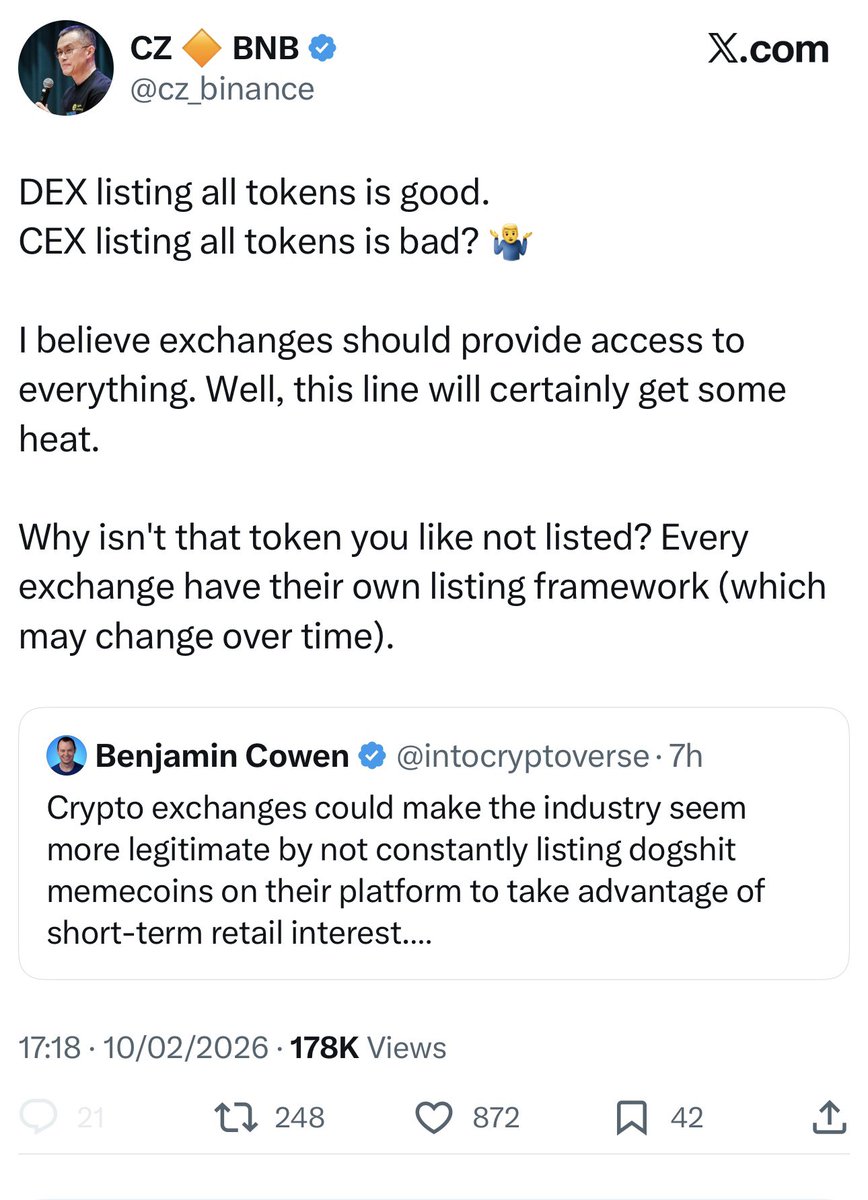
At first glance, this may sound reasonable—but it is actually a false equivalence.
DEXs and CEXs serve fundamentally different roles.
Open, permissionless access belongs to DEXs; responsibility, standards, and accountability belong to CEXs.
A DEX is a pure self-custody tool. The service provider is not an intermediary and does not control users’ funds. Users who interact with DEXs understand—or should understand—that they are using a tool and assuming full responsibility for their actions. As SEC Chair Paul Atkins has stated:
“The right to have self-custody of one’s private property is a foundational American value that should not disappear when one logs onto the internet.”
By contrast, CEXs custody users’ funds, much like banks. As a result, they carry clear obligations around AML, sanctions compliance, fraud prevention, and consumer protection. CEXs are not neutral pipes. They intermediate trust, hold operational responsibility, and therefore have a duty to protect users, not simply list everything that exists.
Conflating DEXs and CEXs is not openness.
It is an attempt to avoid responsibility.
This fundamental distinction reflects a long-standing difference in values between OKX and Binance.