💰Fully on-chain & open-source! Swap tokens like a pro, stack those fees as a liquidity provider, join the AMM vibe, and be an integral part of the Sonic DAO 💪
1/ 🚨 Important Security Announcement 🚨
We identified a security incident affecting Sonic. As a result of this attack, liquidity pool (LP) funds were compromised and stolen.
The security of our users and community is our highest priority, and we are treating this incident with the utmost urgency.
Strategy increased its USD Reserve by $650M and repurchased $109M of $STRC. This increased USD Duration by 143 days to 2.7 yrs and tightened STRC's BTC Credit by 10 bps. As of 8/9/26, we hold ₿840,447 in our BTC Reserve and $4.65B in our USD Reserve. $MSTR https://t.co/rVSI6I6bcx
Sonic User Fund Recovery Portal Is Now Live!
Following the recent Sonic DEX exploit, we have launched a dedicated User Fund Recovery Portal for community members whose liquidity was affected by the incident.
The portal allows eligible users to connect the ICP wallet they used to provide liquidity and verify their positions based on our pre-drain snapshot of Sonic LP holders.
How it works
Connect the wallet you used to provide liquidity on Sonic DEX.
Your wallet principal is matched against our pre-drain LP snapshot.
Your affected liquidity positions will be displayed for verification.
Submit your claim through the portal for review and recovery.
Safe & Read-Only: Connecting your wallet to the portal is read-only. It does not request transaction signatures, approvals, or access to move your funds.
Supported Wallets: Plug • Internet Identity • NFID • OISY • Bitfinity • Stoic • AstroX • MSQ
Important : This recovery portal is exclusively for affected user funds.
Our team will verify submitted claims against the pre-drain on-chain records and process eligible recoveries according to the recovery program.
We understand the importance of getting affected users through this process as smoothly as possible and will continue to provide updates as the recovery program progresses.
Claim Link: https://t.co/WG0JPY5952
The source code for Multidex is here.
My impressions so far.
- Great work building in the open and attracting many-eyes to help find bugs!
- Lots of bugs! 😄 They will be fixed. Dfinity are pros and many-eyes is helpful.
- Some structural concerns, not as easily fixed as bugs. Still, I think most can be solved as we get data.
- Some potentially showstopping concerns, that worry me a lot more. They are:
Showstopper 1: Oracle risk.
Multidex absolutely requires Chainlink to operate safely. Successful oracle manipulation could potentially be catastrophic for the DEX and its liquidity providers, and its current oracle solution is woefully inadequate.
Showstopper 2: Subnet downtime risk.
If the Multidex subnet goes down for 10 minutes during a market crash so liquidations fail to execute, the DEX can wake back up to being stuck with a lot of bad debt, that is taken first from the insurance fund and then from liquidity providers in the the AMM Vault.
But we'll get back to the showstoppers, let's go through things in order.
Bugs first. I will not discuss the actual bugs discovered so far - suffice it to say that running Sol and Opus over the codebase discovers a fair amount, and vigilant devs have found even more - some quite serious issues - despite the code only having been up a few hours.
One might be surprised that @dfinity would release code in this shape. However, anyone who's been on the inside of the sausage factory knows code (especially in vibe coded projects) will go through this phase, it's rarely born pristine. In other words, this may well be interpreted as Dfinity just showing us the code at an earlier stage than they normally would, which I would see as a good thing. I am not worried about the bugs.
Structural concerns are those that remain once we assume the bugs have been fixed. Here the main questions are if the AMM can produce enough profit over a passive basket to compete for liquidity, or if it is possible to exploit systematic architectural weaknesses to extract from the AMM. These things can be hard to predict, ultimately the market will judge if the product works and is attractive.
Then we have the showstoppers: structural concerns that potentially make it impossible for the product to work and be attractive enough. To understand how and where they come in, let's look at the more general structural concerns in better detail.
The central concern for the Multidex, once the bugs are fixed and the machine is executing as expected, will be: can it attract enough traders and liquidity to make enough profit to pay for its gas costs?
The question for traders is generally if they can get better execution for their trades than in competing venues, and the question for liquidity providers is if the APR they can get on their capital is greater than the risk.
All three of these questions require positive answers for the DEX to work.
For traders, the answer depends to some extent on how you trade. The trading fees are very low, which is good. However, for a limit order maker, it soon becomes clear that most market making advantages are captured by the AMM, reducing the value of placing limit orders.
Some commentators have observed that the Multidex is not suitable for High Frequency Trading (HFT) because it is too slow, and that this hurts the targetable market share. After inspecting the source code, we could go even further and conclude that the AMM's "last look" opportunity to move its order ladder before executing an incoming trade outright punishes anyone who tries to take advantage of being fast.
So, the DEX mechanics can be good for humans placing market orders, not so good for HFT bots. For liquidity providers considering placing limit orders, providing their liquidity to the AMM vault seems the better option.
But again, the trading fees are low, so this might drive a fair volume of trade via market orders. That's part of the bet, and is indeed one of the crucial things that remain to be seen when the DEX opens for real.
Then we have the liquidity providers, and the AMM. As mentioned, the AMM has mechanical advantages compared to limit orders, so the AMM is the relevant component to look at for liquidity provision.
It's important to understand a few things about how to evaluate the performance of this AMM. First, your liquidity is split into a basket of USD, BTC, ETH, SOL and ICP. This basket will have a performance on its own.
To be profitable, the AMM output must be compared to the output of just holding the same basket of assets. If the AMM gives 20% return over a period, but just holding the asset basket gave 15% over the same period, the AMM's relevant return compared to the basket was 5%.
Second, the way to judge what APR compared to the basket you need from the AMM (in order for it to be a rational placement of your money) is to judge the risk associated with placing your money there. The higher the risk, the higher the APR you would need.
Coming up with exact reward/risk ratios is complex, but the basic relationship is clear (more risk requires greater reward) and the showstopper is this: it can be the case that the market considers the best APR that the AMM can muster insufficient for the risk it implies.
These numbers are made up, but give an idea. If the risk of losing a substantial portion of your placement is very low, perhaps 1% yearly, then an APR of 10% over the basket might sound fine. But if there is a more pressing risk of catastrophic loss, you may require 50%-100% APR over the basket, or more - something the AMM can't provide, which means that nobody wants to provide liquidity.
Safety against catastrophic risk thus has to be a central concern and selling point of Multidex. Only then will the APR over the basket it can actually provide become attractive.
Unfortunately, Multidex has not one but two substantial and potentially catastrophic risk modes where your liquidity can be lost. In my opinion, both these modes must be addressed for Multidex to become a serious contender for attracting liquidity.
The first risk is oracle manipulation, and if history is any guide, Dfinity risks joining the ranks of every DeFi protocol who thought they didn't need Chainlink for their oracles and got rekt. They all bend the knee, post-catastrophe. In my view, it would be preferrable if Dfinity bent the knee pre-catastrophe instead.
Here's the problem: if you can manipulate the price oracle, you can extract the liquidity from the DEX. There are many ways, the core point is: don't let anyone manipulate your price oracles! You can put in circuit breakers if your oracles behave suspiciously or go offline, but a trading halt while not knowing real prices can in fact be one of the catastrophic failure modes.
If the oracles go down during a crash, liquidation engines can't liquidate uncollateralized positions. The shortage is assumed by the insurance fund, and when that runs out, the LP (the AMM Vault). There are protections in place to limit the Vault's exposure, but in an unfortunate scenario most or all of the provided liquidity could be wiped out.
Multidex has its own, home-grown oracle solution. The setup is not comparable to a Chainlink Decentralized Oracle Network (DON). I have explained in other posts how DON's work, but in short they are dedicated feed providers, specifically incentivized to provide the best data possible at all times, resulting in the solution with the best track record of doing so.
In contrast, Multidex relies on making HTTPS outcalls to a few price sources like Binance and Coinbase - when have they ever gone down in times of high market volatility?
It claims there are 8 sources, but looking more closely reveals that it will continue operations as long as only 2 are available, and furthermore the price sources are far from independent. On top of that, the HTTPS Outcalls have replication turned off (do not pass consensus).
Bottom line: it doesn't matter if more sources are added, if the HTTPS Outcalls are properly replicated, if higher thresholds are used - unless they replicate a full Chainlink DON where dedicated people have as their entire job to make sure you get your doggone price feed no matter what, dagnabbit, you don't have what you need to do oracle driven DeFi. I will happily dive deeper into exactly why in follow up posts, but for this post, I will leave this as my line in the sand.
Without going too far into technical details, the situation can be summarized by saying that the risk of the DEX depends to a *large* extent on the quality of the oracle solution, and the current setup is far from good enough to seem realistic. Best-in-industry and the absolute no-brainer choice is Chainlink, so the time for a call to Sergey is overdue.
This point I consider an absolute showstopper. A DEX that relies so fundamentally on its oracle as Multidex is not possible to take seriously without a best-in-class oracle solution - and the more leverage it supports, the more pronounced the risk becomes. Perps are next? You most definitely need Chainlink.
Without Chainlink, I see Multidex a non-starter. The good news is that all it would take is to ensure Chainlink support and this showstopper is eliminated.
The second showstopper falls in the same category of "what happens if we fail to liquidate longs in a crash, or shorts in a pump?" - but this time we ask ourselves: what if the oracle is working fine but the DEX itself goes down? Not in the sneaky CEX way where all their liquidation engines "luckily" continue to work, but in the "Subnet down" fashion where we genuinely miss our window to liquidate, ending up with bad debt and wiping the insurance fund and Vault.
One important premise: We can't just put a backup of the DEX on another subnet and fall over to that if the subnet with the primary copy of the DEX goes down. Ensuring that something like "chain splits" wouldn't happen would amount to essentially creating a whole new infrastructure layer on top of subnets, to support a "subnet of subnets" (in a different way than what Cloud Engines give us), which would also make the DEX far slower and is just in general not going to happen.
So if the subnet with Multidex goes down during a dramatic crash, it could really be over for it, or at least its liquidity providers. But subnets never go down, right?
They do. I wish I had access to good stats on uptime, if anyone knows a link please feel free to share in the comments. But there are two things that are important to understand:
1) When ICP talks about 100% uptime, that is in the sense that "at least some subnet will always be up and running". The subnet with your app on it may still go down, taking your app with it. Subnets do go down sometimes, in some recorded incidents for hours.
2) We're not (mainly) talking about nodes in a subnet going down. A subnet is resilient to a few nodes going down. The more nodes in the subnet, the more nodes can go down without taking the subnet with it, and the Multidex will as I understand it run on a subnet with lots of nodes (I think 34) so that part is good. The problem is when the whole subnet goes down despite nodes in principle being fine.
How often do subnets go down? Well, weekly, for 1-5 minutes of maintenance. Let's hope it's not at the same time as a market crash, eh?
They also go down from protocol errors, some of the more famous incidents lasting for hours, but anyone who has looked at the logs of an app like Swaprunner that regularly tries to ping 100s of ledgers on different subnets know that it's more rule than exception to see at least a few of those subnets to be down.
I don't know anyone who has recorded reliable statistics on how often subnets experience expected and unexpected outages, but honestly this is one of the most important numbers going into any serious calculation regarding the reward/risk ratio for providing liquidity to the Multidex AMM Vault.
So on this showstopper I am not actually saying "subnet uptime isn't good enough" - the problem is that I don't know if it is. And I would have to be able to know in order to risk any serious capital on the DEX.
If such numbers show the risk is acceptable, then all is good and this showstopper is solved! Maybe @dominic_w even has access to the numbers? Then, if Multidex also starts using Chainlink as its authoritative oracle, both my showstoppers would be solved. This seems solvable!
But both showstoppers do have to be solved, or I think Multidex may end up dead in the water, unable to attract liquidity due to not being able to provide sufficient APR over the basket for its risk. Let's hope we're not doomed to repeat the most classic DeFi mistakes.
Should everyone buy at least 1234 $ICP?
Reacting to @jerrybanfield's video "You'll Regret Not Buying 1234 #ICP"
Jerry breaks down why owning at least 1,234 ICP could look like a life-changing decision years from now and I share my thoughts on his thesis
Dominic is building something powerful called the Mechanicus agent framework 🔥
It’s designed to automatically migrate enterprises onto Open SaaS running on $ICP Cloud Engines.
The end result: tamperproof, AI-native software that’s better than traditional SaaS — and free of the recurring bills.
Tell me I'm wrong — quantum has now become Crypto's Y2K narrative (which enabled scaremongering consultants to make bank in the late 90s).
Hardly a day goes by without some not-very-technical network claiming kudos because it's quantum safe.
As Chief Scientist of DFINITY and someone who has hopefully created some interesting applied cryptography and network designs in the form of the Internet Computer, here's my honest take.
I've spoken to a lot of senior people who don't have an iron in the quantum computing game, and the consensus seems to be that cryptographically-relevant quantum computing (which can break established cryptography) could still be decades away, however...
Let's assume, for the sake of argument, that it is in fact coming in 5 years, which we can theorize AI might help happen — and we should hope it comes quickly, because this kind of quantum computing would be a great thing for humanity, just like AI, and hopefully fusion power.
Even if we assume this, should quantum be what Crypto is focusing on, and should networks be switching over to the latest "quantum-secure" cryptography schemes to impress everyone with how advanced they are, and how unsafe their competitors are?
Sadly, I can tell you, they should not be. Let me explain...
Firstly, the very real problem that Crypto faces, is that AI is getting extremely good at finding holes in open source software code. Running on open source, which reduces the need to trust the developer, is a cornerstone of the Crypto industry (and anyway, AI can find holes in private code too by reverse-engineering binaries, so doing a HyperLiquid doesn't really solve the situation).
Secondly, the vast majority of blockchain projects are really just simple copy/pastes of existing blockchain projects, upon which some unique feature has been grafted or claimed. There isn't really any engineering talent behind them, which creates problems when you have to act quickly in response to real time threats.
What, you may say!!? However, insiders like me understand that the industry mostly departed from first-principles crypto engineering long ago, in search of quick riches from token sales. For that you need a narrative, and since token buyers don't understand much about how these networks actually work, and are not interested in actually verifying technical claims themselves, and don't understand product/market fit, what matters to them is the narrative marketing machinery they can bring to bear (instead of engineers and researchers, they invest in social media bot armies, paid press, partnering with big money that can be used to literally manufacture and establish market prices, and partners who can help spin the narrative flywheel). This is the real situation, and it doesn't put the industry in a good place to address the real emerging threat — AI.
As we've seen from the constant procession of hacks across the industry, the industry's software was already not in a good place before the advent of super smart AI that turbocharge hackers. And AI is getting smarter all the time.
Rather than focusing on quantum, most chains should be focusing on improving the security of their code as quickly as they can, and improving the quality of their engineering. But it gets worse...
Adopting "quantum-safe" cryptography schemes to spin the narrative flywheel is making them even MORE unsafe. Let me explain.
The cryptography schemes that we use today, which are not quantum-safe, have been around for decades. That means we understand the mathematical assumptions that make them work, and armies of researchers have been kicking their tires for a very long time.
The world has a very good understanding of how hard it is to break, e.g., elliptic curve crypto on standard computers, through decades of research. We therefore have high conviction that the parameters used are safe against classical computers.
Unfortunately, we have no such track record for most quantum-safe schemes, apart from the least efficient hash-based signature schemes.
To see this in action, look at what just happened to HAWK, which was under consideration for being made an official US standard (Mythos found the problem): https://t.co/r2Pc1iybXb
We could see improved attacks against other schemes too, like the NIST-standardized Dilithium and Falcon.
Crypto needs to go slow with this, not fast, because cryptographically-relevant quantum computing is not just around the corner (even if new narratives and marketing can be).
We need to go slow and take steps nearer the time, giving all this a chance to shake out.
TLDR; we should not be rushing to implement quantum-safe schemes that could be broken by AI tomorrow, when cryptographically-relevant quantum computers that can break traditional cryptography are years away.
Note that the situation is slightly different for governments and corporations transmitting super secret encrypted communications, because adversaries are recording them so they can decrypt them years from now when cryptographically-relevant quantum computing is real. They need to use stronger ways to encrypt their communications.
However, this is not the situation for Crypto at all. Crypto needs to focus on protecting users from holes in code that AI uncovers. End of.
AI is vastly greater threat, and it's happening NOW.
Stay safe out there.
Tell me I'm wrong — quantum has now become Crypto's Y2K narrative (which enabled scaremongering consultants to make bank in the late 90s).
Hardly a day goes by without some not-very-technical network claiming kudos because it's quantum safe.
As Chief Scientist of DFINITY and someone who has hopefully created some interesting applied cryptography and network designs in the form of the Internet Computer, here's my honest take.
I've spoken to a lot of senior people who don't have an iron in the quantum computing game, and the consensus seems to be that cryptographically-relevant quantum computing (which can break established cryptography) could still be decades away, however...
Let's assume, for the sake of argument, that it is in fact coming in 5 years, which we can theorize AI might help happen — and we should hope it comes quickly, because this kind of quantum computing would be a great thing for humanity, just like AI, and hopefully fusion power.
Even if we assume this, should quantum be what Crypto is focusing on, and should networks be switching over to the latest "quantum-secure" cryptography schemes to impress everyone with how advanced they are, and how unsafe their competitors are?
Sadly, I can tell you, they should not be. Let me explain...
Firstly, the very real problem that Crypto faces, is that AI is getting extremely good at finding holes in open source software code. Running on open source, which reduces the need to trust the developer, is a cornerstone of the Crypto industry (and anyway, AI can find holes in private code too by reverse-engineering binaries, so doing a HyperLiquid doesn't really solve the situation).
Secondly, the vast majority of blockchain projects are really just simple copy/pastes of existing blockchain projects, upon which some unique feature has been grafted or claimed. There isn't really any engineering talent behind them, which creates problems when you have to act quickly in response to real time threats.
What, you may say!!? However, insiders like me understand that the industry mostly departed from first-principles crypto engineering long ago, in search of quick riches from token sales. For that you need a narrative, and since token buyers don't understand much about how these networks actually work, and are not interested in actually verifying technical claims themselves, and don't understand product/market fit, what matters to them is the narrative marketing machinery they can bring to bear (instead of engineers and researchers, they invest in social media bot armies, paid press, partnering with big money that can be used to literally manufacture and establish market prices, and partners who can help spin the narrative flywheel). This is the real situation, and it doesn't put the industry in a good place to address the real emerging threat — AI.
As we've seen from the constant procession of hacks across the industry, the industry's software was already not in a good place before the advent of super smart AI that turbocharge hackers. And AI is getting smarter all the time.
Rather than focusing on quantum, most chains should be focusing on improving the security of their code as quickly as they can, and improving the quality of their engineering. But it gets worse...
Adopting "quantum-safe" cryptography schemes to spin the narrative flywheel is making them even MORE unsafe. Let me explain.
The cryptography schemes that we use today, which are not quantum-safe, have been around for decades. That means we understand the mathematical assumptions that make them work, and armies of researchers have been kicking their tires for a very long time.
The world has a very good understanding of how hard it is to break, e.g., elliptic curve crypto on standard computers, through decades of research. We therefore have high conviction that the parameters used are safe against classical computers.
Unfortunately, we have no such track record for most quantum-safe schemes, apart from the least efficient hash-based signature schemes.
To see this in action, look at what just happened to HAWK, which was under consideration for being made an official US standard (Mythos found the problem): https://t.co/r2Pc1iybXb
We could see improved attacks against other schemes too, like the NIST-standardized Dilithium and Falcon.
Crypto needs to go slow with this, not fast, because cryptographically-relevant quantum computing is not just around the corner (even if new narratives and marketing can be).
We need to go slow and take steps nearer the time, giving all this a chance to shake out.
TLDR; we should not be rushing to implement quantum-safe schemes that could be broken by AI tomorrow, when cryptographically-relevant quantum computers that can break traditional cryptography are years away.
Note that the situation is slightly different for governments and corporations transmitting super secret encrypted communications, because adversaries are recording them so they can decrypt them years from now when cryptographically-relevant quantum computing is real. They need to use stronger ways to encrypt their communications.
However, this is not the situation for Crypto at all. Crypto needs to focus on protecting users from holes in code that AI uncovers. End of.
AI is vastly greater threat, and it's happening NOW.
Stay safe out there.
The past few days have been challenging for the Sonic community.
Today, we're publishing our official incident report, providing a transparent update on the security incident, the progress of our investigation, our commitment to supporting affected users, and the future direction of the Sonic platform.
This is just the beginning of our recovery journey.
https://t.co/RknDtCERHl
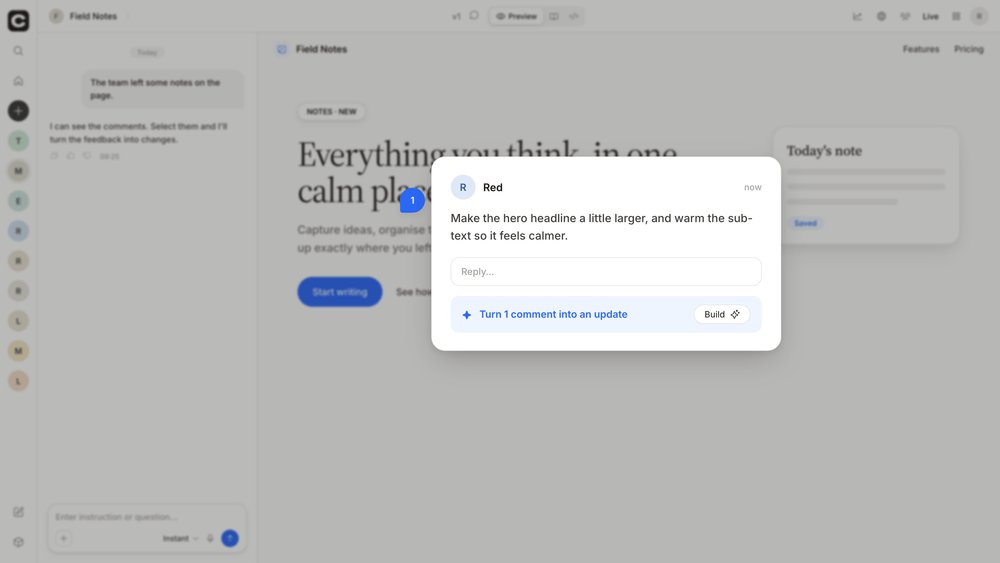
Feedback on an app usually ends up buried in a chat thread nobody acts on.
In Caffeine you leave a comment right on the app, where the change should go. Then you pick the comments you want and hit Build, and it makes the changes for you.
MULTI/DEX enters the Phase II, the next trading competition has started, and its gone open source at: https://t.co/adNLq5zHJF
Now eyeing perps. A 100% onchain advanced exchange like no other in the industry — that no other network could host. Owned by the world. AI native 🔥
In parallel with our investigation, we are taking immediate measures to secure all our infrastructure.
Our focus right now is to minimize any further risk, strengthen the protocol's security, and ensure the safety of the remaining assets while we continue the investigation.
We will continue to provide transparent updates as more information becomes available.
1/ 🚨 Important Security Announcement 🚨
We identified a security incident affecting Sonic. As a result of this attack, liquidity pool (LP) funds were compromised and stolen.
The security of our users and community is our highest priority, and we are treating this incident with the utmost urgency.
3/ 🔍 Investigation Underway
Our team is actively investigating the incident with security experts and relevant partners.
We have already identified promising leads and are pursuing all available avenues, including legal action and coordination with the appropriate authorities and ecosystem partners to trace the stolen funds.
We will continue to keep the community informed as we verify new information. Thank you for your patience and support during this difficult time.
Every app in this demo was built without a single line of human code.
AI is already building production-grade SaaS on the Internet Computer. Tamperproof. Unstoppable. Sovereign.
Dear ICP community, the Internet Computer has now been running strong for 5 years 👏👏👏
Here is a celebratory preview of ICP "cloud engines," the sovereign frontier cloud technology the network shall soon provide from https://t.co/D5Dfj44BmO.
Main points:
— Cloud engines enable anyone to spin up their own sovereign frontier cloud. The technology involves an extraordinary inventive step, in which cloud is created from a mathematically secure network of nodes. The nodes run as part of the Internet Computer network (https://t.co/ptsshOm9nj) but are selected and configured by the cloud engine's owner.
— The frontier cloud provided by engines is strongly focused on enabling AI agents to build and update online applications and services for us. The world is changing fast, and nearly all new online apps and services are already being built with the help of AI, and thus cloud engines target the future of cloud.
— Software hosted on cloud engines is tamperproof, which means that it is immune to infrastructure hacks, because it runs inside a mathematically secure network protocol, rather than on computers directly. This means that AI agents, and those building with them, don't need to have a security team in the loop, or to trust someone else's security team. This is crucial, because in the future, non technical people will demand the freedom to build with full automation — where they just need to issue instructions to AI about what to build, and don't need to worry about anything or anyone else. Of course, apps and services running on engines are also vastly safer from the new breed of hacker being enabled by frontier AI.
(The cloud engines themselves are also "tamperproof." Even if a hacker gains physical access to some portion of a cloud engine's nodes, and can make arbitrary changes, the computations and data of the hosted apps and services cannot be corrupted or interrupted so long as the network's fault bounds aren't exceeded. The recent hack of Vercel, a major cloud platform, which gave hackers access to the apps it hosted, provides additional perspective on the importance of this advantage.)
— Software hosted on cloud engines is guaranteed to run, so long as a sufficient number of the engine's nodes are running. This means that AI can build applications and services without the need to have a human systems admin team constantly tinkering with the underlying platform to keep it running, which is again crucial, because in the future, non technical people will expect the freedom to use AI to build without the support of others.
— New frontier programming language technology, in the form of the Motoko language developed by Caffeine Labs, leverages seminal "orthogonal persistence" technology that unifies program logic and data to deliver further unlocks for AI (Motoko is the first computer language being developed that targets agents that are writing software rather than humans engineers per se). Nowadays, AI can build and update production apps at a prodigious rate, even at the speed of conversation. But it can also make mistakes, and there's a risk that an update it creates might be "lossy" in the sense it causes some transformed data to be lost. Again, in this new world, it's both undesirable and impractical for everyone to have to have a systems admin team on-hand to detect lossy updates and roll them back, but Motoko provides a solution: it can detect new software updates are lossy before they are applied, reducing potentially catastrophic errors by AI to harmless coding retries.
— Software hosted on cloud engines is "serverless" but unlike traditional serverless software, directly it directly incorporates data through "orthogonal persistence." Another key purpose is simplify backend software logic and fuel the modeling power of AI by increasing abstraction (sorry for the technical language!!!). Put simply, this enables AI to produce more sophisticated backends, faster, and at dramatically lower costs, as measured by the number AI API tokens consumed during coding. (Tip for the technical: orthogonal persistence is a new paradigm where "the program is the database," and data lives inside program variables, which is possible because it's as if hosted software runs forever in persistent memory).
— An expanding database of skills at https://t.co/lloVYiGYs8 shall make it possible to develop and directly deploy apps and services to your cloud engines directly from Claude Code, Perplexity, Codex and other AI platforms. Further, your account on https://t.co/IfQrVovF3L can be connected, so that new apps and updates created through conversation automatically appear hosted from your cloud engine. In the future, R&D is going to be very seamless. You converse with AI, and your secure and unstoppable apps or services are created or updated. Cloud engines are designed to directly support this "self-writing cloud" future where we can work hands-free.
— Tech sovereignty is becoming a huge issue worldwide, with governments and corporations seeking to create sovereign tech stacks owing to geopolitical tensions. Increasingly, people are realizing that tech provided by foreign nations can come with hidden backdoors and kills switches, from the base platform, right up through hosted apps and services. ICP technology is open source, and those building on ICP using AI own their own source code. When you have the source code, you can verify that there are no backdoors, and when you own the source code thanks to AI, you can update it at will, freeing you from vendor lock-in. But cloud engines take sovereignty much further...
— You create a cloud engine by selecting the nodes that will be combined. You can choose the class of nodes used, and their number, but more importantly, you can choose who operates the nodes, and where they are located. Almost any configuration is possible, because the Internet Computer scales the security privileges afforded to hosted software within the network according to configuration (software hosted on cloud engines can directly interoperate with software on other engines and traditional subnets, but base restrictions are applied according to security rules). A cloud engine can be created within a region such as Europe, to comply with regs such as GDPR, or completely within a sovereign state like Switzerland or Pakistan. But cloud engines go further still...
— Sovereignty is also about freedom from vendor lock-in. Cloud engines are essentially ICP (Internet Computer Protocol) network configurations, and this means the underlying compute nodes they combine can be swapped out without interrupting their hosted apps and services. This is a big deal. In addition, cloud engines now support nodes that are instances running on Big Tech's clouds, in addition to nodes that are dedicated specialized hardware, as per the Gen I and Gen II nodes that dominate the Internet Computer today. For example, it is possible to have an engine running across different AWS data centers, say, and then reconfigure the engine to run across a mixture of AWS, Google, Azure and Hetzner for even more resilience, without the users of hosted apps and services noticing a thing. That's true freedom.
— Sovereign AI is becoming increasingly important too, and cloud engines allow special "AI nodes" to be added to them, so that hosted software can perform inference on hardware provisioned by the owner from a location the owner has selected. Even though the AI nodes are only accessible within the cloud engine, they can still benefit from the forthcoming Internet Intelligence Gateway (IG), which will make it possible to validate inference performed on key frontier open weights LLMs, even when the inference is performed on completely independent AI clouds. When the results of inference are received, this technology can verify that neither the prompt+context (input) nor the inference result (output) have been modified, and that the results were produced by the precise LLM expected. This ensures that AI clouds don't cheat by running inference on cheaper models than are being paid for, and bad actors aren't modifying the inputs or outputs to surreptitiously insert advertising into results, say, or change facts, or insert malware when code is being generated. What's super cool about this technology is the cost of the verification is scalable. A very valuable additional security can be achieved with only 1-2% of extra cost.
— Scaling apps and services when they hit capacity limits is another thorny problem that cloud engines help the world address. Engines make scaling possible without rewriting or reconfiguring software. The query workload capacity of hosted software can be horizontally scaled simply by adding new nodes to an engine, and nodes can also be added in geographical proximity to demand. Meanwhile, update workload capacity can first be scaled-up by swapping an engine's nodes out for the next class up, and then when no larger class of node is available, horizontally scaled-out by "splitting" the engine into two, which doubles available capacity. (Technical tip: horizontally scaling update capacity by splitting engines requires multi-canister architectures).
— For those who have been following how Caffeine builds apps that can efficiently store large numbers of files, I should mention that apps built on cloud engines will also support the new ICP Blob Storage cloud network (since cloud engines currently have up to about 3 TB of memory, which apps storing large amounts of files can easily exceed). We are also working on allowing blob storage nodes to be added to cloud engines, to enable sovereign mass blob storage within an engine, similarly to how AI nodes can be added currently.
— Lastly, but certainly not least, I should mention that cloud engines are multi-blockchain capable, and ready for digital assets, thanks to the clever math at their core. For example, an e-commerce service built on a cloud engine can securely accept and custody stablecoin payments, or a multi-chain DEX could be hosted. Further, engines can support software autonomy (software orchestrated and controlled by other autonomous software, in a decentralized way) and can themselves be orchestrated by SNS technology, and thus run autonomously too.
Today, though, the focus is on *mainstream* cloud. This year, the cloud industry will generate approximately one trillion dollars in revenue. That number is already huge, but is expected to grow to two trillion dollars by 2030.
After years of continuous development, which have seen more than $500m spent on R&D, the Internet Computer network is now tacking directly toward this mainstream cloud market with cloud engine technology.
In their first version, cloud engines are not meant to be a cloud panacea. For example, currently they are not ideal for working with big data. You should use something like DataBricks for that.
Cloud engines are carefully targeted at enabling AI to produce traditional online applications and services, including SaaS, in a safer and more productive way, which represents a new market segment with tremendous potential. Of course, DFINITY will continue to work relentlessly to push forward ICP's capabilities, so expect further developments.
It's worth mentioning that this cloud segment isn't just about creating new apps and services using AI, it's also about replacing legacy systems and apps built on super expensive SaaS services. Caffeine Labs is working to produce technology (Caffeine Snorkel) that can study an enterprise's legacy systems and app built on SaaS, create replacement systems and apps, and migrate the data, while supporting key stakeholders through the process over email and chat, with full automation. Thus the legacy systems and SaaS markets shall also be addressed by cloud engines.
Zooming out, and reasoning in a more metaphysical way, we believe, as we always have, that there is room for a new kind of cloud created by mathematical networks, that provides seminal advances in the fields of security and resilience, as well as true sovereignty and freedom from lock-in. That this same technology, with the help of additional technologies like orthogonal persistence and Motoko, enables AI to build for us without the need for so much oversight, and to create more backend sophistication while consuming fewer AI API tokens, enables ICP to bring game-changing advances to the world.
Cloud engines will work synergistically with the Intelligence Gateway, which will enable apps and services running on engines to seamlessly leverage AI, wherever that AI is running, while providing verifiability at extremely low cost for open weights frontier models.
We believe that cloud engines represent an inflection point in the storied history of the Internet Computer project, and I'm very proud to be sharing the details with you on the network's fifth birthday 💪
I'll be back with more news soon!!