Just found the most insane free resource for Kubernetes certifications. 🤯
One GitHub repo. Every single CNCF certification. Courses, labs, docs, tips and free practice tests all in one place.
Kubestronaut is the highest Kubernetes title you can earn. It requires passing 5 CNCF certifications.
Here is everything it covers:
→ CKA: Certified Kubernetes Administrator
→ CKAD: Certified Kubernetes Application Developer
→ CKS: Certified Kubernetes Security Specialist
→ KCNA: Kubernetes and Cloud Native Associate
→ KCSA: Kubernetes and Cloud Security Associate
→ CGOA: Certified GitOps Associate
→ CAPA: Certified Argo Project Associate
→ CCA: Cilium Certified Associate
→ KCA: Kyverno Certified Associate
→ OTCA: OpenTelemetry Certified Associate
→ PCA: Prometheus Certified Associate
→ ICA: Istio Certified Associate
→ CNPE: Certified Cloud Native Platform Engineer
→ LFCS: Linux Foundation Certified System Administrator
No paywalls. No fluff. Just the exact resources that help you pass.
Bookmark this. You will thank yourself later.
Repo here:
https://t.co/38wHrXgbjq
SpaceX just acquired Cursor for $60B
> be Cursor
> 4 MIT students start a side project in 2022
> build the AI coding tool developers love
> hit a $10B valuation
> decide copilots aren’t enough
> move into models
> need massive compute to compete with OpenAI, Anthropic & Google
> meanwhile xAI is losing the coding race
> realizes catching up could take years
> skips the line
> buys Cursor for $60B
> Cursor gets compute
> xAI gets the coding leader
> founders become multi-billionaires
More than 1.6K stars on terraform-skill! ❤️
Writing #Terraform with AI, but not always getting great results?
I have just shipped a major update to Terraform Skill v1.7.0, with significantly fewer hallucinations.
It was also fact-checked by seven independent reviewers: five Claude expert personas (Terraform, Security, DevOps, SRE, Cloud), plus GPT Codex and Gemini.
Terraform Skill v1.7.0 is ready for Claude, Cursor, Copilot, Gemini, Codex, and more:
npx skills add https://t.co/S6rOXICIBd
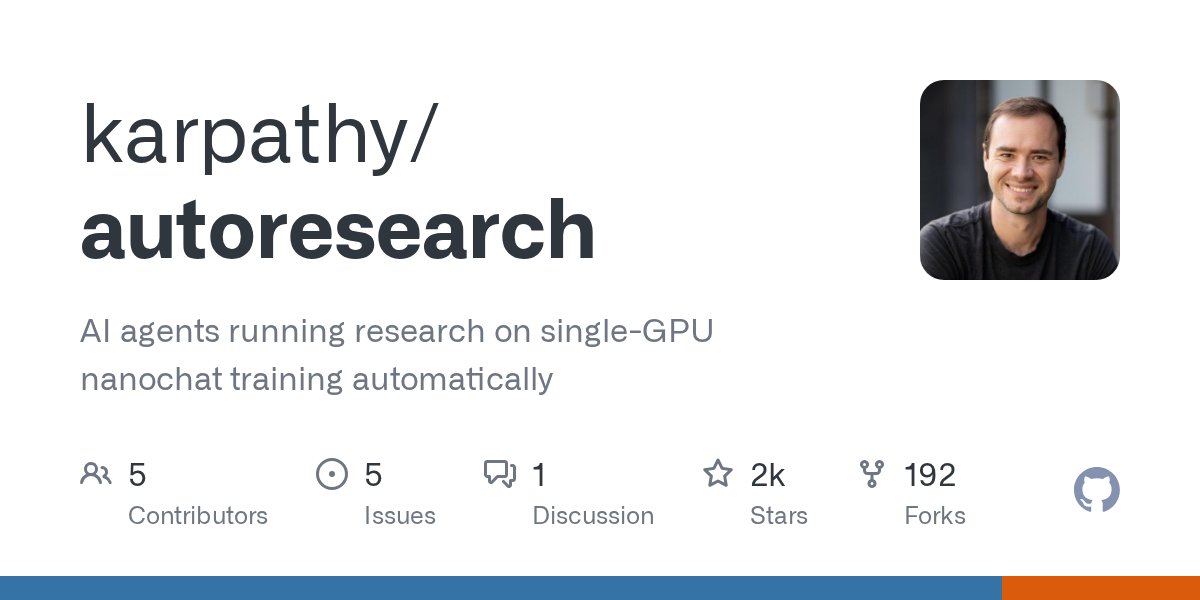
Introducing Autoresearch: AI agents are now automatically researching single-GPU nanochat training! 🤖 This project aims to revolutionize efficiency in AI development. Limited info available, but the concept is huge. #Autoresearch#AIAgents
Case Study: How I Saved $1,000/Month by Automating AWS RDS Migration with Python
A client reached out with a simple question: Can you help us reduce our cloud spending on RDS?
I looked around their RDS setup and found a few RDS instances with over-provisioned storage. This made me want to look around other instances, too.
I wrote a Python script to analyze storage across all databases. Generated an Excel report showing allocated vs used storage.
We found
- One database: 600GB allocated, only 80GB used, another: 400GB allocated, 120GB used.
- Some databases: 500GB+ extra space unused, others: 200GB+ wasted storage
They had allocated "just in case" instead of actual needs
We calculated the overspending of $1,000+ per month across all accounts.
You might say, What's the problem? Just update the storage to the appropriate value.
Actually, AWS doesn't let you reduce RDS storage. You can't shrink it or restore from a snapshot with less space.
The only solution was to create a new RDS with smaller storage and migrate manually.
To do this manually for 100+ RDS instances, it would take 1 month.
So I decided to show off my Python skills and build an elaborate Python automation.
I built the script that
- Pull the details about the RDS instance
- Create a duplicate instance with exact same configuration, with a new allocated storage value.
- Backed up the older instance with pg_dump
- Restore with pg_restore
- Swap instances by renaming
- Stop the old instance
I Dockerized the automation and deployed it as an ECS task, triggered by a Lambda function.
But there was a problem: pg_dump/pg_restore were too slow for 500GB+ databases. And it needed a longer downtime window.
So I ditched pg_dump/pg_restore and switched to pgsync as it allowed a faster, live migration.
Flow: Lambda → ECS → Python script → Migration → Savings
Outcome:
- Reduced storage waste by 60%
- Saved $1,000+ monthly ($12,000+ annually)
- Zero downtime (well, almost zero )
- 5 days for complete development/testing/deployment
- Fully automated
- Showed off this as a reusable asset(companies love this word)
This is why Python is essential for DevOps. You can't solve complex cloud problems with bash scripts or CLI commands. It lets you build intelligent automation that saves real money.
Dear Sanju Samson,
On behalf of the entire nation, we apologize for the endless trolling, the "inconsistent" labels, and every time we doubted your spot in the team. You've carried the pressure with grace and delivered when it mattered most. Forgive us—keep smashing it for India! 🇮🇳🫡
With regret and respect,
Bharat
239,957 stars on GitHub insane
OpenClaw now has more stars than Linux
Linux has powered the internet for decades servers, cloud, Android & supercomputers. Now an AI-driven security project like OpenClaw is gaining massive traction in record time
The penguin built the foundation
The lobster is building the autonomous layer on top
2026 is wild
Khoj is an open‑source, self‑hostable AI “second brain” platform designed for search, conversational AI, research assistance & automation
Link - https://t.co/yZ43vbfKEv
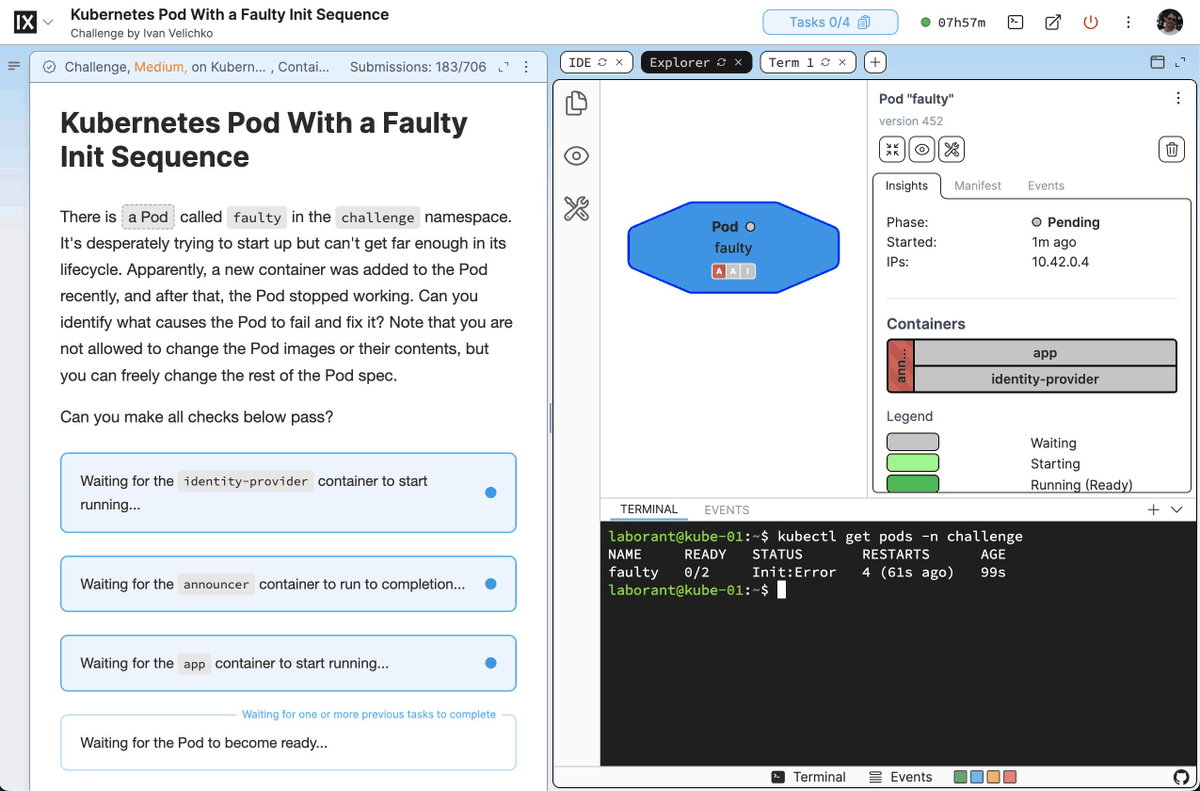
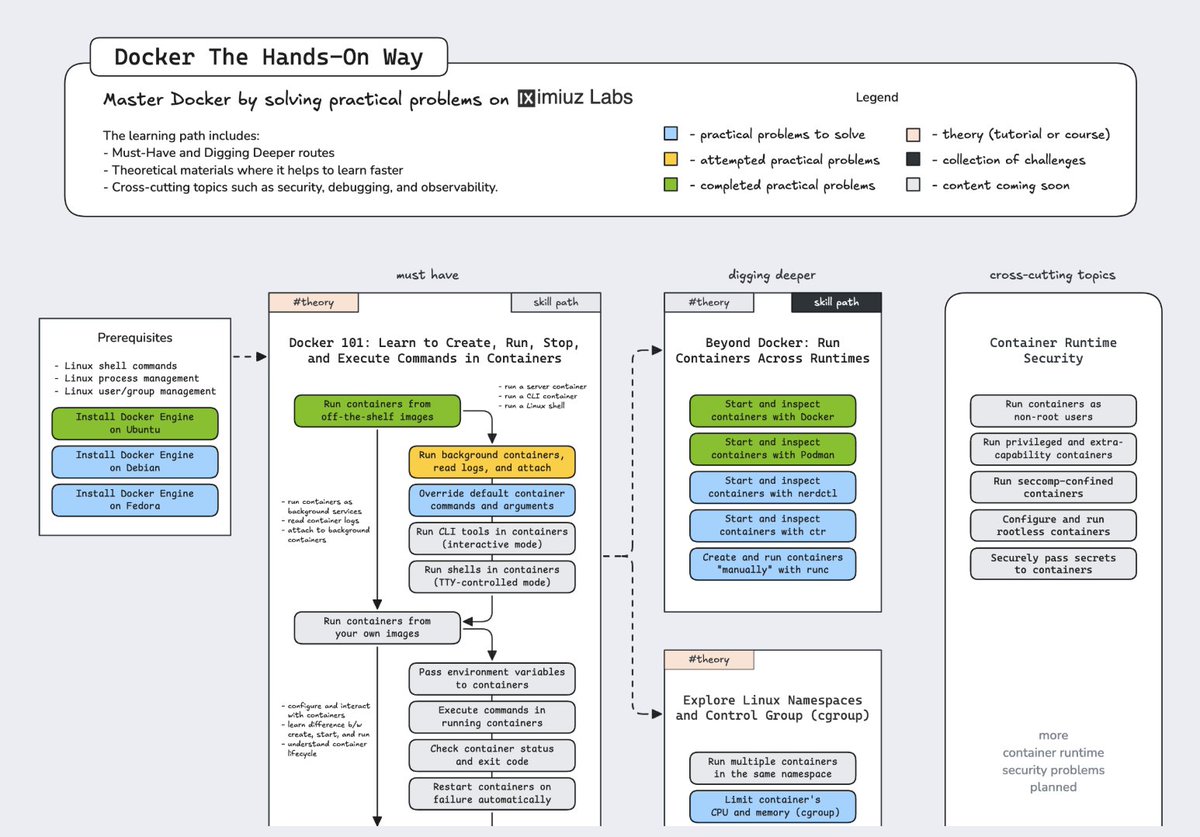
Learn Linux, networking, containers, and Kubernetes by solving hands-on problems 🛠️
A curated collection of over 100 carefully crafted challenges - with interactive checks, clear diagrams, and helpful theoretical references.
Like LeetCode but for DevOps https://t.co/Gm79xSZbfP
𝗕𝘂𝗶𝗹𝗱 𝗧𝗵𝗶𝘀 𝗘𝗻𝗱-𝘁𝗼-𝗘𝗻𝗱 𝗔𝗪𝗦 𝗗𝗲𝘃𝗢𝗽𝘀 𝗣𝗿𝗼𝗷𝗲𝗰𝘁 (𝗥𝗲𝗮𝗹 𝗣𝗿𝗼𝗱𝘂𝗰𝘁𝗶𝗼𝗻 𝗘𝘅𝗽𝗼𝘀𝘂𝗿𝗲)
You will learn more by building one hands-on project from scratch than by watching 10 YouTube tutorials.
Project Description: An OpenTelemetry-based E-commerce microservices app deployed on AWS with full CI/CD + GitOps.
🟢 Project Architecture (Industry Style)
User
→ Domain (GoDaddy)
→ Route53
→ Load Balancer
→ EKS
→ Kubernetes Services
→ 20+ Microservices
If you build this once interviews become easy.
🟢 Step 1: Infrastructure as Code (Terraform)
Use Terraform to provision everything.
What you will implement:
✅ VPC (public + private subnets)
✅ Internet Gateway
✅ Route Tables
✅ NAT Gateway
✅ Security Groups
✅ EKS Cluster using Amazon EKS
✅ S3 backend for remote state
✅ DynamoDB for state locking
👉 What you will learn:
- Real VPC networking design
- How production EKS clusters are created
- Remote state management best practices
- Terraform backend configuration
- State locking (why it matters in teams)
- This alone gives you real DevOps exposure.
🟢 Step 2: CI/CD with GitHub Actions
Use GitHub Actions
Pipeline Stages You Should Create:
🔹 Build
- Checkout code
- Setup Go
- Install dependencies
- Run unit tests
🔹 Code Quality
- Integrate golangci-lint
- Perform static analysis
🔹 Docker
- Build images
- Push to Docker Hub
🔹 Update Kubernetes Manifests
- Auto-update image tag
- Commit back to repo
👉 What you will learn:
- Automated CI pipelines
- Docker image tagging strategy
- Version control in pipelines
- Secure secret handling
- Production-grade workflow design
This is exactly what companies expect.
🟢 Step 3: Containerization
Use Docker
What you will implement:
- Containerize 20+ microservices
- Multi-stage Docker builds
- Lightweight production images
- docker-compose for local testing
👉 What you will learn:
- Microservice packaging
- Build optimization
- Local vs production environment differences
- Dependency management
🟢 Step 4: Kubernetes on AWS
Deploy everything on Kubernetes using Amazon EKS
What you will implement:
✅ Deployments
✅ Services (ClusterIP, LoadBalancer)
✅ Ingress
✅ Service Accounts (IAM roles for service accounts – IRSA)
✅ Resource limits & requests
👉 What you will learn:
- Pod scheduling
- Service-to-service communication
- Ingress + ALB integration
- Secure workload identity
- Real cluster debugging
- This is real production experience.
🟢 Step 5: GitOps with ArgoCD
Use Argo CD
What you will implement:
- Connect GitHub repo to EKS
- Enable auto-sync
- Maintain desired state = actual state
👉 What you will learn:
- GitOps workflow
- Declarative deployments
- Drift detection
- Production-grade release strategy
- Modern companies are moving toward GitOps.
🟢Step 6: Domain + Traffic Routing
Use:
- Amazon Route 53
- GoDaddy domain
Flow:
User
→ Route53
→ AWS Load Balancer
→ Ingress
→ Service
→ Pod
👉 What you will learn:
- DNS configuration
- Hosted zones
- A records / CNAME
- Real internet traffic routing
Now your project becomes public and production-like.
🎯Final Outcome
If you build this project fully: You will understand:
✔ Networking
✔ CI/CD
✔ GitOps
✔ Kubernetes
✔ IAM & Security
✔ Terraform Backend
✔ Production troubleshooting
✔ Real DevOps workflow
I have documented everything in my GitHub repository.
You can follow it step by step, and if you get stuck, feel free to take help from ChatGPT but make sure you truly understand the concepts.
𝗠𝗮𝗶𝗻 𝗣𝗿𝗼𝗷𝗲𝗰𝘁 𝗥𝗲𝗽𝗼: https://t.co/HoGVLDDXlN
𝗧𝗲𝗿𝗿𝗮𝗳𝗼𝗿𝗺 𝗥𝗲𝗽𝗼: https://t.co/VffpUPOyUn
If you found this helpful, feel free to like, retweet, and share it with aspiring DevOps engineers.
Signing off
@devops_nk 🫡
An attacker gains access to a read-only S3 bucket containing your Terraform State file.
The state file is encrypted at rest.
However, the attacker opens the JSON file and finds:
`"password": "super-secret-db-password"`
in plain text.
Why does Terraform store sensitive output values in plain text in the state file even if they are marked as `sensitive = true` in the code?
Senior DevOps Interview:
What happens when you type google[.]com into your browser and hit Enter?
Focus specifically on the TCP/IP stack.
1. ARP request (to find the gateway MAC).
2. DNS (UDP).
3. TCP 3-Way Handshake (SYN, SYN-ACK, ACK).
4. TLS Handshake.
5. HTTP GET.
Which of these steps is skipped if you visit the site a second time (Keep-Alive)?
Redis in 60 Second 👇
What is Redis ?
Redis = REmote DIctionary Server
An in-memory data store used mainly as:
- Cache
- Session store
- Message broker
- Real-time data store
It’s insanely fast because data lives in RAM, not on disk.
🟢 Why Redis exists
Typical flow without Redis:
User → Application → Database
- Database is slow
- High traffic = high DB load
- Latency increases
- DB becomes a bottleneck
- This doesn’t scale.
🟢 Redis comes into the picture
- Redis sits between Application and Database
New flow:
User → Application → Redis → Database
- Redis acts as a fast access layer
🟢 Complete Redis request flow
1️⃣ User sends a request
2️⃣ Application checks Redis first
3️⃣ If data exists in Redis → Cache HIT
Data returned in milliseconds
4️⃣ If data not found → Cache MISS
App fetches data from Database
Stores it in Redis with TTL
- Returns response to user
- This is called Cache Aside Pattern
🟢 Where Redis is used in real systems?
- Login sessions
- API response caching
- Rate limiting
- Leaderboards
- Real-time analytics
- Background jobs / queues
- Almost every high-traffic app uses Redis.
🟢 Redis in DevOps & System Design :
As a DevOps, Redis knowledge is used in:
- Application performance tuning
- Scaling backend systems
- Reducing DB cost
- Designing high-availability systems
Thanks for reading .
Happy Learning !
How to optimize Docker builds
This is a popular interview question, and it came up today for me.
- Use a small base image like alpine or distroless.
- Add a .dockerignore to exclude unnecessary files.
- Order layers wisely. Put least-changing steps first.
- Combine RUN commands to reduce layers.
- Leverage Docker layer cache by copying dependencies first.
- Use multi-stage builds to keep runtime images minimal.
- Pin base image versions instead of latest.
- Install only required packages, remove build tools after use.
- Clean package manager cache in the same RUN step.
- Prefer COPY over ADD unless ADD is needed.
- Avoid copying the entire project early in the Dockerfile.
- Use BuildKit for parallel and cached builds.
- Run containers as a non-root user where possible.
I needed one Postgres database for my dev environment.
So I got one t3.medium RDS single instance. Simple. Done.
Then I thought about disaster recovery. What if I accidentally deleted data?
I configured automated snapshots. AWS takes backups every day. Keeps them for 7 https://t.co/AWUkdDSfZt I can restore my dev data if something goes wrong.
A few weeks later, someone asked me to deploy the app in production.
Just 100 users. Small app. But production needs to be reliable.
I added Multi-AZ standby. Now I have primary in one zone, standby in another. If primary fails, standby takes over automatically in 60 seconds. No manual intervention. Cost doubled but production can't go down like dev.
The app grew. More users signed up. Traffic increased.
Started seeing database throttles. Queries getting slow. CPU hitting 80%.
The problem? Too many read queries hitting the primary.
I added one read replica. Routed all analytics and reporting queries to the replica. Primary freed up for normal app traffic. Performance improved immediately.
A few months later, we hit 10K users.
One read replica wasn't enough. Added two more replicas.
Distributed read traffic across three replicas. Primary only handles writes now. The database can scale with traffic without upgrading the instance size.
Then the business went global. Users in US, Europe, and Asia.
European users complained about slow performance. Makes sense. Database is in us-east-1.
Evaluated options. Aurora Global Database was the answer.
Primary cluster in US. Secondary cluster in Europe. Replication under 1 second.
European users read from eu-west-1. Fast for them. US users read from us-east-1. Fast for everyone.
All writes still go to primary. But reads are local. Latency dropped from 200ms to 20ms for Europe.
Today, the setup looks like this:
Dev environment - Single instance with automated snapshots.
Production - Aurora Global. Primary in US. Secondary in Europe. Three read replicas per region.
Multi-AZ enabled on primary for high availability.
Cost went from $50/month for dev to $5K/month for production.
But we're serving 100K users globally with 99.99% uptime.
Worth every penny.
Here's what I learned:
Start simple. Don't over-engineer day one.
Single instance is fine for dev. Multi-AZ when you go to production. Read replicas when you actually see read scaling issues.
Aurora when you need extreme scale or global distribution.
Each configuration solves a specific problem. Match the solution to your actual problem. Not the problem you think you might have someday.
Monitor your metrics. CloudWatch tells you when you need to scale. CPU high? Add replicas. Need HA? Add Multi-AZ. Going global? Consider Aurora.
This story is hypothetical. But the pattern is real.
This is how most applications evolve their database architecture.
Don't build for 100K users when you have 100. But don't wait until 3 AM production outage to add high availability either.
Scale when you need it. Not before. Not after.
Developers, where do you host your websites?
•Vercel
•Netlify
•Heroku
•Pxxl
•AWS (Amazon Web Services)
•Google Cloud Platform
•Microsoft Azure
•DigitalOcean
•Render
•Firebase
•GitHub Pages
•Railway
•Cloudflare Pages
•Glitch
Which one do you think is the best hosting platform and why?