Using complexity science, data science and AI to investigate fundamental issues in different areas: language, music, sustainability, information, creativity.
🆕
How can design & #AI work together to generate ambiences that feel natural, suggestive, and open-ended?
Introducing #Funiki (雰囲気) our new project exploring how light & sound can turn everyday spaces into dynamic ambiences.
📽️
https://t.co/NskMsRXwq4
🙏Thanks to all guests of 2026 Open House of Sony Computer Science Laboratories
From engaging discussions & demos to panel discussions and concerts, it was an insightful event full of research exchange, fresh perspectives, and inspiring encounters!
👇
https://t.co/2Is3XD1LTy
📽️ Join us tomorrow for our next #Etincelle with #KarlFriston
💡Tomorrow, Oct. 7 on our YT channel, we are hosting a seminar by Karl Friston on "The physics of #sentience"
⚡ Don’t miss this talk, Oct. 7 at 11am: https://t.co/vdbxVhOZzY
#research#seminar#physics#sonycsl
We just made Cortex public! 🚀
Cortex is a lightweight, open-source framework that turns AI coding agents into a persistent, coordinated workforce with continuity across chat sessions. It practically yields an unlimited context window, maintaining structured logs, cheat sheets and shortcuts.
It’s built for researchers and engineers whose work spans multiple projects, machines, and long-running experiments—and who want agent activity to remain understandable and auditable.
It gives agents durable, structured, human-readable project memory, shared task tracking, remote-server coordination, experiment bookkeeping, monitoring, specialized roles, and carefully scoped permissions. One conductor remains your main interface, while node agents and specialized workers can inspect systems, run experiments, maintain projects, back up configured work, safely package approved changes into commits, and preserve useful context across sessions.
Cortex is practical: plain files, Git, SSH, and the provider CLIs you already use.
We’re excited to share it publicly and curious to see what you build with it!
https://t.co/NwEybWPcFb
#AgenticFramework #AIAgents #CodingAgents #ResearchEngineering #DeveloperTools, @SonyCSLParis@SonyCSLMusic@SonyCSL
ai-phi 4.0 is here!
For our inaugural session, philosopher @levin_francois joins us for the first Critical Perspectives on AI live podcast:
What if human intelligence isn’t the model?
🗓 8 Oct · 10:30
📍@SonyCSLParis
🇫🇷 In French
https://t.co/zPQJnOrWEj
📆We are organizing "Convergence Workshop" on modular #openhardware for science on 11/09/2026
The event will bring together contributors from Science #Jubilee, #OpenUC2 and #EnderScope
Register here https://t.co/7QpiVKDarf
🕒Full planning https://t.co/7e8kVU85BO
See you there
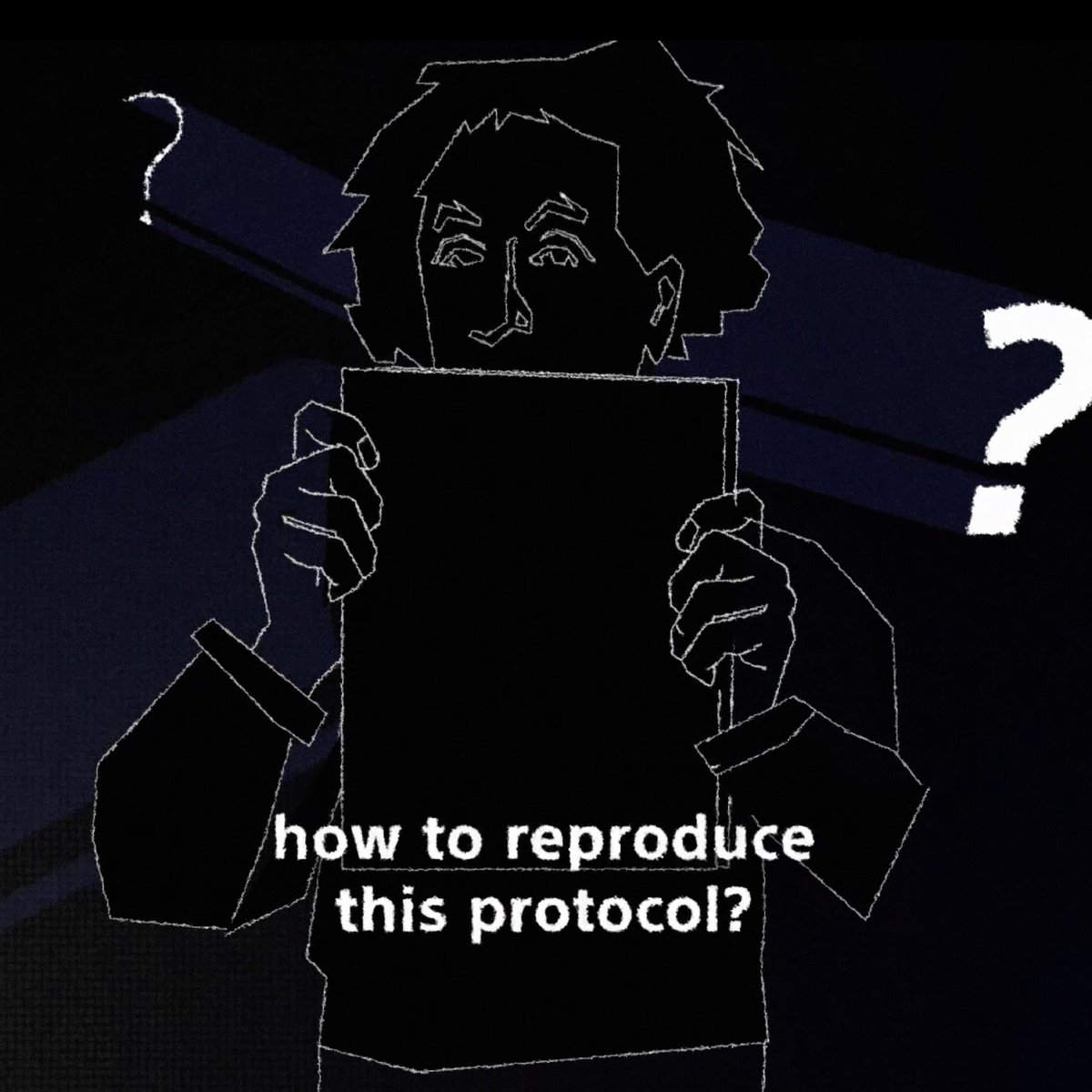
🆕 based on #AliénorLahlou's paper, we developed a practical resource to help microscopy users quantify illumination at the sample
🥽 Protocol: https://t.co/XqKv37Bh7d
📽️ Video: https://t.co/RGDYD71wv4
🗞️ Paper: https://t.co/CzQCxoI4uA
⬇️
#Quantitativefluorescence microscopy requires knowing how much light reaches the sample.
In practice, this is not always straightforward.
This resource is intended for #microscopy users, imaging facilities, and #researchers interested in quantitative illumination calibration.
🆕 Our last month #SensitiveMachines workshop brought together researchers and students from #IFT and our lab for a playful, hands-on #workshop centered on code, hardware, materials, and hybrid physical-digital experiments
Here is our recap video!
#research#multidisciplinary
🆕#Tomonami for KKAA
In this new collaboration with #KengoKuma and Associates, Alexis André @MacTuitui explores how Japanese onomatopoeia describing texture, flow, and spatial qualities can become creative parameters within #Tomonami
https://t.co/K3ANjE4RDw
#creativeengineering
What should an AI and philosophy community become after a year of shared
questions?
Join ai-phi for our End-of-Year Party on Thu 4 June, 7 PM at @SonyCSLParis
Details:
https://t.co/Bp9yPufryk
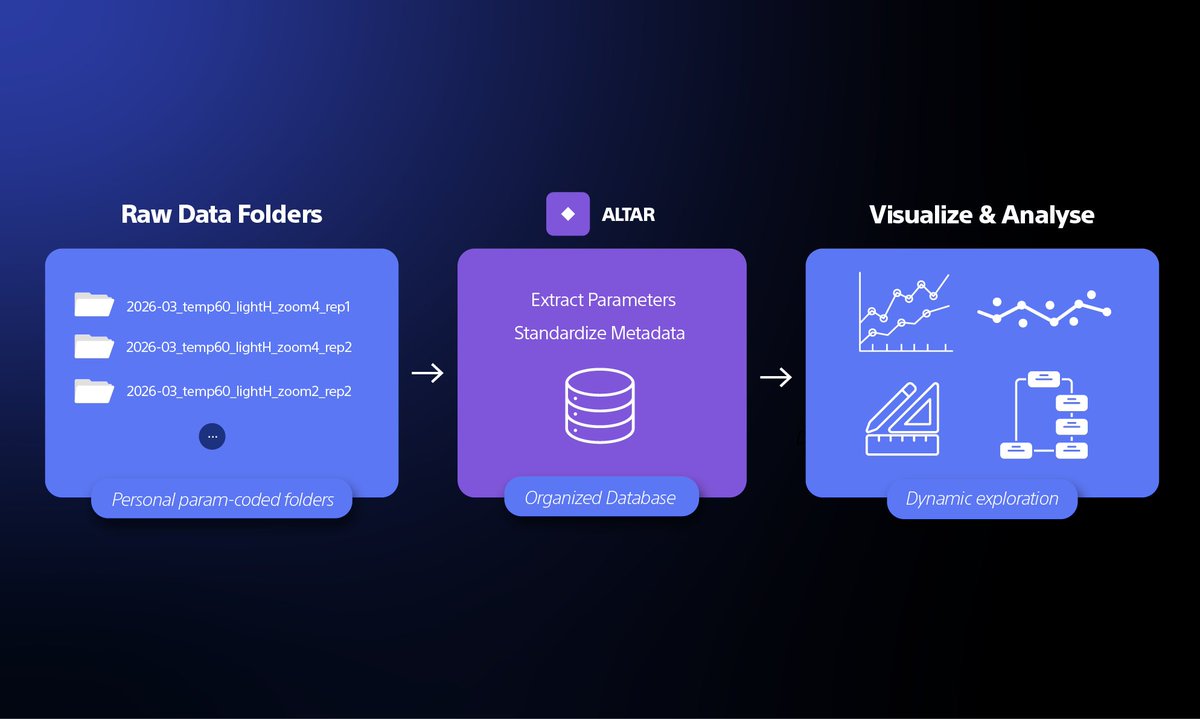
🆕#AltarTools
“I’ll organise my data later.”
After facing this too many times, we built #Altar a flexible way to manage research data from the very beginning of a project, while letting the structure evolve as the research progresses
ALTAR available here: https://t.co/A2mA0n90CO
The same thing can matter… or not at all.
It depends on the goal.
AI-Phi Session #35:
🗓️ April 16 · 18:30 CET
📍@SonyCSLParis
🎙️ Ali Shiravand (ENS)
🔗 https://t.co/7szB0Ftrz5
🆕 Artist @VITALICOFFICIAL collaborated with researcher #EmmanuelDeruty to study pitch perception in contemporary electronic music
From ambiguous pitch to tuning beyond 12-TET, a conversation between research & studio practice now online on our YouTube!
https://t.co/c5K0zGiSjF
Our latests press release is out! In it, we cover the recent work of our Paris-based partners on how “Single-cell imaging and machine learning reveal hidden coordination in algae’s response to light stress”.
https://t.co/vheScaUNzL
Interplay between high-energy quenching and state transitions in Chlamydomonas reinhardtii: a single-cell approach
Lahlou et al.
https://t.co/XtOFuihXqg