Recep Tayyip Erdoğan Hospital in Mogadishu, formerly Digfer Hospital, provides medical services to approximately 1,600 patients daily, according to hospital officials.
The 377-bed capacity serves not only the Somali population but also the wider region. In this regard, it is an invaluable asset for the entire area.
Since its reconstruction and reopening in 2014, it has provided comprehensive healthcare services.
Outpatient clinics, inpatient wards, operating rooms, delivery rooms, an intensive care unit, MRI, tomography, stone crushing, dialysis, bone densitometry, a physical therapy unit, and a burn unit are actively operating in the hospital.
What gives me the greatest hope is witnessing a new generation of Somali engineers eager to learn from our history and reclaim the spirit of scientific and technological achievement. In the 1970s, I was privileged to be among the Somali engineers involved in the development of missile technology and military capabilities. Decades later, I see an opportunity to pass those experiences and lessons to a new generation.
This lecture, organized by Somali engineering students in Türkiye, will be held next Thursday at 20:00. I hope it will not simply be a lecture about the past, but a moment to inspire young Somali engineers to believe in themselves, learn from our history, and lay the foundations for a new era of Somali science, engineering, and technological innovation.
The true power of a state begins with legitimacy, when citizens believe the state belongs to them and serves their common interests. Without legitimacy, disagreements widen between government and opposition, political divisions deepen, and armed opposition can emerge, creating openings for external actors to intervene. A strong state is not one that controls people through force, but one that earns their trust, protects their dignity, and unites them around a shared national purpose. As Somalis, can we must learn honestly from our history, recognize our mistakes, and have the courage not to repeat them.
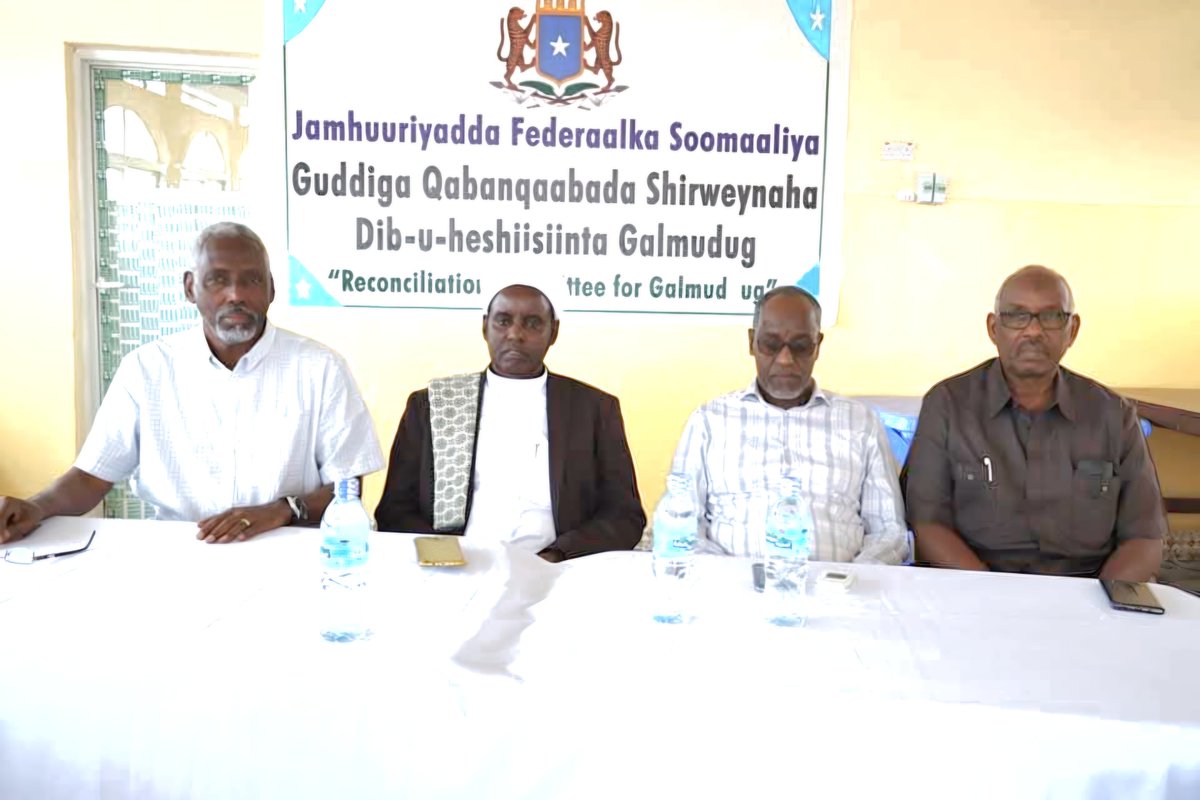
A precious and deeply cherished memory from the 2019 Galmudug reconciliation process, during which I had the honor of serving as chairman of the reconciliation committee. This photograph brings back a remarkable chapter in our journey, when people from different sides came together in the hope of building peace and reconciliation. In the picture, you can see Sheikh Shakir, representing Ahlus-Sunna Wal-Jamaaca; Abdi Mohamed Sabriye, the Minister of Interior; and my deputy, Abdi Waayeel. Looking at this image today, I am reminded of the dedication, challenges, and sacrifices that shaped those efforts, and of the enduring hope we carried for a peaceful and united Galmudug. I sincerely hope that the spirit of peace and reconciliation we worked so hard to nurture will continue, grow stronger, and inspire future generations to choose dialogue, unity, and coexistence over division and conflict.
I Am Coming Home to Mogadishu in September 2026 with Somalia First Agenda
My heart is heavy, yet burning with resolve.
After deep soul-searching, I will meet every opposition force - Somali Future Council, Nabad iyo Nolol, Xaqsoor–Haybad Qaran, and Somali Unity Council.
They must embrace one sacred truth - Somalia First. Accountability. Transparency. Good governance. Rule of law. Zero tolerance for corruption. No compromises. No excuses.
In September 2026 I return to Mogadishu. There I will place this unbreakable agenda before them. Only then will I choose whom to stand with.
I am done with leaders who promise but never delivered free education, free healthcare, justice, and the end of IDP camps - then abandon our people.
Done watching our brothers and sisters live without dignity, without homes, without hope.
I carry four years of hard lessons from the House of the People. I will use them to guide true leaders who put the Somali citizen first - above power, above greed, above empty words.
In Mogadishu I will sit with our youth, our mothers, our elders, our IDPs, the marginalized, civil society, and our religious leaders.
I will listen. I will carry their pain. I will fight for their dignity. This is not politics.
This is a vow to restore the honor of every Somali soul.
Somalia First.
Always.
Sadly, it pains me to see and hear the songs, slogans, language, and political behavior of the military-rule era returning so visibly on social media, especially among many of our political elites. It makes me deeply wonder: are we slowly falling back into the same political culture that once brought our nation to such a painful crossroads? Have we begun to romanticize an era whose political excesses and authoritarian culture left such a deep wound in our collective memory? If our elites are nostalgic for that past, then we must ask ourselves a painful question: have we learned anything from our history, or are we preparing to repeat it?
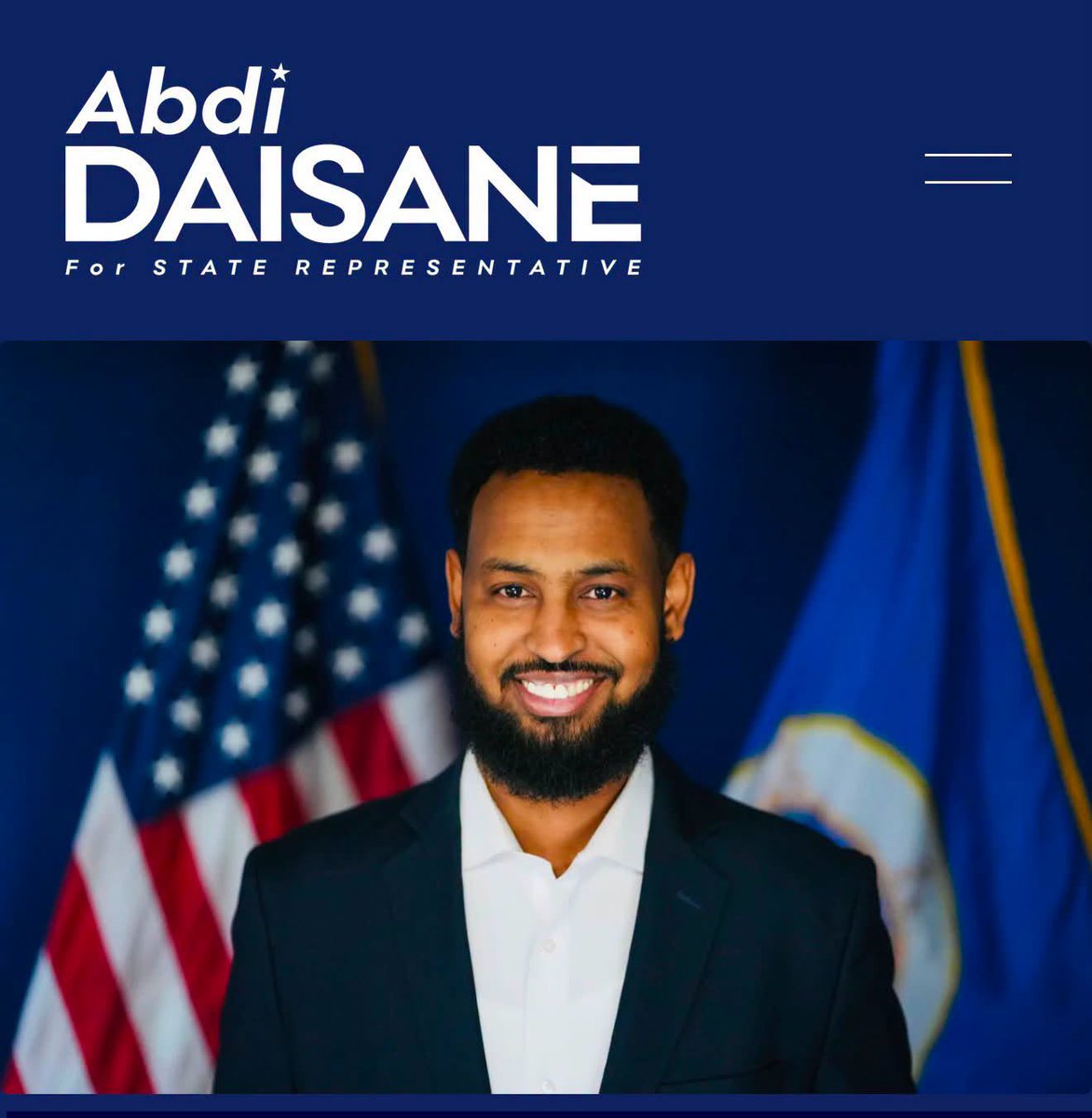
🚨 BREAKING: ABDI DAISANE WINS! 🇺🇸🇸🇴
Abdi Daisane has won the Democratic primary for Minnesota House District 14A! 🗳️
A historic night in St. Cloud and another powerful moment for Somali-American civic leadership in Minnesota.
Congratulations, Abdi Daisane! 🎉
The journey continues to November. 🇺🇸 Abdi H. Daisane @daisaneformn
Somalia was never truly stateless. In the medieval period, two powerful state, the Adal Sultanate and the Ajuran Sultanate, played a major role in protecting Somali territories from foreign intrusion and maintaining political order.
Following their decline in the 17th century, a number of smaller sultanates emerged across Somalia. Among them was the Gasaregude Sultanate, whose headquarters was in the historic town of Luuq.
This Thursday, we will explore the history of the Gasaregude Sultanate, its origins, leadership, political system, and historical legacy. You are welcome!
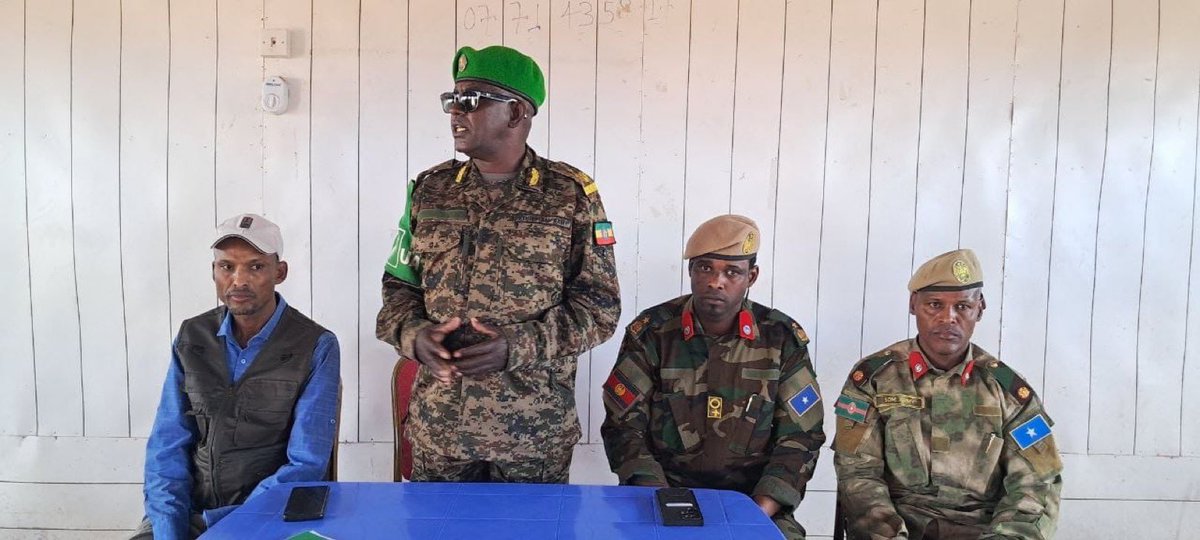
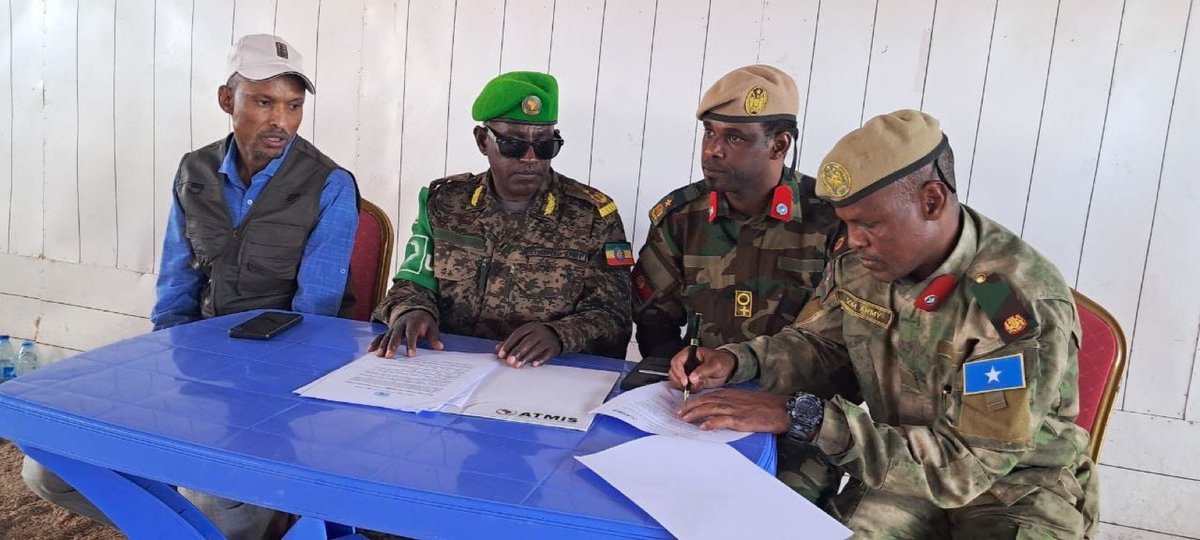
#Somalia: AUSSOM #Ethiopian contingent transferred the technical management of Buurhakaba Forward Operating Base (FOB) to the 60th Division of the Somali National Armed Forces.
The base has been manned by Ethiopian forces since 2014.
“This handover marks another important step in strengthening Somali-led security and advancing the progressive transfer of security responsibilities to the Somali Security Forces,” AUSSOM said.
Somalia’s deepest crisis is not merely political; it is the painful gap between the vision of a modern state and the mindset of its political elites. A mismanaged election is not democracy, clans cannot replace the rights of citizens, and national security and sovereignty cannot be outsourced to foreigners. Worse, a majoritarian system risks deepening our instability when our political culture has long been rooted in consultation, negotiation, and consensus. Until we reconcile our political system with our society, we will continue to reproduce the crisis we desperately seek to escape.
Over the decades, we have gradually normalized a way of life that should never have become normal. In many ways, we exemplify what is commonly described as the “boiling frog” phenomenon, a metaphor for how people can gradually adapt to deteriorating conditions, accepting each new level of dysfunction until what was once considered unacceptable becomes ordinary. We have normalized killing one another, siphoning off public resources, corruption on an extraordinary scale, rigging elections, failing to reach political agreements, and relying on foreign security guarantees and external assistance to sustain our state. As insecurity, political instability, institutional weakness, and social decline developed incrementally, we adapted to them rather than confronting their underlying causes. Consequently, what should be treated as national crises has become part of everyday life. This prolonged adaptation to abnormal conditions has weakened our sense of urgency, diminished our ability to recognize the depth of our problems, and, perhaps most dangerously, eroded our capacity to imagine and pursue a fundamentally better future.
One of the enduring puzzles of Somalia's prolonged state-building crisis is the failure to recognize political culture as the principal obstacle to building a stable state. Much of the debate has focused on constitutional design, federalism, clan dynamics, and external intervention, while paying insufficient attention to the norms and practices that shape political behavior.
However, the defining characteristic of contemporary Somali politics is its transactional nature. Political alliances, decisions, and institutions are largely driven by short-term bargaining over power, offices, and resources rather than by ideology, constitutional principles, or national interests. As a result, political loyalties are fluid, agreements are often temporary, and institutions remain weak. This culture of transactional politics has become a major obstacle to sustainable state-building, democratic governance, and long-term political stability in Somalia.
Yesterday, I paid an official visit to Somali National University at the invitation of its President, Dr. Mohamed Mohamud Ahmed. He was accompanied by the Deputy President, Dr. Abdullahi Makawi, the Dean of the Faculty of Education, Dr. Mohamed Ibrahim Abdi, and the Director of the Library, Ustad Abdirizak M. Adan. I would like to express my sincere gratitude for the warm welcome and generous hospitality extended to me by the leadership of the university.
The visit was particularly meaningful to me because of my long-standing relationship with the university. After completing my engineering courses at the Higher Air Defence Academy in Odessa in 1977, I returned to Somalia due to the deterioration of Somali–Soviet relations. Later, I joined the Faculty of Engineering at Somali National University, where I wrote my thesis and served as a part-time lecturer from 1982 to 1984.
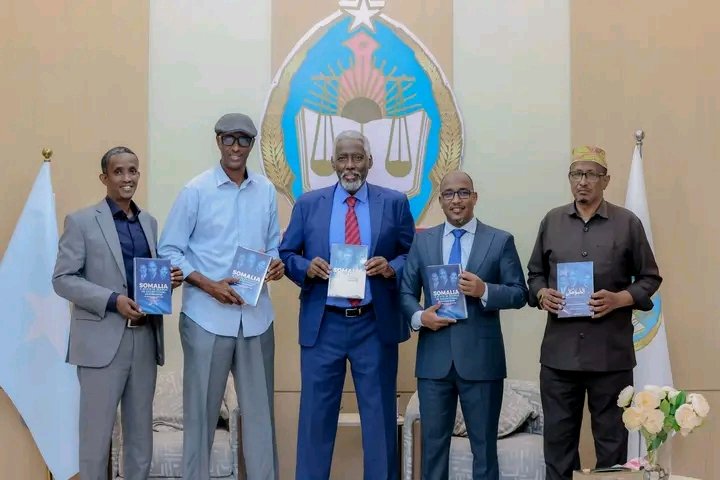
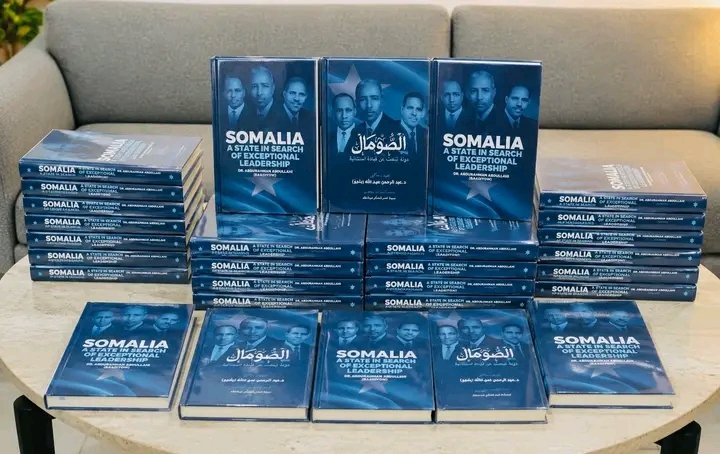
During this visit, I presented the university with 20 copies of my latest book, Somalia: A State in Search of Exceptional Leadership, in both English and Arabic. I hope these books will serve as valuable resources for lecturers and students, encouraging academic discussion and contributing to a deeper understanding of Somalia’s leadership challenges.
The Ministry of Commerce and the Ministry of Agriculture have a responsibility to protect our local production. Allowing the large-scale import of bananas, milk, vegetables, fruits, and other agricultural commodities undermines domestic producers, discourages local investment, and weakens the national economy. Protecting and promoting local production is essential for strengthening food security, creating jobs, and supporting sustainable economic development.
A person named Sadak recently sent me a message highlighting the challenges facing our agricultural sector. His concerns underscore the urgent need to adopt policies that support local farmers and strengthen domestic production.
Supermarkets also have an important role to play. They should prioritize locally produced goods, invest in local producers, and create reliable market opportunities for Somali farmers and manufacturers. Supporting local production benefits consumers, producers, and the country's long-term economic growth.
The six main blessings that Allah bestowed on us, which can be used to rebuild our state, are:
1. Freedom and dignity – We are a free people. Freedom and honor are priceless gifts from Allah that must be safeguarded.
2. Strong social bonds – Our families, clans, and kinship networks provide solidarity, mutual support, and resilience in times of hardship.
3. A nation with a unified language and religion – We share a common faith and a common tongue, which strengthen our identity, unity, and sense of purpose.
4. Resilience and entrepreneurship – We possess an extraordinary ability to adapt, survive, innovate, and build businesses under the most difficult circumstances.
5. A blessed land – Allah has endowed us with a favorable climate, abundant sunshine, fertile resources, and fresh natural food.
6. A strategic location – Our position at the crossroads of important trade routes gives us great potential for commerce, connectivity, and influence.
Our greatest challenge is not a lack of blessings, but how we use them. If we combine these divine gifts with faith, the rule of law, knowledge, and righteous leadership, Somalia has every reason to become a peaceful, prosperous, and exemplary nation.
Kulamada aan maalin kasta la yeesho aqoonyahannada iyo ardayda Soomaaliyeed, waxaan si joogto ah u ogaadaa sida ay u qoto dheer tahay raadadka ay reebeen sheekooyinka gumeysiga ee qaabeeyey fahamkeenna guud. Mid ka mid ah dhibaatooyinka ugu xanuunka badan ee ka dhashay sheekooyinkaas waa fikradda ah in bulshadeenna lafteedu tahay dhibaatada — in qabyaaladdeenna, dhaqamadeenna, iyo nidaamyadeenna soo jireenka ah ee maamulku ay yihiin caqabado hor istaagaya horumarka.
Laakiin sidee ayay ummad u bogsan kartaa haddii ay diiddo xididdadeeda? Sidee ayaynu u dhisi karnaa dowlad xooggan annagoo iska indha tirayna xaqiiqooyinka bulsheed ee qarniyo badan qaabeeyey dadkeenna? Qabiilladeennu ma aha cudur la dabar gooyo; waa xaqiiqo bulsheed oo u baahan in la fahmo, la hago, lana horumariyo. Diinteena iyo dhaqamadeennu ma aha cadowga dowladnimada; waa qayb ka mid ah tiirarka lagu dhisi karo dowlad sharciyad iyo aqbalid bulsho leh.
Waxaan marar badan ku celceliyey in xalku uusan ahayn in lala dagaallamo bulshadeenna, balse uu yahay in la heshiisiiyo dowladda iyo bulshada. Dowladda casriga ah ee Soomaaliyeed waa inay barato sida ay u dhexgelin karto qaab-dhismeedyada bulsheed iyo qiyamka diimeed, iyadoo dhisaysa hay’ado qaran oo xooggan, muwaadinnimo siman, iyo ku dhaqanka sharciga.
Aragtidan waxaan ugu yeeraa “dib-u-heshiisiinta dowladda iyo bulshada.” Ma aha dib ugu noqosho hore, mana aha diidmo casriyeyn. Waa waddo dhab ah oo aqoonsanaysa cidda aan nahay, kana dhigaysa awooddeena bulsheed saldhigga dowlad shaqaynaysa.
Kadib tobannaan sano oo qalalaase iyo dhibaatooyin ah, waa inaan joojinnaa su’aasha ah: “Sideen uga baxnaa xaqiiqadeenna?” oo aan bilownaa su’aasha ah: “Sideen uga dhisi karnaa xaqiiqadeenna?” Mustaqbalka Soomaaliya wuxuu ku xiranyahay awooddeenna aan ku fahamno nafteena, ku heshiinno kala duwanaanshaheenna, kuna dhisno dowlad ay dadkeedu leeyihiin.
The most dangerous form of slavery is not the chains around your hands, it is the chains around your mind. A slave mentality does not question. It does not reflect. It simply obeys orders, repeats what others say, and imitates what it sees elsewhere without the wisdom to distinguish truth from falsehood, or what benefits from what harms.
Do you know individuals who carry these symptoms? Have you examined yourself to see whether you are completely free from them? Before judging others, turn the question inward. Reflect, contemplate, and ask yourself: Am I truly thinking, or am I simply following?