If you generate your pin images, break the look on purpose.
Off-center crop. A hand in frame. Real typed text instead of the model's lettering. Slight grain.
The generated default is now the most common image on the platform, and common is the opposite of saveable.
Anatomy of a deal pin that actually works:
Price in the image, because nobody expands the description
Discount in the title, because that's what search shows
Deadline in the description, because urgency belongs where it can be edited
The link goes to the live deal page, never the homepage.
Black Friday is 17 days out, which on Pinterest means your deal pins should already be live.
Pins need two to three weeks to gather saves before the week that matters. Publishing on the day is publishing to nobody.
Up now, refreshed later.
My whole Pinterest research routine for a new niche:
1. Search the money keyword
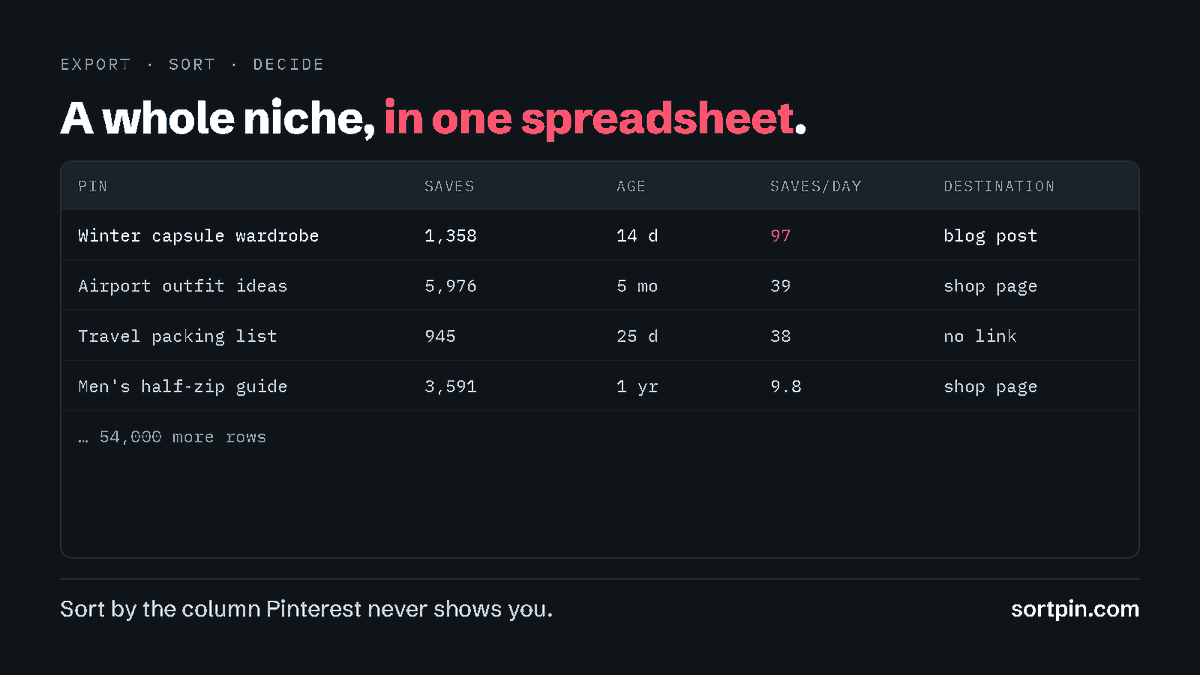
2. Export the feed to CSV
3. Sort by saves divided by age
4. Open the top three and write down the format
Twenty minutes, and you stop guessing what to make this week.
Pinterest is a search engine wearing a mood board costume.
People treat it like Instagram and wonder why nothing lands. Then they write one keyword-shaped title and suddenly a pin from March is still pulling traffic in November.
Write for the search, design for the scroll.
Gift season means your Pinterest feed fills with ads and generated images.
Dim both, and what's left is the stuff real people actually saved. That's the only sample worth studying when you're deciding what to make.
Signal first, inspiration second.
Gift pins convert on the person, not the product.
'Ceramic mug' is a product.
'Gift for a coworker you barely know' is a search someone is typing tonight.
Put the person in the title. The product is already in the picture.
Open your Pinterest analytics and find the pin with the most saves and the fewest clicks.
That gap is the most useful thing in the whole dashboard, and almost nobody looks at it.
What does yours say? Mine usually means the image over-promised.
Saves tell you people want the thing.
Clicks tell you they want it from you.
A pin with lots of saves and almost no clicks is usually a promise the landing page doesn't keep. Fix the page before you make more pins.
Your Etsy listing photo is not a pin.
The listing photo answers 'what is it'. A pin has to answer 'why would I want this in my life'.
Same product, different job. That's why plain product shots sit at the bottom of every Pinterest search.
Before you make a new pin, try refreshing an old one.
Same URL, new image, new title. Pinterest treats it as fresh content, and the page keeps whatever history it already earned.
Your best post from last year is the cheapest pin you can make this week.
Three things worth pinning in November:
1. Gift guides with a price in the title
2. Hosting and table setting
3. January reset content, early
The first two sell this month. The third is the reason your January won't be dead.
Halloween is today, which on Pinterest means Halloween was over weeks ago.
The saves happened in September. Today is just the people who saved it finally doing the thing.
So: what are you pinning for January? That's the question that actually pays.
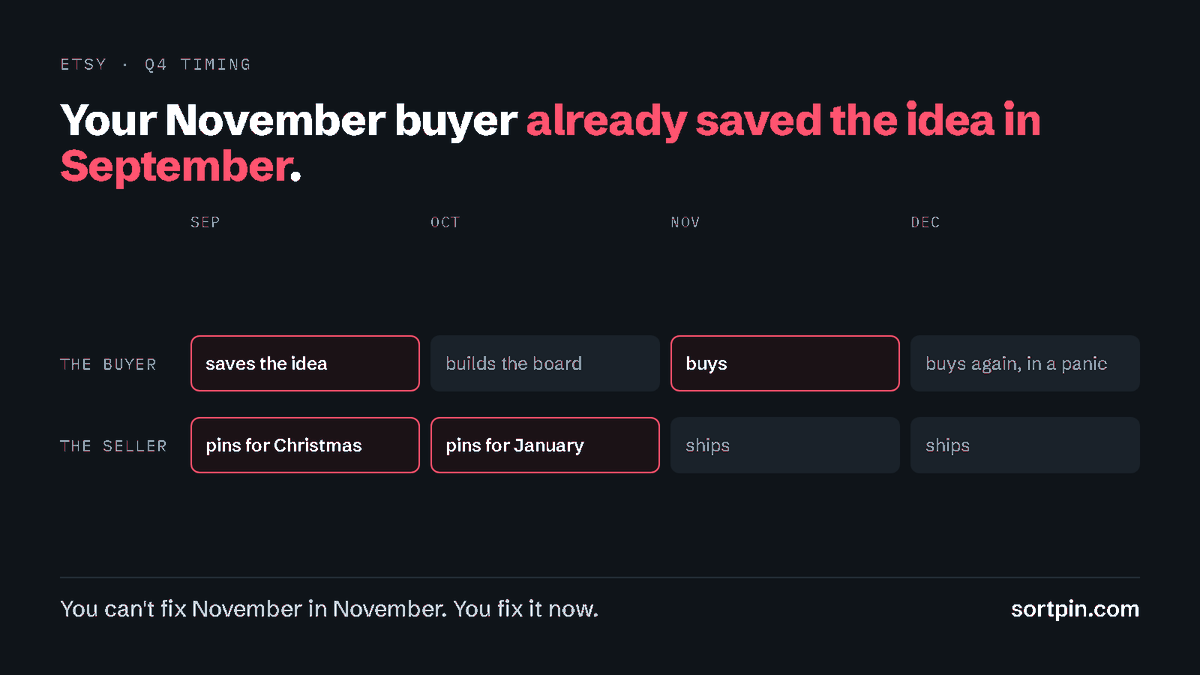
Etsy sellers, the uncomfortable timing of Q4:
the person who buys from you in November already saved the idea in September.
You can't fix that in November. What you can do is pin for January now, so the next wave of buyers saves your thing first.
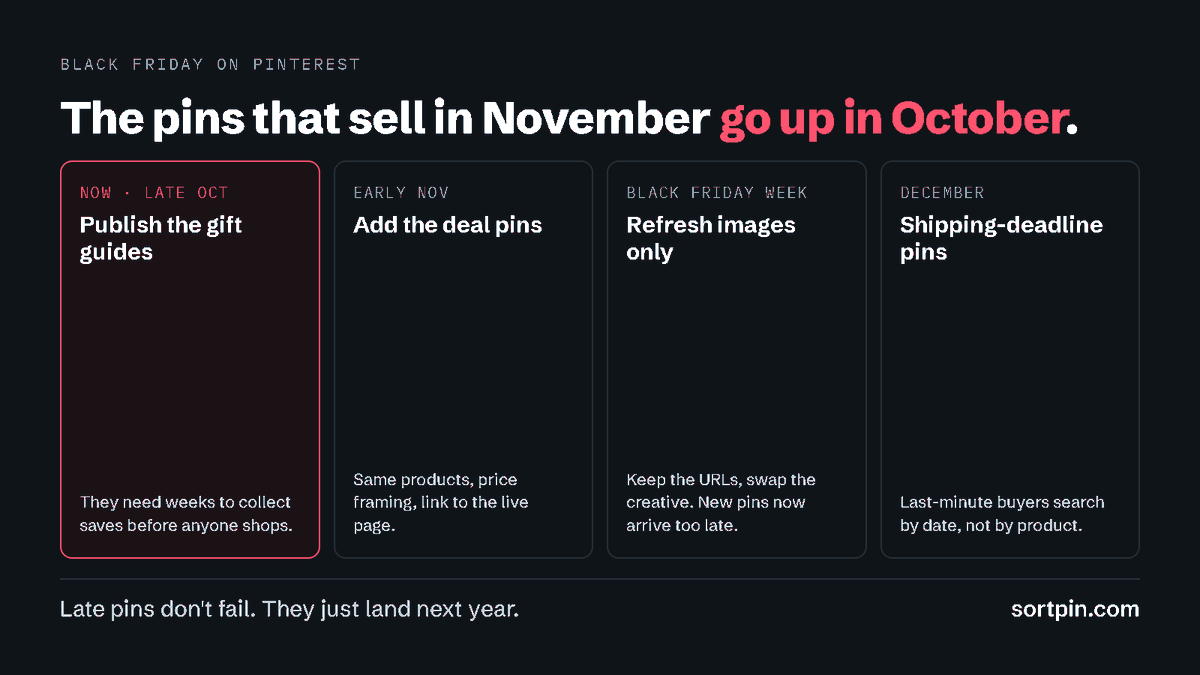
Black Friday plan for Pinterest, in order:
Now: publish the gift guides, they need weeks to collect saves
Early Nov: add deal pins pointing at the live page
Black Friday week: swap images, keep the URLs
December: shipping-deadline pins
New pins made during the sale arrive too late.
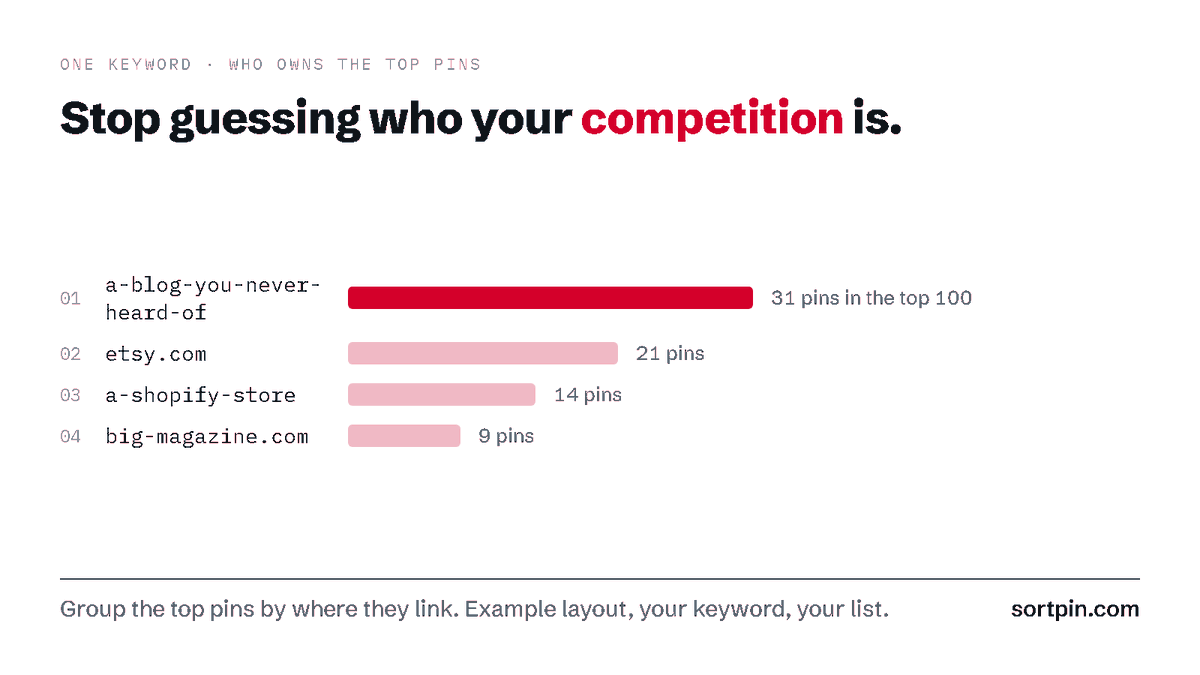
Your real Pinterest competitor is usually not the brand you think.
Take the top 100 pins for your keyword and group them by where they link. Nine times out of ten the winner is a small blog nobody mentions, not the big magazine.
That blog is the one to study.
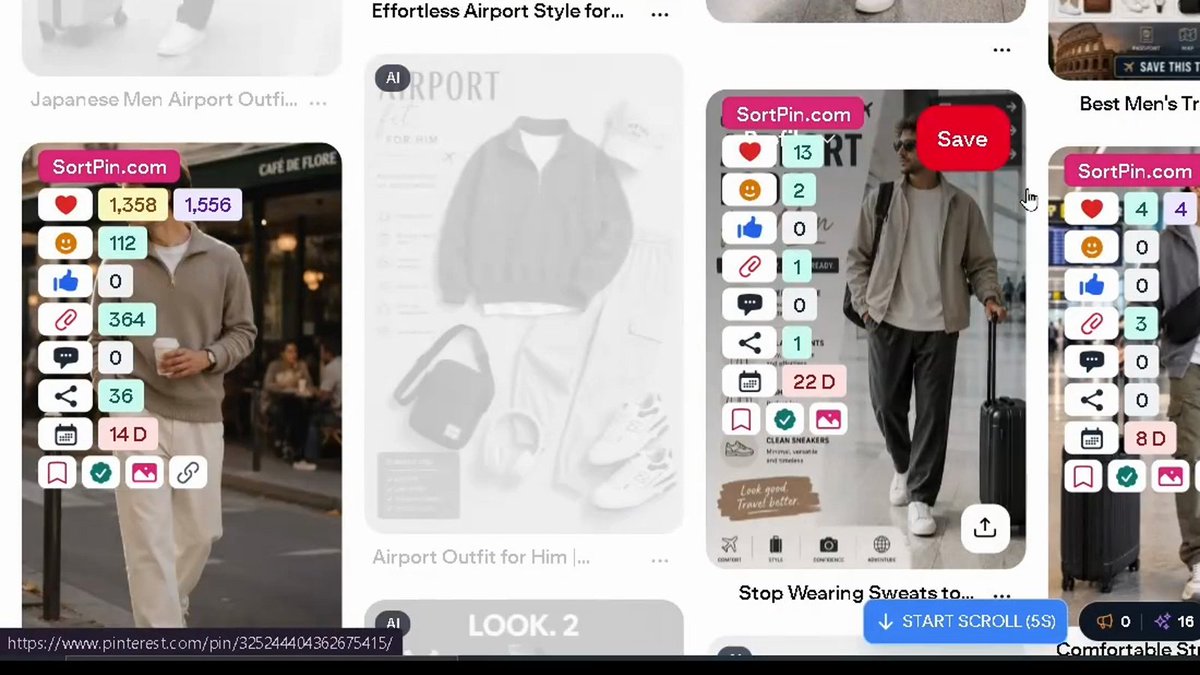
This is what a Pinterest search looks like with the numbers turned on.
Saves, repins, comments and pin age sitting on every single pin while you scroll, plus the AI pins faded out.
Thirty seconds of scrolling tells you what used to take an afternoon.
Two free Pinterest tools most people skip:
Trends, which shows you when a search peaks across the year, and the search bar itself, which shows you what people actually type.
Between them you can plan three months of pins without guessing once.
The entire Pinterest routine, twenty minutes a day:
1. Search one keyword and scroll for a minute
2. Sort what you collected by Most Saves
3. Make one pin in the winning format
4. Schedule it and close the tab
Do it for 30 days before you decide whether Pinterest works for you.
Honest question for anyone using Pinterest for traffic right now:
what is working better for you, a lot of fresh pins every day, or fewer pins with better design?
I keep seeing both answers from people who clearly know what they're doing.