Another week, another research article: this time it's $CODEC
I genuinely believe this is one of the most underlooked robotics coin in crypto. Robotics is the future but there aren't a lot of bets in crypto for it.
This is one of the few, feel free to get $CODEC-pilled
To those that have been waiting on the sidelines for more tangible updates, waiting to test out the tech and take a deeper look at what $CODEC could become for robotics in web3, the penny should be dropping for you.
It is still early and the SDK will evolve, you can start building workflows, give feedback and get stuck in. The SDK will be updated regularly by both @unmoyai and @_lilkm_
I will say this again, one of the lead devs, @_lilkm_ works at @LeRobotHF . Lerobot is quickly becoming one of the most used tech stacks in the robotics space. @_lilkm_ is contributing to that. Using feedback from developers in this space, in web2, codec is being built, not just for web3 devs to build on top of, but web2 devs, too. There are not many projects in web3 that focus on this. Real adoption.
This is the most conviction I have had on a project. I know where this is headed. I have placed my bets accordingly.
Coded.
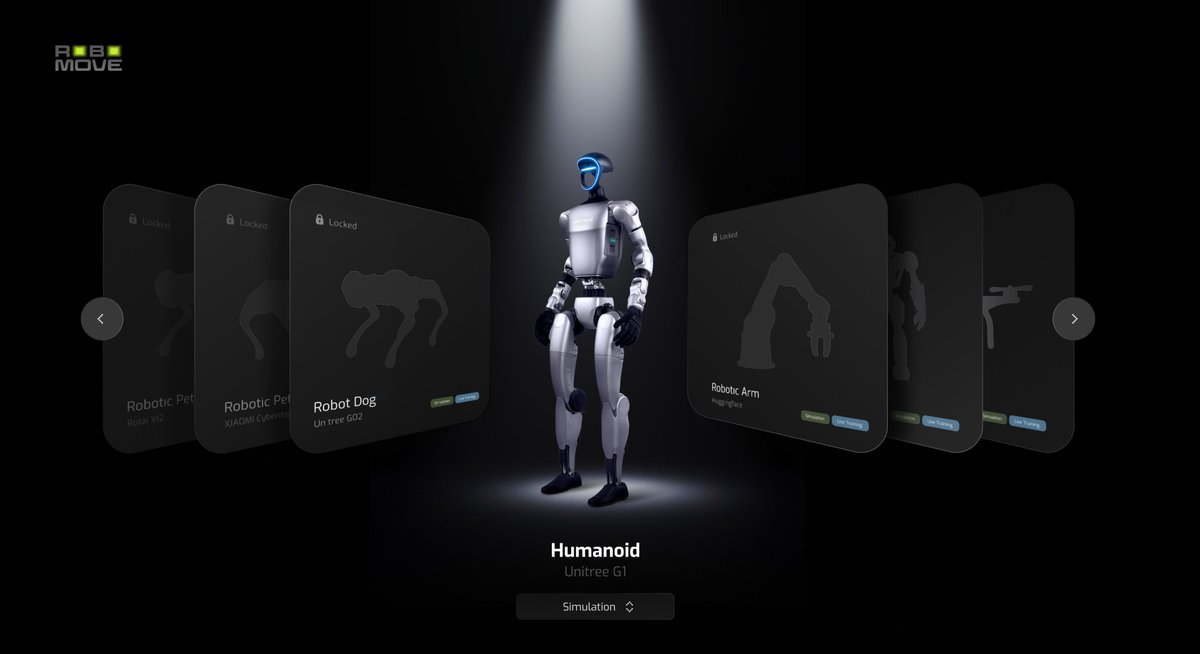
Introducing RoboMove
@RoboMove is an interactive robot playground that livestreams robots in action, whether in simulation or real-world environments while allowing viewers to control and interact with them through tweets.
Built using CodecFlow’s stack enabling developers, researchers, and hobbyists to create robotic workflows through a comprehensive SDK or visual node based editor.
How it works
Starting this week, you’ll be able to interact with live robotic simulations directly on Twitter. We’ll be kicking off with the Unitree G1 humanoid. At launch, the robot only knows how to move. from there, it learns through open ended feedback from you, its environment, goals, and the tasks you suggest.
Here’s how:
- Tweet a command tagging @RoboMove.
- The sim interprets your instruction and the robot tries it.
- A short video reply shows the attempt.
- Each run updates the policy for future use.
Why put training onchain?
Opening the training loop to the public means anyone can improve the model. Recording actions onchain keeps the process transparent and verifiable, paving the way for insurance, auditing, and shared ownership of the resulting policies.
Marketplace
Buy or sell policies: use proven behaviors on your own robots.
License task modules: drop-in skills tuned to specific models.
Create new tasks: upload or simulate challenges and earn rewards.
More robot types are coming, each starting from zero and learning with the community’s help.