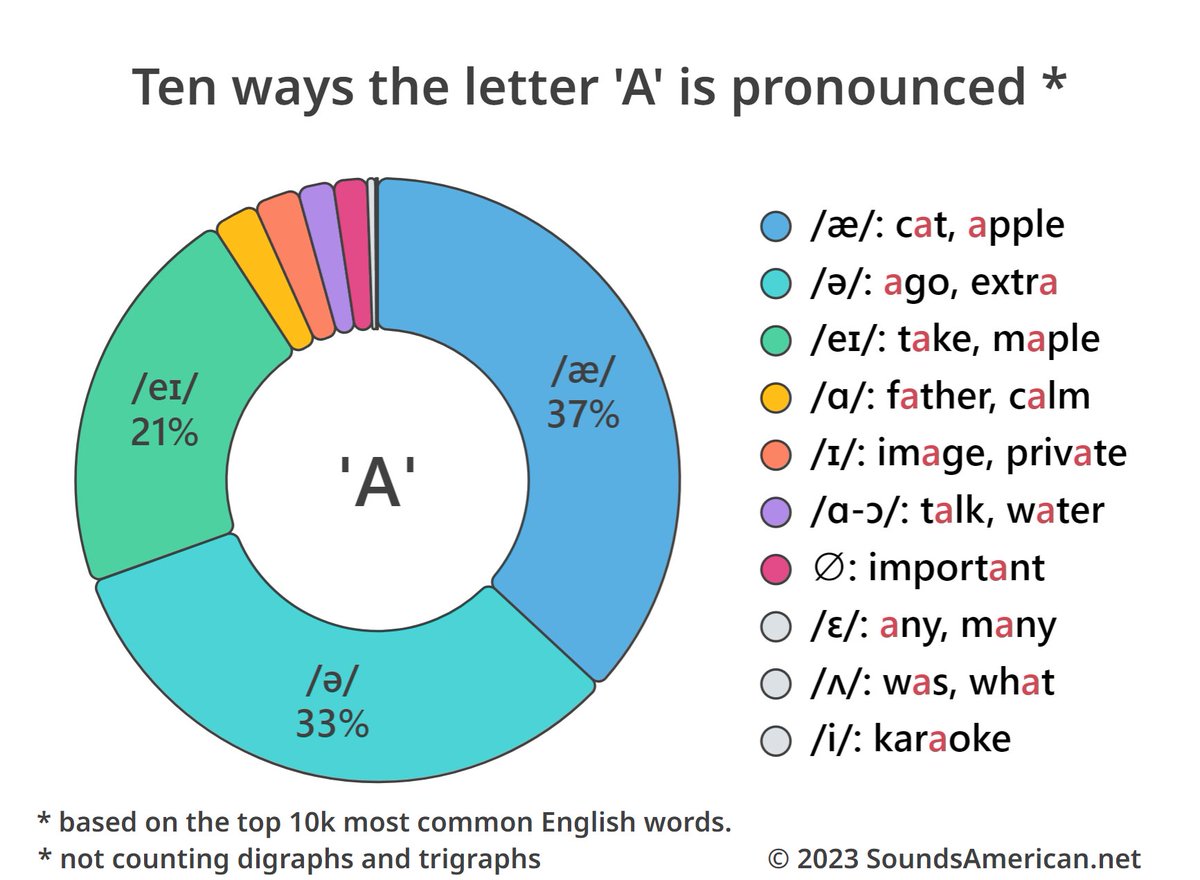
The most common spelling for the /eɪ/ vowel is the letter 'A.' The opposite is not true because, in most English words, the letter 'A' represents the /æ/ sound. 🤯 The good news is that the digraphs 'Ai' and 'AY' are almost always pronounced as /eɪ/. 👍 https://t.co/ANbA9aAR2F
Nearly all North American native speakers pronounce the letter 'Y' as the tense /i/ sound when it occurs at the end of words like 'happy' or 'very'. 🤔 This makes 'Y' the most common spelling for the /i/ vowel, at least in General American English. 😉 https://t.co/Gvw1ptKRWB
You know how the letter 'S' is not always pronounced as /s/? For example, when 'S' is followed by '-UAL,' it represents /ʒ/ in 'visual,' but /ʃ/ in 'sensual.' Why? 🤔 It depends on what comes before 'S!' 😉 Check out this article for more details: https://t.co/aBJwBnxzsb
There is no big difference between the /ɝ/ and the /ɚ/ sounds. 🤨 Their pronunciation is almost the same, except the /ɚ/ is always relaxed and only occurs in unstressed syllables. Check it out: 'Eager tigers hammer spiders'. 🎧 https://t.co/GPtjgxA53H
#MnemonicPhrase
The words 'axis' and 'access' are perfect examples of how English spelling begins to make sense when you know a couple of phonics rules. 🧐 The pronunciation of these two words is different, but possibly not in the way you might expect. 😉 https://t.co/1Gpp4FVkiu
#PhonicsRules
There are two variations of the /l/ sound in American English: the "regular" L and the "dark" L. 🤔 So, here's a quick test: listen to the phrase "A lone lamb lost his land" and try to catch the difference between them: 🎧 https://t.co/MlFCxLViAM
#Pronunciation#MnemonicPhrase
Can you tell whether the words 'weather' and 'whether' are pronounced the same or differently? 🤔 And while you're at it, what about the word 'wether?' 🎧 https://t.co/YQPLB6ZMm1 😉
#ESL#English#Pronunciation#PhonicsRules
Do you have the labiodental voiced fricative /v/ in your language? 🙄 Here's a quick test: record the phrase 'Vivid vacation in a vintage van' 🌴 and compare your recording to the classic General American pronunciation: 🎧 https://t.co/blrcFtIeQ5
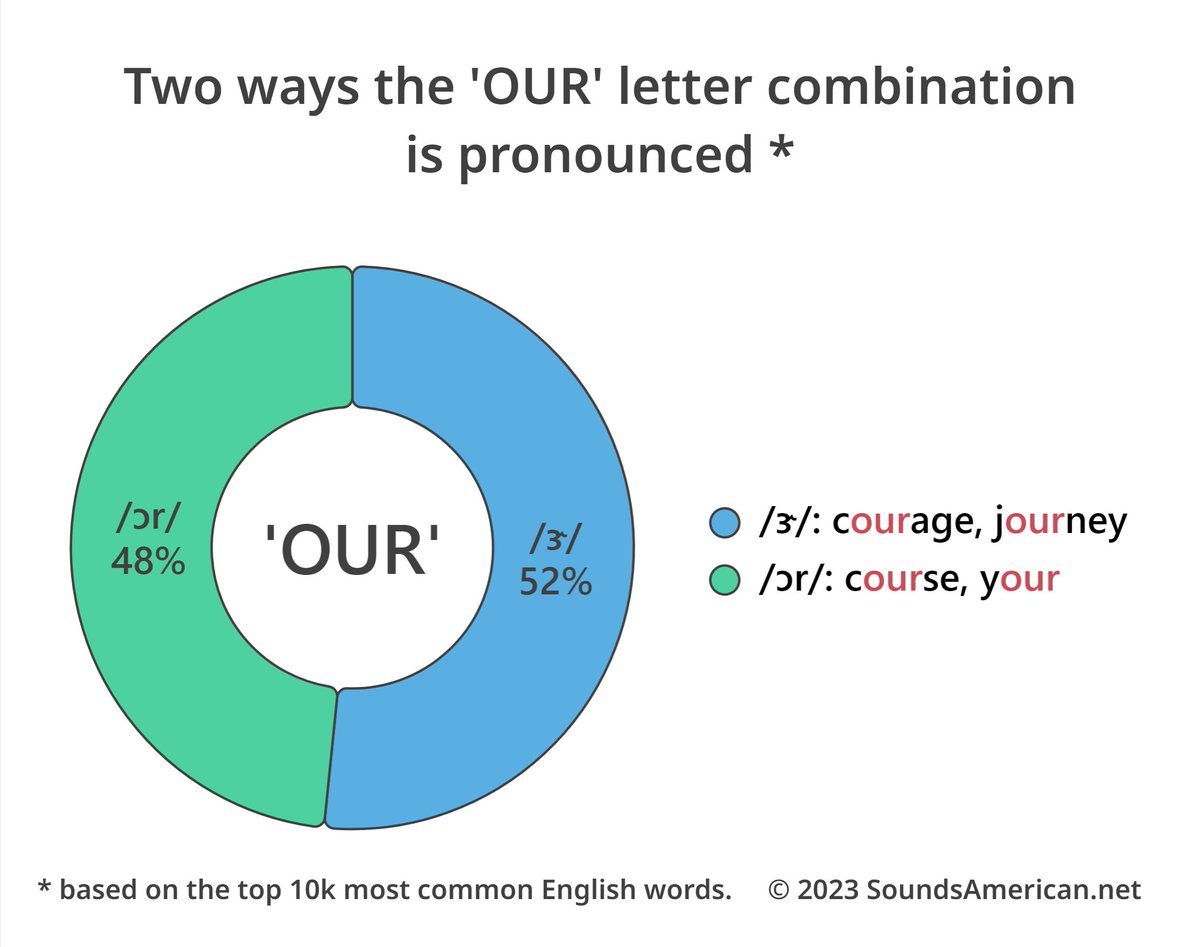
In American English, the 'OUR' letter combination is pronounced either as /ɝ/ or /ɔr/. We wish there was a rule, but unfortunately, there's none. 😥 So, we made two lists of words you can practice. Don't worry; they're easy to memorize: 🎧 https://t.co/zwKiYO5dcw
The glottal T doesn't occur in American English very often, and even when it does, you can safely replace it with a regular T. 🤔 So, it's not a very important sound, except for one detail: it'll make your speech more natural 😉 Kittens in satin mittens. 🎧https://t.co/bjSaJb7lYc
Could the words "knees" and "niece" be homophones? 🤔 Of course they could! 😉 Many English words have different spellings but are pronounced the same way, like "would" and "wood." 😲 Still, are "knees" and "niece" #homophones or not? https://t.co/n1wAUcieOI 💡
Over ten percent of Americans dress up their pets in a Halloween costume. 🤪 Our cats refuse to wear any clothing, so we came up with a video where you can practice pronouncing the 100 most common words related to Halloween. 🎧 https://t.co/3gndmOGO6U 🎃Hope you'll like it! 👻
English pronunciation is all about patterns. 😎 For example, the 'AIR' letter combination is always pronounced as the /ɛr/ sound, as in words like "hair," or "dairy." 😀 Now, let's see if we can find any patterns for 'IAR,' as in the word "diary." 🤔 https://t.co/7WEUMA9w2a
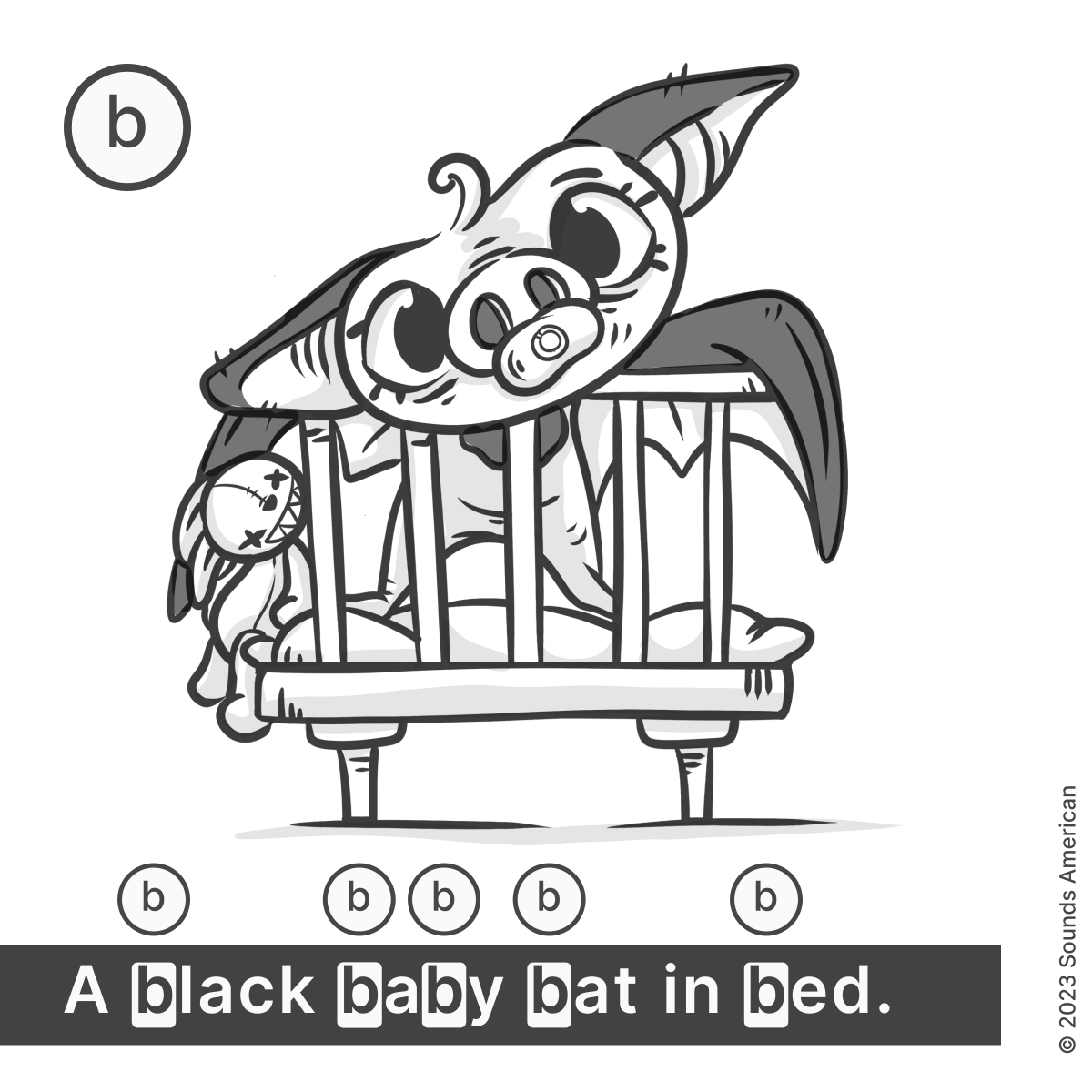
Voiceless stops are aspirated at the beginning of a word. 💨 What about the voiced ones? Are they aspirated, slightly aspirated, or unaspirated? 🤔 Listen to our mnemonic phrase and tell us what you think: A black baby bat in bed. 🎧 https://t.co/olUNA4m6yx
#MnemonicPhrase
Why is the letter 'B' silent in words like 'dumb' or 'lamb'? 🤔 A few hundred years ago, someone decided to ditch the /mb/ endings and keep it simple with just /m/. 🤣 What can we do about it? 😜 As always, we can #practice#pronunciation! 🎧 https://t.co/5bK375WZXZ
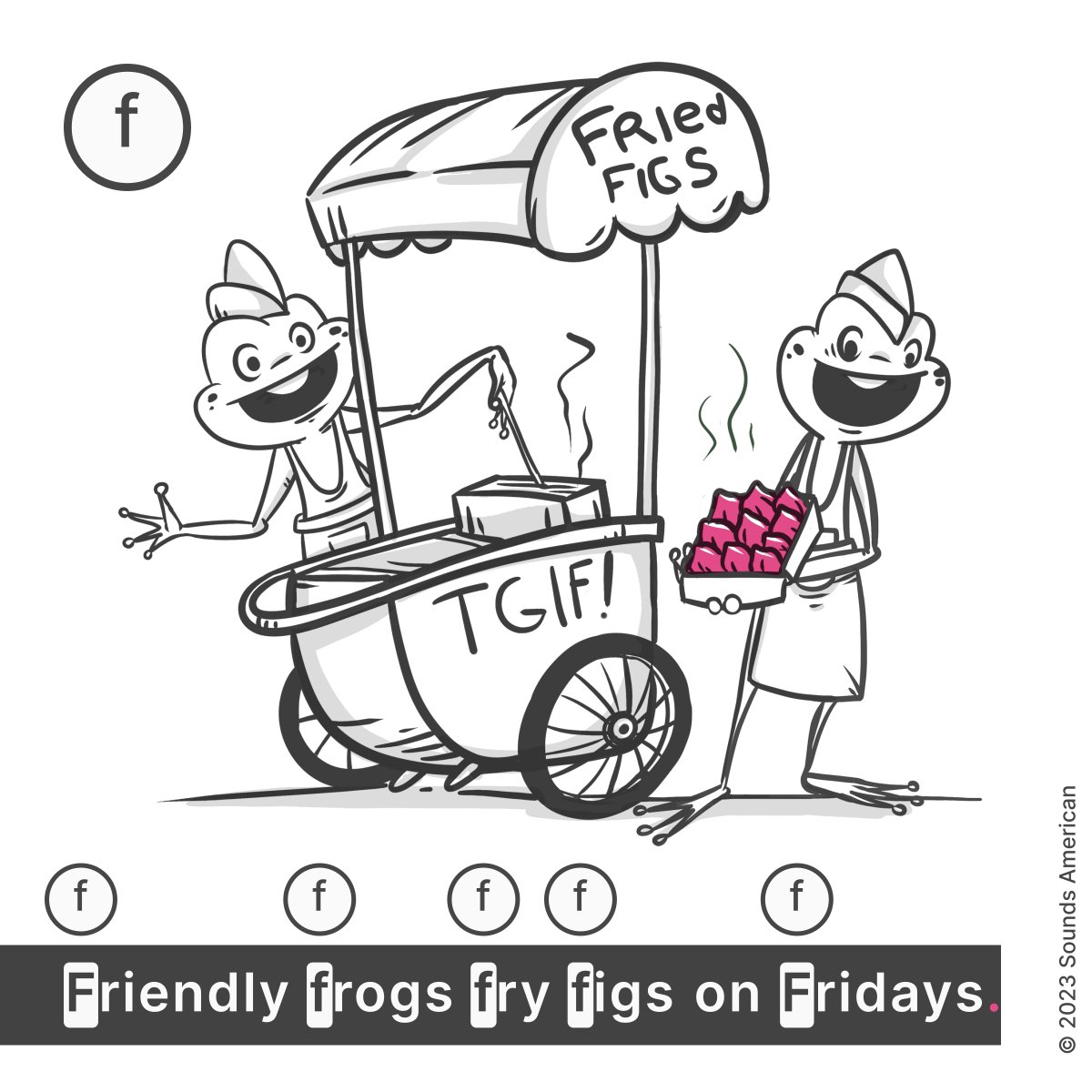
Most languages have the /f/ consonant, yet it's one of the sounds that gives your accent away. 😢 Here's a tip on how to pronounce it like an American: Lightly touch the back of your lower lip with your upper teeth. 🎧 Friendly frogs fry figs on Fridays - https://t.co/FRK0XkYwlO
Thanks to loanwords from Greek 🇬🇷 and German 🇩🇪, the English spelling for the /f/ sound isn't always straightforward. 😥 To cut a long story short, words like 'φιλοσοφία' and 'lachen' are the origins of the 'PH' and 'GH' digraphs. 🎧 https://t.co/fKkANj0Bxo
#CommonSpelling
There are two different ways Americans pronounce the /r/ sound, but there's no way your tongue should touch the alveolar ridge. 🤔 Because if it does, the sound becomes trilled, and Americans never trill their Rs. Try it: A rat rode a train in the rain. 🎧 https://t.co/1Uy9Br5tEK
Some say that English pronunciation rules are hard to grasp and impossible to remember. 😭 Like, why the heck is 'A' pronounced as /æ/ in 'apple' but as /eɪ/ in 'maple'? 🤔 Can we explain this? Sure thing, check out this article on Sounds American: https://t.co/4lZYZPpSYX 😎
95% of the major world languages don't have the voiced TH sound. 😢 In English, though, it's hard to think of a sentence without it. So, it didn't take us long to come up with a phrase with five /ð/s! 🤣 Try it: That's their mother, father, and brother. 🎧 https://t.co/Ctz2NLo6WE