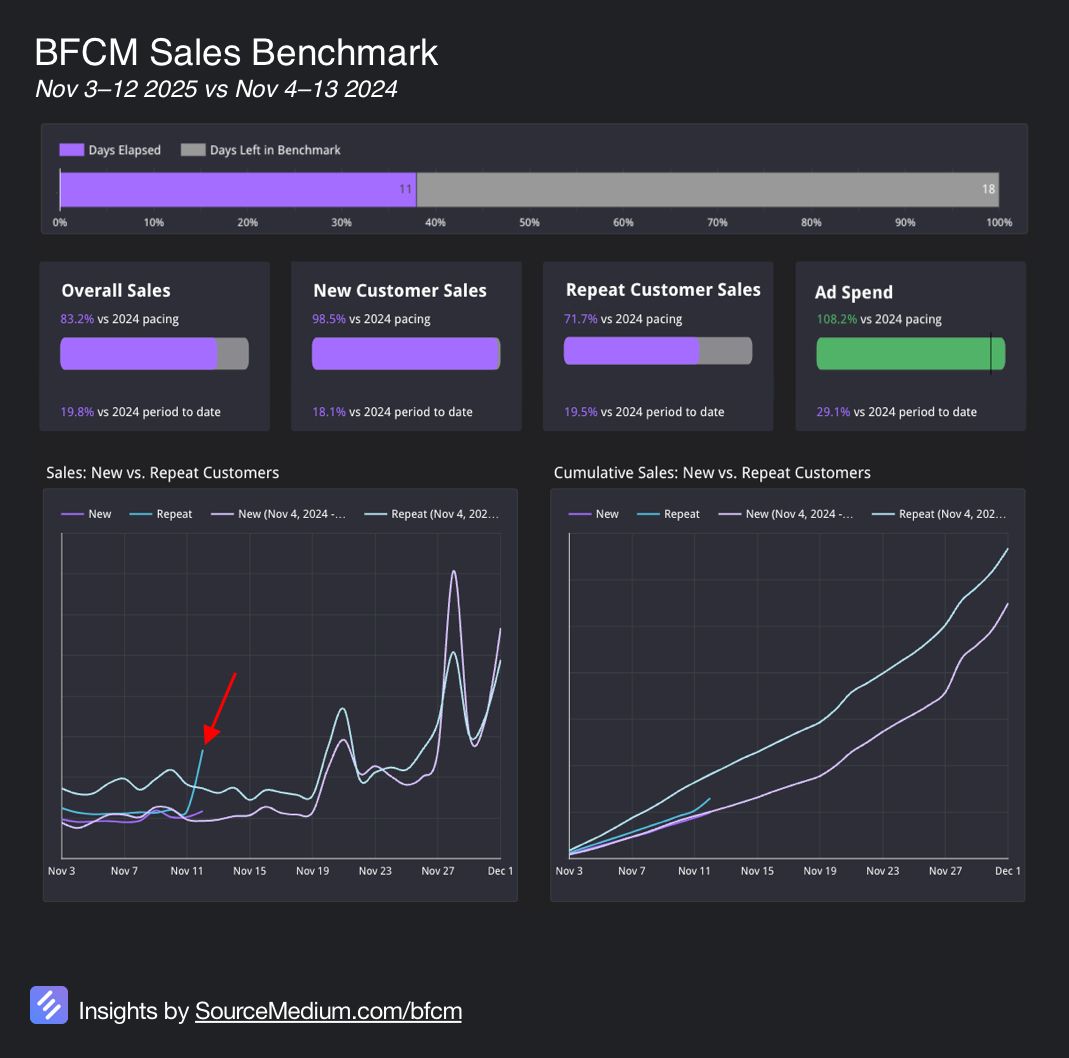
Yesterday’s BFCM benchmark finally gave us our first real shift in behavior — and it came from an unexpected place.
Repeat customers woke up. 🙋♀️🙋♂️🙋
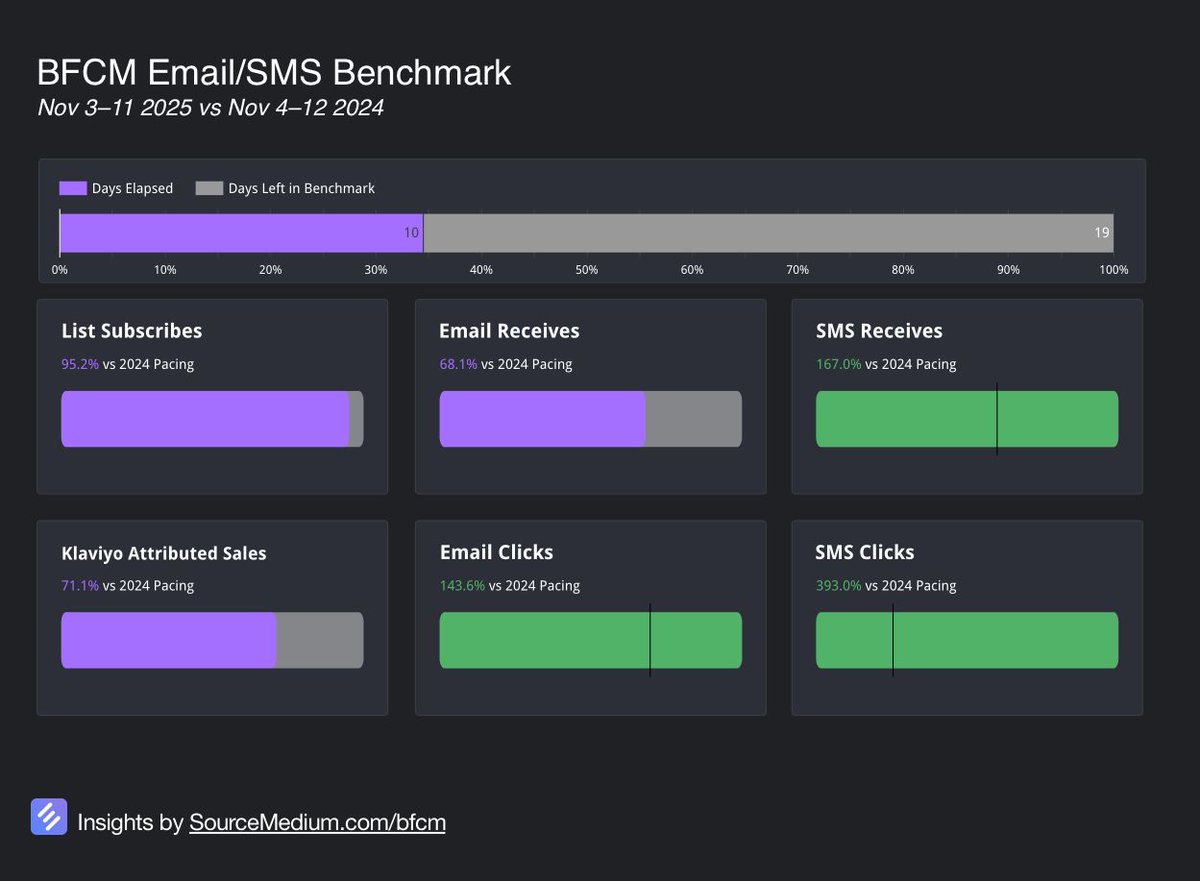
New customers have been pacing close to last year, but repeat performance was the drag… until yesterday. We saw a clear upward bend in the repeat-customer curve, and it came alongside a breakout in Email/SMS engagement.
While geeking out with Lindsey Holzberger on the data, we dug into the driver behind the surge:
• Email + SMS receives are still under 2024 pacing. Brands aren’t blasting more. This wasn’t volume-driven.
• Clicks and engagement, however, spiked hard.
• Email click rate broke out.
• Email clicks jumped.
• SMS clicks surged at one of the highest levels we’ve seen.
• @klaviyo -attributed revenue reacted immediately, showing that existing customers didn’t just click — they converted.
• 1P last-click/UTM revenue hasn’t fully shown up yet.
• That lag is (hopefully) normal, and it means the full impact of yesterday’s engagement wave is still rolling in.
So even though total sales are still pacing below last year, the shape of the curve is finally starting to bend upward. Consumers aren’t passively browsing anymore — they’re starting to take action.
If you’re unsure how your brand will perform this BFCM, now is a great moment to test the waters with your existing customers. Engagement is heating up, and buyers tend to convert first with brands they’ve already engaged with and trust. A light-touch offer or reminder to your current list can give you a clean early signal — without overcommitting or oversending.
We’ll see whether this momentum builds or softens, but yesterday was the clearest sign yet that shoppers are waking up.
Access the benchmark at https://t.co/1zD4Oy1ok8
Same password as last year. Comment "bfcm" and I’ll DM it to you.
The 2025 BFCM Benchmarks are live and early results signal a clear shift in buying behavior compared to last year.
Through the first week, overall sales are pacing ~80% of 2024 levels, and not because acquisition has slowed, but because repeat customers haven’t started spending yet.
🟣 Week 1 Highlights (Nov 3–11):
• Overall Sales: 81% vs 2024 pacing
• New Customer Sales: 99% vs 2024 — acquisition efficiency holding steady
• Repeat Customer Sales: 62% vs 2024 — main source of the gap
• Ad Spend: +8% YoY — brands are spending more to maintain topline
• MER: flat for new customers, lower overall
📈 Paid Ads
• CTR is way up: fewer impressions but many more clicks → creative/targeting is pulling harder
• Effective CPC is down: spend is up a bit while clicks are up a lot → you’re buying clicks cheaper on average
• Effective CPM is up: spend divided by fewer impressions → cost per thousand impressions rose.
• Sales aren’t scaling with clicks: clicks +52% vs sales +6% → post-click performance (CVR and/or AOV) is softer
💬 Email/SMS:
• Email clicks: +144% YoY
• SMS clicks: +393% YoY
• Yet attributed sales down ~30% → engagement is high, but conversion delayed
• Customers are browsing, not buying — holding out for stronger offers
Last year followed a similar pattern: a slow start that flipped into a record surge once Black Friday promotions hit. Whether that happens again depends on how quickly repeat buyers re-enter over the next two weeks.
In short:
Paid is steady. Engagement is strong. Conversion is late. The demand is there — it just hasn’t been unlocked yet.
🧠 Live benchmarks (updated daily): https://t.co/1zD4Oy1ok8
Same password as last year. DM for password.
"More attribution data hasn't led to more confidence—it's created analysis paralysis."
@iamBradRedding had me and @JRokeach on the "Conversion Tracking Playbook" podcast to unpack why brands have more attribution tools than ever but less confidence in their marketing spend.
The harsh reality: brands stuck on last-click attribution watch branded search take all the credit while Meta campaigns look underwater. Classic attribution theater.
Yet right there in @getelevar data sits a goldmine. Their funnel data stream captures conversions and key events with server-side deterministic identity resolution—the most accurate reflection of actual marketing performance.
Having analyzed Elevar data across many 8-9 figure brands, the attribution insights are impressive. But most brands ignore this and pay thousands for black-box solutions that create more data silos and vendor lock-in.
Good attribution isn't sexy. It's reliable first-party data, comprehensive UTM taging, and consistent naming conventions.
Working closely with Elevar data, we saw the opportunity immediately: build transparent MTA on top of their rock-solid dataset. If you're running Elevar tracking, you already have everything needed for proper attribution. No new pixels. Your trusted data, unified.
🎧 Listen: https://t.co/MEFPohltPk
Ready to see what this looks like on YOUR data? Link in comments.
Shopify and Stripe are making a massive bet on stablecoins. Why now?
Both companies see cross-border commerce hitting a wall with traditional card rails. International transactions still cost merchants 3-5% in fees, take days to settle, and exclude billions of potential customers without access to traditional banking.
Instead of building their own crypto infra, @Shopify aggregated the best players: @stripe handles fiat conversion, @coinbase provides Base network rails, @circle supplies the regulated stablecoin.
Merchants can now flip a toggle in Shopify settings and USDC appears in checkout as a new option. The cost savings are immediate:
• 200ms settlement vs 1-3 days for international cards
• 0% foreign exchange fees (vs the usual 2-4%)
• Smart contract escrow handles auth/capture/refunds just like cards
• Zero chargebacks
But here's the interesting part: those cost savings don't have to go straight to margin. Merchants can pass them on to customers as credits, loyalty points, or discounts—exactly like the credit card companies did with miles. Imagine offering 1-2% cashback on international orders paid with USDC. Suddenly you're competing on price while improving your unit economics.
Why is everyone converging on Circle's USDC? It's all about compliance. They were first to meet EU MiCA regulations in 2024. USDC has $1 trillion in monthly transaction volume, 1:1 USD backing with audited reserves. Unlike Tether's opacity, Circle publishes everything.
For merchants expanding into APAC, LATAM, or MENA, this matters. Digital dollars often work better than local cards or cash on delivery. The pilot data from Shopify's early access program shows merchants converting customers who previously couldn't complete card payments due to banking restrictions.
The strategic play is obvious: @PayPal already uses USDC for remittances, @Walmart is testing stablecoin rails.
All of this heavily depends on consumer adoption still. It's a space worth watching. 👀
"Is @AppLovin stealing credit from @Meta , or actually driving incremental new customer revenue?" This question came up in three separate customer calls last week.
I just recorded a 3-minute demo showing exactly how we answer this using our upcoming multi-touch attribution dashboard. The insights from real customer data might surprise you.
��� The Problem:
Most brands run Meta + AppLovin but can't tell if they're cannibalizing each other or truly incremental. Platform reporting shows conflicting numbers. Third-party MTA tools give you black-box answers you can't verify.
🔍 What We Built:
Instead of adding another pixel, we aggregate your existing data—GA4, CAPI, Shopify, plus zero-party attribution surveys—into one unified stream.
In the demo, you'll see exactly how we:
→ Layer first-touch, last-touch, and linear attribution models
→ Cross-reference with post-purchase survey data ("How did you hear about us?")
→ Isolate true incrementality between channels
The verdict for this brand? When we filtered to customers who said they heard about the brand from "mobile games," it was overwhelmingly AppLovin.
When filtered to "Facebook/Instagram," Meta dominated. Where there are overlaps, it's less than 10%.
This took 3 minutes to analyze. Previously would have required weeks of spreadsheet gymnastics or expensive consulting.
Our philosophy: 70% attribution you can verify beats 100% modeled data you can't trust. Especially when making million-dollar budget decisions.
Full transparency = full BigQuery access to audit every calculation.
Want early access to what we're building? We'll be releasing the waitlist next week.
📷loom.comSourceMedium MTA Demo - Meta vs. AppLovin
"More attribution data hasn't led to more confidence—it's created analysis paralysis." Last week, a $50M DTC brand confessed they're paying for 4 different attribution tools plus platform reporting. Still couldn't agree on which channels actually drove their holiday revenue.
🎯 Sound familiar? The typical e-commerce brand now tracks attribution through platform reporting, GA4, third-party MTA vendors, and "how did you hear about us" surveys. Each shows different numbers. Each has its own methodology. And reconciling them? Nearly impossible.
Here's what we've been quietly building at @SourceMediumHQ .com
For the past year, we've been developing a completely different approach to multi-touch attribution. One that doesn't require another pixel. One that aggregates your existing tracking instead of adding to it. One that's already running across 10+ brands.
The results? We've conducted side-by-side purchase journey data quality tests with alternative (much more expensive) solutions. What we found surprised even us: brands' own 1st party funnel data matched as closely as touchpoints collected by proprietary pixels.
Let that sink in. Your existing data—properly aggregated—is just as good as those expensive black-box solutions.
Our philosophy is simple:
Aggregation over Addition 📊
Why add another pixel when you already have GA4, server-side CAPI, Shopify, and UTMs? We bring them together into one unified stream.
Your Trusted Data as the Foundation 🎯
Built on the sources you already rely on—CAPI, GA4, enriched with your zero-party attribution data. A refreshing approach to blackbox solutions, offering full transparency on what's tracked and what isn't.
Trust over Coverage ✅
70% attribution you can verify beats 100% modeled data you can't. Especially when making million-dollar budget decisions.
Transparency, Access, Full Customizability 🔍
Full BigQuery access to input and output data. Audit everything. Build custom models. Your data, your control.
The attribution problem isn't about needing more data. It's about trusting the data you already have.
I'll be sharing more about what we've learned from early beta customers in the coming days. Want to be among the first to see how we're solving attribution differently? Let's talk.
Your customers are still spending. But for how much longer?
We track consumer health like a vital sign—combining jobs, inflation, credit stress, and sentiment into one score. Think of 60+ as 🟢 healthy, below 55 as 🟡 warning signs. (see https://t.co/Ap1xw4F1uy)
Our Consumer Health Index score has been stuck at ~58 🟡 for 3 straight months, now sitting 4.7 points below the historical average of 62.8 🟢.
Here's what's actually happening to your customers:
The stress is building in pockets:
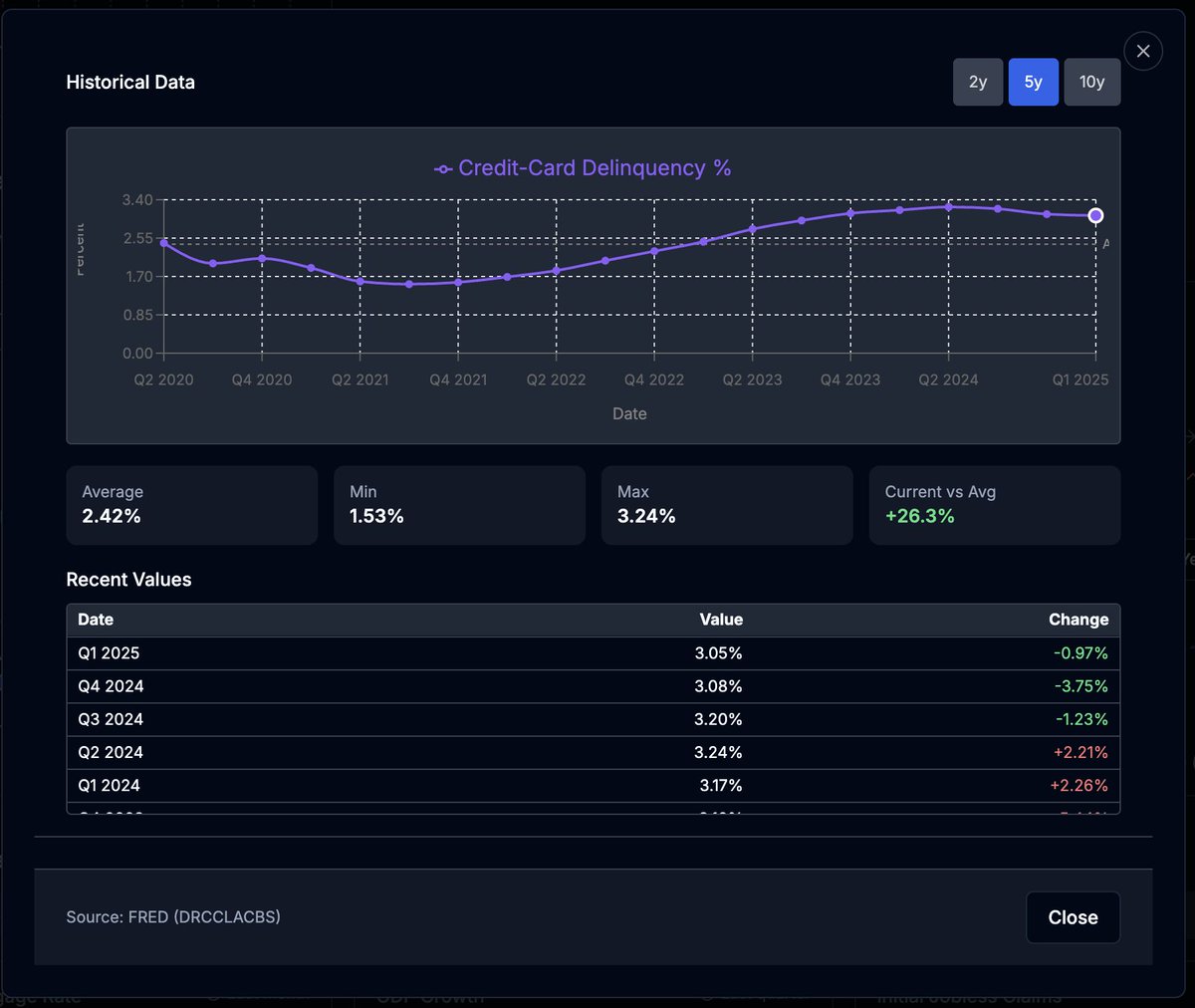
💳 Credit card delinquencies at 3.05% overall, but some subprime segments seeing 20%+ rates
🏦 Personal savings rate crashed to 4.9% (BEA)
💸 8.8% of credit card balances transitioning to delinquency
What's keeping things afloat:
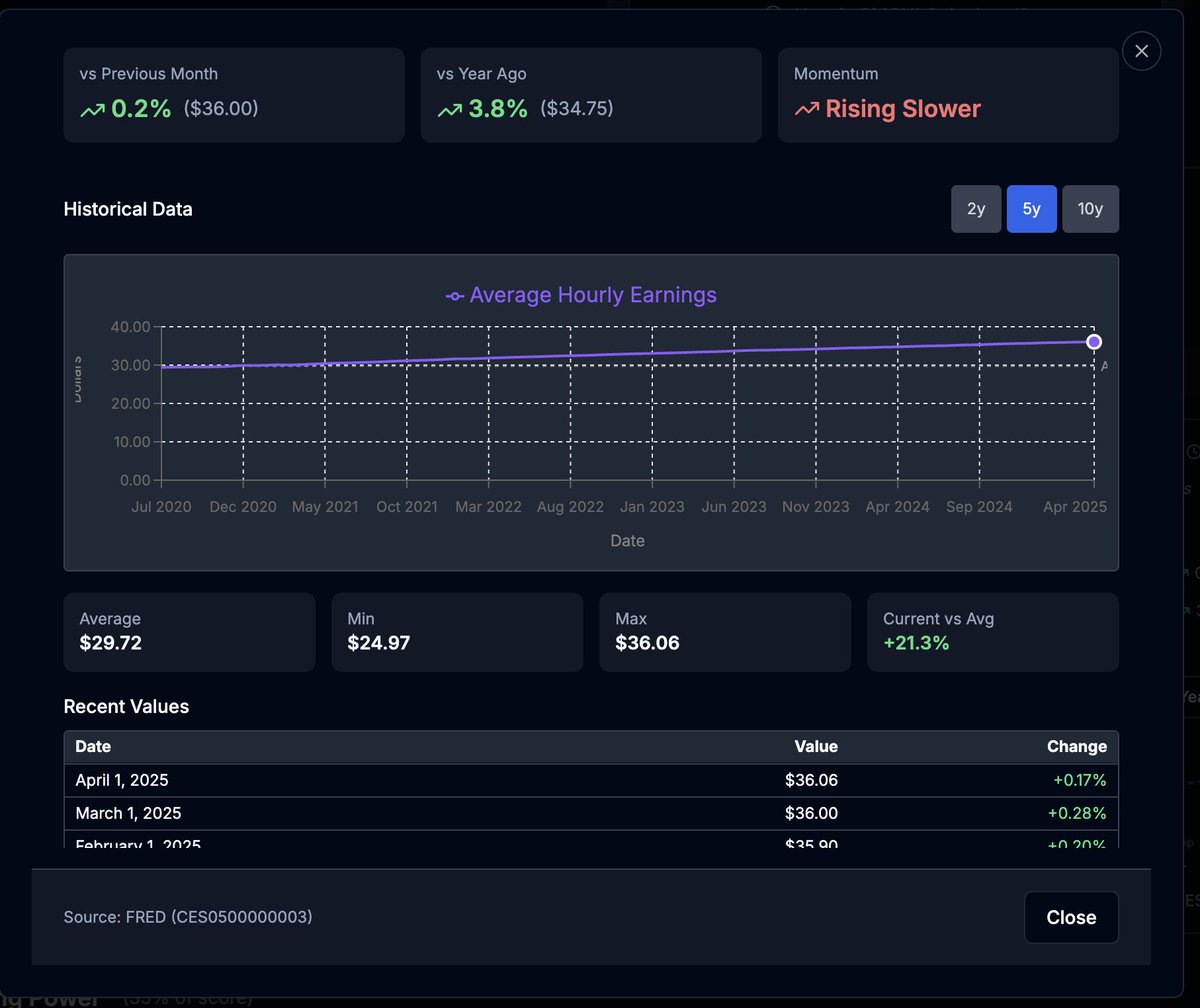
• Wages growing faster than inflation YoY—hourly earnings up 3.77% vs CPI up 2.33% (BLS)
• Debt service ratio stable at 11.28% despite high rates (Fed)
• Credit card delinquencies actually DOWN 3.79% YoY
The confusing part: 🤔
• Michigan Consumer Sentiment: 52 (near 2022 lows)
• Conference Board Consumer Confidence: 98 (near normal)
This 46-point gap shows your customers are splitting into two camps.
Why does this matter? It means your customers are splitting into "haves" and "have-nots." The stressed shoppers need deep discounts. The stable ones still buy at full price. One-size-fits-all pricing strategy won't work.
The warning signs are stacking up:
• Retail sales growth at 5.16% YoY in April, but Q1 GDP contracted -0.2%
• The disconnect: sales still positive but economy shrinking
• Layoffs are accelerating (jobless claims up 11.11% YoY)
Right now, strong employment (159,517K jobs) is masking the cracks. But with our Consumer Health Index flatlining and forward indicators weakening, the divergence can't last.
Three moves to make NOW:
1) Know your customers - Financially stressed consumers need discounting and flexible payment options. Make sure to manage your own risk accordingly.
2) BNPL appetite may increase across all price ranges - With 8.8% of credit card balances transitioning to delinquency, even good customers need payment options.
3) Shift toward essentials - The data shows services outperforming goods, and essentials over discretionary. Adjust your mix accordingly.
Want to see other metrics included? Drop a comment below. 👇
See the full dashboard: https://t.co/Ap1xw4F1uy
Most operators only hear about consumer trends when they're already on CNBC.
By then, it's too late.
You catch fragments – inflation mentioned on a podcast, unemployment on Twitter, consumer sentiment in a newsletter. But there's never been one place to see how US consumers are actually doing.
Until now.
We just launched @SourceMediumHQ Trends – the first comprehensive consumer health dashboard built specifically for e-commerce operators.
Here's the problem we solved:
Economic data lives in silos. The Fed publishes 100+ indicators. Analysts cherry-pick whatever supports their narrative. You're left guessing which signals actually matter for your business.
Our Consumer Health Index changes that.
We synthesize 12 critical indicators into one score, tracking three dimensions:
💼 Jobs & Income (40%): Employment, payrolls, wages, jobless claims
🛒 Purchasing Power (35%): Inflation, disposable income, retail sales, sentiment
💳 Financial Stress (25%): Credit conditions, mortgage rates, GDP growth
Plus 3 additional context indicators to complete the picture.
One unified dashboard. Real-time updates. No more piecing together fragments.
But here's where it gets powerful:
Soon, we're layering in earnings data from @Shopify, @amazon, @Affirm, @blocks (Afterpay), @klaviyo, @Meta, and @Google.
Imagine knowing:
- When Shopify GMV diverges from consumer health scores
- How Affirm's BNPL volume correlates with debt stress indicators
- Whether Meta's ad performance predicts retail sales shifts
This isn't just economic data. It's e-commerce intelligence.
Smart operators are already using this to:
→ Time inventory buys when indicators align
→ Adjust CAC targets before consumer stress hits margins
→ Spot category opportunities while competitors wait for quarterly reports
→ Plan launches based on purchasing power trajectories
The brands that win in 2025 won't be the ones with the most data.
They'll be the ones who see the complete picture first.
Get ahead of the narrative: https://t.co/Ap1xw4F1uy
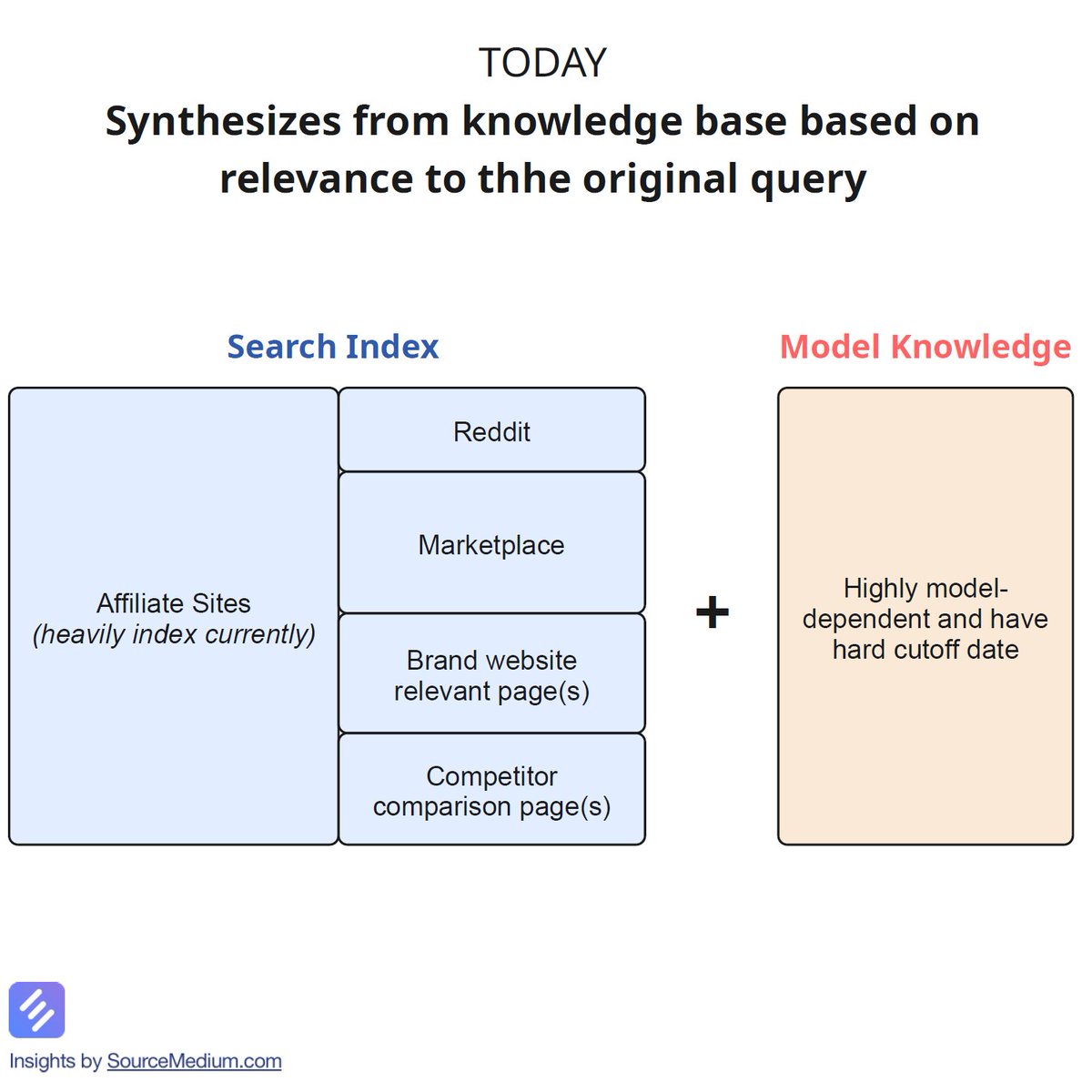
80% of AI shopping suggestions come from affiliates—not your site. 😞
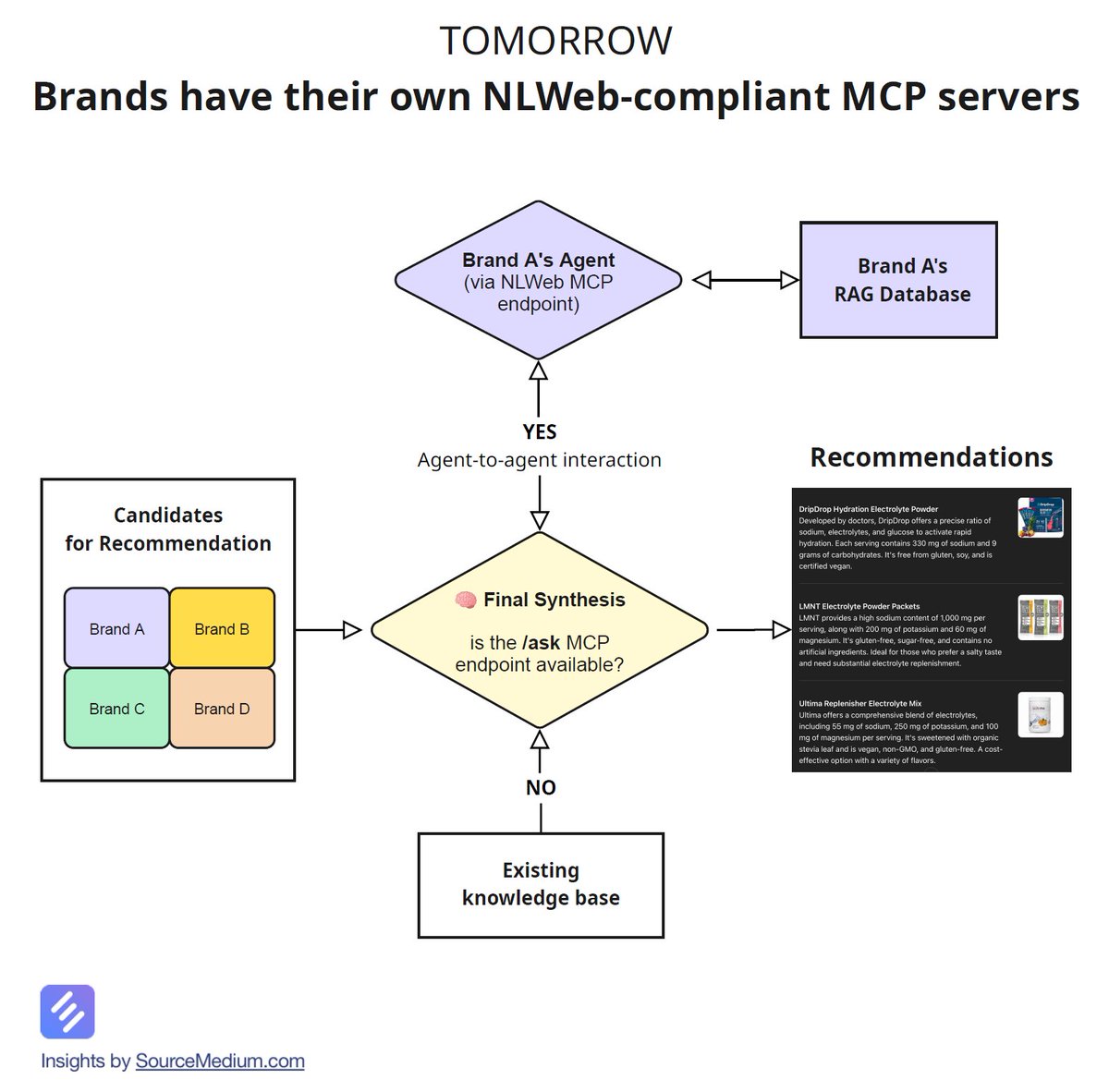
@Microsoft's new MCP standard, NLWeb, will transform AI search as we know it.
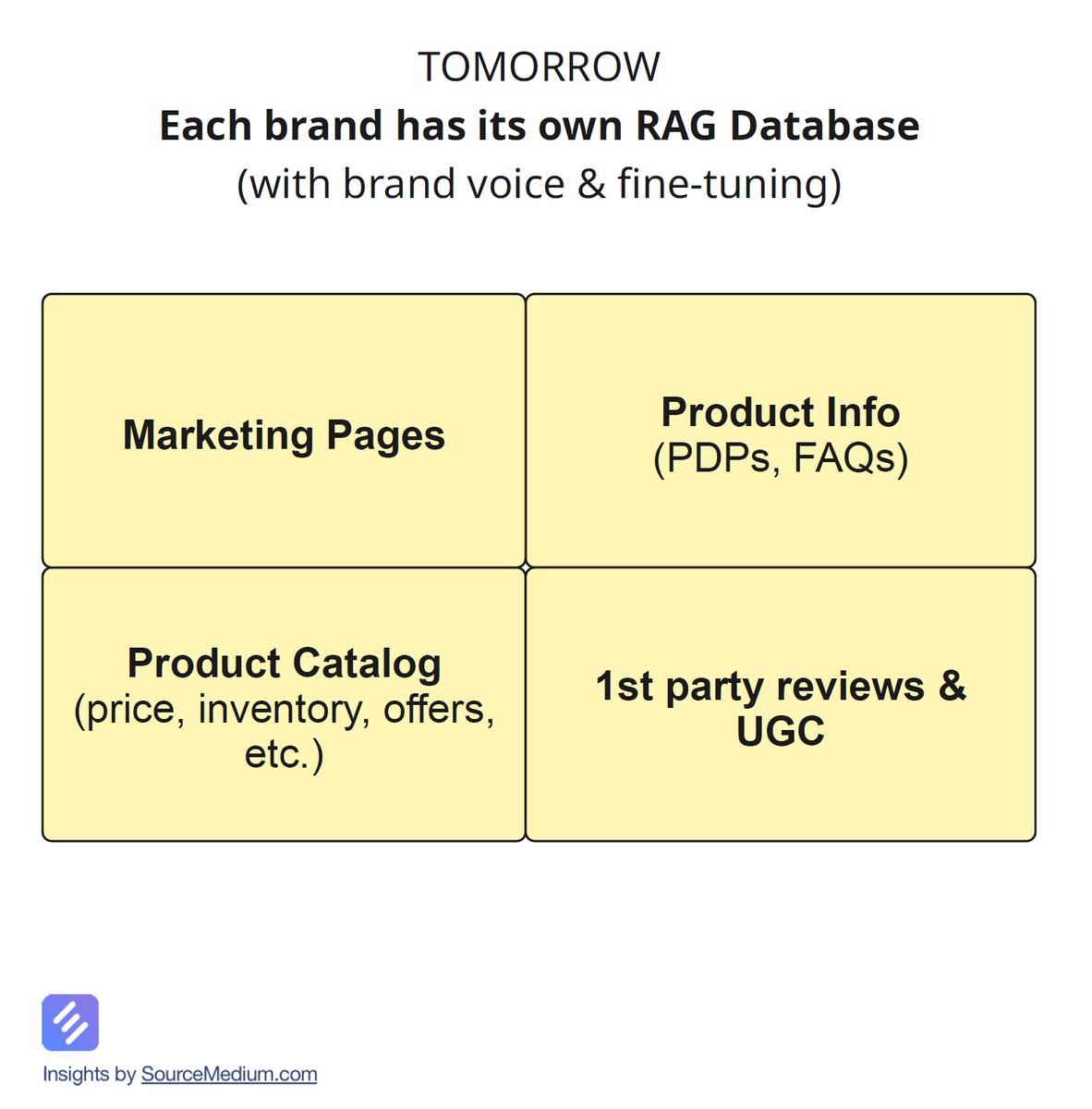
NLWeb creates a universal way for AI agents to interact with your brand's data via MCP, putting the brand back in the driver's seat.
By exposing a "https://t.co/g5bOAY0S2q" endpoint, AI agents will be able to quickly access:
- Product catalog, pricing, availability, offers
- Educational content & FAQ's
- Customer reviews and social proof
- Brand story and differentiation points
No more web scrapping. No more outdated information.
This matters for a few reasons:
📝 Brands control their narratives, not some 3rd party affiliate site or competitor comparison pages
🎯 Accurate present your product info, differentiation, and offers
🤑 Craft AI-specific offers to boost conversion
Given Microsoft's relationship with @OpenAI I wouldn't be surprised for ChatGPT to start adopting it this year. Early adopters already include @Shopify, @Tripadvisor, and @eventbrite this technology is moving toward industry consensus.
The possibilities are infinite as this standard evolves. Aside from information retrieval, agents will have more autonomy to perform actions like email sign-up, loyalty program enrollment, and direct transactions.
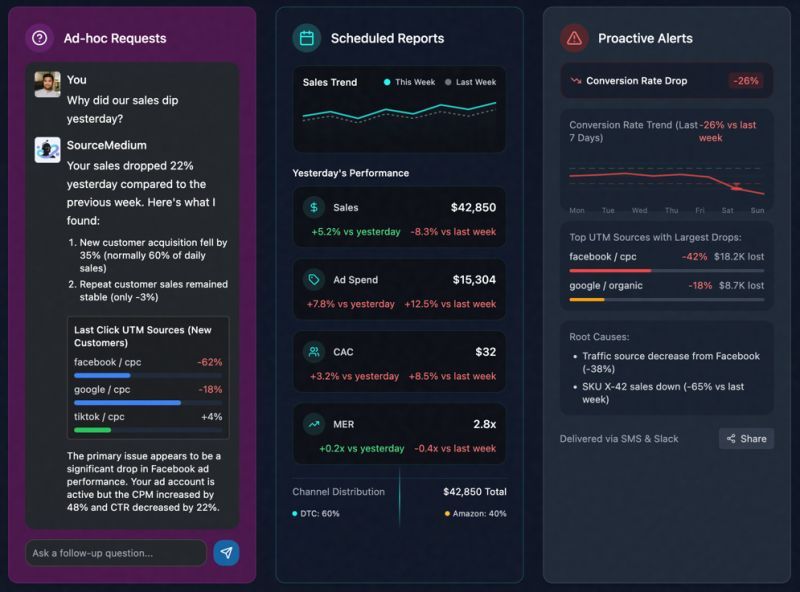
Brands have spent millions building data stacks that no one uses. @SourceMediumHQ is building an AI analyst that understands ecommerce metrics, your business nuances, communicates in plain English, and lives where decisions happen—Slack, email, SMS, and voice calls.
Unlike dashboard-centered tools that require technical expertise, https://t.co/MVN7m4NRBi transforms complex commerce data from @Shopify, @amazon, ads, and email into actionable insights delivered directly in your workflow. No platforms to learn. No queries to write. Just accurate answers when decisions matter.
🔍 Why enterprise AI analytics typically fails:
• Most AI systems produce "confident hallucinations"—answers that sound right but contain dangerous calculation errors
• Traditional solutions require major infrastructure overhauls with 6+ month implementation timelines
• Black-box systems prevent verification, creating data trust issues at the executive level
• Siloed deployments fragment insights across multiple disconnected tools
📊 Our enterprise-ready approach:
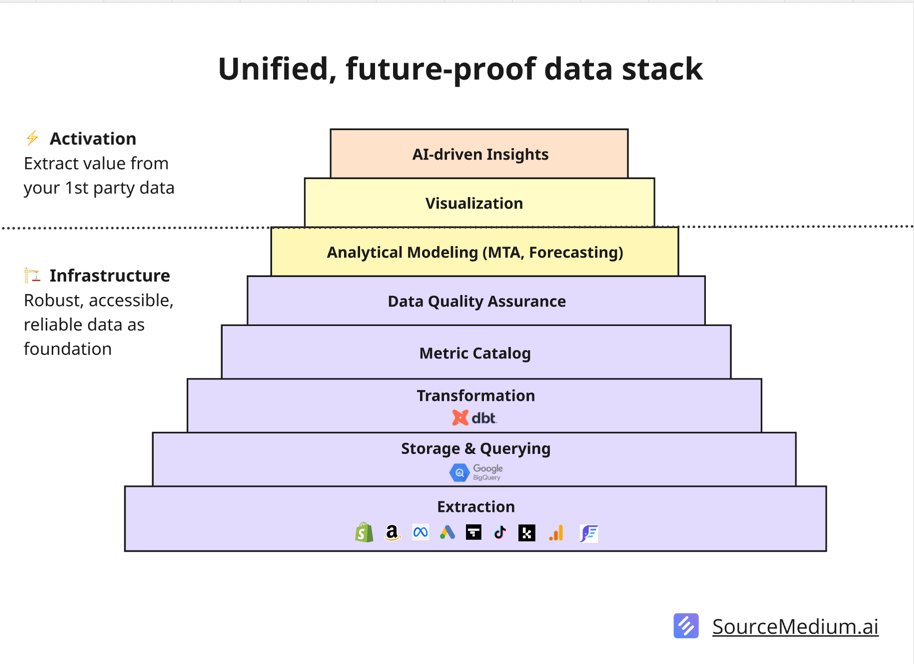
1. Built on Proven Infrastructure - Leveraging our years of experience powering data for 8 to 9-figure brands, we're creating an AI layer on top of battle-tested, accurate data pipelines.
2. Full Transparency - Every AI-generated insight will be fully auditable. Users will see the exact calculations and explore underlying data without technical barriers.
3. Enterprise-Grade Security - SOC 2 compliance with dedicated data warehouse instances to eliminate cross-contamination, meeting rigorous security requirements.
4. Natural Communication - Our AI analyst integrates directly into your existing communication channels—dramatically reducing adoption friction and enabling data-driven decisions in real-time.
5. Consumption-Based Model - We're designing flexible pricing so you can start small and scale as you realize value, unlike infrastructure-heavy projects requiring massive upfront investment.
What makes our approach unique isn't experimental AI—it's building on rock-solid ecommerce data infrastructure (with https://t.co/uDHcnFVZSJ) that understands the nuances of attribution, customer lifetime value, and marketing efficiency metrics that actually drive growth.
For ambitious brands seeking to democratize data insights without sacrificing accuracy, https://t.co/MVN7m4NRBi won't be just another AI experiment—it will be a trusted analyst that fits naturally into your existing workflows.
As we develop this solution, we'd love to hear: What's your biggest obstacle to getting actionable insights from your ecommerce data today?
Greg Abel grew CalEnergy from a niche geothermal outfit into Berkshire Hathaway Energy’s $26 billion enterprise—and now he’s poised to run the whole conglomerate. What can business leaders learn from Buffett's chosen successor?
Behind his "affable, yet hard-driving" leadership style lies a strategic playbook that's remarkably relevant for today's executives:
🧠 Operational Focus + Deal-Making
Unlike Buffett (known primarily for stock-picking), Abel built his reputation by running and acquiring businesses. He's executed massive deals while maintaining operational excellence—demonstrating that vision without execution is worthless. His integration of acquisitions like PacifiCorp ($5.1 B) and NV Energy ($5.6 B)showcases his ability to identify value and then actually realize it.
🔍 Risk Assessment & Capital Allocation
Abel's approach mirrors Buffett's fundamental principle: "Avoid serious risks, including those never before encountered." He methodically evaluates competitive threats and fundamental risks, then allocates capital with patience and discipline. This risk-aware growth strategy has fueled Berkshire's utilities expansion while avoiding dangerous leverage.
🏢 Decentralized Management Done Right
Abel gives subsidiary CEOs autonomy while maintaining accountability. This seemingly contradictory balance—hands-off yet highly engaged—creates a culture where managers think like owners. As Buffett shifted more responsibilities to Abel, he's maintained this delicate equilibrium across 90+ operating companies.
⏱️ Patience & Long-Term Value Creation
In an era obsessed with quarterly results, Abel embodies Buffett's long-term mindset. His statement that "capital allocation principles that Berkshire lives by today will continue to survive" signals his commitment to sustainable growth over flashy short-term wins.
🤝 Skin in the Game
When Abel received $870 million for his 1% BHE stake in 2022, he reinvested ~8% of that payout right back into Berkshire stock. This move demonstrated alignment with shareholders and long-term commitment that's increasingly rare in modern leadership.
What makes Abel's approach particularly valuable is its transferability beyond Berkshire. His focus on operational excellence, disciplined capital deployment, and building businesses to last offers a blueprint for sustainable growth that transcends industry boundaries.
The most successful leaders don't just chase quick returns—they build legacies through methodical execution, strategic patience, and uncompromising integrity. Abel's playbook demonstrates that spectacular results don't require spectacular risks.
Stripe just brought stablecoins mainstream with accounts now live in 101 countries.
At Sessions 2025, @stripe unveiled a comprehensive stablecoin infrastructure that transforms how businesses move money globally. This isn't speculative crypto—it's digital dollars integrated directly into Stripe's platform for practical business operations. 💸
🌐 The facts and implications:
1. Transaction economics
- Traditional cross-border: 2-5% fees, days in settlement
- Stablecoin transactions: ~0.1%, minutes to settle
- For a $10M business: potential $250K+ annual savings
- Protection from currency fluctuations in volatile markets
2. Global financial capabilities
- Near-instant settlement to 101 countries
- Lower-cost supplier payments without wire fees
- Stablecoin-backed @Visa cards usable at 150M merchants
- Case study: @Starlink leveraging this for Argentina operations
3. Implementation details
- Operates through existing Stripe accounts
- No crypto expertise required—familiar interface
- Support for regulated stablecoins (USDC and USDB)
- Automatic conversion between crypto and fiat currencies
While @Bitcoin dominated headlines, Stripe focused on the practical business application: programmable digital dollars that move at internet speed, particularly valuable for international operations.
As tariffs reshape global commerce and margins tighten, every % matters. Now may finally be the time to take stablecoins seriously.
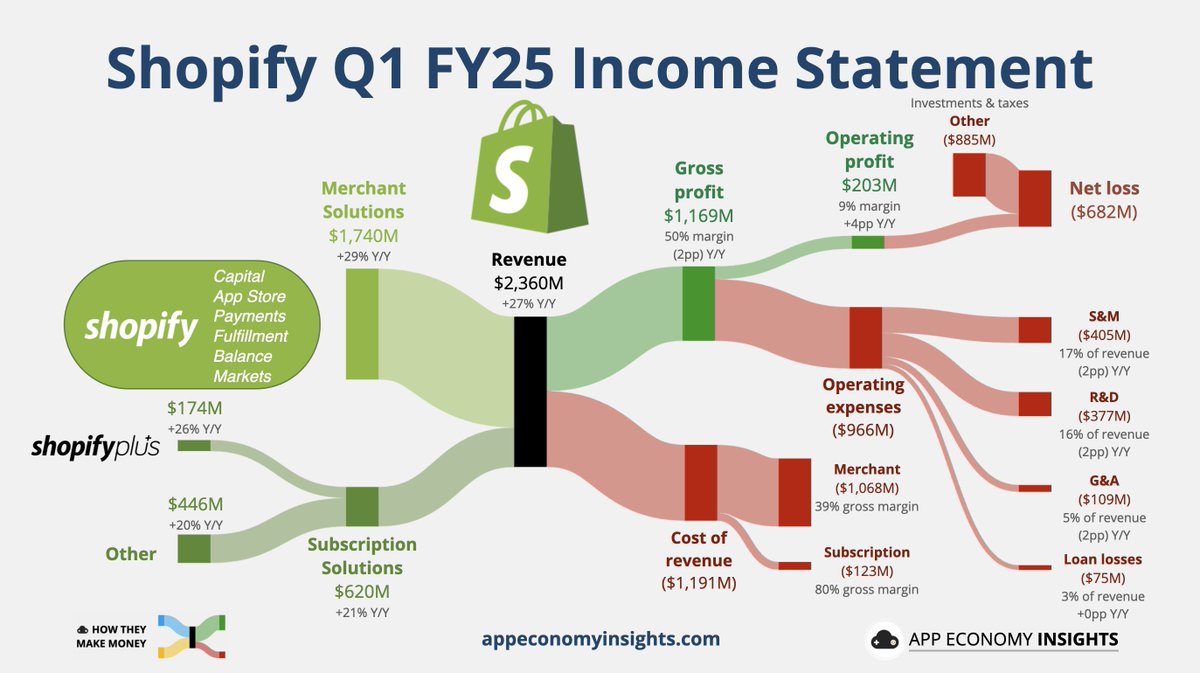
@Shopify's Q1 earnings reveal two major growth vectors many merchants are missing: B2B sales exploded 109% YoY while European GMV surged 36%. Yet beneath the impressive 27% revenue growth lies both opportunity and caution for operators navigating the e-commerce landscape. 🏔️
Shopify's Q1 earnings numbers:
Revenue hit $2.36B (+27% YoY) with GMV at $74.8B (+23% YoY). Free cash flow reached $363M with a healthy 15% margin. But don't miss the concerning signals – a widening GAAP net loss of $682M and gross margin contraction to 49.5% (from 51.4% last year).
Key growth levers merchants should pay attention to:
🏭 B2B Commerce: B2B GMV more than doubled (+109% YoY). If you're selling to other businesses but not leveraging Shopify's B2B capabilities, you're leaving significant growth on the table.
🌍 International Expansion: European GMV grew 36% YoY (vs North America's 21%). With Shopify Payments now in 39 countries and Markets available to all merchants, cross-border selling is increasingly accessible.
🛍️ Omnichannel Selling: Offline GMV grew 23% YoY, with cumulative offline sales now exceeding $100B. The integration between online and physical retail is proving powerful for merchants who master both channels.
📱 Shop App Opportunity: 94% YoY growth in native GMV through the Shop App represents a significantly underutilized channel for most merchants.
What's working (and what isn't):
⚡ Checkout Optimization: Shop Pay grew 57% YoY, processing $22B in GMV. With 64% of eligible merchants now using Shopify Payments (up from 60%), the integrated payment stack is driving conversion improvements.
⚙️ Platform Performance: Admin page loads 25% faster with 12.5% quicker navigation.
📊 Analytics Upgrade: The new ShopifyQL gives merchants custom query capabilities in real-time, reducing reliance on developers for data insights.
⚠️ Margin Pressure: The declining gross margin (49.5% vs 51.4% last year) signals potential challenges in Shopify's revenue mix or cost structure.
The big picture:
Despite impressive growth, Shopify has captured just ~2% of its $849B addressable market. This explains management's continued aggressive push on multiple fronts while still delivering "conservative" guidance for Q2.
For e-commerce operators, the highest ROI opportunities currently sit in B2B expansion, international markets, and omnichannel integration. Those who combine these strategies with Shopify's improving conversion tools (Payments, Shop Pay) are positioning themselves to outpace competitors.
Visualizing data helps humans digest complex information 10X faster than text, yet most dashboards actually slow down decision-making.
@EdwardTufte's pioneering work reveals why: effective data visualization requires ruthlessly eliminating noise to amplify signal—what he calls "above all else, show the data."
1. Maximize the Data-Ink Ratio 🔍
Remove decorative elements that don't convey information. Every pixel should serve a purpose. Those 3D effects and heavy gridlines? They're actively hiding your insights.
2. Answer "Compared to What?" 📊
Tufte's favorite question drives his "small multiples" concept—mini-charts arranged side-by-side with consistent scales. When executives see monthly revenue across six product categories simultaneously, patterns emerge instantly.
3. Context Belongs On the Visualization 📝
Annotate directly on charts rather than in legends or footnotes. A small note "Promo campaign launch" on a sales spike explains more than a meeting ever could.
4. Embrace Sparklines for Trends 📈
These "word-sized graphics" pack tremendous insight alongside metrics. A tiny 30-day trendline next to "Conversion Rate" immediately conveys direction without requiring separate charts.
5. Design for Decisions, Not Aesthetics 🎯
The true test: does this visualization help someone make a better decision? If not, it needs rethinking.
At @SourceMediumHQ , these principles guide our data visualization design, which has powered up to 30x growth for some of our customers over the years. We're now designing these principles into our AI data analyst agent to make it a seamless part of your daily workflow – no more thinking about the best way to make charts, you simply get the most effective visualizations based on your questions and preferences.
This represents a fundamental paradigm shift from conventional dashboards and web apps. https://t.co/MVN7m4NRBi doesn't just present data; it delivers insights with Tufte-inspired clarity and purpose, integrating directly into your team's communication channels.
The best data visuals aren't the flashiest—they're the ones that disappear, leaving only understanding behind.
Meta AI is closing in on 600 million monthly active users—positioning it to become the most powerful AI-driven product discovery platform before competitors even launch their ad models. 😳
At LlamaCon 2025, @Meta unveiled impressive AI capabilities that could transform commerce.
🛍️ Shopping discovery – the missing monetization engine for Meta's AI ecosystem:
- Deep understanding of user preferences: Meta AI remembers preferences and can leverage Facebook/Instagram data (with permission)—creating the infrastructure for personalized shopping based on actual purchase history and brand affinity.
- Social discovery framework: The app's new "Discover feed" lets users share and explore AI creations—potentially evolving into a product recommendation ecosystem where shoppers could "remix" discoveries.
- Spot it -> Shop it: Meta glasses can identify real-world products, Meta AI matches them to your preferences, and you complete purchase across any device—compressing the entire shopping journey into minutes.
- Voice shopping: Ask "find running shoes like my last pair but in blue" without explaining your whole life story. This level user empathy puts the world's best personal shopper in everyone's pocket.
🏰 Meta has a deep moat when it comes to AI Shopping:
- 650M Llama downloads + growing Meta AI user base = potential massive scale for future commerce
- Millions of businesses already familiar with Instagram Shop infrastructure
- Established payment rails enable frictionless transactions
- Mature ad ecosystem will inevitably transfer over to AI recommendations
While Meta hasn't launched any commerce features with Llama yet, the building blocks are all there. The combination of rich user data, robust commerce infrastructure, and a leading frontier model points directly to Meta becoming the dominant force in AI-powered commerce.
Smart brands are acting now—feeding Meta rich product data, activating Instagram Shop, optimizing their Meta Pixel implementation, and building audience segments today that will give them first-mover advantage when AI commerce arrives.
Here's a peek behind the curtain on how we're building https://t.co/MVN7m4NRBi to deliver state-of-the-art accuracy.
Ever wonder why most AI analytics tools give you incorrect answers? They rely on a single language model to generate SQL queries.
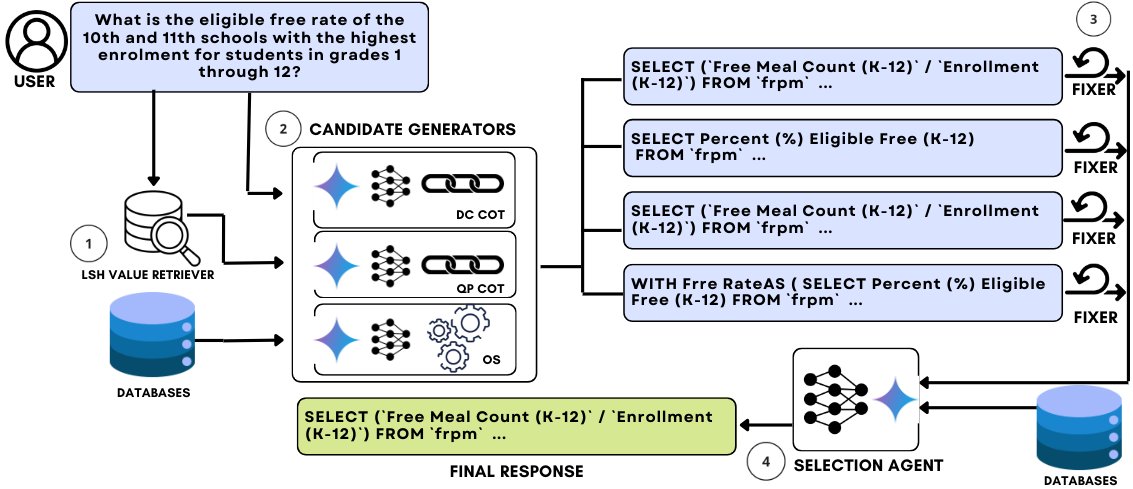
We're taking a fundamentally different approach by implementing a multi-agent architecture inspired by Google's CHASE-SQL research. Here's exactly how it works:
When you ask our AI analyst a question, three specialized agents generate SQL simultaneously:
1���⃣ Divide-and-Conquer Agent: Breaks your complex question into simpler sub-parts, solves each independently, then combines them into a comprehensive SQL query.
2️⃣ Query-Plan Agent: Thinks step-by-step about database execution, considering joins, filters, and aggregations before writing any SQL.
3️⃣ Few-Shot Example Agent: Uses your previous similar queries as templates to approach your current question.
The critical innovation: a Selection Agent that performs pairwise comparisons between candidate queries, carefully evaluating each approach before choosing the most accurate SQL to execute.
Why does this architecture matter for ecommerce brands?
When you ask "What drove our AOV decrease during last month's promotion?" getting the wrong answer isn't just frustrating—it leads to misallocated marketing dollars.
Our approach achieves state-of-the-art accuracy by not placing all bets on a single model's output. This multi-model consensus approach delivers the same results you'd get if your most skilled data engineer wrote the query.
When https://t.co/MVN7m4NRBi launches, you'll get:
• Completely auditable SQL for every query
• Direct BigQuery connections for verification
• Insights delivered in Slack/email where you already work
• Ecommerce-specific metrics baked into the model
We're building the waitlist now for brands ready to stop drowning in dashboards and start getting answers. This isn't just another AI tool—it's enterprise-grade intelligence with verifiable accuracy.
The most valuable competitive edge isn't showing your team another dashboard—it's giving them data they can actually trust.
When data security failures cost brands millions, your data partner's location isn't just geography—it's a strategic decision. 🔒
At @SourceMediumHQ, we've built an all-American analytics powerhouse where EVERY team member—from engineers to analysts to contractors—is U.S.-based. Here's why that matters:
🏛️ Zero-Compromise Security
- 100% U.S. team means no international data transfer risks
- Bank-grade encryption and automated security protocols
- Your PII data never leaves American jurisdiction
- 4,000+ automated quality checks running daily
⚡ Business at the Speed of Same-Time-Zone
- Issues spotted at 9am resolved by noon, not "tomorrow"
- Your success team doesn't work while you sleep
- Cultural alignment means faster understanding of your needs
- No coordination delays across continents
🔑 Your Data, Your Control
- Full SQL access to your data in our hosted or your own BigQuery instance
- Zero vendor lock-in by design – you always have the option to move all your data to another warehouse
- One client put it perfectly: "With their managed BigQuery instance, we have full control over our data, creating custom metrics rapidly"
20 U.S. states now have strict privacy laws, and 98% of companies have implemented data residency strategies. Smart brands are applying this same thinking to their analytics partners.
The math is simple: when your data stays in America under your control, with experts who understand your business working in your time zone, you get more than just reports—you get a true data partner.
For 8-9 figure brands, your analytics infrastructure isn't just another tool—it's your competitive edge. @SourceMediumHQ's all-American approach delivers the security, speed, and sovereignty that ambitious brands demand.
What's the real cost of offshore data operations to your business agility and customer trust?
The ability to talk to your data isn't enough—it must actually tell you the truth. AI data analysts are only as good as the infrastructure they're built on. 🧱
Building https://t.co/MVN7m4NRBi taught us something crucial: before creating another chat interface, you need rock-solid data infrastructure that business leaders can actually trust for decisions.
While the industry focuses on conversational interfaces, we've been obsessing over what makes AI insights truly valuable:
�� Infrastructure That Earns Trust
- Meticulously aligned with platform data (Shopify, Amazon, Meta, Klaviyo, Gorgias, Elevar, etc.)
- Thousands of automated tests running daily catching errors before your team does
- Brands with $100M+ revenue run their entire analytics on our infra – a 10% error means millions in bad decisions
🔍 Verification Over Blind Faith
- Every query is fully visible and auditable in BigQuery, Sheets, or Python Notebooks
- Your data lives in your warehouse, not our proprietary system—full sovereignty, zero lock-in
- Explainable insights you can verify instantly
- Robust metric docs with business logic and technical implementation
⚙️ Commerce Expertise, Not Generic AI
- Deep understanding of ecomm metrics, decision-making flows, and best practices
- An analyst with long term memory — it'll remember your analytical preferences
- NO new logins — get insights directly in Slack, email or voice calls with no platform to learn
Last year, we evolved from dashboards to comprehensive data infrastructure—a powerful foundation our most technical customers immediately valued. But we faced a consistent challenge: "This is amazing, but we don't have the technical resources to fully utilize it." Now with AI, we're finally bridging this gap—democratizing enterprise-grade analytics by embedding intelligence directly in your workflow, regardless of your team's technical sophistication.
Data infrastructure isn't flashy, but it's what separates transformative AI from impressive demos that can't handle real-world complexity.
The future of analytics isn't better dashboards or chat windows—it's having meaningful, accurate conversations with your data exactly when and where you need them.
Stop drowning in dashboards. Start getting answers.
Today we're launching the waitlist for https://t.co/MVN7m4NRBi – your AI commerce analyst that lives where your team already works.
After 5+ years powering $4B+ in annual commerce sales with our data infrastructure, we kept hearing one consistent challenge: "Your data is amazing... but I still can't talk to it." That's exactly what we envisioned in 2020 – not dashboards, but a data analyst in Slack that never sleeps. The technology wasn't ready then. It is now.
What makes https://t.co/MVN7m4NRBi different:
🤝 Your analyst, not a platform: Interact like you would with a senior team member via Slack, email or voice. No dashboards. No logins. Just answers.
💸 Pay per insight: Shift from hefty SaaS contracts to pay-per-interaction – making enterprise-grade analytics accessible at any scale.
🧠 Commerce expertise built-in: Fine-tuned on our standardized metrics layer that understands LTV, CAC, MER, acquisition vs. retention, and SKU-level profitability.
📊 Trust through transparency: Every answer includes the SQL that generated it, ensuring full verification of results.
🛠️ Built on robust infrastructure: The same foundation that cut tool sprawl by 80% and deploys in under 2 weeks now powers your AI analyst.
Our roadmap:
- May 2025: Internal fine-tuning begins using Google's latest Gemini models
- July 2025: Beta testing with existing customers
- Q3 2025: Early access for waitlist members
For high-growth brands, this isn't just another AI tool – it's the difference between data you have and data you can actually use to make decisions. The future of analytics isn't better dashboards; it's having meaningful conversations with your data.
Join the waitlist: https://t.co/4dEajgabKx
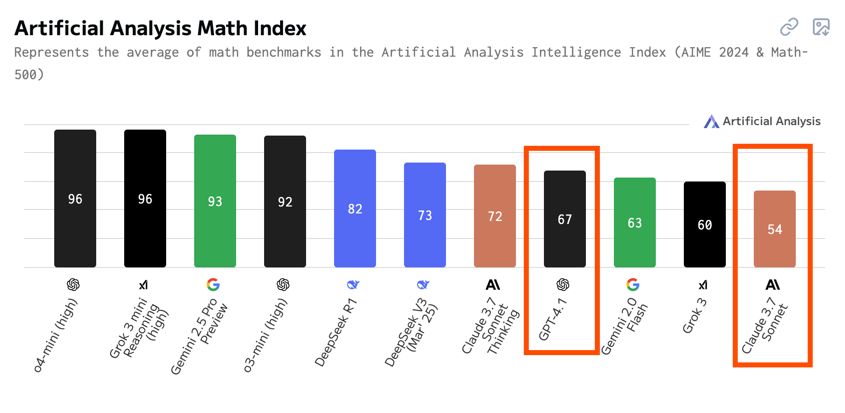
@OpenAI just changed the game with GPT-4.1 and o-series models – and @AnthropicAI 's coding crown is in danger. 🔄
Cost dropped by 95%, context window grew to 1M tokens, and they might acquire @windsurf_ai for $3B. 😳
What's New in @OpenAI 's April Release:
🧠 GPT-4.1 – A suite of multi-modal models specifically designed for professional/enterprise
📜 Million-Token Context – GPT-4.1 supports a massive 1 million token context window, 5× larger than Claude's 200K limit, enabling entire codebases to be processed at once
💰 Radical Cost Reduction – Pricing slashed to just $2 per million input tokens (and $8 per million output tokens), making it 95% cheaper than previous models
🧮 o-Series Models – New specialized reasoning models (o3 and o4) optimized specifically for code, math, and step-by-step logic tasks that complement the general-purpose GPT-4.1 family
🚀 o3-mini Performance – A cost-efficient reasoning model for coding and scientific tasks that in some tests outperforms GPT-4.1's smaller variants
🛠️ Developer-First Approach – GPT-4.1 is API-only, showing OpenAI's commitment to developer use cases over consumer applications
🏆 Coding Performance Leap – Scored 54.6% on SWE-bench (real-world coding benchmark), a 21% jump over GPT-4o, and more than doubled accuracy on multi-language code editing tests
💸 Potential Windsurf Acquisition – Advanced talks to buy the "agentic" IDE maker (formerly @codeiumdev ) for $3 billion, which would directly compete with Cursor & Copilot
🔓 Apache-Licensed CLI – OpenAI's Codex CLI tool released under Apache License 2.0, allowing developers to inspect, modify and extend the command line interface while Claude Code remains under proprietary terms
Why Anthropic Should Be Worried:
Up until now, Claude has been the default choice for developers. Not anymore.
1. Context Window Dominance – GPT-4.1's 1M token context is 5× larger than Claude's 200K limit, allowing for much bigger codebases and comprehensive documentation
2. Specialized Reasoning Models – While Claude 3.7 Sonnet still edges out GPT-4.1 on coding benchmarks (44 vs 42 on ArtificialAnalysis), OpenAI's new o3/o4 series models specifically optimized for reasoning are designed to close this gap
3. Pricing Advantage – The dramatic cost reduction makes GPT-4.1 more accessible for heavy coding workloads than Claude models
4. Tool Integration – The main reason Claude dominated for coding. 4.1 now specifically optimizes for code execution and function calling
5. Developer Tooling Approach – OpenAI's Apache-licensed Codex CLI gives developers freedom to customize their coding interface, while Claude Code's closed-source CLI limits modification and extension capabilities
The battle for AI coding dominance intensifies with each release, but OpenAI's comprehensive approach creates a compelling environment that developers will find increasingly hard to resist.
What will you build with 1 million tokens of context?