🇱🇾🇮🇳 India-Libya Bilateral Talks Resume in Tripoli After 8 years
✍️Salem Al-Zadma, Deputy Prime Minister of Libya's Government of National Unity (GNU), officially received a diplomatic delegation from India in Tripoli.
👨💻 India officially reopened its diplomatic mission in Tripoli to rebuild momentum and this visit builds directly on recent momentum following the Libyan Foreign Minister's breakthrough trip to New Delhi the first such ministerial visit in over 15 years.
🇵🇰 Pakistan is dealing directly with Field Marshal Khalifa Haftar and the Libyan National Army (LNA) based in Benghazi.
🇮🇳India is dealing with the Government of National Unity (GNU) in Tripoli, led by Prime Minister Abdul Hamid Dbeibah - GNU is the officially UN-recognized government of Libya.
👨💻Araudra Singh - Critical Minerals Expert talks with SBR on How Partners like Japan Are important for India to reduce "Rare Earth Dependency from China"
Araudra's research interests include naval power with the focus on undersea warfare, critical minerals, and India-US ties. His work has appeared in several national and international media outlets and think tanks including The Hindu, The Diplomat, Stimson centre's South Asian Voices, Observer Research Foundation, and Hindustan Times, among others.
✍️ Credentials - @auro508
- @CSDR_India
👨💻 South Bloc Reports is pleased to welcome Dr. S. Kulshrestha as a Research Adviser.
Dr. Kulshrestha previously served as the Director-General of Naval Armament Inspection (DGNAI) at the Integrated Headquarters, Ministry of Defence (Indian Navy), bringing decades of leadership and expertise in defence, naval systems, strategic affairs, and national security.
His guidance will strengthen SBR's research initiatives across defence, maritime security, geopolitical analysis, and strategic affairs as we continue building an independent platform committed to structured, evidence-based open-source reporting.
We are honoured to have sir join the South Bloc Reports advisory team.
@DrSKulshrestha - Welcome Sir 🙏
🇵🇰🏴☠️ Pakistan Brokers Peace for the World But Abandons Its Own Citizens to Starve
Pakistan has spent over 60 days in a state of absolute paralyzed inertia regarding its own citizens. Armed Somali pirates hijacked MT Honour 25 taking 10 Pakistani crew members hostage out of the 17. Pakistani Crew member and Second Officer Syed Kashif Umar confirms - the crew has been reduced to one ration of boiled rice per day and is consuming contaminated tank water. The pirates initially demanded $10 million, but now are non-negotiable for $3 million to $4 million for the release of the ship and the crew.
Earlier this year, the Indian Navy’s INS Kolkata and MARCOS commandos intercepted the hijacked MV Ruen, forcing the surrender of 35 Somali pirates and rescuing all crew members without even a single scratch.
#pakistán #india #news
How Bangladesh-Nepal-Myanmar Trio Is Using India-China Tug of War into a Multi Billion Dollar Extortion Game
These three nations deliberately engage with India on sensitive issues such as border security, digital public infrastructure, river management and trade to make China uncomfortable. Once China panics, these small neighbors walk into China with a massive leverage, demanding major investments, tariff free trade and infrastructure projects.
🇳🇵Nepal
June 5–7, 2026 - Nepal's Foreign Minister - Shisir Khanal lands in India to meet S. Jaishankar and NSA Ajit Doval.
June 14–17, 2026 - China calls Khanal to China to meet Wang Yi.
🇲🇲 Myanmar
June 3, 2026 - Burmese President U Min Aung Hlaing meets and holds talk with PM Narendra Modi.
June 15–19, 2026 - Xi Jinping issues State Invitation to Myanmar's Prez to visit Beijing
🇧🇩 Bangladesh
April 7–9, 2026 - Bangladesh's New Foreign Minister - Dr. Khalilur Rahman holds talks in New Delhi.
June 24–26, 2026: China isses invite hosting Bangladeshi PM Tarique Rahman’s debut visit.
🇳🇵 NEPAL
Nepali FM Khanal went landed in Delhi to show the break from old communist baggage. Khanal left with a massive victory - Joint roll out connecting India’s UPI with Nepal's NPI for cross border remittances and also Digital Public Infrastructure deal for AI language translation engines.
Seeing these digital and financial deals made China deeply uncomfortable. Using this leverage, Nepal walked straight into China to demand faster execution of Belt and Road projects and cross border connectivity grants.
🇲🇲 MYANMAR
Burmese President Min Aung Hlaing chose India for his post election debut, reassuring Modi that Burmese borders would not be weaponized against Indian security interests.
Watching this, China immediately hosted Hlaing with full state honors in Beijing. Myanmar used the Indian security engagement as leverage to force Xi Jinping into fast tracking economic investments and guaranteeing security protections for China Myanmar transit pipelines located in the region.
🇧🇩 BANGLADESH
Post Hasina, Bangladesh sent its Foreign Minister to India in April to hold talks and asked India for stable diesel flows and fertilizer supplies.
Bangladesh knowing they had already stabilized its baseline relationship with India, Prime Minister Tarique Rahman bypassed the tradition of visiting India for the first foreign trip, choosing Malaysia and China instead. Rahman walked into Beijing with his massive leverage, demanding economic partnerships and putting the long delayed Teesta River restoration project on the table for Chinese to engineering and fund.
At last, these trio understand that it's better to get the work done from both the sides before picking a side.
🇮🇳🇦🇪📡 UAE LOOKING FOR ACCURACY AND COST CUTTING ? - AS REPORTS INDICATE INDIA IS IN TALKS TO SELL BRAHMOS MISSILES AND AKASHTEER SYSTEMS TO THE GULF NATION
➡️ As per the report from reuters, Indian government has entered early stage discussions to sell their premier combat tested military hardware to the United Arab Emirates. UAE is focused on procuring the BrahMos supersonic cruise missile - the world's fastest cruise missile, featuring 290 kilometer range and also the Bharat Electronics Limited Akashteer Fully Automated Air Defense Command and Control System.
➡️The recent Iranian conflict highlighted the financial asymmetry for UAE - which is, a complete American THAAD battery costs around $1 billion and $1.8 billion with single interceptors ranging from $12 million to $15 million, whereas India's indigenous Akashteer is priced at roughly $240 million for the entire system. The supersonic BrahMos missile, offers UAE highly accurate, tier one defensive and counter strike capabilities unlike the Western luxury prices.
➡️ United States will immediately raise their concerns, warning UAE that introducing the Russian linked hardware - the BrahMos could compromise security protocols of the existing US supplied platforms. They also might use the Countering America's Adversaries Through Sanctions Act as the political leverage behind closed doors to slow down the deal.
#india #NewsUptate
🇺🇸🇨🇺WILL TRUMP GET HIS FAME BACK THROUGH CUBA ? 🤔
The fallout from US-Iran Memorandum of Understanding has left not only Trump but their cabinet facing domestic and international humiliation. The Trump administration that was built entirely on the brand of "Projection of Raw Power", now are being forced to sign an agreement with Iran and notably releasing blocked funds is a huge humiliation.
For anyone who understands the psyche of Donald Trump knows he will not sit quietly under the weight of humiliation or defeat. He completely knows that needs to balance his ledger and he needs to do it fast before his domestic MAGA audience completely turns on him.
For this - his answer and eyes will be on - CUBA
If one wants to understand why Cuba is the ultimate target - one has to look at the chronology of how Trump got dragged into the Iran disaster in the first place. The clean-swift successful US special military operation in Venezuela gave the Trump administration a massive-cheap victory. This ease of the Venezuelan intervention operation created the illusion of invincibility within the White House. It basically led Trump to believe he could use the exact same rapid military pressure against the highly sophisticated and asymmetric Iran just like Venezuela.
The reality which Trump did not understand was that Iran was not Venezuela. Iran's simple and long tested ballistic missile stockpiles, asymmetric warfare and their proxy networks gave serious costs on US and their assets, which eventually forced Washington into the humiliating retreat.
Trump now has two important paths forward - one is to completely end all foreign military adventures out of fear, the second is double down on Cuba - which is a low risk target and rewrite the media cycle. Given Trump's psych of projecting strength, the second alternative is highly possible and also Cuba perfectly fits in the profile for a media distraction.
The main slogan for this operation would be "We are cleaning up threats right on our border." Just like when the Trump adminstaration said they'll provide support to the local Iranian's to protest against the regime. The justification always remains the primary distraction. More like Venezuela, Cuba has very low capacity to project resistance to the US mainland. Their traditional military infrastructure is aging, they lack depth and it cannot drag the US into a long battle like Iran did. This is a conflict which Washington knows it can manage and dominate visually on television and media.
Trump might also look to posture himself as the ultimate defender of the Monroe Doctrine - claiming that he is directly kicking America's rivals out of the Caribbean region
BUT - there is also a secondary calculation. The scale of the humiliation in Iran conflict has made fractures inside the Trump cabinet, the American public is also deeply fatigued with the economic costs of the Middle East conflict. If there is huge internal resistance from the Pentagon, Trump might be forced into temporary paralysis, halting all his offensive plans.
TAKEAWAY - Trump’s political survival is like Reality TV: if the show fails in Middle East, you cancel it and begin drama in the Caribbean.
#Trump #USA2026 #geopolitics
🇺🇳SELECTIVE OUTRAGE - HOW NATIONS WEAPONIZE THE DEATH OF CHILDREN
Across recent global conflicts, this phrase "baby killer" has become the ultimate rhetorical tool for nations looking to tally moral high grounds, with governments routinely condemning rivals for targeting children while systematically doing the exact same thing when strategic interests dictate it.
This hypocrisy spans every major area : Pakistan aggressively slams Israel for their actions in Gaza, yet its own military operations in Afghanistan that have claimed the lives of innocent civilians and children.
Similarly, Russia labeled Ukraine a "baby killer" after the devastating Ukrainian drone strike which hit a student dormitory in Starobilsk, resulting in the killing of teenagers, in the same sense UN and independent data confirms Russian strikes have killed or injured thousands of Ukrainian children since 2022.
This cycle also continues in the Middle East, where Iran and its proxy networks blame the United States and Israel over civilian deaths like the historic Minab school bombing, yes both United States and Israel should be help accountable for their attacks in innocent children, but yet Iran's own state sponsored proxies have claimed countless young lives through suicide attacks, bombings and global targeted attacks, including the 2012 New Delhi Israeli embassy sticky-bomb attack where Indian bystanders were caught in the crossfire.
In the modern warfare, children have been weaponized in two instances - first as collateral damage on battlefield and second as the cheap political shield in the information war. Children are not bargaining chips neither they are tools of propaganda. Instead of pointing fingers to win over the news, nations must face the truth that - if you use the slaughter of innocents to justify your geopolitics ambitions and priorities you lose all moral authority to speak on human rights. Accountability cannot and shouldn't be selective.
✍️https://t.co/plOmCQxM52 - This video provides the UN briefing regarding the child casualties reported in the Starobilsk dormitory strike as well as the other data on youth impacted by the conflict.
🇳🇵⁉️🇮🇳NEPAL’S PSYCHOLOGICAL DILEMMA WITH EAM JAISHANKAR
➡️ As per, The Kathmandu Post, Indian External Affairs Minister Dr. S. Jaishankar remains deeply held in the political psychology of Nepal’s top leadership, dating back to his chaotic 2015 diplomatic visit to Nepal.
➡️ Back in 2015, Jaishankar traveled to Nepal as the special envoy just days before the country adopted their historic new constitution. He strongly urged the Nepali leaders to pause the process to address the grievances of dissatisfied minority groups (Madhesis and Tharus) to prevent future border instability, local Nepali politicians fiercely rejected and viewed as direct external interference in their domestic affairs.
➡️ Over a decade later, top Nepali leaders and former ministers are quietly softening their stance towards India and Jaishankar. Many are beginning to separate Jaishankar’s tough delivery method from his actual message, realizing that India’s core fear was long-term disruptions on its borders rather than stopping Nepal's sovereignty.
🇮🇱Sa’ar’s Realignment within Likud - The Price of Loyalty
The merger between Gideon Sa’ar’s New Hope faction and the ruling Likud party has reached its endgame. Under the terms of the agreement, Sa’ar has been awarded the first reserved slot on Netanyahu’s slate, effectively pushing the sitting Foreign Minister within the top-ten bracket of the Likud leadership hierarchy. This strategy highlights Netanyahu's willingness to bypass internal party primaries and anger long-standing Likud loyalists to guarantee Sa’ar's political survival. By absorbing Sa’ar’s right-wing voters directly into the Likud apparatus, the coalition ensures that no national-conservative votes are accidentally vaporised below the 3.25\% threshold, shoring up Netanyahu's personal defence line as the largest single party list on the board.
#Israelis #elections #netanyahu
🇺🇦THE 2026 BOOM - HOW UKRAINE BECAME THE WEAPONS EXPORTER
Local factories in Ukraine grew so fast that, they can now build $55 billion worth of hardware in a year. Because the Ukrainian government has only the budget to buy around $13 billion worth of it, Ukraine officially changed the law in May 2026 to allow weapons exports. Now, Ukraine is exporting its battlefield-proven technology to allied nations under the framework called "Drone Deals."
🇸🇦Saudi Arabia
Deal Type: "Drone Deal" export contract.
What Ukraine is Exporting: Cheap - automated drone-hunting UAVs and anti-drone jamming software. Ukraine is also sending its battlefield experts to Saudi Arabia to teach their military how to shoot down Iranian drones using cheap interceptors instead of wasting $3 million on Western missiles.
🇦🇪United Arab Emirates (UAE)
Deal Type: Defence Industry Co-production and Technology Transfer.
What Ukraine is Exporting: The UAE is funding the building of Ukrainian long-range strike drones and naval sea drones. Ukraine exports blueprints, the combat-tested guidance software and the electronic warfare (EW) technology, while the UAE builds them in their local factories.
🇶🇦 Qatar
Deal Type: Public-Private Military Contract.
What Ukraine is Exporting: Advanced artificial intelligence software for drone swarms and electronic jamming tools. Qatar is buying software that allows multiple drones to fly and attack together without relying on the GPS, which is heavily jammed in modern warfare
🇱🇹Lithuania
Deal Type: Bilateral Defence Cooperation Pact.
What Ukraine is exporting: Long-range attack drones, naval surface drones, and drone-interceptor technology. Ukraine is setting up local production lines directly on Lithuanian soil.
🇱🇻Latvia (Signed June 9, 2026)
Deal Type: Bilateral Drone and Air Defence Treaty.
What Ukraine is exporting: Anti-drone defence systems and frontline military expertise. Following recent incidents of drones crossing into Latvian airspace, Latvia is immediately bringing in Ukrainian combat experts to train its forces and build joint drone defences.
🇪🇪Estonia (Signed June 9, 2026)
Deal Type: Joint Defense-Industrial Cooperation Framework.
What Ukraine is Exporting: Integrated air-defence software, advanced artillery shells, and electronic warfare shields based on real-time data from the Ukrainian combat lines.
🇵🇱Poland
Deal Type: Industrial Relocation and Joint Export.
What Ukraine is Exporting: Over half of Ukraine's private drone companies have opened sister factories in Poland to protect their production from Russian missile strikes. Ukraine exports its engineering talent and combat designs to Poland, using Polish factories to safely manufacture weapons for both the Ukrainian front lines and foreign buyers.
#ukrainians #ukrainerussianwar
🇹🇼🇫🇷🇨🇳TAIWAN FIGHTER JET PROBLEM - WHY THE STRATEGY FAILED
Taiwan tried to use it's old trick to get the new weapons from the West. Taiwan wanted to use talks with France to force U.S. to sell them advanced jets. But this time France backed out due to China's trade leverage and Washington is too busy with the war in Iran, thus leaving Taiwan completely stuck.
For a long time, Taiwan has used a clever strategy to buy weapons from the west. The United States is usually very worried about angering China, so they often delay or refuse to sell their best military hardware to Taiwan. To break this delay, Taiwan historically used France as a tool to pressure the Americans.
The best real life example happened back in 1992. France ignored the heavy warning signals from China and sold 60 Mirage 2000-5 fighter jets to Taiwan. This move shocked the Americans. Washington didn't want to loose their monopoly on the Taiwanese weapons market, so they quickly dropped their delays and approved the massive sale of F-16 fighter jets to Taiwan. At present, Taiwan’s old Mirage jets are breaking down and costing too much money to fix and operate. Taiwan tried to use the exact same old trick again. They started loud, public talks with France to buy their next-generation Rafale jets. The real goal wasn't actually getting French planes but Taiwan wanted to make the U.S. nervous enough to finally sell them the highly advanced F-35 stealth fighter.
The world has changed since the 1990s, and Taiwan’s gamble failed its first test in France. The French government stepped in and blocked the Rafale deal completely, forcing the plane manufacturers to back away from Taiwan. France walked away because China holds too many economic leverage today. To build advanced jets like the Rafale, France needs critical rare-earth minerals and special chemicals. China completely controls the world’s supply of these chemicals and materials . If France sold jets to Taiwan, China could simply stop shipping these materials, which would completely freeze France’s domestic military factories. France makes billions of dollars selling civilian Airbus planes, luxury goods and wine to the massive Chinese market. The French presidency decided that a one-time weapons deal with Taiwan was not worth losing their biggest commercial trade partner.
The second and biggest blow to Taiwan's plan came from their core partner the United States. The recent visit by Donald Trump to China, the U.S. relationship with Taiwan has been normalised significantly. Right after the meetings in China, the White House announced it was freezing a long-delayed $14 billion arms package to Taiwan. Instead of protecting Taiwan at all costs, America is now treating these weapons deliveries as a bargaining chip to keep things stable with China.
This shift is happening because the U.S. military has much bigger emergencies and problems to handle. The United States is currently locked in a major, expensive military conflict with Iran in the Middle East. This involves heavy naval blockades and active combat. The war in Iran is eating up huge amounts of American ammunition, missiles and money. It is also consuming almost all of Washington's attention and intelligence assets, leaving Taiwan sidelined.
#france #taiwan #china
🇮🇱"Netanyahu Appoints Tech Veteran as National Security Adviser
The appointment of Shmuel Ben Ezra as Head of the National Security Council indicates the comprehensive push to reinforce Israel’s military technological edge, stabilize relations with Washington and also protect economic resilience.
Here are few reasons for his appointment:
Reason 1 -
Israel’s National Security Council had been operating without permanent head for nearly eight months following the period of intense policy disagreements within the Netanyahu cabinet. The sudden permanent appointment of Shmuel Ben Ezra completely changes the management policy in Israel. Ben Ezra, an elite defense innovator who has won the prestigious Israel Defense Prize for leading the development of the "Arrow 3" ballistic missile interceptor project and also directed the Shin Bet's cyber-technology division, brings a deeply technical skillset to the core of national security.
Reason 2-
The timing of this appointment is itself a unique political paradox due to the legal mechanism of the office. In Israel, the National Security Adviser holds a "position of trust," meaning there is no fixed tenure and the adviser's term is legally bound to the sitting Prime Minister. With Israeli elections rapidly approaching and Netanyahu fighting a fierce domestic battle to retain his legislative seats, Ben Ezra's long-term survival in the post is entirely dependent on the current government's victory. However, Netanyahu is utilizing this specific mechanism to project executive authority, telling both domestic voters and international allies that he is installing a highly qualified and permanent war occupied with experts.
Reason 3 -
Ben Ezra's appointment highlights Israel's need for a grand strategy as its military operations expand deeper into Lebanon. By choosing the leader who holds advanced degrees with highest honors in Applied Physics, Business Administration and Political Science, Netanyahu is preparing the state for a highly complex, technologically demanding and also an expensive conflict. Ben Ezra's diverse technical and multidimensional background is uniquely designed to protect Israel's domestic economic and technological resilience, ensuring the country remains a global tech powerhouse even under long term and severe wartime strains. This highly calculated appointment aims to balance aggressive territorial gains on the battlefield with the long-term economic stability required to sustain Israel’s position on the global stage.
#Netanyahou #IsraelStrikes
🇷🇺"Russia Companies Can Now Buy Their Own Air Defense Systems"
- Russia's new decree lets private companies buy heavy anti-aircraft weaponry, which reveals the limits of state protection against relentless drone attacks.
Previously, private Russian companies were only legally allowed to buy light-scale passive security gear, like firearms for guards or other basic electronic jamming devices. Now, the newly approved decree completely changes the rules of private company security. Now, major industrial companies, especially oil refineries and million dollar companies can directly fund and procure heavy military hardware which includes anti-aircraft artillery, automated turrets, specialized military vehicles and advanced radar systems.
How is the Hardware Managed?
According to the RBC report, this is not a license for companies to build private armies. The technical design forces a strict partnership with the state - in simple Public-Private Partnership. Private companies provide the cash to buy the heavy weapons, but the equipment is handed directly to the newly formed "Mobile Fire Groups." These groups are staffed by a mix of military reservists, local volunteers and company personnel, operating under the umbrella of the Russian Defense Ministry. This legal loop ensures that while private money scales up the defense industry quickly and the state maintains absolute command over the weapons, preventing them from leaking onto the black market.
#russia #airdefense
Can Friedrich Merz’s Coalition Survive Germany’s Domestic and Political Pressure?
Germany's ruling CDU–SPD coalition is facing a huge internal crisis and public dissatisfaction, economic pressure and most importantly the rise of the AfD begins testing the stability of the coalition.
Berlin's current governing coalition is led by Friedrich Merz’s CDU/CSU bloc with the center-left SPD. In the 2025 federal elections, CDU/CSU emerged as the largest bloc in the Bundestag with 208 seats, SPD entered government despite suffering major electoral losses. Both together formed a narrow “Grand Coalition” to block the rise of the rightists AfD and maintain government. However, in the past year the CDU/CSU coalition has struggled with major internal disagreements over policies like energy, pensions, migration, taxation, military spending and domestic economic reforms. The support for AfD has continued rising in national polls.
The question to be asked now is whether the coalition will eventually breakdown under domestic pressure. Given the present scene, a complete breakdown appears to be unlikely because neither the CDU or SPD possesses the stable alternative governing path. However, if AfD popularity rises among diffrent blocs, economic crisis continues and Merz���s approval ratings keep declining there might be a coalition collapse, in such case Germany would likely face snap elections.
#german #AfDzerstörtDeutschland #FriedrichMerz
🇬🇧 Tony Blair Thinks Labour Is Losing Britain
The former British Prime Minister has suddenly intervened into the Labour politics, showing the growing panic inside the party over economic pressure, climate policy backlash,the fear of losing political relevance and the leadership question.
Tony Blair’s re-emergence is not about him just supporting Labour — it is critically about preventing the party from which he controlled for years drifting into what he sees as politically damaging idealism. Blair's criticism of the Labour’s current net-zero and the energy policies shows the growing concern that aggressive climate commitments policies are becoming more economically unsustainable for the ordinary British citizens during a prolonged cost-of-living crisis coming through the Middle East. Blair is warning that Labour risks alienating working and the middle-class voters if it continues to push expensive green transitions while the energy prices, industrial pressure and also the economic stagnation continue to hurt the general public. This is why Blair's remarks front-on challenged the current administration of Keir Starmer’s government and figures associated with Labour’s climate policy.
Notably this goes beyond internal Labour domestic politics and policies. Blair’s intervention shows the wider crisis developing across parts of Europe where "Centrist Governments" are struggling to balance climate policy ambitions, economic mechanisms, migration concerns and the rising domestic populist anger at the same time. This is why Blair is attempting to pull Labour back toward a realism and pragmatic based, election-based political structure before the public anger strengthens both the right and anti-establishment movements. Blair's comeback also exposes another message, that many within Labour see him as an outdated and disconnected individual from modern Britain and its modern politics, others believe he is one of the only few senior individuals to openly accept and acknowledge that Europe’s political and economic thinking and model is entering a period of deep stress.
#tonyblair #britian #keirstarmer #LabourGovernments
🇷🇺 Russia May Be Winning Territory — But The War Is Still Costing Hugely
Russia estimates nearly $8 billion in damage across occupied regions, which shows the growing reality Moscow can no longer fully conceal the fact that - the Ukraine war is carrying a long-term economic and infrastructural burden even though battlefield gains are improving.
For the initial years of the war, Russia largely attempted to shield the Russian public from the financial consequences of the conflict by maintaining economic stability mechanism, controlling information flow, and redirecting energy revenues to sustain wartime operations. But as the war dragged, the costs have reached sky high and it's increasingly visible. Beyond its military expenditure, Russia now has to face widening pressure from sanctions, repeated attacks on its shadow oil fleet, infrastructure deep inside occupied territories and the growing financial burden of maintaining a long-term military mobilization. The latest estimates regarding damages in newly annexed regions only add another layer to the already expensive war structure.
While Russia continues to dominate the military battlefield across several fronts and Ukraine may not currently possess the capacity for a decisive battlefield victory but Ukraine has successfully imposed huge economic attrition on Moscow through a combination of Western-backed sanctions, drone attacks on its vessels, energy disruptions and mainly the prolonged instability. This shows the 21st century reality that modern wars are no longer measured only by territorial advances, but on how long a country can absorb economic exhaustion, domestic industrial pressure, and diplomatic isolation. Russia may still hold the battlefield command but the long-term financial cost of sustaining the war is becoming impossible to hold and ignore.
#russia #ukraine
🇷🇺💉“Has Russia Found The Ebola Breakthrough?”
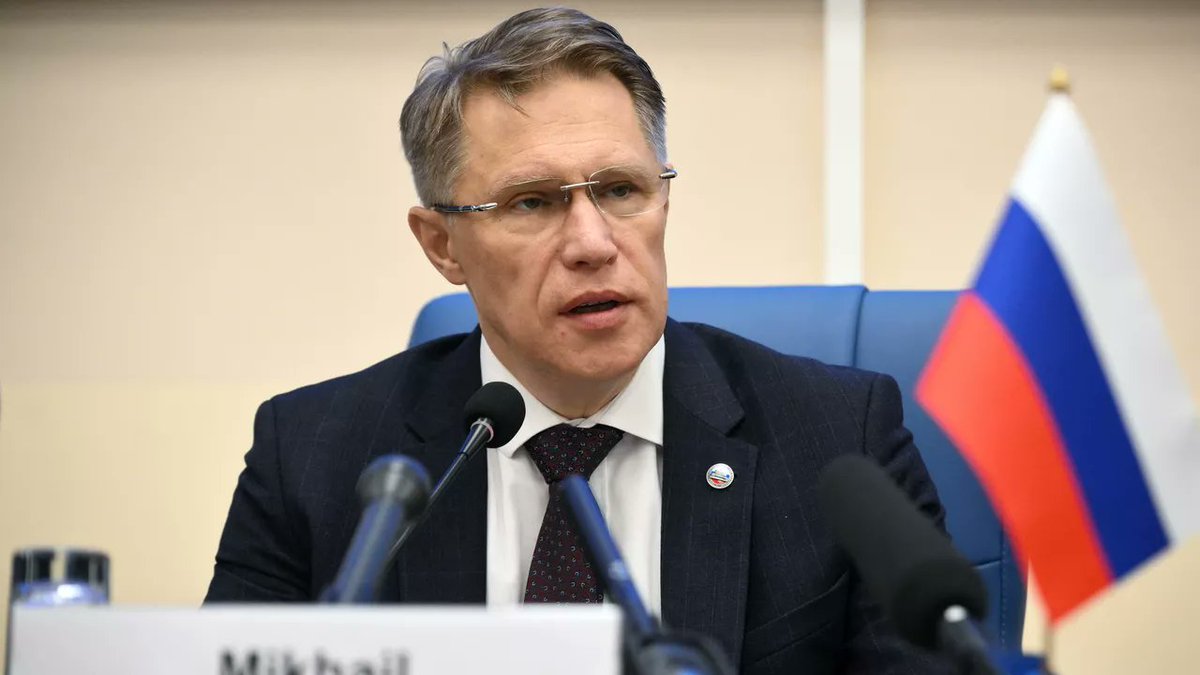
Russia’s Health Ministry has announced that their scientists have already developed preliminary vaccine work against newly found and emerging Bundibugyo strain of Ebola currently spreading across parts of Central Africa. According to the Russian Health Minister Mikhail Murashko - Russian researchers have “already created critical groundwork for the vaccine” targeting the new strain that recently triggered emergency in the Democratic Republic of Congo and Uganda.
If this claim eventually develops into a successful vaccine, the results will go far beyond medicine alone. The World Health Organization has already stated they are not in a place to contain and control the spread of the virus. The current outbreak involves the Bundibugyo strain of Ebola - which is a variant for which there is currently no widely medically approved vaccine solution comparable to the Ebola-Zaire strain.
This breakthrough makes Russia’s announcement significant.
#russia #ebola #africa