@TMTLongShort For all of them i understand why, except France. Could you elaborate ? Because of the coming elections next year ? Or the ou-of-control deficit and recession ?
delusional optimism is the only way out. most people lose before they even start because deep down they already convinced themselves it probably won’t work. they look at the odds and the competition and they try to be more practical and slowly talk themselves out of their own potential. but the people who end up doing insane things usually have one thing in common. they were delusional enough to believe they could actually pull it off before there was any proof. that’s the weird power of delusional optimism. it makes you keep going long enough for reality to eventually catch up to your vision.
i just can’t understand why you all are this realistic with your dreams. why you only allow yourself to want things that feel achievable from where you currently stand. every massive success story ever sounded delusional in the beginning. every athlete, artist, entrepreneur, creator, all of them had moments where nobody around them understood the vision. people laughed at them. doubted them. told them to be practical. but they kept going anyway because they were obsessed enough to trust something nobody else could see yet.
i mean just think about it. you are alive and here in this world. the odds were already impossibly slim. you exist on a planet floating in infinite darkness where trees communicate underground, where dead stars became the atoms in your body, where creatures glow in the ocean without sunlight ever touching them. your own brain is made of electricity and somehow produces dreams, memories, ideas, emotions. everything about existence sounds insane if you really think about it deeply enough. so why do people suddenly become “realistic” or “practical”the moment it comes to their own potential? there is nothing realistic about being alive in the first place. so be delusional, that’s the only way out.
Rare-Earth Startup Lines Up $500 Million in Pentagon Funding
Rare-earth refiner Phoenix Tailings Inc. received a conditional $500 million loan from the Pentagon, the latest White House deal to boost production of rare-earth elements in the US.
The long-term debt financing would support construction of a proposed plant that is supposed to produce a range of rare earths by 2028, the Massachusetts-based company said in a Tuesday statement. Phoenix Tailings is one of many companies pushing to build what would be the first new US rare-earth processing plants in decades. (Bloomberg)
I am being told that Trump's 100 million barrel figure here is roughly accurate, and that over the past 3 weeks, huge dark fleets from Abu Dhabi National Oil Company (ADNOC), escorted by U.S. Navy, have traversed the Hormuz Strait (as high as 7 million barrels per day)
Greek Prime Minister Kyriakos Mitsotakis:
China now has 30% of the world's manufacturing capacity and has essentially the ability to destroy industries across the globe, and certainly in Europe.
This is a topic that we need to take very, very seriously. We cannot just allow our industrial base to be completely annihilated simply because we're in search of always the cheapest product.
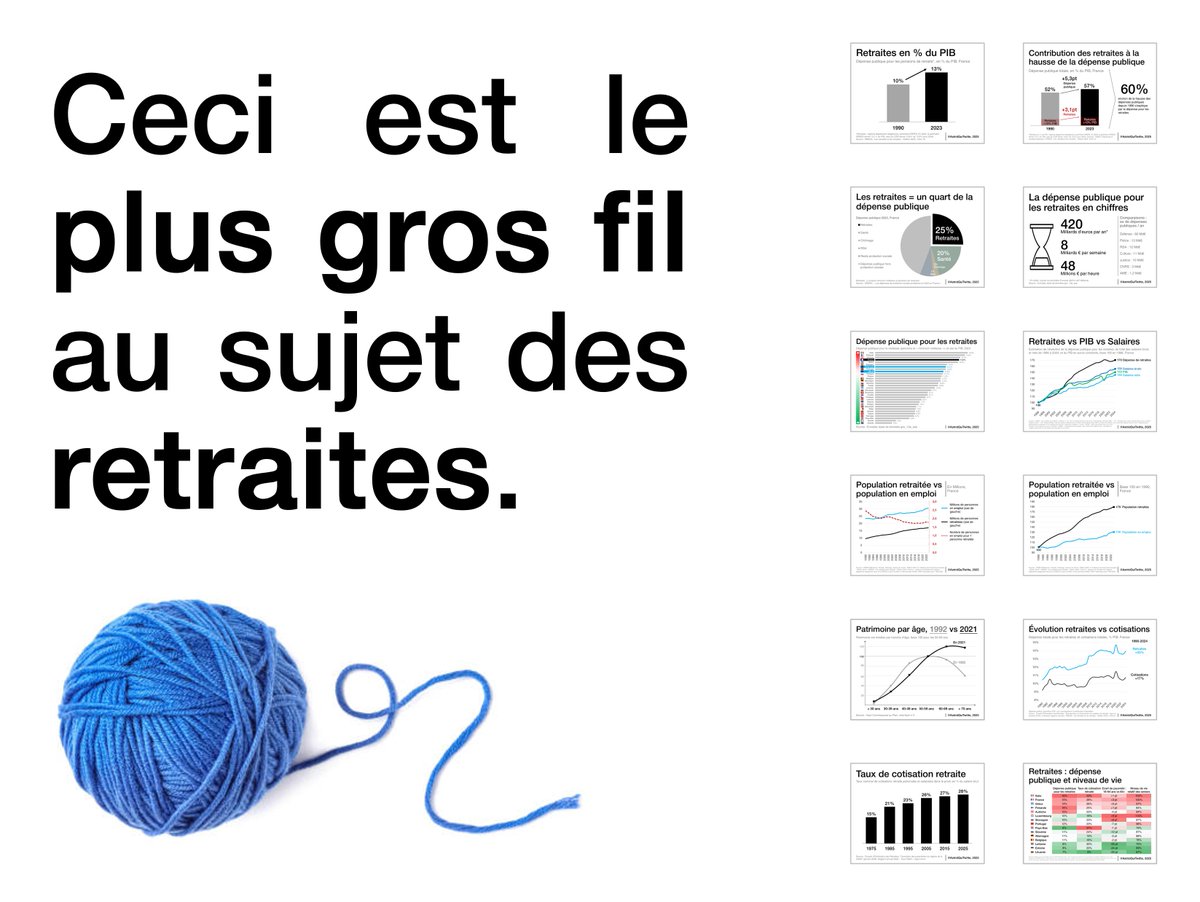
💥 Le financement des retraites représente un poids ÉNORME, à la charge des actifs.
Alors j'ai décidé d'en refaire un fil, que dis-je, une corde, un câble, un hauban.
Installez-vous confortablement, likez, retweetez, et lisez 🧶
💥 Le MYTHE du temps de travail des boomers : Nicolas 30 ans va-t-il vraiment moins travailler dans sa vie que Bernard, né en 1955 ?
😐 Bof bof. Peut-être aura-t-il à travailler 4% de moins, si on croit vraiment à une stabilisation de l’âge de départ à 64,7 ans (scénario de référence du COR). Pas de quoi en faire toute une histoire.
Et si l’âge de départ est décalé de 2 ans, les deux auront autant travaillé dans leur vie.
📍 EDIT : c'est 64 900h en 43 ans et non pas 44 ans pour Bernard, j'ai posté l'image trop vite.
Détails du calcul ci-dessous.
1°) Evolution du temps de travail annuel
La durée du temps de travail annuel a constamment baissé jusqu’en 2002, et est maintenant à peu près stable, autour des 1420 heures d’après la série INSEE.
Bernard, né en 1955, aura donc vu son temps de travail diminuer pendant les 2 premiers tiers de sa carrière, avant stabilisation. Nicolas 30 ans est parti pour avoir une durée de travail annuelle stable.
2°) Nombre d’années travaillées dans la vie
L’âge d’entrée dans la vie active a constamment augmenté jusqu’à la génération née au milieu des années 1970. Nicolas est entré dans la vie active à 2,3 ans de plus que Bernard.
Mais l’âge de départ à la retraite a été repoussé de 2,8 ans en parallèle. En somme, Nicolas devra travailler 6 mois de plus que Bernard.
3°) Temps de travail total dans la vie
Quand on fait la somme des heures travaillées pour chacune des années travaillées par Bernard et par Nicolas, le résultat n’est pas très différent : 64 900 heures pour le premier, 62 200 heures pour le deuxième. Un écart de 4%.
4°) Et si… l’âge de départ est repoussé ?
Vous faites ce que vous voulez, et vous avez le droit de croire au scénario de référence du COR, qui se base sur une hausse de la fécondité (!!??) et sur une stabilisation de l’âge moyen de départ à 64,7 ans.
Perso, je ne compte pas trop là-dessus, et j’ai donc fait le calcul dans une configuration où Nicolas doit bosser 2 ans de plus. Ça me semble assez réaliste, ça pourrait même être largement pire.
Bon, ben Nicolas travaillerait alors à peu près autant que Bernard. Une grosse centaine d’heures de plus, pour être exacte.
😠 "Mais si les retraites sont élevées, c'est parce que les retraités ont aussi beaucoup cotisé pour ça"
Ben NON.
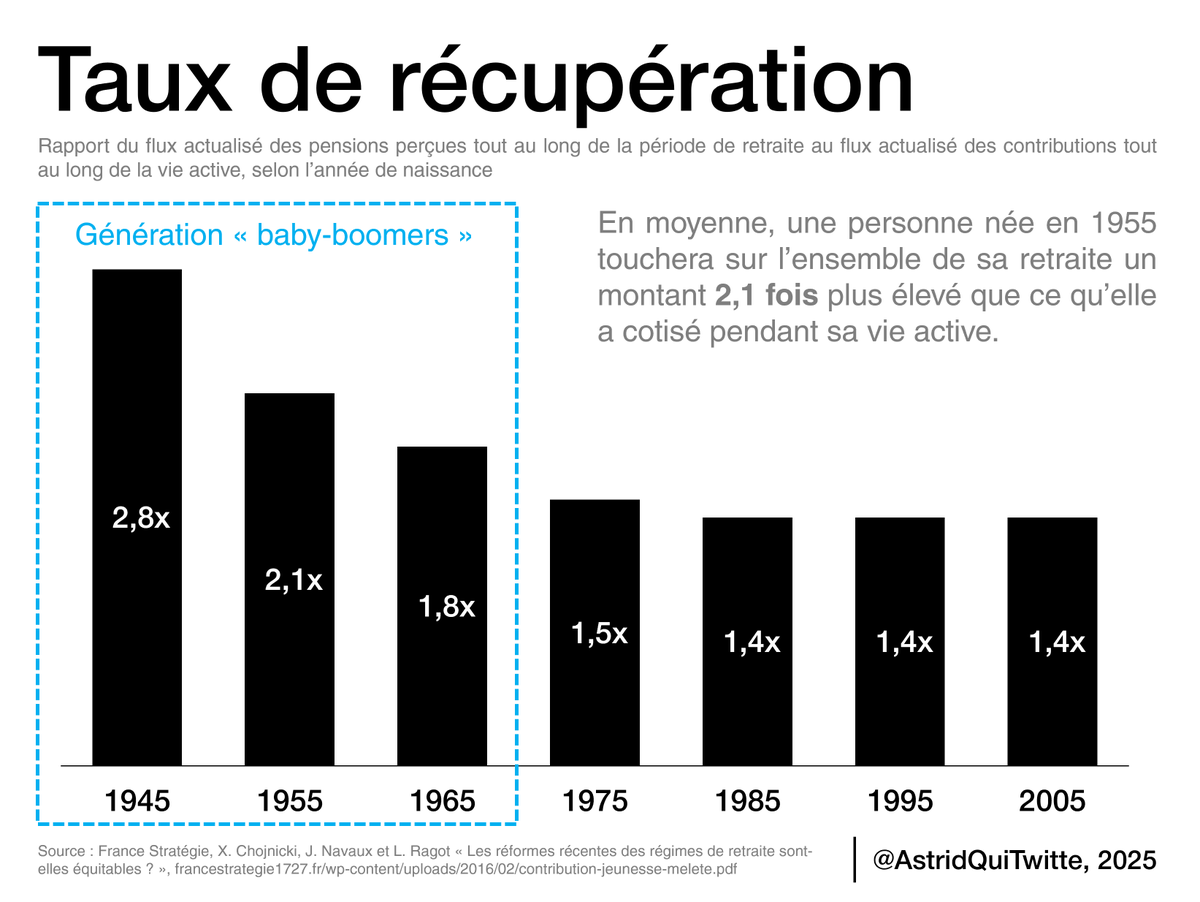
Un retraité né en 1955 touche DEUX FOIS PLUS en pensions de retraite que ce qu'il a payé en cotisations.
26/
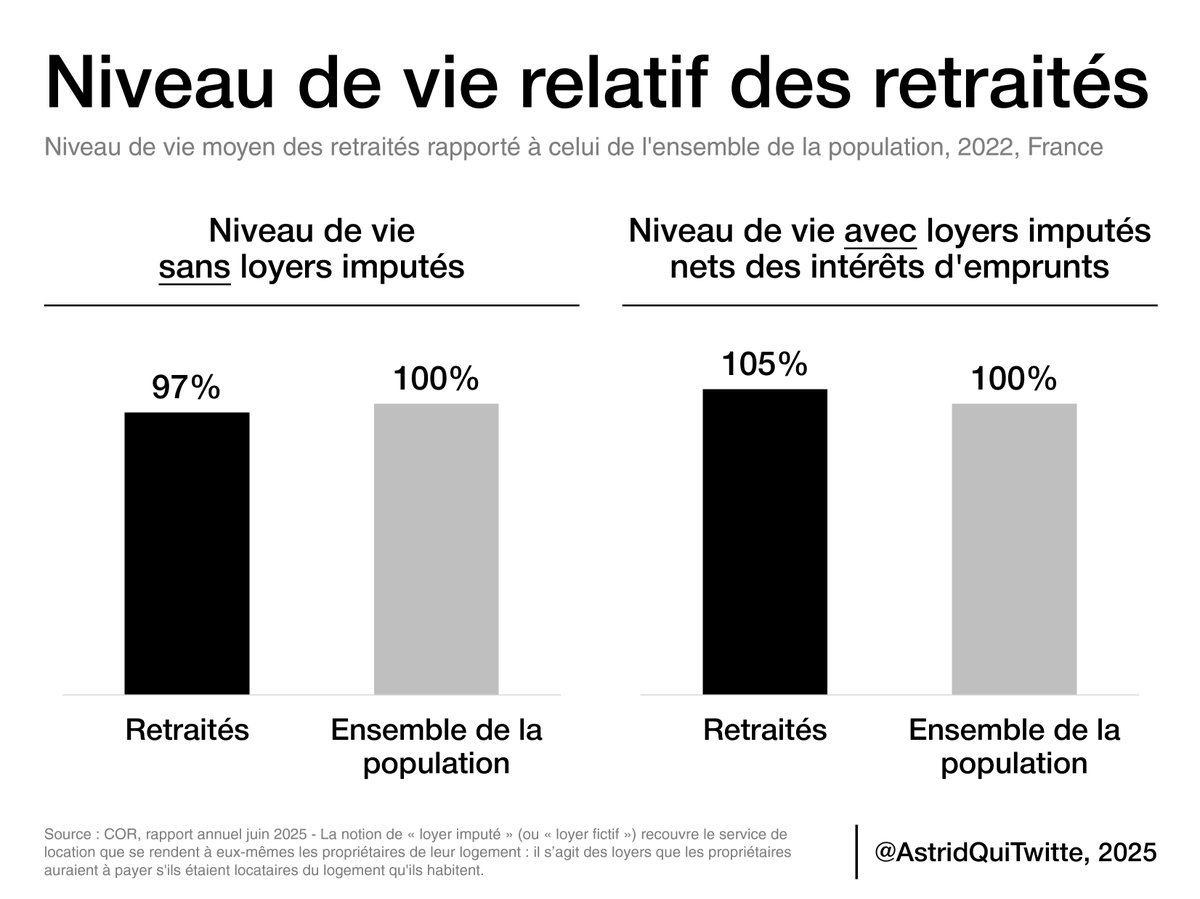
Et attention, quand le COR nous dit que le niveau de vie des retraités est à 97% du niveau de vie moyen, c'est sans compter qu'ils sont bien moins nombreux à devoir payer un loyer.
Une fois imputés les loyers, leur niveau de vie est 5% supérieur à la moyenne nationale !
20/
Venezuela has replaced Iraqi oil in the US and Indian markets.
I was wrong! When he gained control of 50 million barrels of Venezuelan oil and redirected most of it to the Gulf of Mexico, I thought he did so because he was not able to sell it.
A few weeks later, the Strait of Hormuz was effectively closed, and the US seamlessly replaced Iraqi crude with Venezuelan barrels. From a refiner’s perspective, the two grades are interchangeable despite their differences in quality.
NYT Claims: The U.S.–Iran draft deal includes a $300 billion investment fund for Iran. Tehran wanted reparations for war damage. Washington rebranded it as an international investment vehicle. Witkoff and Kushner floated the idea, pitching Tehran real estate and a broader fund as deal sweeteners.
China -- via its massive stockpile -- is the new central bank of oil, replacing Saudi Arabia ...
Helped save the US and Europe from a much bigger oil shock