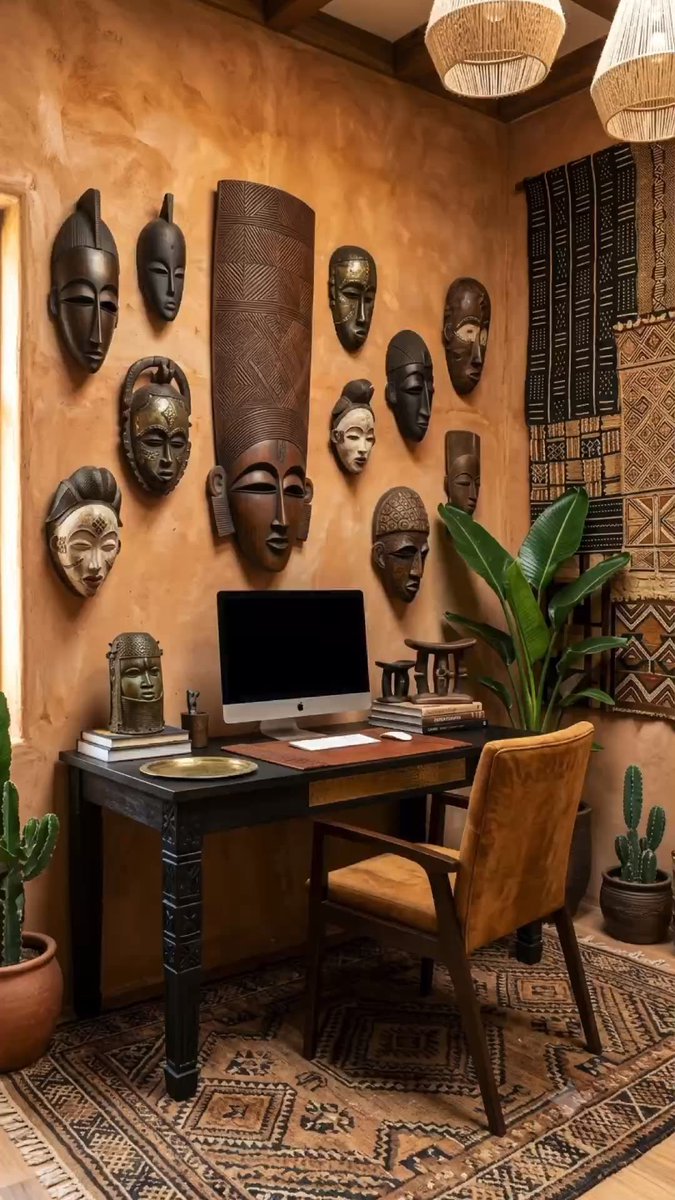
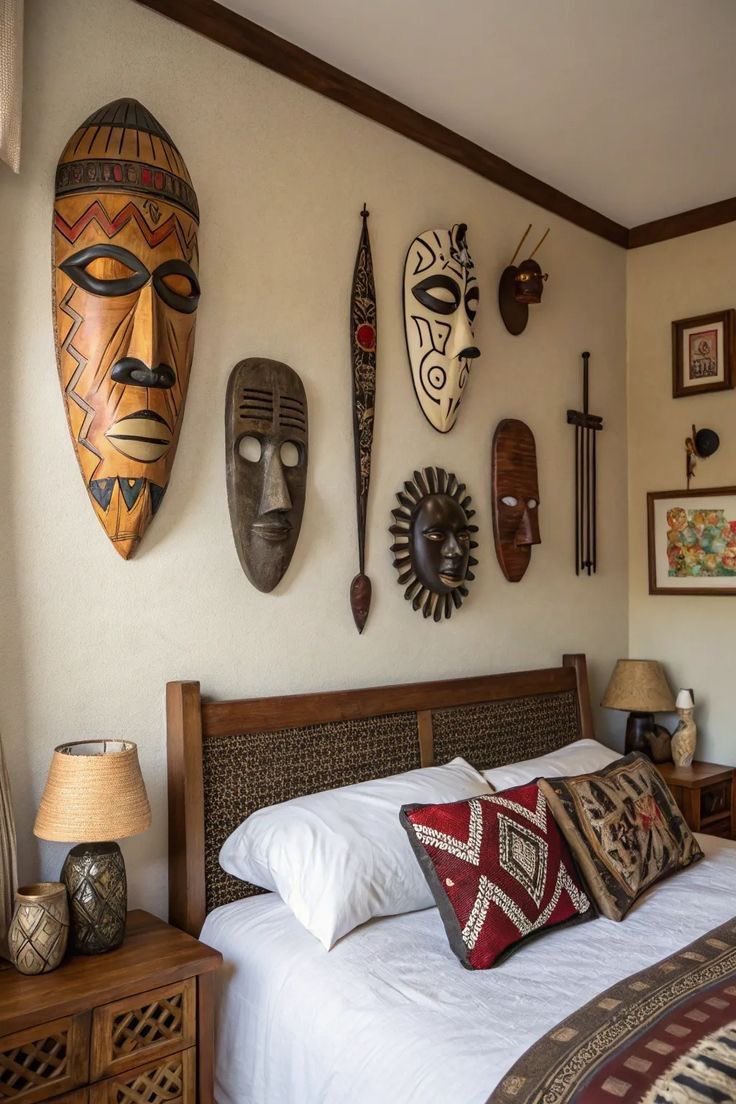
Most of our own wall art has been demonized by our own people so thoroughly that you’ll never find a carved mask or door in our homes, but you’ll find portraits of Jesus and other religious figures everywhere, a culture that was never ours to begin with.
The irony is that these very carvings sit locked in the British Museum, and people fly in from around the world just to see them.
Why don’t we value what’s already ours?
We were so rich in art that it lived on our doors and windows, carved into the very things we touched every day. Now we chase plain, minimalist furniture because we’re desperate to fit in.
Why did “modern” have to mean “Western” to us?
According to psychology, the urge to immediately fix a partner’s or friend’s distress instead of just sitting with them in it isn't empathy; it is your own low frustration tolerance. When someone you love is hurting, and you instantly jump into problem-solving mode, offering unsolicited advice or trying to find a silver lining, you are often trying to soothe your own secondary anxiety. You aren't rescuing them from their pain; you are rescuing yourself from the discomfort of witnessing a vulnerability you don't know how to hold.
This is what you deserve for weekends like this when the month is at its apex financially.
This is what 3.7m budget can get you with variance (+/-). Your home has all you want. Cozy and with your loved ones.
The two rest days should count before they see you next Saturday.
If you have such as a vacation home . You can’t imagine the ROI. Hii sasa ndio uweke huko nyumbani you will have the urge to stay longer.
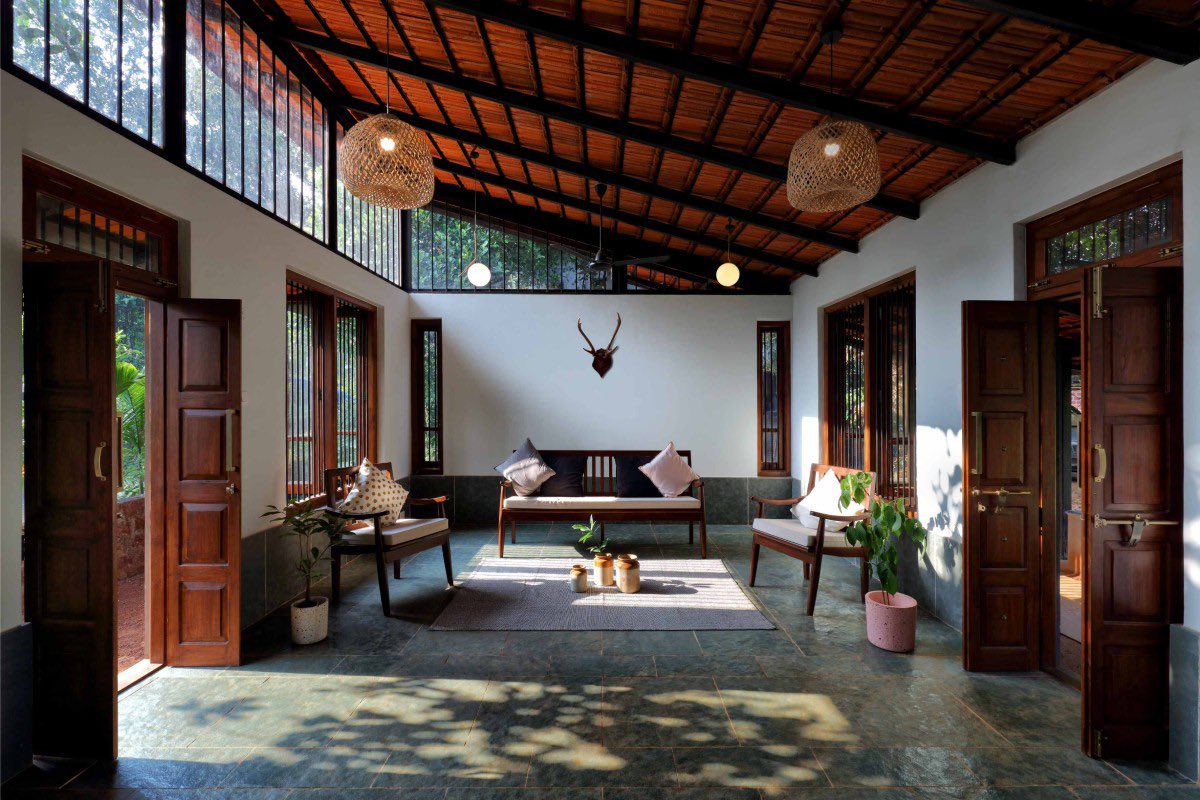
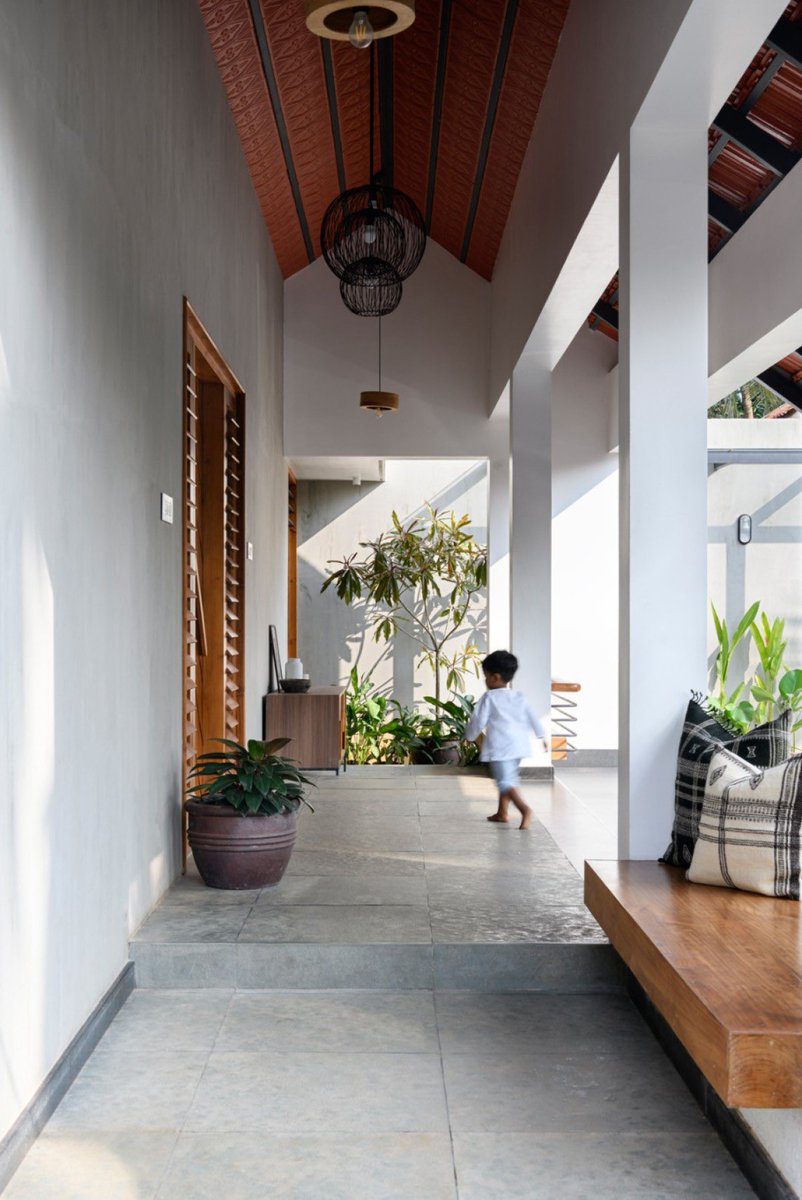
“Terracotta roof tiles pulled indoors and pressed into a patterned ceiling.” That’s the first thing you notice at Sajeevan Residence, before the double-height spaces or the teak tones even register.
Studio Acis let the roofline carry the home’s traditional palette upward, ochre-red panels running the length of the pitched ceiling, echoing the same terracotta used outside. Paired with kota stone floors and teak, the roof stops being a boundary and becomes the room’s warmest surface.
Most homes hide the roof structure behind flat plaster. This one turned it into the interior’s main character.
Sajeevan Residence | Studio Acis
Kannur, Kerala, India | 2021 | Photographs: Justin Sebastian
This house in Palakkad, Kerala was built for a family of five returning home from Dubai after years of fast-paced city life, a 3,700 square foot retirement home called Baraka, designed to slow everything down. Layered clay tiles stretch across the roof in staggered pitches, an inheritance from Kerala’s own vernacular, doing the same job it always did against monsoon rain and equatorial heat, just refined into the home’s defining architectural feature instead of a background detail.
The first floor sits perpendicular to the ground floor, cantilevering out on both sides so the upper bedrooms appear to hover, while courtyards, verandahs, and a poomugham pull straight from Kerala tradition to keep air moving through the house without a single fan doing the real work. Exposed brick and rubble masonry ground the lower level, lime plaster catches shifting daylight on the walls above, and a swimming pool facing the paddy fields cools the air around it before it ever reaches the rooms.
This is not an expensive house pretending to be humble. It is a disciplined one, choosing restraint over ornament and proving that vernacular knowledge, when taken seriously, is not a downgrade from modern living. It is modern living, done properly.
The crude indigenous designs sitting in our own communities do not need to be abandoned. They need exactly this, effort, orientation, and the discipline to lay material down like it matters.
Baraka. Thrithala, Palakkad, Kerala, India.
Architects: Shyamraj Chandroth & Aziya H Mondal, 7th Hue Architecture Collective. Photography: MARC Frames.
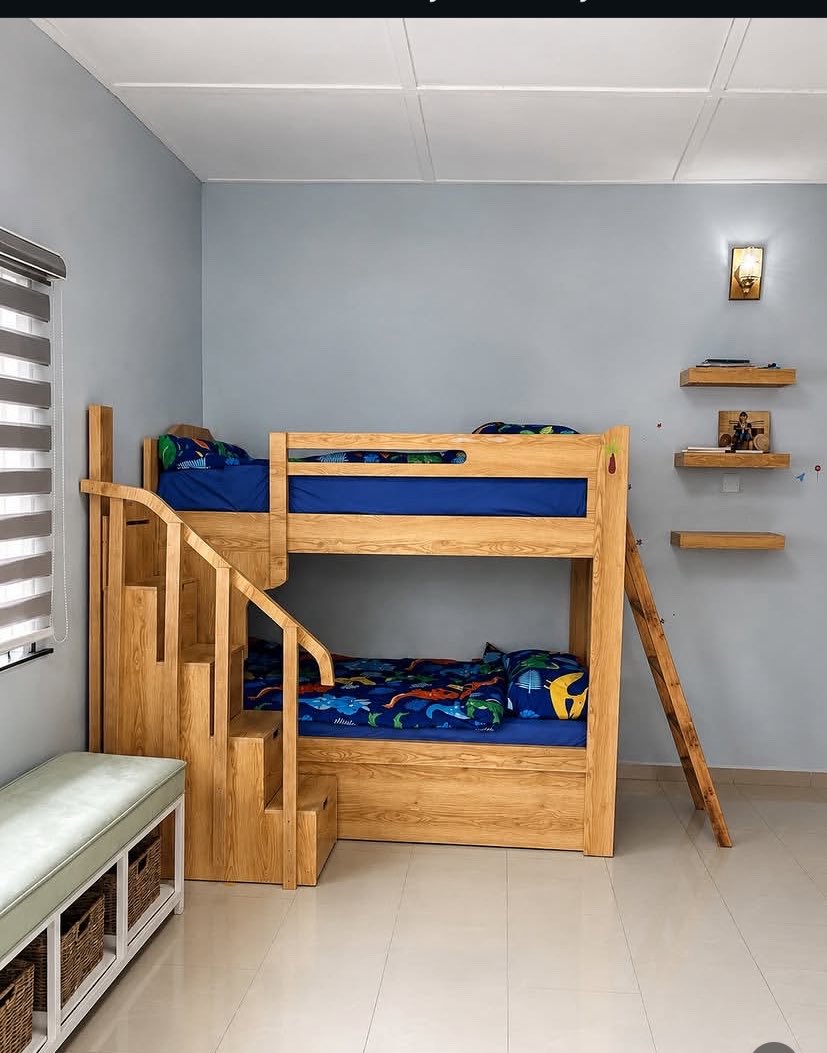
I started learning furniture making at Ipaja furniture yard at 30, as the only female apprentice there. People would literally stop and stare at me as I worked, but I didn’t care😂
It was tough, my body complained, my complexion darkened but I adjusted. I’m glad I took that decision.
Meet the Eboh bunk bed, named after my bestie in the third frame.
Eboh means Peace in Idoma language.
Disclaimer: I didn’t make the ladder but the shelves and the metal ottoman was from my workshop.
A doctor couple left the noise of Chennai for two acres of land outside the city, in a village called Sholavaram. They wanted a modest two bedroom home with traditional building elements, nothing extravagant.
That home is VIPA Farm House, designed by Studio One By Zero, architects Deepak Sundaram and Kavya Rajendra. The walls are exposed brick and plain cement plaster, nothing hidden behind imported cladding. The ceiling uses a filler slab technique and the floor is oxide finish, both of which keep the house cool without any air conditioning doing the work. Every piece of furniture, the wardrobes, kitchen cabinets, doors, is reclaimed wood pulled from old palaces and houses across Tamil Nadu instead of freshly cut timber. Two courtyards run through the house east to west, so light, air, and even the smell of rain reach straight into the dining space. 2,350 sq ft, completed 2022.
None of these choices were made to look expensive. Exposed brick costs less to install than plastered and painted walls, and it never needs repainting. Reclaimed wood costs less than new hardwood and comes with a history new material can’t replicate.
A similar case exists on another continent. Casa Morro da Manteiga in Brazil, a much smaller 75 square meter home, was built under a government low income housing program using the same logic, brick left exposed, electrical and structural elements left visible instead of covered, to keep both the look and the cost down.
Two different countries, same conclusion. Building with local, honest materials is not a luxury choice, it is often the cheaper option and the one that survives the climate longer. The conversation Africa needs is not about waiting for bigger budgets. It’s about building with what already costs less and lasts longer.
Architect: Studio One By Zero, Deepak Sundaram, Kavya Rajendra
Location: Sholavaram, Chennai, India
Completed: 2022
Photography: Yash R Jain
This house in Ratnagiri, Maharashtra was built on a budget, 1,100 square feet, using laterite stone quarried within 10 kilometres of the site, Mangalore clay roof tiles, teak wood joinery and clearstory windows along the eastern wall that pull morning light through the entire living area. Cross ventilation through high ceilings and large openings means no mechanical cooling. Not a single tree on the site was cut during construction.
This is not an expensive house. It is a disciplined one.
The crude indigenous designs we have in our communities do not need to be abandoned. They need effort. When slight effort is put into laterite, into fired brick, into rammed earth, when someone takes the time to lay it properly, orient the building correctly, and open it to the right wind, the result stops looking crude and starts looking like this. The people around us cannot see how good our materials are because we have never shown them what those materials look like when they are taken seriously.
Building kilns is not a fantasy. We have the clay. We have the land. We just have not decided it matters enough yet.
There is no pride in crudeness and there is no excuse for mediocrity when the solution is already in the ground.
Ratnagiri, Maharashtra, India | Articulated Design Initiative | Photography: Vaibhav Kapadi
In 2019, Professor Gillian Ku gave a 1 hour masterclass on how to negotiate & get what you want.
Her ideas:
- Reciprocity beats direct request
- Scarcity creates desire out of thin air
- We say yes to people we like, not people who are right
10 lessons to negotiate better:
In the spirit of well done spaces and brick finishes.
I think this would be a massive hit especially for local high end joints.
I am thinking about one or two around lower kabete, somewhere around ngong’.
I just randomly picked the locations because I have seen the gap kubwa sana hapo.
Na people along those routes are loaded.
These spaces ni zile hidden gems where you do beers, shots and close deals worth thousands or millions. I would say billions but Naah 😂😂 I would be punching beyond my weight!
I think most of us want this. A home in the hills, surrounded by trees, quiet enough to hear yourself think. Not a mansion. Just something honest and well built, by the time life starts to make sense in your thirties.
This is Ekam. A house that had been abandoned in the hills of Amboori, Trivandrum, Kerala. ARK Architecture Studio did not tear it down. They walked in and asked what it could still become.
A verandah that opens into the forest. Terracotta roof tiles. Exposed timber rafters. Cane chairs. Patterned floor tiles. A river nearby and mountains behind it. 1,080 square feet that feels like enough.
The materials are not expensive. The land did most of the work. What made this possible was simply the decision to work with what was already there instead of starting over.
We have land like this in Africa. We have the materials. We keep starting over when we should be building on what we already have.
More photos in the comments.
ARK Architecture Studio | Ekam | Amboori, Trivandrum, Kerala, India | 1,080 sq ft | 2023
📷 Nathan Photos
It is quite satisfying to watch the antelope loudly proclaim its friendship with the leopard. But the entire savanna knows, that this friendship has never existed anywhere but in the mind of the predator searching for a more comfortable way to feed, and that of a prey so foolish it has mistaken the beauty of those spots for something other than the last thing it will ever see..